
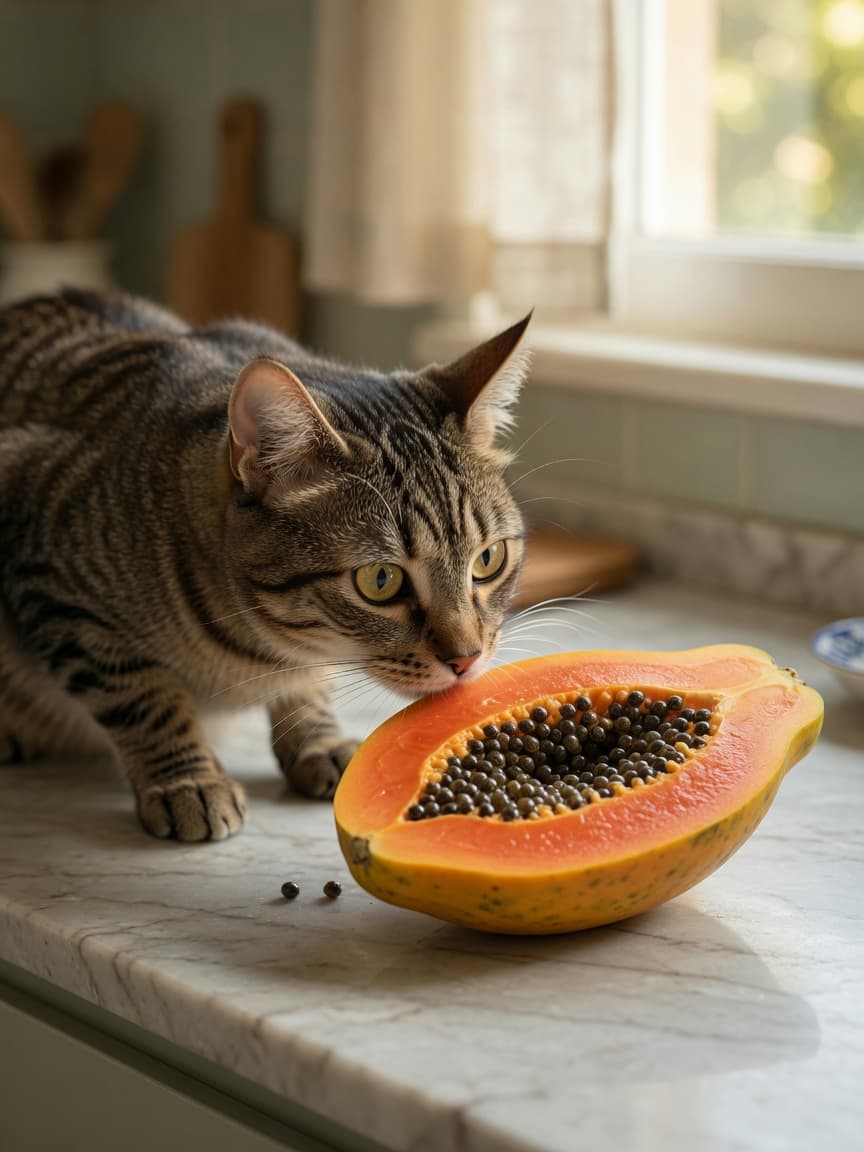
Can Cats Eat Papaya?
Yes, cats can eat papaya in moderation. While papaya is not a natural part of a cat's diet, small amounts of ripe papaya flesh can be offered as an occasional treat without causing harm to most cats. However, there are several important considerations to keep in mind before sharing this tropical fruit with your feline friend.
Understanding Your Cat's Dietary Needs
Cats are obligate carnivores, meaning their bodies are designed to obtain most of their nutrition from animal protein. Unlike humans and some other animals, cats have limited ability to process plant-based foods efficiently. This is why commercial cat food is primarily meat-based, and why fruits and vegetables should never form a significant part of your cat's daily diet.
Papaya, whilst harmless in small quantities, is fundamentally a plant-based food with limited nutritional value for cats. It should only ever be offered as an occasional treat, never as a meal replacement or regular dietary component.
Potential Benefits of Papaya
Papaya does contain certain compounds that can be beneficial. The fruit is rich in vitamin C, vitamin A, and fibre. It also contains an enzyme called papain, which aids in digestion. For cats, these properties might offer minor digestive support if papaya is consumed in very small amounts. Some pet owners have found that a tiny piece of papaya can help with mild digestive discomfort, though this is not a substitute for veterinary care if your cat shows signs of digestive problems.
How Much Papaya Can Your Cat Eat?
The appropriate serving size is small—think of it as a treat, not a snack. A piece no larger than your thumbnail, offered only occasionally (perhaps once or twice a month), is a reasonable guideline. Most cats will not show interest in papaya anyway, so forcing your cat to eat it is unnecessary and not recommended.
Never offer papaya as part of your cat's regular meals, and ensure it takes up no more than 10% of your cat's daily calorie intake on the day it is given.
How to Safely Serve Papaya to Your Cat
If you decide to offer papaya to your cat, preparation is essential. Always use ripe papaya—unripe fruit is harder to digest and less palatable. Remove all seeds, as these can be a choking hazard and may cause digestive upset. Discard the skin entirely and only offer the soft, orange flesh in very small pieces.
Never cook, freeze, or season the papaya. Serve it plain, at room temperature, and always supervise your cat while eating. Some cats may not be interested, and that is perfectly normal and nothing to worry about.
Important Cautions
Whilst papaya is generally safe, certain cats should avoid it altogether. If your cat has kidney disease, diabetes, or a sensitive digestive system, consult your vet before offering any papaya. Additionally, cats with a history of gastrointestinal issues may not tolerate the fruit well.
Watch for signs of digestive upset after offering papaya, including vomiting, diarrhoea, or loss of appetite. If any of these occur, discontinue offering papaya and contact your veterinarian.
What to Avoid
Never offer papaya juice, dried papaya, or papaya products intended for human consumption, as these often contain added sugars or preservatives that are unsuitable for cats. Also avoid the leaves and stems of papaya plants, which can cause digestive irritation.
Better Treat Alternatives
If you are looking to diversify your cat's treats, there are safer options specifically formulated for feline nutritional needs. Commercial cat treats are designed with your cat's digestion and health in mind. Small amounts of cooked chicken or fish, without seasoning, are also excellent occasional treats that align better with your cat's carnivorous nature.
The Bottom Line
Papaya is safe for cats in very small, occasional amounts, but it offers limited nutritional benefit and is entirely optional. Your cat's primary diet should consist of high-quality commercial cat food formulated to meet their complete nutritional requirements. If you choose to offer papaya as a rare treat, prepare it safely, serve a tiny portion, and monitor your cat closely. When in doubt, consult your veterinarian before introducing any new food to your cat's diet.