
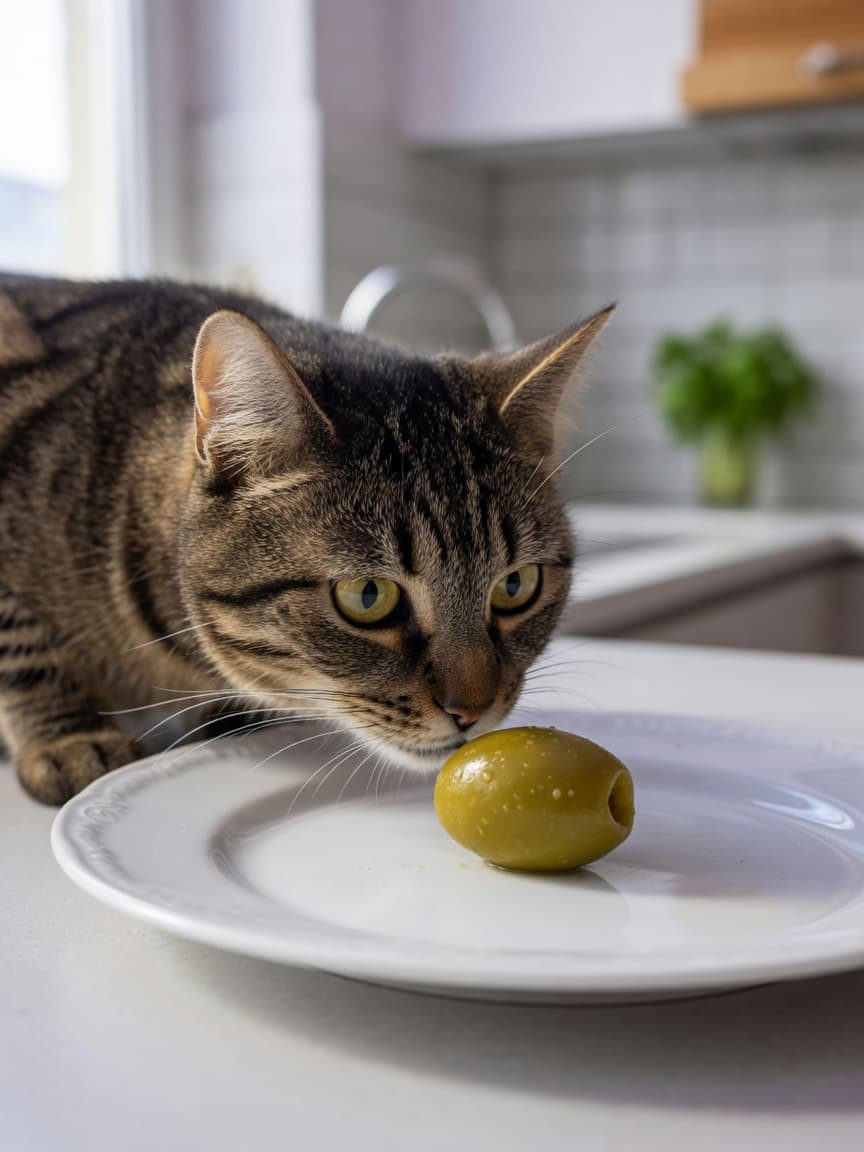
Can Cats Eat Olives? Yes, But With Important Cautions
The short answer is: yes, cats can eat olives in small amounts, but they require caution. While olives are not toxic to cats, they pose several risks that make them an unnecessary food for your feline friend. As a pet owner, it's worth understanding what these risks are and how to keep your cat safe if they do manage to nibble an olive.
Why Olives Need Caution
Olives present several concerns for cats, starting with their high sodium content. Most olives sold commercially are preserved in brine (salt water), and even those labelled "low-sodium" can contain problematic levels of salt for cats. Cats have no nutritional need for salt, and excessive sodium can contribute to dehydration and, over time, affect kidney and heart function—particularly in older cats or those with existing health conditions.
The texture and shape of olives also pose a choking hazard, especially the pitted whole varieties. The pit itself is a serious concern; if swallowed, it could cause an intestinal blockage, which is a veterinary emergency requiring surgery. Even if your cat manages to spit out the pit, the experience could be distressing.
Another consideration is fat content. Olives contain oils that, whilst natural, are high in calories relative to their nutritional value. Cats are obligate carnivores, meaning they have evolved to thrive on meat alone. Olives offer them nothing nutritionally—no essential amino acids, no taurine (critical for feline heart and eye health), and no other nutrients cats actually need. Feeding olives takes up stomach space that could be filled with appropriate feline nutrition.
The Issue of Seasonings and Additives
Canned or jarred olives often contain additional ingredients beyond salt, such as garlic, herbs, or spices. Garlic and onions are toxic to cats and can damage their red blood cells. Even small amounts matter. Always check the ingredient list carefully if you're considering olives as an occasional treat.
Safe Preparation If You Proceed
If your cat has already eaten a small amount of olive, or if you decide to offer one as an occasional treat, follow these guidelines:
- Choose unsalted, pitted olives whenever possible, or remove the pit completely yourself
- Rinse the olive under running water to reduce sodium content
- Offer only a tiny piece—roughly the size of a pea—not a whole olive
- Never offer olives packed in oil, brine with strong seasonings, or those containing garlic or herbs
- Keep this as an extremely rare occurrence, not a regular treat
How Much Is Safe?
There is no recommended amount of olives for cats. If you offer one at all, it should be a one-off experience with a microscopic piece, not something repeated weekly or even monthly. Your cat's diet should remain centred on high-quality feline-specific food that meets their complete nutritional needs.
Which Cats Should Avoid Olives Entirely
Certain cats should never eat olives, even in tiny amounts:
- Cats with kidney disease or hypertension (high blood pressure)
- Senior cats over 10 years old, whose kidneys are more sensitive
- Cats with heart conditions
- Cats with a history of gastrointestinal blockages
- Any cat with known food sensitivities or digestive issues
If your cat falls into any of these categories, skip olives entirely and discuss safe treats with your vet instead.
Warning Signs to Watch For
If your cat has eaten an olive, monitor them for:
- Vomiting or retching
- Constipation or diarrhoea
- Loss of appetite
- Lethargy or unusual behaviour
- Difficulty swallowing or excessive drooling (suggesting blockage)
Any of these signs warrant a call to your vet, particularly if your cat swallowed an olive whole or with the pit intact.
Better Treat Alternatives
Rather than olives, consider treats that actually benefit your cat: small pieces of cooked chicken, commercial cat treats formulated for their nutritional needs, or dedicated feline snacks. These options align with your cat's biology as an obligate carnivore and won't introduce unnecessary salt or choking hazards.
The bottom line: olives aren't toxic, but they offer no benefit to cats and carry real risks. If your cat has never eaten one, there's no reason to introduce them. If yours has shown interest, a tiny taste once in a while is unlikely to cause harm—but caution, vigilance, and proper preparation are essential.