
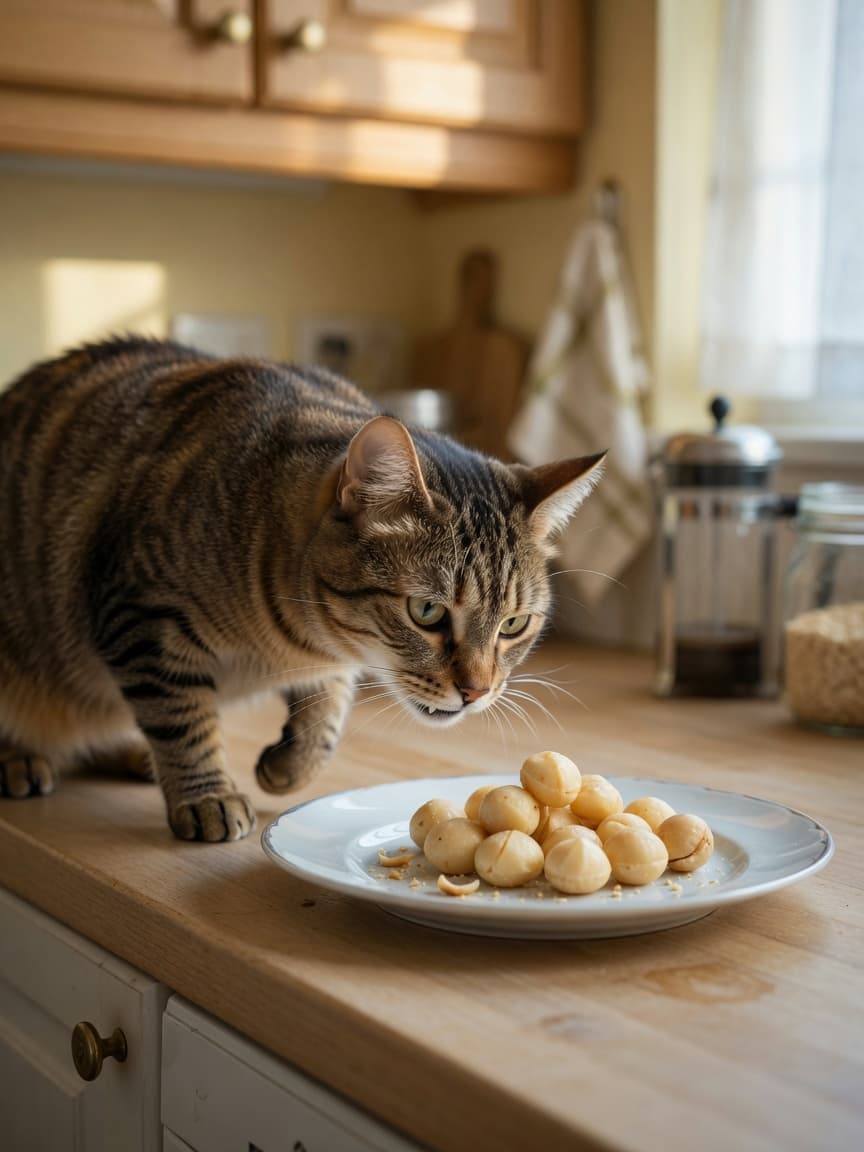
Can cats eat macadamia nuts?
No — macadamia nuts are toxic to cats and must never be fed to them under any circumstances. Even small amounts can cause serious illness, and in severe cases, macadamia nut toxicity can be life-threatening. If your cat has eaten macadamia nuts, you must contact your veterinarian or animal poison control immediately.
Why are macadamia nuts toxic to cats?
Macadamia nuts contain a compound that is toxic to cats, though the exact mechanism of how it causes illness is not fully understood by veterinary science. What we do know is that this toxin affects cats' nervous systems and muscles, even in relatively small quantities. Cats are obligate carnivores, meaning their bodies are designed to digest meat, not plant-based foods like nuts. Their digestive systems lack the enzymes needed to safely process many human foods, including macadamia nuts.
The toxin in macadamia nuts is particularly dangerous because it requires no minimum threshold — any amount consumed poses a risk to your cat's health. This means you cannot assume that "just a little bit" is safe.
What does macadamia nut toxicity do to cats?
When a cat ingests macadamia nuts, the toxin enters the bloodstream and affects the nervous system and muscles. This can lead to a range of serious symptoms and complications. The severity of the illness depends on the amount consumed and the individual cat's size and sensitivity, but all cases should be treated as emergencies.
Macadamia nut toxicity can cause weakness, tremors, and difficulty walking. Cats may also experience muscle pain and stiffness. In more severe cases, cats can develop neurological problems that affect their coordination and ability to move normally. Some cats may experience vomiting or gastrointestinal upset as well.
Symptoms of macadamia nut poisoning in cats
If your cat has eaten macadamia nuts, watch for the following warning signs:
Weakness or lethargy, particularly in the hind legs; Tremors or shaking; Difficulty walking or loss of coordination; Stiffness or pain when moving; Vomiting; Loss of appetite; Depression or unusual behaviour; Hyperthermia (elevated body temperature) in some cases.
Symptoms may appear within 6 to 12 hours of ingestion, though in some cases they can develop more quickly. Do not wait to see if symptoms appear — contact your vet immediately if you know or suspect your cat has eaten macadamia nuts.
What should you do if your cat eats macadamia nuts?
Act immediately. Contact your veterinarian or animal poison control straight away. Have the following information ready: the approximate amount of macadamia nuts your cat consumed, roughly when they were eaten, your cat's weight and age, and any symptoms you have already noticed.
Do not attempt to treat your cat at home or wait to see if symptoms develop. Do not induce vomiting unless specifically instructed by a veterinarian, as this can sometimes cause additional harm. Your vet may recommend decontamination measures or monitoring, depending on how recently the nuts were eaten and the amount consumed.
Your veterinarian will provide supportive care to help your cat recover. This may include intravenous fluids, medication to manage symptoms, and careful monitoring of your cat's neurological and muscular function.
Prevention is essential
The best approach to macadamia nut toxicity is prevention. Keep all macadamia nuts, macadamia nut butter, and foods containing macadamia nuts safely out of reach of your cat. Be especially vigilant around baked goods, chocolate spreads, and other human foods that may contain macadamia nuts as an ingredient.
If you have macadamia nuts in your home, store them in a secure cupboard or container that your cat cannot access. Educate family members and visitors about the danger of feeding human foods to your cat, particularly nuts.
Remember: macadamia nuts are not safe for cats at any dose. When in doubt about what your cat can eat, consult your veterinarian. Your cat's health and safety depend on keeping toxic foods out of their reach.