
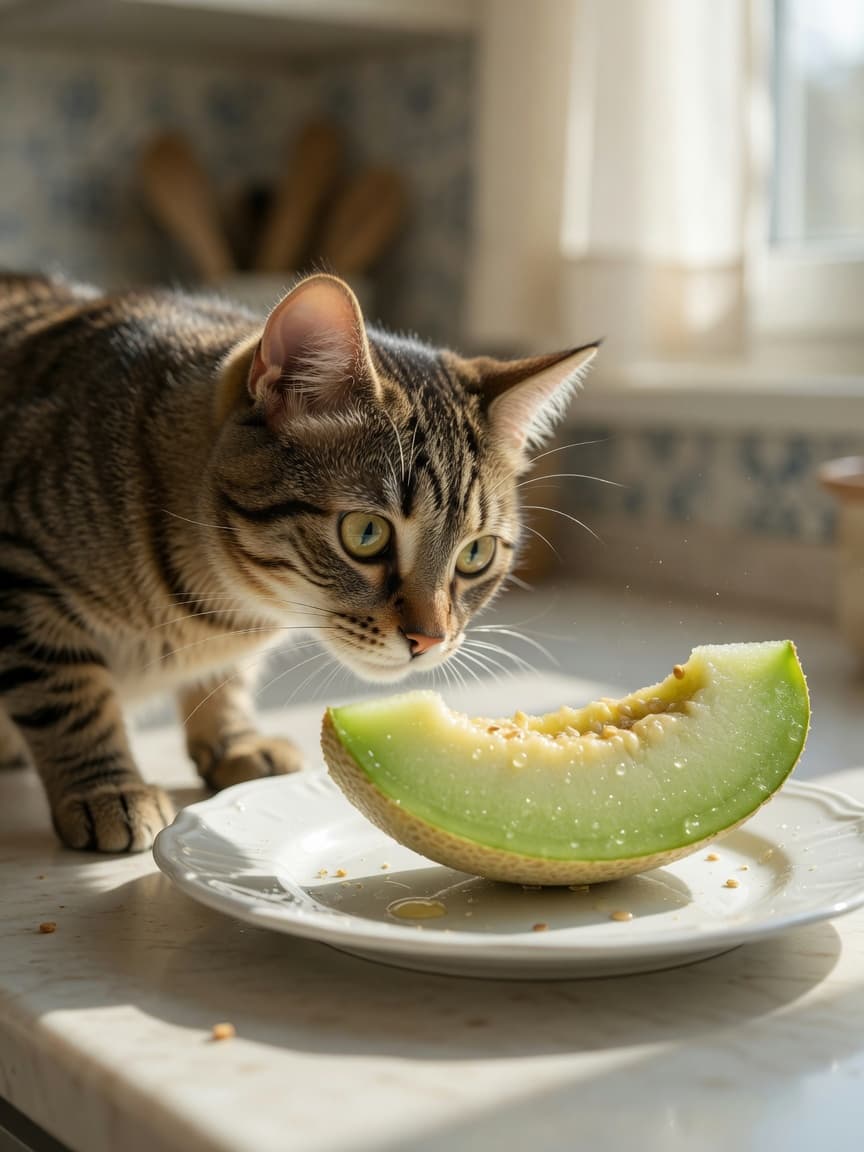
Can cats eat honeydew?
Yes, cats can eat honeydew in moderation. This sweet, pale green melon is generally safe for cats as an occasional treat, though it should never replace their regular diet. If you're wondering whether it's okay to offer your cat a small piece of honeydew, the straightforward answer is that it poses no toxicity risk when given appropriately.
Is honeydew safe for cats?
Honeydew melon is non-toxic to cats, which means it won't poison your pet. The flesh of the melon itself contains no compounds harmful to felines. However, safety goes beyond just whether something is toxic—it also concerns whether it's nutritionally appropriate and suitable for your cat's digestive system.
Understanding your cat's dietary needs
Cats are obligate carnivores, meaning they're biologically designed to thrive on meat-based diets. Unlike humans or even dogs, cats have specific nutritional requirements that centre on animal proteins and certain amino acids like taurine, which they cannot manufacture themselves. While cats can tolerate small amounts of fruits and vegetables, these should play only a minor role in their overall nutrition.
Honeydew is primarily water and natural sugars, with minimal protein and virtually no taurine. This means it offers little nutritional benefit to your cat, though it's unlikely to cause harm in small quantities.
Potential benefits of honeydew for cats
The main advantage of offering honeydew to your cat is its high water content, which can contribute to hydration. Some cats, particularly those who don't drink enough water, may benefit from the moisture in watery fruits. Honeydew is also very low in calories, making it a guilt-free treat option if your cat is overweight or prone to obesity.
Additionally, the texture and novelty of honeydew may provide mental enrichment for some cats, turning treat time into a mild form of environmental engagement.
How much honeydew can cats eat?
Moderation is key. A small piece—roughly the size of a sugar cube or smaller—offered occasionally is the appropriate amount. "Occasionally" means once or twice per week at most, not daily. Treats, including honeydew, should make up no more than 10% of your cat's daily caloric intake, with the remaining 90% coming from complete and balanced cat food.
If your cat is particularly small or has a sensitive digestive system, start with an even tinier portion to observe how they respond.
How to serve honeydew safely
Always remove the rind and all seeds before offering honeydew to your cat. The rind is tough and poses a choking hazard, whilst seeds may present a minor choking risk. Cut the melon into small, bite-sized pieces that your cat cannot choke on.
Serve honeydew at room temperature—never frozen or chilled directly from the refrigerator, as very cold foods can upset a cat's stomach. Offer it as an occasional treat in a small bowl, separate from their regular meals.
Caveats and when to avoid honeydew
If your cat has diabetes or is overweight, consult your veterinary surgeon before offering honeydew, despite its low calories. The natural sugars may not be ideal for diabetic cats. Additionally, if your cat has a sensitive digestive system or has previously experienced digestive upset from fruits, it's best to avoid honeydew altogether.
Some cats simply have no interest in fruit, and that's perfectly normal. Never force your cat to eat honeydew or any treat they don't want.
Signs of digestive upset
After offering honeydew for the first time, monitor your cat for signs of digestive discomfort, such as vomiting, diarrhoea, or lethargy. If any of these occur, discontinue honeydew and contact your veterinary surgeon if symptoms persist.
The bottom line
Honeydew is safe for cats in moderation and can serve as a refreshing, low-calorie occasional treat. However, remember that your cat's nutritional needs are best met through high-quality cat food. If you choose to offer honeydew, do so sparingly, remove all seeds and rind, and watch for any adverse reactions. When in doubt, speak with your veterinary surgeon about appropriate treats for your individual cat.