
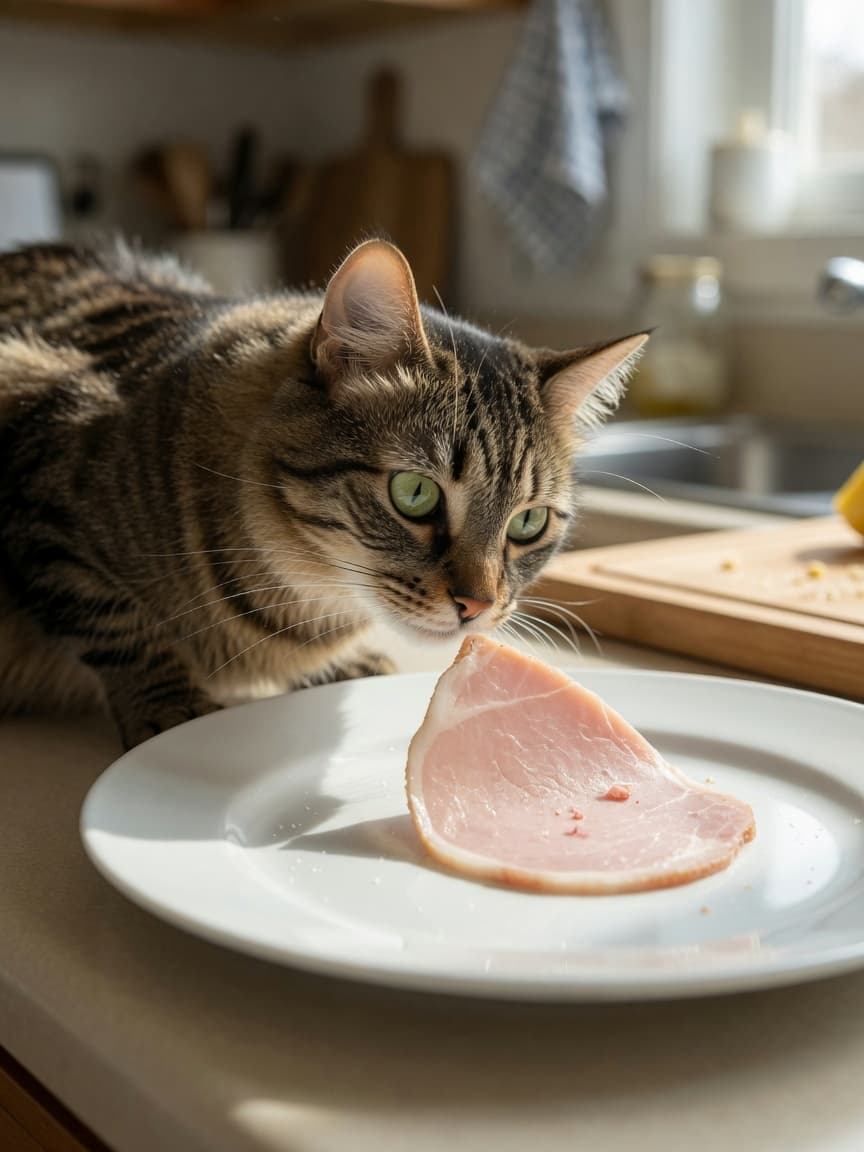
Can Cats Eat Ham?
The short answer is: yes, cats can eat ham, but only in small amounts and with important caveats. Whilst ham is meat and cats are obligate carnivores (meaning they require meat to survive), processed ham carries specific health risks that make it something to offer cautiously, if at all.
Why Ham Requires Caution
Ham is a processed meat product, which means it contains several ingredients and additives that aren't ideal for cats. The main concerns are:
Sodium content: Ham is cured and salted, making it very high in sodium. Cats don't need added salt in their diet, and excess sodium can contribute to hypertension and put strain on their kidneys and heart over time.
Preservatives: Many hams contain nitrates and nitrites, which are chemical preservatives used to prevent bacterial growth and maintain colour. These additives offer no nutritional benefit to cats and are best avoided.
Fat content: Ham can be quite fatty, particularly certain cuts. Excessive fat may cause digestive upset, pancreatitis, or obesity in cats, especially in animals already prone to these conditions.
Seasonings and smoke: Some hams are smoked or contain garlic, onion powder, or other seasonings that can be harmful to cats. Even small amounts of garlic and onion are toxic to felines.
How Much Ham Is Safe?
If you do choose to offer ham to your cat, it should be treated as a very occasional treat only—perhaps once or twice a month at most, and in tiny quantities. A piece no larger than a postage stamp is sufficient for most adult cats. The key is moderation: ham should make up no more than 1–2% of your cat's daily calorie intake.
Plain, unseasoned, unsalted, and uncured ham carries fewer risks than standard shop-bought varieties, but such products are rare and difficult to source. If you're considering ham as a treat, ask yourself whether a healthier alternative might serve the same purpose.
Safe Preparation
Should you decide to offer ham, follow these guidelines:
Choose the plainest option available: look for ham with minimal additives, low sodium if possible, and no added seasonings. Avoid smoked ham. Remove any visible fat before offering a small piece to your cat. Do not season it further. Ensure it's at room temperature or cool, never hot. Offer it only occasionally, not as a regular part of their diet.
Cats That Should Avoid Ham Entirely
Some cats should never be given ham, including those with:
Kidney disease or chronic renal failure (high sodium is particularly problematic). Hypertension or heart conditions. Pancreatitis or a history of digestive sensitivity. Obesity or weight management concerns. Any allergy or sensitivity to pork.
If your cat has any underlying health condition, consult your veterinary surgeon before introducing ham or any new food.
Better Alternatives
Rather than processed ham, consider offering your cat small amounts of plain, cooked chicken breast or turkey with no seasoning. These are lean proteins that pose fewer health risks and provide genuine nutritional value. You could also explore commercial cat treats formulated specifically for feline nutritional needs.
Signs of an Upset Stomach
After giving your cat ham, watch for these warning signs: vomiting, diarrhoea, constipation, lethargy, loss of appetite, or abdominal pain. If any of these occur, contact your veterinary surgery, particularly if symptoms persist longer than a few hours or worsen.
The Bottom Line
Cats can technically eat small amounts of ham, but the processed nature of the meat, combined with high sodium and preservatives, makes it a risky choice when better alternatives exist. If you're certain your cat is in good health and you want to offer ham very occasionally, choose the plainest variety you can find, keep portions tiny, and monitor your pet afterwards. However, your cat's health and safety are best served by sticking to appropriate cat foods and healthier treat options. When in doubt, speak to your veterinary surgeon about what treats are safest for your individual pet.