
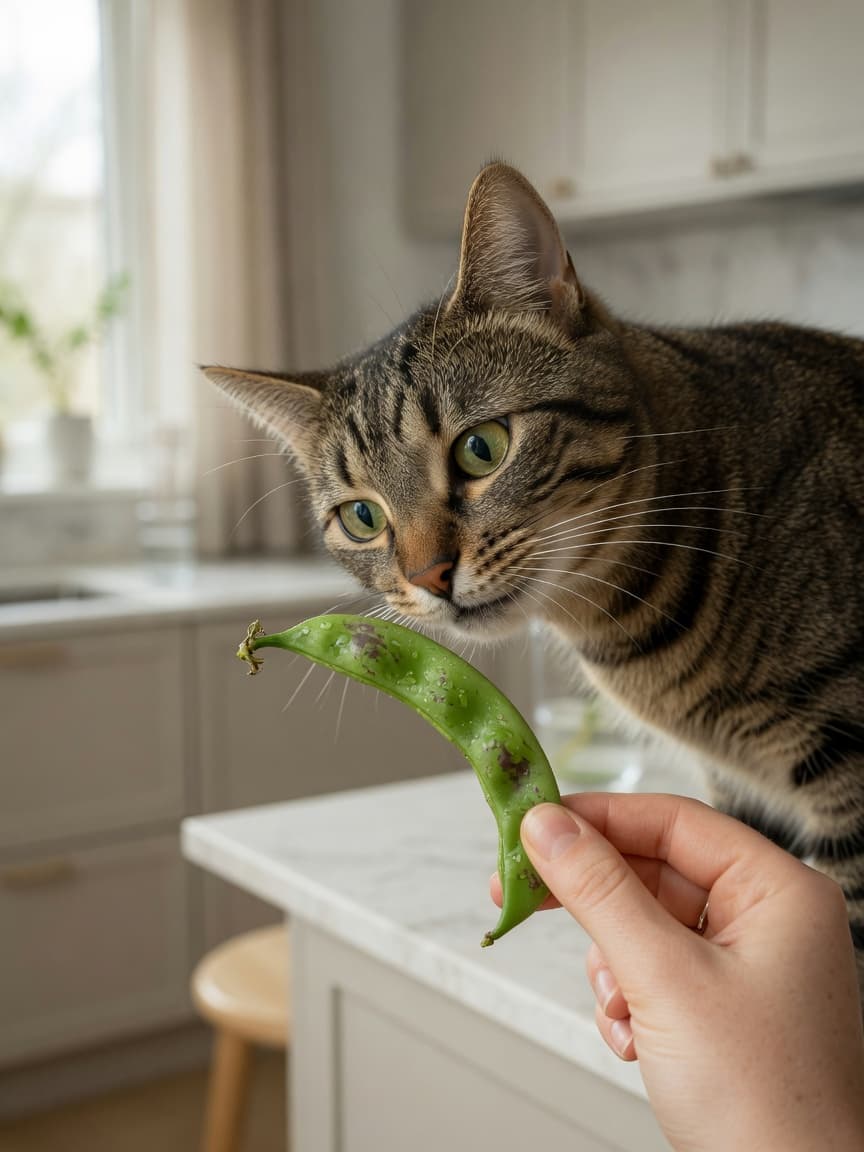
Can cats eat green beans?
Yes, cats can eat green beans in moderation. Green beans are generally safe for cats as an occasional treat, though they should never replace meat in your cat's diet. If you're looking to give your feline friend a healthy snack or add variety to their meals, plain, cooked green beans are a reasonable choice—but there are important guidelines to follow.
Are green beans nutritious for cats?
Green beans are low in calories and contain useful nutrients including fibre, vitamins A, C, and K, and some minerals. They're also relatively high in water content, which can support hydration. For a cat that needs to maintain a healthy weight, a small green bean snack is unlikely to contribute excess calories or nutritional imbalance.
However, it's important to remember that cats are obligate carnivores. This means their bodies are designed to get essential nutrients—particularly taurine, vitamin A in its active form, and arachidonic acid—from meat. Green beans and other vegetables cannot replace the protein and nutrients your cat needs from meat-based food. Any vegetables you offer should be thought of as a minor addition to their diet, not a significant nutritional source.
How much green bean can I give my cat?
Treats of any kind, including green beans, should make up no more than 10% of your cat's daily calorie intake. For most cats, this means offering just a small piece or a few thin slices of green bean as an occasional treat—perhaps once or twice a week rather than daily. If your cat is overweight or has specific dietary restrictions, check with your vet before introducing new foods.
How to serve green beans safely
Cook them first. Always offer cooked green beans rather than raw. Cooking softens them and makes them easier for your cat to chew and digest. You can boil, steam, or lightly roast them without any added seasoning.
Skip the seasonings. Never add salt, garlic, onion, butter, or oils. Some seasonings are toxic to cats; others simply aren't appropriate for feline nutrition. Plain, unseasoned green beans are safest.
Cool before serving. Let cooked green beans cool completely before offering them to your cat to avoid burns.
Cut into small pieces. Cut green beans into small, bite-sized chunks to reduce choking risk and make them easier for your cat to manage.
Introduce gradually. If your cat has never eaten green beans before, offer a tiny piece first and monitor for any digestive upset. Most cats tolerate them well, but individual sensitivities can occur.
When to be cautious
If your cat has digestive issues, diabetes, kidney disease, or any other medical condition, consult your vet before offering green beans or any new food. Some cats may experience mild stomach upset or diarrhoea if they're not used to vegetables, so introduce them slowly and in very small amounts.
Canned green beans are generally safe too, but they often contain added salt, so rinsing them thoroughly is a good idea if you choose this option. Fresh or frozen green beans are preferable.
Will my cat actually eat them?
Many cats show little interest in vegetables at all, and that's perfectly normal. You're not obliged to offer green beans; they're simply a safe option if your cat enjoys them or if you'd like to provide a low-calorie treat. Some cats find them appealing as a crunchy texture, while others ignore them entirely. Never force your cat to eat vegetables—stick with what they enjoy and what your vet recommends.
The bottom line
Green beans are a safe, occasional treat for most cats. Keep portions tiny, serve them plain and cooked, and remember that they're a supplement to a proper meat-based diet, not a replacement for it. If you're ever unsure whether a particular food is suitable for your individual cat, your vet is the best source of personalised advice.