
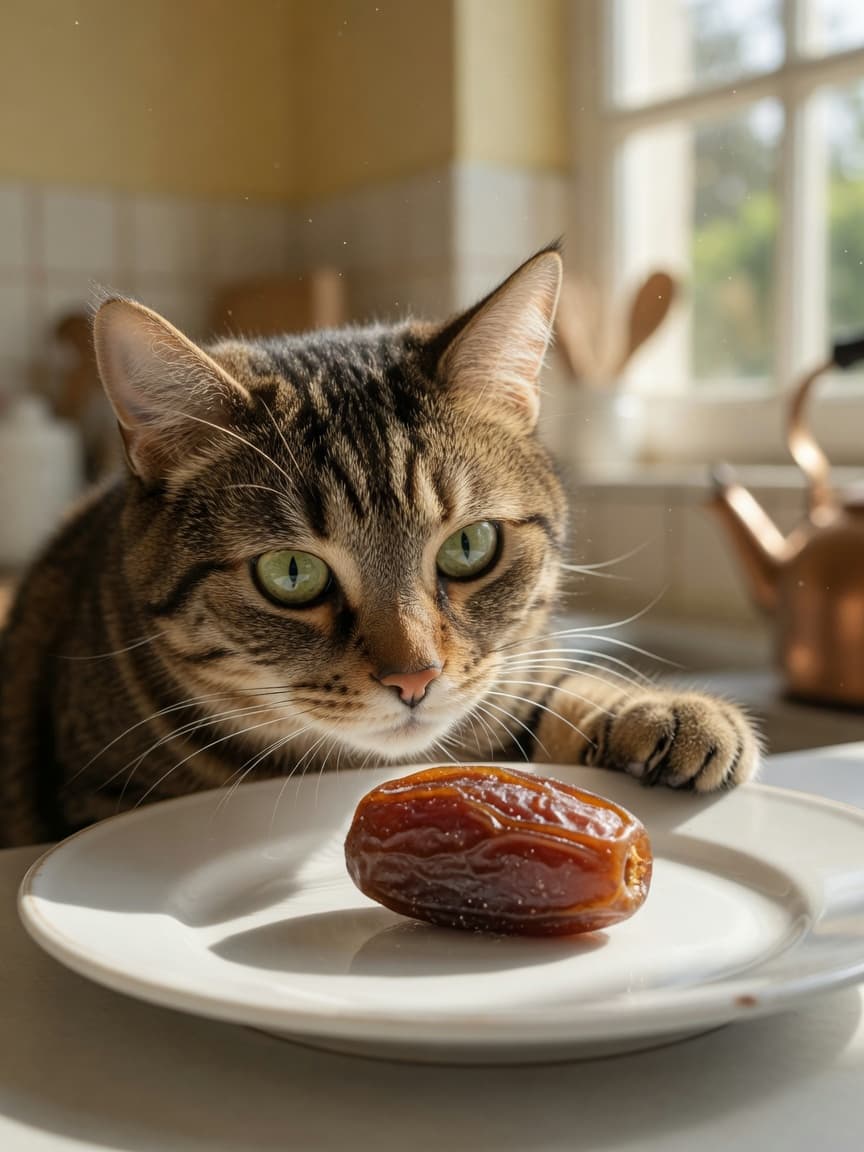
Can cats eat dates?
Yes, cats can eat dates in moderation. While dates are not a natural part of a feline diet, they are not toxic to cats and can be offered as an occasional treat. However, there are several important considerations to keep in mind before sharing this sticky fruit with your pet.
Understanding your cat's dietary needs
Cats are obligate carnivores, meaning their bodies are designed to thrive on meat-based diets. Unlike humans and some other animals, cats have limited ability to process plant-based foods effectively. Their digestive systems are optimised for breaking down animal proteins and fats, and they have minimal nutritional requirements from fruits and vegetables. This fundamental difference means that whilst dates can be given as an occasional treat, they should never form part of your cat's regular meal plan.
Potential benefits of dates for cats
Dates do contain some nutritional compounds that could theoretically benefit cats in small amounts. They provide natural sugars for quick energy, fibre for digestive health, and various minerals including potassium, magnesium, and copper. However, these benefits are minimal for obligate carnivores and can easily be obtained from a balanced commercial or home-prepared feline diet. The primary reason to offer a date to your cat would be for enrichment or as a bonding experience rather than for nutritional gain.
How much is safe?
If you decide to give your cat a date, less is always more. A small piece—roughly the size of your cat's pinky fingernail—is an appropriate portion. This should be treated as a very occasional indulgence, perhaps once a week or less frequently. Most of your cat's daily calorie intake should come from high-quality protein sources formulated specifically for feline nutrition. Treats, including dates, should make up no more than 10% of your cat's daily caloric intake.
How to serve dates safely
Before offering a date to your cat, remove the pit completely. Date pits pose a choking hazard and could cause intestinal blockage if ingested. You should also remove any skin if it appears thick or difficult to chew. Consider cutting the date into very small, manageable pieces that suit your individual cat's size and chewing ability. Never offer processed dates that contain added sugars, preservatives, or chocolate, as these could be harmful. Stick exclusively to plain, natural dates.
Some cats may be more interested in dates than others, depending on their individual preferences. Not all cats will want to eat fruit, and that is perfectly normal and healthy. There is absolutely no obligation to offer dates to your pet.
Important caveats
Dates are high in natural sugars, which can contribute to weight gain and dental problems if given too frequently. Cats are not naturally motivated to eat sweet foods, so offering dates regularly may encourage unhealthy eating habits. Additionally, some cats may experience mild digestive upset, including loose stools or stomach discomfort, if they consume unfamiliar plant-based foods. If your cat has existing health conditions—such as diabetes, obesity, or digestive sensitivities—consult your veterinary surgeon before introducing dates or any new food.
When to avoid dates
Do not offer dates to kittens, senior cats with dental problems, or cats with compromised immune systems without first discussing it with your veterinary surgeon. Pregnant or nursing cats should also stick to their specialised diet without additional treats. If your cat has a history of gastrointestinal issues or food sensitivities, dates are best avoided entirely.
The bottom line
Dates are safe for most adult cats in moderation and can serve as a harmless occasional treat. However, they offer little nutritional benefit to obligate carnivores and should never replace proper feline nutrition. Always remove the pit, offer only tiny portions, and monitor your cat for any signs of digestive upset. If you have any concerns about introducing new foods to your cat's diet, your veterinary surgeon is the best resource for personalised guidance.