
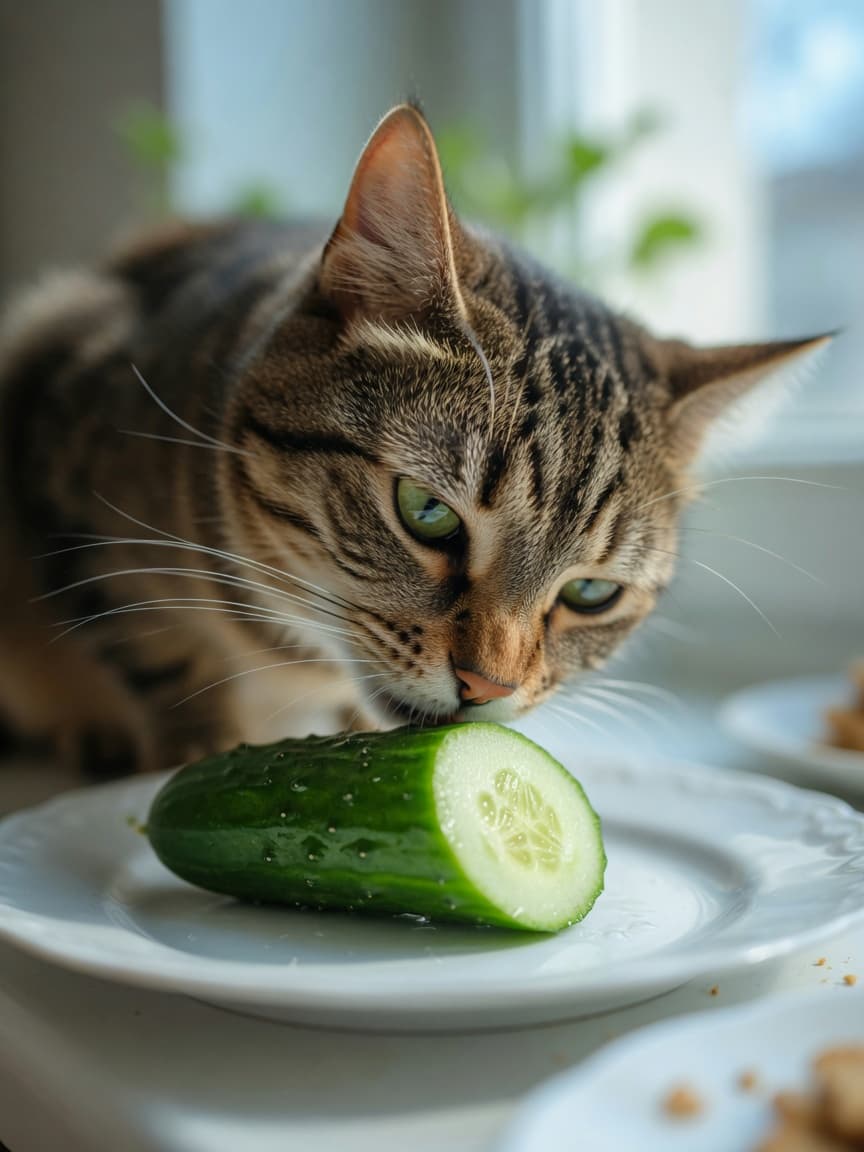
Can cats eat cucumbers?
Yes, cats can eat cucumbers in moderation. They are generally safe for cats when offered occasionally as a treat and prepared properly. However, cucumbers should never replace a balanced, meat-based diet, as cats are obligate carnivores with specific nutritional needs that only animal protein can fully meet.
Are cucumbers safe for cats?
Cucumbers are non-toxic to cats, making them one of the safer vegetable options for feline snacking. They contain no ingredients that will poison your cat or cause harm when eaten in small amounts. Many cats find the texture interesting and enjoy them as an occasional treat, particularly on warm days.
Potential benefits of cucumbers for cats
Cucumbers are mostly water, which means they are very low in calories. This can be helpful if your cat needs to maintain a healthy weight. The high water content also provides mild hydration, though cats typically receive most of their water from their food and drinking.
The crunchiness of a fresh cucumber can provide mild oral stimulation, and some cats enjoy the novel texture. For cats that are prone to boredom, offering a small piece of cucumber occasionally might provide harmless enrichment.
Nutritional limitations
It is important to remember that while cucumbers are safe, they offer very little nutritional value for cats. They contain negligible protein, minimal vitamins, and few minerals in amounts that matter to feline health. Cats are obligate carnivores, meaning they have evolved to thrive on a diet composed primarily of animal tissue. Their bodies require taurine, an amino acid found almost exclusively in meat, along with specific vitamins and nutrients that plant-based foods cannot adequately provide.
Cucumbers should therefore be viewed purely as an occasional treat or enrichment item, never as a meal replacement or dietary staple.
How much cucumber can a cat eat?
A small piece of cucumber once or twice per week is an appropriate amount for most healthy adult cats. This might be roughly the size of a coin or a small slice. Kittens and senior cats should be offered even smaller amounts, or avoided altogether if they show no interest.
If your cat has never eaten cucumber before, start with a tiny piece to observe their reaction. Some cats show no interest in vegetables whatsoever, and that is perfectly normal and healthy.
How to safely prepare cucumbers for your cat
Always use fresh cucumbers and wash them thoroughly under running water to remove any pesticides or dirt. Cut the cucumber into small, cat-sized pieces to prevent choking hazards. Remove any seeds if you prefer, though they are not harmful.
Never offer cucumber that has been coated with salt, seasoning, dressing, or any human food accompaniments. Pickled cucumbers should be avoided entirely, as the vinegar, salt, and spices are not suitable for cats. Serve only plain, fresh cucumber.
Offer the piece directly to your cat or place it in their bowl. Some cats will eat it immediately; others may sniff and walk away. Either response is normal.
Cats that should avoid cucumbers
Cats with certain health conditions should not be fed cucumbers without first consulting your veterinarian. This includes cats with kidney disease, diabetes, or other metabolic conditions. Additionally, cats with a history of digestive upset should avoid new foods, including cucumbers.
If your cat is on a special therapeutic diet prescribed by your vet, do not introduce any treats—even safe ones like cucumber—without permission first.
Signs of an adverse reaction
Most cats tolerate small amounts of cucumber without any problem. However, watch for signs of digestive upset such as vomiting, diarrhoea, or loss of appetite. If your cat shows any of these signs after eating cucumber, discontinue it and contact your veterinarian if symptoms persist.
The bottom line
Cucumbers are a safe, occasional treat for most healthy cats. They pose no toxicity risk when offered in small amounts and prepared plainly. However, they offer minimal nutritional benefit and should never be considered a substitute for a proper, meat-based feline diet. If your cat enjoys cucumber, occasional pieces can be a harmless enrichment activity. If your cat shows no interest, there is no need to encourage it. Always prioritise meat-based nutrition and consult your veterinarian if you have concerns about your cat's diet or health.