
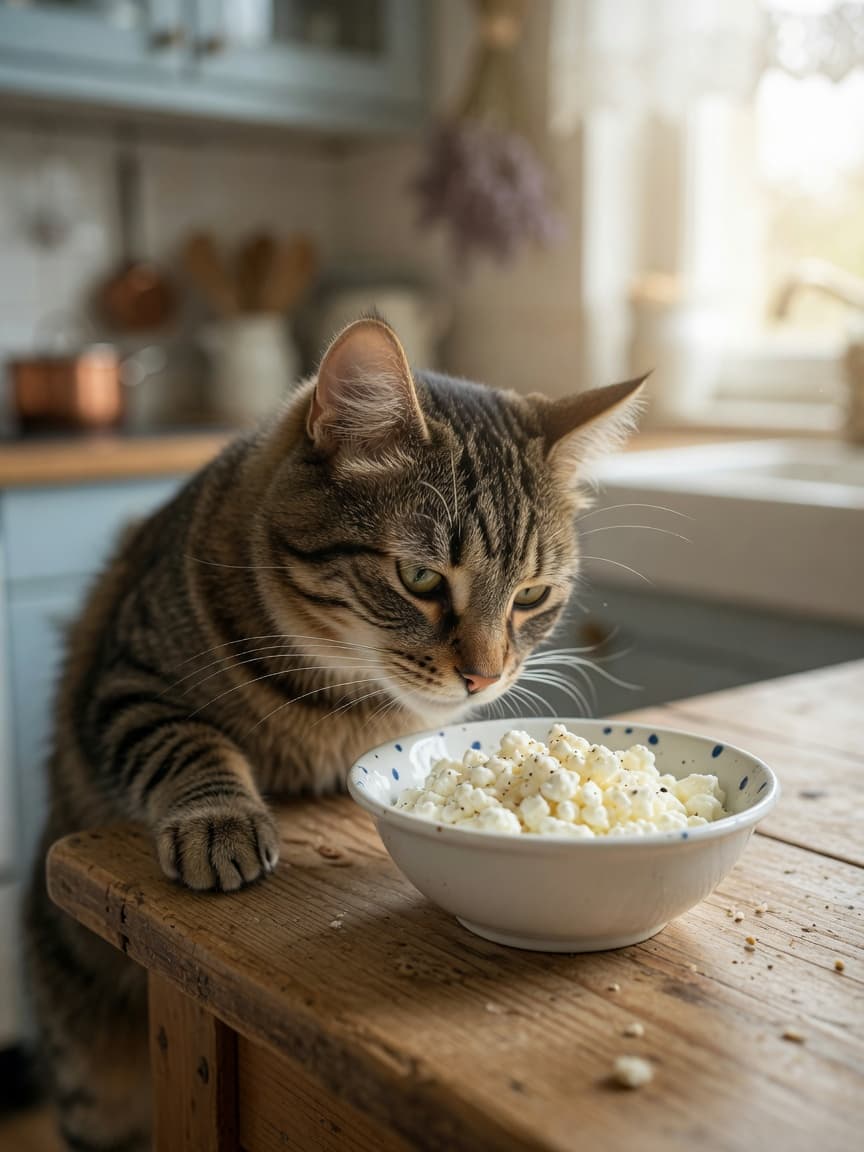
Can cats eat cottage cheese?
Yes, cats can eat cottage cheese in moderation. It's generally a safe food for them when offered as an occasional treat rather than as part of their regular diet. However, there are important considerations to keep in mind before serving it to your cat.
Is cottage cheese nutritionally beneficial for cats?
Cottage cheese does contain some beneficial nutrients, including protein and calcium, which cats need for healthy bones, teeth, and muscles. It's also a source of B vitamins. However, cats are obligate carnivores, meaning they thrive on a diet based primarily on meat. Their bodies are designed to extract nutrients from animal protein far more efficiently than from dairy or plant sources.
Whilst cottage cheese provides protein, it's not a substitute for the high-quality, meat-based nutrition your cat needs. It should only ever be considered a supplementary treat, never a meal replacement or a regular part of their main diet.
Lactose sensitivity in cats
The most important consideration when offering cottage cheese to your cat is lactose intolerance. Most adult cats produce very little lactase, the enzyme needed to digest lactose found in dairy products. This means many cats struggle to digest milk, cheese, and other dairy items, even though they may enjoy the taste.
Some cats tolerate small amounts of cottage cheese better than other dairy products because it's lower in lactose than milk or cream. However, this doesn't mean it's safe for all cats. If your cat has never eaten dairy before, introduce cottage cheese in very small quantities and observe for signs of digestive upset, such as vomiting, diarrhoea, or constipation.
How much cottage cheese can you safely give your cat?
If you do decide to offer cottage cheese, keep portions tiny. A teaspoon or small tablespoon once or twice a week is sufficient, or even less frequently. This amount is unlikely to cause problems in most cats whilst still being an occasional treat they may enjoy.
Never use cottage cheese as a meal replacement or offer it as a main component of your cat's diet. It should account for no more than 10% of your cat's daily calorie intake, and ideally much less.
How to serve cottage cheese safely
When serving cottage cheese to your cat, follow these simple guidelines:
Use plain cottage cheese only. Avoid any varieties with added fruit, sweeteners, salt, or other ingredients. These can be harmful to cats. Check the label carefully—some cottage cheese products contain xylitol, an artificial sweetener that is toxic to cats.
Serve at room temperature. Cold cottage cheese straight from the fridge may upset your cat's stomach. Allow it to warm slightly before offering.
Start with a tiny amount. Offer just a teaspoon initially to see how your cat responds. Wait 24 hours before offering it again to check for any negative reactions.
Watch for signs of intolerance. If your cat vomits, has loose stools, or shows signs of abdominal discomfort after eating cottage cheese, avoid giving it in future.
When to avoid cottage cheese
Certain cats should not eat cottage cheese at all. This includes cats with a history of digestive issues, those with known dairy intolerance, cats with kidney disease, and senior cats with sensitive stomachs. If your cat has any underlying health condition, consult your veterinary surgeon before introducing any new foods, including cottage cheese.
Kittens younger than 12 weeks should never be given cottage cheese, as their digestive systems are still developing and they're particularly susceptible to digestive upset from dairy.
Better treat alternatives
If you're looking for healthy treats to reward your cat, consider meat-based options instead. Small pieces of cooked chicken (without seasoning), turkey, or beef are far more appropriate for your cat's nutritional needs as an obligate carnivore. These align naturally with your cat's dietary preferences and digestive capabilities.
Final thoughts
Cottage cheese is safe for cats in moderation, but it's not necessary and certainly not ideal. Many cats are better off without it. If you do choose to offer it, do so sparingly, watch carefully for any adverse reactions, and prioritise meat-based treats instead. When in doubt, consult your veterinary surgeon about the best treats for your individual cat.