
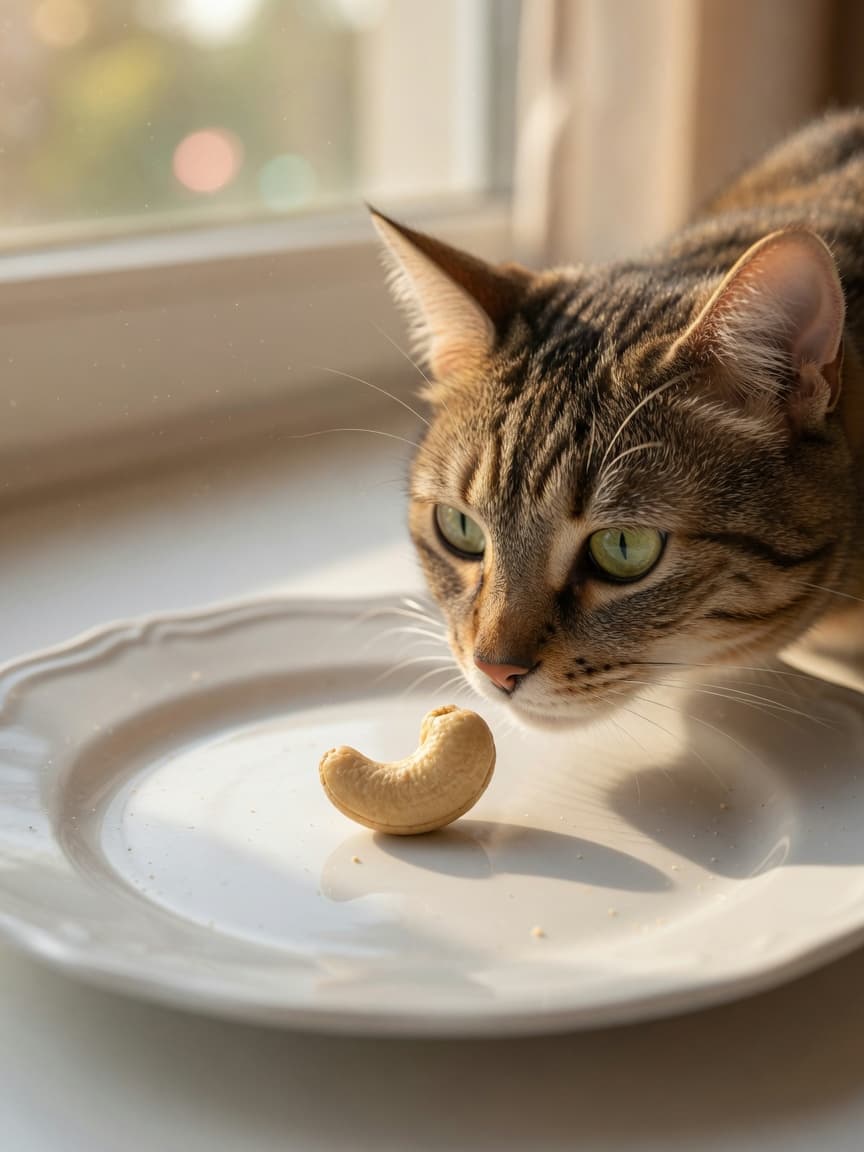
Can Cats Eat Cashews?
The short answer is: cats can eat a small amount of plain, unsalted cashew nuts, but only occasionally and with caution. While cashews aren't toxic to cats in the way that chocolate or grapes are, they do present genuine risks that make them a food to approach carefully. If you're thinking about sharing a cashew with your cat, it's important to understand those risks first.
Why Cashews Require Caution
Cats are obligate carnivores, meaning they're designed to thrive on meat-based diets. Their digestive systems have evolved to process protein and fat from animal sources, not plant foods. Cashews are high in fat and relatively indigestible for cats, which can lead to several problems.
Digestive upset is the most common issue. Cashews can cause vomiting, diarrhoea, or constipation, especially if your cat isn't used to eating nuts. This happens because cats lack certain enzymes needed to break down plant oils efficiently. Even a small amount may trigger stomach discomfort in a sensitive cat.
There's also a choking risk to consider. Cashews are solid, hard nuts that don't break down easily. Cats don't chew food the way humans do; they tend to swallow chunks whole. A cashew could potentially pose a choking hazard, particularly for kittens, senior cats with dental problems, or cats who gulp their food.
Pancreatitis is a more serious concern. This is inflammation of the pancreas, and it can be triggered or worsened by high-fat foods. Cats with a history of pancreatitis or those at risk (older cats, overweight cats, or certain breeds) should definitely avoid cashews entirely. If your cat develops sudden vomiting, loss of appetite, or abdominal pain after eating cashews, seek veterinary advice immediately.
Cashews also naturally contain compounds like tannins and phytic acid, which can interfere with mineral absorption in cats. While these aren't dangerous in tiny amounts, they're another reason to keep cashew consumption minimal.
Safe Preparation and Portion Size
If you do decide to offer a cashew to your cat, preparation is essential. The cashew must be:
Plain and unsalted. Never give your cat salted, roasted, honey-roasted, or seasoned cashews. Salt in particular can be harmful to cats, potentially leading to sodium ion poisoning if consumed in sufficient quantity. Any added oils, spices, or flavourings increase the digestive risk.
Raw or lightly roasted. Avoid cashews that have been deep-fried or treated with excess oil.
As for quantity, one small piece—genuinely the size of a pea or smaller—is the absolute maximum. This should happen only as an occasional treat, not regularly. For most cats, it's honestly safer and simpler to skip cashews altogether and choose cat-appropriate treats instead.
Who Should Avoid Cashews Completely
Certain cats should never eat cashews, including:
Cats with a history of pancreatitis or digestive issues. Cats who are overweight or obese. Senior cats or those with dental disease. Kittens with developing digestive systems. Cats with known food sensitivities or allergies. Any cat currently unwell or on a restricted diet recommended by a vet.
Warning Signs to Watch For
If your cat has eaten a cashew, watch for vomiting, diarrhoea, constipation, loss of appetite, lethargy, abdominal pain or bloating, or difficulty swallowing. If you notice any of these signs, contact your vet, especially if symptoms persist or worsen.
Better Alternatives
Rather than offering cashews, consider cat-safe treats: cooked chicken or turkey, cooked fish, commercial cat treats designed for feline nutrition, or a small piece of cooked egg. These options align with your cat's nutritional needs and pose far fewer risks.
The Bottom Line
Cashews aren't poisonous to cats, but they're not a good match for feline digestion either. The safest choice is to keep cashews off your cat's menu entirely. If your cat has already eaten one, observe her carefully, but don't panic—a single nut is unlikely to cause serious harm. When in doubt about what's safe for your cat, your vet is always the best source of guidance.