
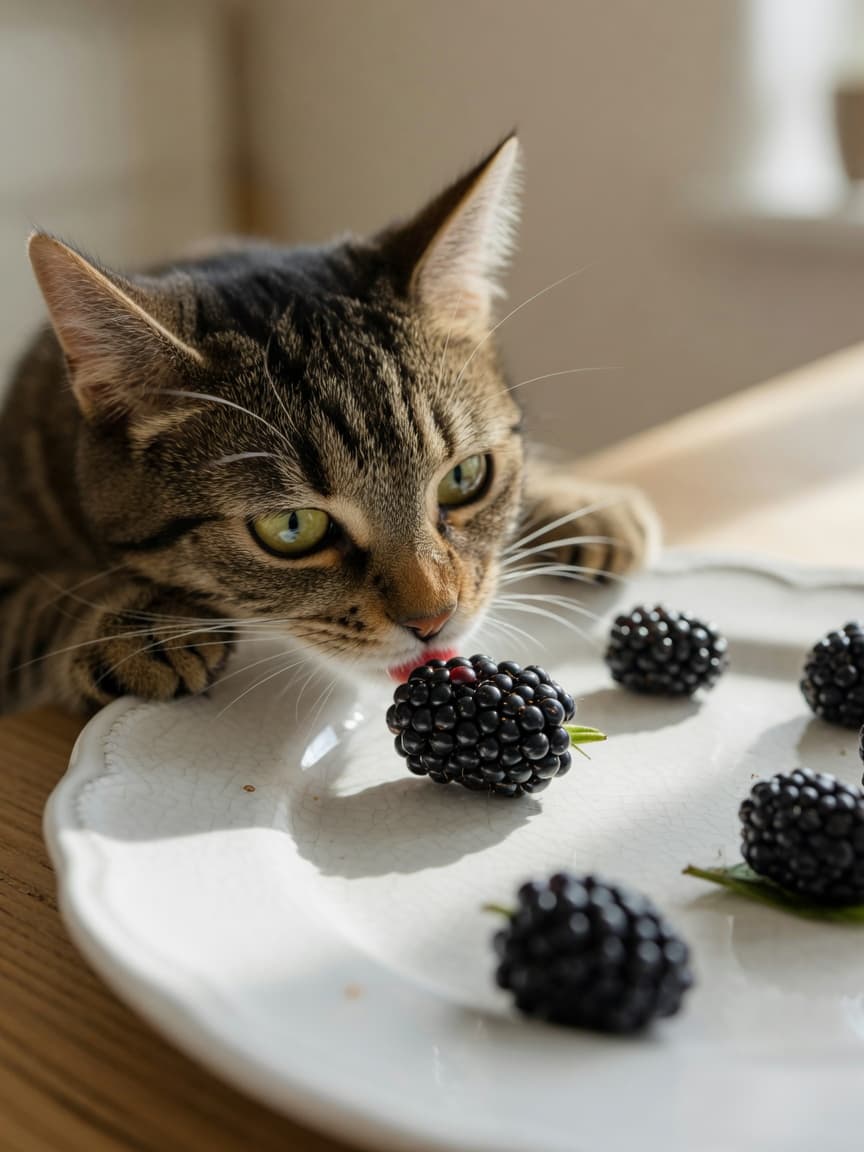
Yes, cats can eat blackberries in moderation as an occasional treat. However, they're not essential to your cat's diet, and most cats show little interest in them anyway.
Are blackberries safe for cats?
Blackberries are non-toxic to cats and contain no harmful substances. They're safe to offer occasionally, though they're not a natural part of a cat's diet. As obligate carnivores, cats rely on meat and animal proteins to thrive, so fruit should never replace their regular meals. Blackberries are simply a novel treat some cats may enjoy exploring.
Potential benefits of blackberries
Blackberries do contain some nutrients that cats could theoretically benefit from in tiny amounts. They're a source of fibre, vitamin C, and antioxidants. However, your cat's body doesn't require these from fruit—cats synthesise their own vitamin C and get all necessary nutrients from a balanced feline diet. Any nutritional benefit from blackberries is minimal and shouldn't be seen as a health boost.
How much can you safely give your cat?
Treats of any kind, including blackberries, should make up no more than 10% of your cat's daily calorie intake. For most adult cats, this means offering a single blackberry or perhaps half of one, once or twice a week at most. This keeps them as an occasional novelty rather than a regular part of meals. If your cat has never eaten fruit before, start smaller—just a tiny piece—to see how they respond.
Never use blackberries as a meal replacement or significant food source. Your cat needs their regular cat food to meet their complete nutritional needs.
How to serve blackberries safely
If you decide to offer blackberries, take these precautions:
- Wash thoroughly. Rinse blackberries under running water to remove any pesticides or dirt.
- Serve fresh. Avoid canned or frozen blackberries, as these often contain added sugars or preservatives unsuitable for cats.
- Cut into small pieces. Halve or quarter the berry to reduce choking risk and make it manageable for your cat.
- Supervise. Watch your cat while they explore the berry to ensure they don't choke.
- Remove seeds if concerned. Whilst the small seeds aren't toxic, some owners prefer to mash the berry gently to make seeds less prominent.
Signs your cat doesn't enjoy blackberries
Honestly, many cats show zero interest in blackberries. Your cat may sniff it, walk away, or refuse it entirely—this is completely normal. Cats are obligate carnivores with taste preferences geared toward meat. There's no need to persuade a reluctant cat to eat fruit. Some cats occasionally enjoy licking or nibbling soft fruits out of curiosity, but this isn't expected behaviour.
When to be cautious
Avoid blackberries if your cat has a sensitive digestive system or suffers from conditions like diabetes or obesity—the natural sugars, though low, may be better avoided in these cases. Always consult your vet before introducing new foods if your cat has underlying health issues.
Also skip blackberries if your cat is taking medications that interact with fruit, or if they've previously shown digestive upset from treats. Some cats develop loose stools from unfamiliar foods.
What about other berries?
If you're exploring safe fruits for cats, raspberries and blueberries are similarly non-toxic in moderation. However, avoid grapes and raisins entirely, as these are genuinely toxic to cats and can cause kidney damage.
The bottom line
Blackberries are safe to offer your cat occasionally as an exploratory treat, but they're entirely optional. Your cat won't miss out nutritionally if they never eat one. Stick to their regular, balanced cat food as the foundation of their diet, and think of blackberries as a rare curiosity rather than a health food. If your cat enjoys them, a tiny piece once or twice weekly is perfectly safe. If they ignore them, that's equally fine.