
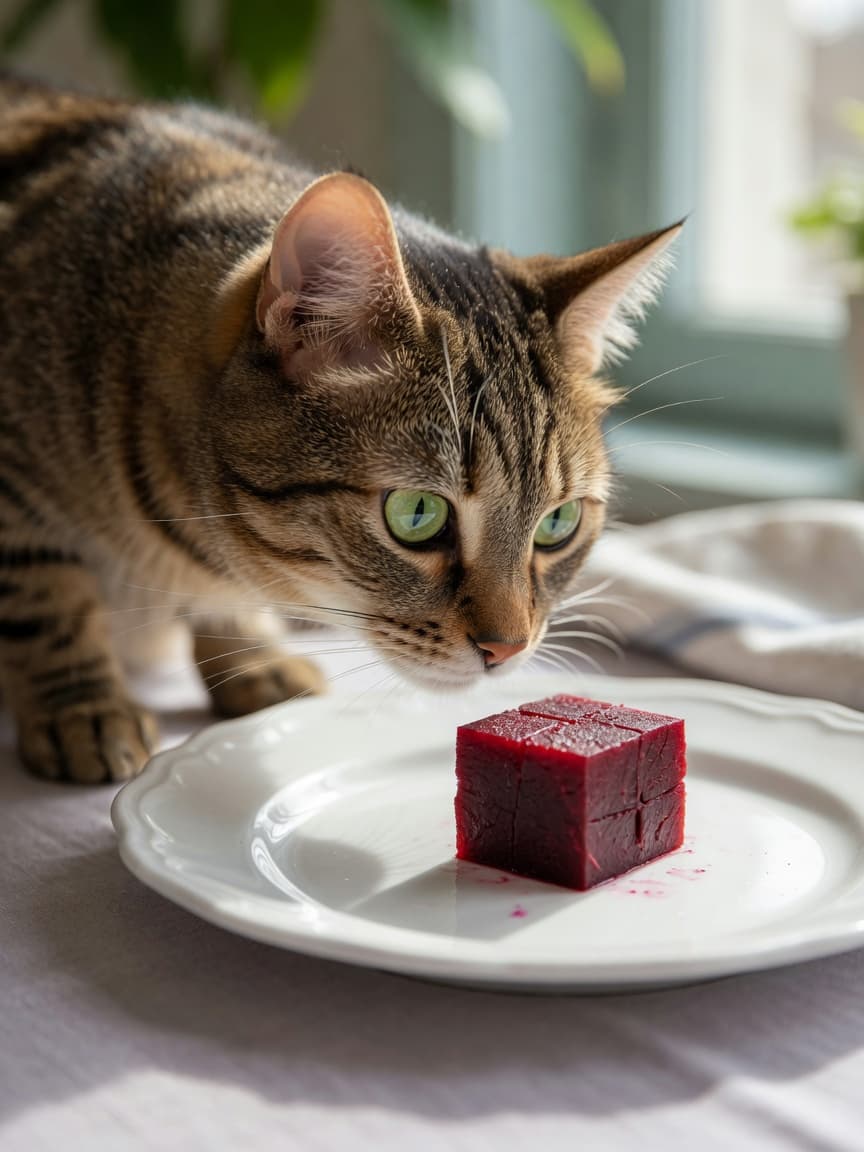
Can cats eat beetroot?
Yes, cats can eat beetroot in moderation as an occasional treat. While beetroot is not toxic to cats and contains some beneficial nutrients, it should never become a regular part of their diet or replace their primary protein-based meals. A small amount of cooked, plain beetroot offered occasionally is safe for most healthy adult cats.
Is beetroot safe for cats?
Beetroot itself is not poisonous or toxic to cats. Unlike foods such as onions, garlic, chocolate, or grapes, beetroot does not contain compounds that are known to cause harm in feline bodies. However, this does not automatically make it an ideal food choice for cats, and it comes with several important caveats.
Why would you give beetroot to your cat?
Beetroot contains folate, manganese, and fibre, along with antioxidants like betalains. Some pet owners may wonder whether these nutrients could benefit their cats. Whilst these compounds are nutritionally sound, it is important to remember that cats are obligate carnivores. This means they are biologically designed to obtain their essential nutrients—including taurine, vitamin A, and arachidonic acid—from animal protein. Their digestive systems are optimized for meat, not vegetables.
Your cat's primary nutritional needs are met through a balanced, high-quality commercial cat food or a properly formulated home-prepared diet. Beetroot should be viewed only as an occasional treat, not as a source of vital nutrition.
How much beetroot can your cat have?
If you wish to offer beetroot to your cat, keep portions very small. A piece no larger than a pea or a small cube once or twice a month is sufficient. Many cats will show no interest in beetroot whatsoever, and that is completely normal and healthy. Never allow beetroot to make up more than 5–10% of your cat's daily calorie intake, and only as an infrequent treat.
How to serve beetroot safely
Always cook beetroot thoroughly before offering it to your cat. Raw beetroot is harder to digest and poses a potential choking risk, especially for smaller cats or kittens. Boil or steam the beetroot until it is soft, then cut it into very small, manageable pieces. Serve it completely plain—no salt, sugar, vinegar, or seasoning. Never offer pickled beetroot, as the vinegar and added sodium are inappropriate for cats.
Allow the beetroot to cool to room temperature before giving it to your cat. Some cats may prefer it slightly warmed, but always check the temperature with your finger first to avoid burns.
Potential concerns
Beetroot contains oxalates, compounds that can contribute to kidney and bladder stone formation in susceptible cats. If your cat has a history of urinary issues, kidney disease, or has been diagnosed with crystals or stones, avoid giving beetroot altogether. Always consult your veterinarian before introducing any new food if your cat has underlying health conditions.
Additionally, the natural sugars in beetroot mean it is not suitable for cats with diabetes or obesity. Beetroot may also cause temporary staining of your cat's mouth, teeth, or litter box contents—this is harmless but worth knowing about.
Signs of digestive upset
Some cats may experience mild diarrhoea or digestive discomfort after eating beetroot, even in small amounts. If you notice vomiting, diarrhoea, lethargy, or loss of appetite after offering beetroot, discontinue it immediately and contact your veterinarian if symptoms persist.
When to avoid beetroot entirely
Do not give beetroot to kittens, very elderly cats, or cats with compromised immune systems. Avoid it if your cat has diabetes, kidney disease, urinary issues, or a sensitive digestive system. If you are unsure whether beetroot is appropriate for your individual cat, ask your veterinarian before offering it.
The bottom line
Beetroot is safe for most healthy adult cats in very small, occasional amounts, but it offers no significant nutritional advantage. Your cat's health and wellbeing depend on a meat-based diet tailored to their species-specific needs. If you want to treat your cat, consider options specifically designed for feline nutrition, or simply offer extra affection and playtime instead.