
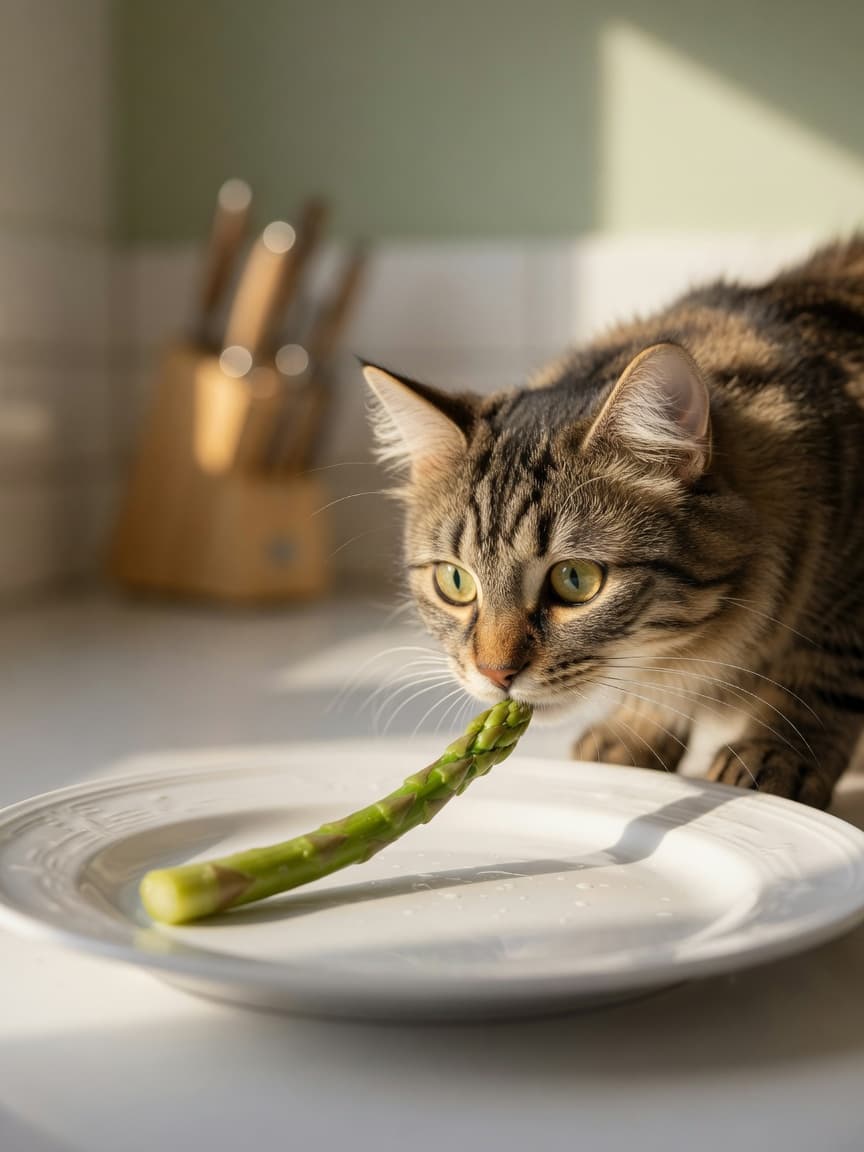
Can cats eat asparagus?
Yes, cats can eat asparagus in moderation as an occasional treat. It is generally safe for felines and poses no significant toxicity concerns. However, asparagus is not an essential part of a cat's diet, and it should never replace their main meals of high-quality cat food.
Is asparagus nutritionally beneficial for cats?
Asparagus does contain some nutrients that could theoretically benefit cats, including vitamins A, C, and K, as well as fibre and antioxidants. However, cats are obligate carnivores, meaning they are biologically adapted to obtain their essential nutrients from meat-based protein rather than plant material. Their digestive systems are designed to process animal protein efficiently, and they require specific nutrients like taurine, which is found naturally in meat but is not present in asparagus.
Whilst the vitamins in asparagus are not harmful, cats can obtain all the nutrition they need from a balanced, complete commercial cat food. Asparagus should therefore be viewed as an occasional treat for enrichment rather than as a nutritional supplement.
How to serve asparagus safely to your cat
If you decide to offer your cat asparagus, preparation is important. Always cook the asparagus by steaming or boiling it until it is soft, as raw asparagus can be tough and pose a choking hazard. Never season it with salt, garlic, onions, or any other additives, as these can be harmful to cats.
Cut the asparagus into small, bite-sized pieces to minimise choking risk. Remove the tough, woody base of the spear and discard it. Serve only the tender, cooked tip and softer middle sections. Allow the asparagus to cool completely before offering it to your cat.
How much asparagus can a cat eat?
Asparagus should only be given as an occasional treat, not as a regular part of your cat's diet. A small piece or a few bites once or twice a week is more than sufficient. Treats, including vegetables, should make up no more than 10% of your cat's daily caloric intake, with the remaining 90% coming from their regular cat food.
Most cats show little interest in vegetables anyway, so you may find that your cat ignores asparagus altogether. This is completely normal behaviour for an obligate carnivore and is nothing to worry about.
Potential considerations and caveats
Whilst asparagus is safe, there are a few points to keep in mind. Some cats may experience mild digestive upset if they eat too much asparagus, as their digestive systems are not optimised for plant-based foods. If your cat experiences diarrhoea or vomiting after eating asparagus, discontinue offering it and consult your veterinary surgeon.
Asparagus does contain small amounts of oxalates, compounds that can theoretically contribute to urinary crystal formation in susceptible cats. However, the levels in asparagus are not considered clinically significant. If your cat has a history of urinary problems or kidney disease, it is sensible to check with your veterinary surgeon before introducing any new foods.
Never serve canned asparagus to your cat, as it typically contains added salt and preservatives that are not appropriate for felines. Fresh or freshly cooked asparagus is always the safer choice.
What to do if your cat eats asparagus accidentally
If your cat manages to eat a small amount of cooked asparagus that you were preparing for yourself, there is no need to panic. Asparagus is not toxic, and a small accidental amount is unlikely to cause any problems. Simply monitor your cat for any signs of digestive upset over the next 24 hours.
The bottom line
Asparagus is a safe occasional treat for cats when served cooked, unseasoned, and in small pieces. However, it offers little nutritional benefit to obligate carnivores and should never form a significant part of their diet. A high-quality, meat-based cat food remains the gold standard for feline nutrition. If you have any concerns about your cat's diet or health, speak with your veterinary surgeon for personalised advice.