
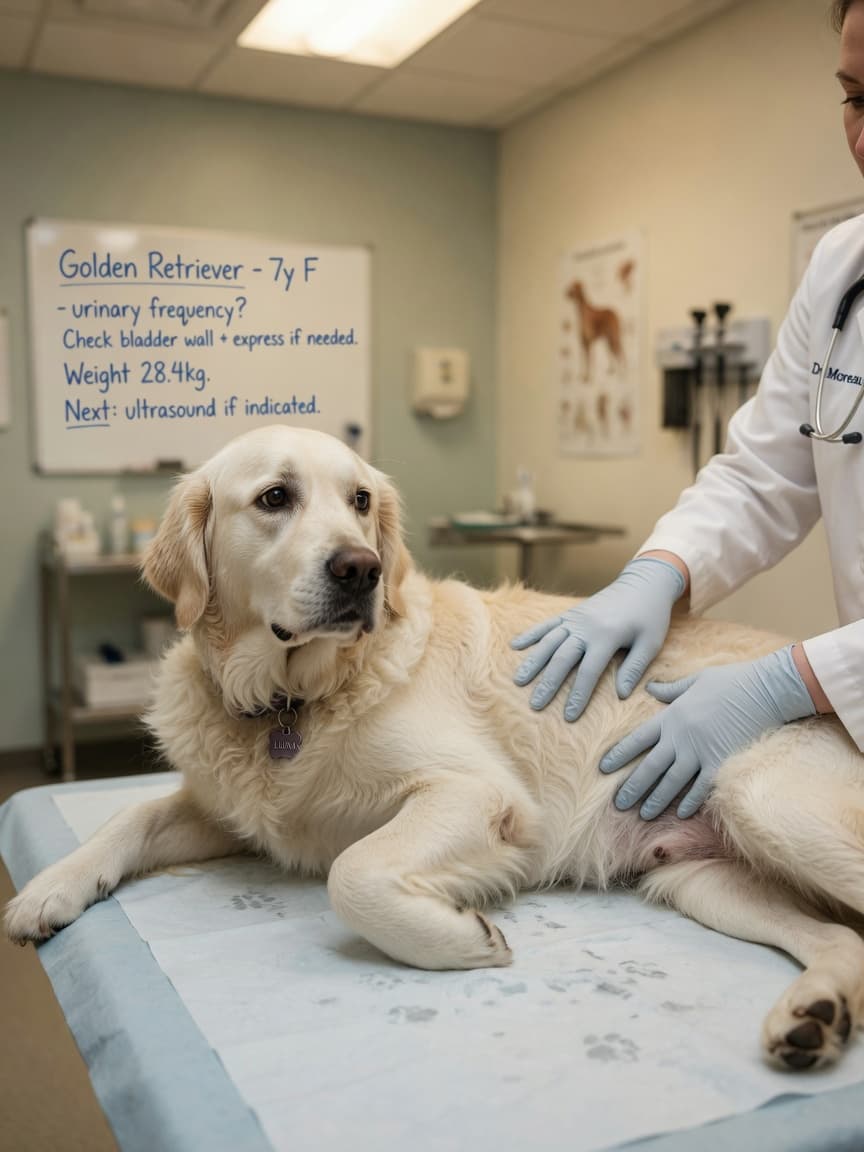
What Are Bladder Stones?
Bladder stones, medically known as uroliths or urolithiasis, are mineral deposits that form within the urinary bladder. They range from tiny sand-like grit to stones larger than a golf ball, and a dog may have a single stone or dozens. While small stones can sometimes pass unnoticed, larger ones or accumulations of smaller stones cause significant discomfort and, in severe cases, can completely obstruct urine flow — a life-threatening emergency requiring immediate veterinary intervention.
Bladder stones are more common than many owners realise. They account for a substantial proportion of urinary complaints presenting to veterinary practices, and certain breeds are significantly predisposed.
The Main Types of Bladder Stones
Not all bladder stones are made of the same material, and this distinction is critical because it determines the treatment approach. The two most frequently encountered types in dogs are struvite and calcium oxalate.
Struvite stones
Struvite is composed of magnesium, ammonium, and phosphate. In dogs, the vast majority of struvite stones form as a consequence of a bacterial UTI. Certain bacteria produce the enzyme urease, which raises urine pH and creates the alkaline environment in which struvite crystalises. Female dogs are overrepresented because of their greater susceptibility to UTIs. Struvite stones can often be dissolved through dietary management, making them unique among the common stone types in their responsiveness to non-surgical treatment.
Calcium oxalate stones
Calcium oxalate stones cannot be dissolved. They form in acidic urine and are associated with hypercalcaemia, certain metabolic conditions, and dietary factors. They are more common in older dogs and in specific breeds. Once present, they must be physically removed. Prevention of recurrence relies on dietary modification and, in some cases, medication.
Less common types
- Urate stones: Associated with liver shunts and genetically in Dalmatians, who have a unique uric acid metabolism
- Cystine stones: Caused by a hereditary defect in amino acid transport, seen in certain breeds such as Newfoundlands and Mastiffs
- Silica stones: Linked to high silica content in some grain-based diets
Recognising the Symptoms
The symptoms of bladder stones closely resemble those of a UTI, and the two conditions often occur together — a UTI can trigger stone formation, and stones can predispose to infection.
Common signs include
- Straining to urinate with little or no urine produced
- Frequent attempts to urinate
- Blood-tinged urine
- Urinating in unusual places or having accidents indoors
- Licking of the genital area
- Signs of abdominal discomfort
A complete urinary obstruction is a medical emergency. If your dog is straining repeatedly and producing no urine at all, seek veterinary attention immediately. Male dogs are far more vulnerable to obstruction due to their longer, narrower urethra.
How Bladder Stones Are Diagnosed
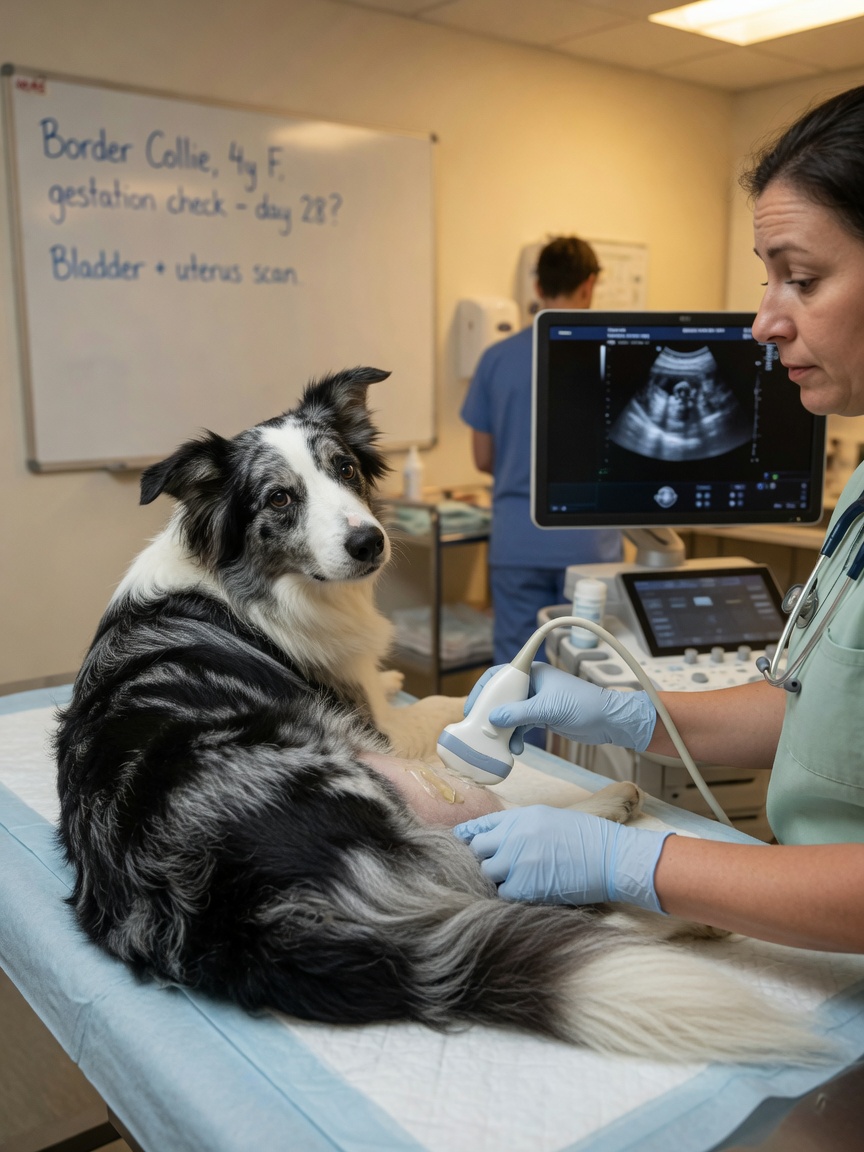
Diagnosis begins with a physical examination, during which a vet may palpate stones in the bladder of smaller dogs. Imaging is essential to confirm their presence, number, and size. Radiography detects most stone types as they are radio-opaque, meaning they appear white on X-rays. However, some stone types — particularly urate and cystine — are radiolucent and require ultrasound for detection.
A urine sample is analysed for pH, crystals, bacteria, and blood. Identification of the stone type is ultimately confirmed either by sending a retrieved stone for laboratory analysis (quantitative mineral analysis) or by using imaging characteristics and clinical context to make a working presumption. Accurate stone type identification is essential for choosing the right treatment and prevention strategy.
Treatment Options
Dietary dissolution
Struvite stones caused by infection can often be dissolved over four to twelve weeks using a prescription dissolution diet. These diets create an acidic urinary environment inhospitable to struvite and reduce the minerals available for stone formation. Simultaneous treatment of the underlying UTI with appropriate antibiotics is essential — the infection must be eliminated for dissolution to succeed. Regular monitoring with imaging tracks progress throughout the process.
Surgical removal (cystotomy)
For calcium oxalate stones, large stones, stones causing obstruction, or cases where dissolution is not an option, surgery is required. A cystotomy involves opening the bladder under general anaesthesia and manually removing the stones. It is a routine procedure for experienced veterinary surgeons and most dogs recover fully within two weeks. The retrieved stones are sent for mineral analysis to guide post-surgical dietary management.
Non-surgical retrieval techniques
- Urohydropropulsion: Flushing small stones out through the urethra under sedation — suitable only for small stones in female dogs
- Laser lithotripsy: Uses a laser passed via a cystoscope to fragment stones, which are then flushed out — available at specialist referral centres
- Voiding urohydropropulsion: Applicable in some cases where stone size and patient anatomy allow
Prevention: Stopping Stones From Returning
Recurrence rates for bladder stones are high without active prevention. The strategy depends on stone type.
Preventing struvite recurrence
- Prompt treatment of any UTI
- Regular urinalysis to catch new infections early
- Maintaining good urinary hygiene
Preventing calcium oxalate recurrence
- Feeding a prescription urinary diet formulated to reduce oxalate and calcium in urine
- Increasing water intake to dilute urine — wet food is particularly helpful
- Avoiding vitamin C supplementation and high-oxalate foods
- Regular imaging to catch early recurrence before stones become problematic
The specific breeds most commonly affected by bladder stones deserve particular vigilance. Miniature Schnauzers, Bichon Frises, Shih Tzus, Yorkshire Terriers, and Dalmatians all carry elevated risk and benefit from proactive monitoring of urinary health throughout their lives.