
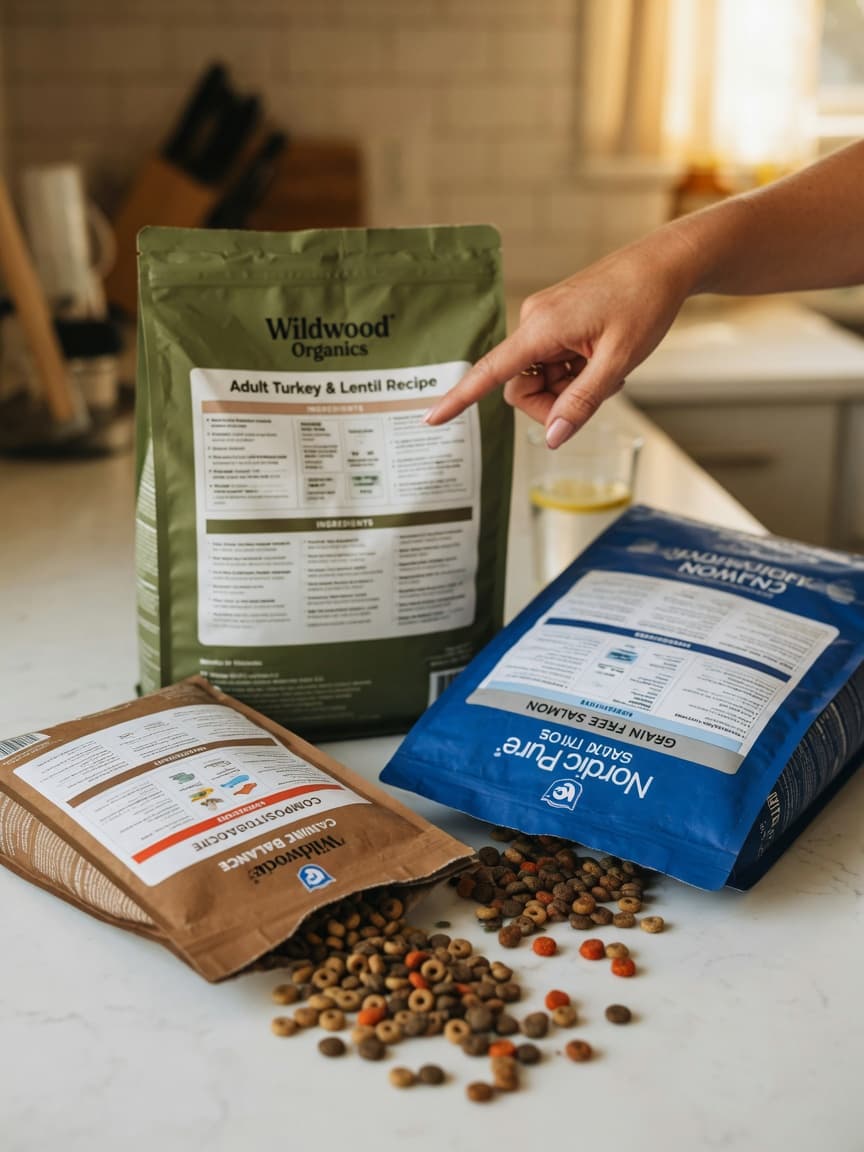
Why Pet Food Needs Preserving at All
Fats go rancid. It is a straightforward chemical process: oxygen reacts with fatty acids and breaks them down into compounds that not only smell unpleasant but can also cause genuine harm to your dog over time. For a product that might sit in a warehouse for months before landing on a shop shelf, and then in your kitchen cupboard for weeks after that, controlling oxidation is a real technical challenge.
Manufacturers have two broad options: synthetic preservatives or natural alternatives. The synthetic options, particularly BHA, BHT, and ethoxyquin, have been the subject of ongoing debate among dog owners for years. Understanding what these compounds actually are, what the evidence says, and where they tend to appear will help you make a more informed choice rather than simply reacting to the letters on a label.
BHA: Butylated Hydroxyanisole
BHA is a fat-soluble antioxidant that prevents oxidative rancidity in fats and oils. It has been used in human food for decades and appears in everything from breakfast cereals to chewing gum. In pet food, it is used to extend shelf life and maintain palatability.
The controversy around BHA stems from animal studies in which high doses were associated with tumour formation in the forestomach of rodents and hamsters. Forestomachs are not present in humans or dogs, which has led some researchers to question the relevance of those findings. Regulatory bodies in the US and EU classify BHA as generally recognised as safe at permitted levels, but some health organisations have flagged it as a possible human carcinogen. The key phrase throughout is "at high doses," and the doses used in concerning studies are typically far in excess of what appears in pet food.
That said, there is no compelling benefit to seeking it out either, and natural alternatives exist that perform a similar function.
BHT: Butylated Hydroxytoluene
BHT is chemically related to BHA and is often used alongside it. It works through the same antioxidant mechanism and has a similar safety profile in the regulatory literature. Animal studies have produced mixed results depending on the species and dose used: some showed tumour-inhibiting properties at low doses, while others suggested carcinogenic effects at high doses.
For dogs specifically, there is limited direct research on BHT's long-term effects. Most of the available data comes from rodent studies, which do not always translate cleanly to canine physiology. Again, the doses used in laboratory conditions tend to far exceed what a dog would encounter through diet.
BHT is permitted in pet food at low concentrations in most countries. If you would rather avoid it, there are plenty of foods that rely on natural preservatives instead, and these are not difficult to find at any price point.
Ethoxyquin: The Most Controversial of the Three
Ethoxyquin has attracted more concern than BHA or BHT, and for slightly more specific reasons. It was originally developed as a pesticide and rubber stabiliser before being adopted by the food industry as a preservative for fats and fishmeal. It is particularly effective at preventing oxidation in fish-based ingredients.
The European Food Safety Authority reviewed ethoxyquin and concluded that the data available was insufficient to establish a safe level for its use as a food additive. As a result, the EU effectively suspended its use in food for humans and food-producing animals in 2020. In the US, the FDA has received consumer complaints and placed pressure on manufacturers to voluntarily reduce its use, though it has not been formally banned.
One complication specific to ethoxyquin is that it does not always appear on a pet food label even when it is present. Ethoxyquin is routinely used to preserve fishmeal at the point of manufacture, before the meal reaches the pet food factory. When a manufacturer purchases pre-preserved fishmeal, they are not technically adding ethoxyquin themselves, and in some regulatory contexts are not required to list it. This gap has been a source of frustration for owners trying to make informed choices.
How to Identify These Preservatives on Labels
When they are present and declared, synthetic preservatives appear in the ingredient list. You are looking for:
- Butylated hydroxyanisole (or BHA)
- Butylated hydroxytoluene (or BHT)
- Ethoxyquin
They are typically added at very low concentrations and appear near the end of the ingredient list. If a food contains fish or fish meal, it is worth contacting the manufacturer directly to ask whether the meal was pre-preserved with ethoxyquin, since label rules may not require disclosure.
Natural Preservatives: The Alternatives
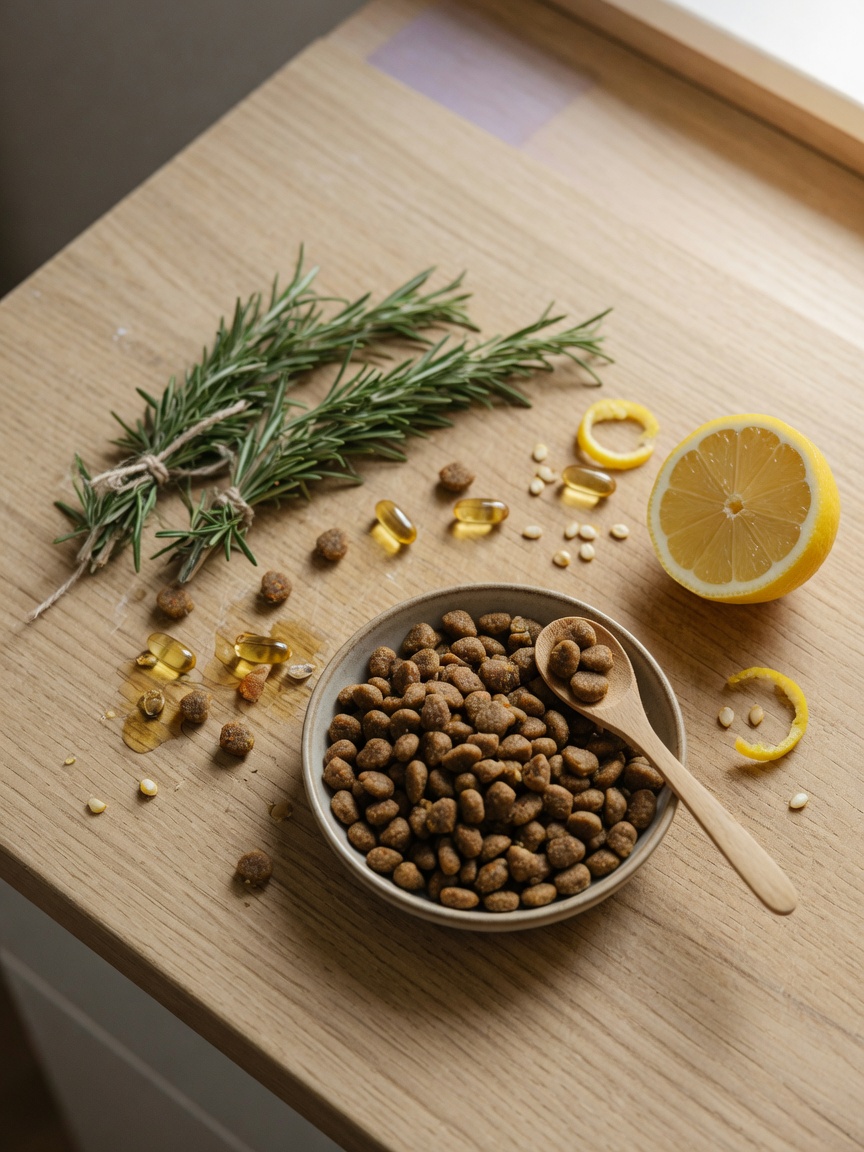
Many manufacturers have moved away from synthetic preservatives in favour of natural antioxidants, most commonly:
- Mixed tocopherols (a form of vitamin E)
- Rosemary extract
- Ascorbic acid (vitamin C)
These are genuinely effective, though they typically offer a shorter shelf life than their synthetic counterparts. A bag of food preserved with tocopherols may have a best-before date of 12 to 18 months rather than 24 months. This is a reasonable trade-off for most owners, and proper storage in a sealed container in a cool, dry place helps maximise that window.
Putting the Risk in Perspective
The scientific evidence surrounding BHA, BHT, and ethoxyquin does not support the conclusion that they are acutely dangerous at the levels found in commercial pet food. The animal studies that raised flags used doses that would be essentially impossible to achieve through normal feeding. Regulatory bodies in most countries continue to permit their use at defined limits.
However, the precautionary argument is straightforward: when effective natural alternatives exist and are widely available, there is little reason to choose a product that relies on synthetic preservatives instead. This is not about panic. It is about choosing the option with the cleaner evidence base when both are accessible and the cost difference is minimal.
Reading the full ingredient list, including the small-print additions near the bottom, takes about thirty seconds and gives you a clear picture of what you are actually buying.