
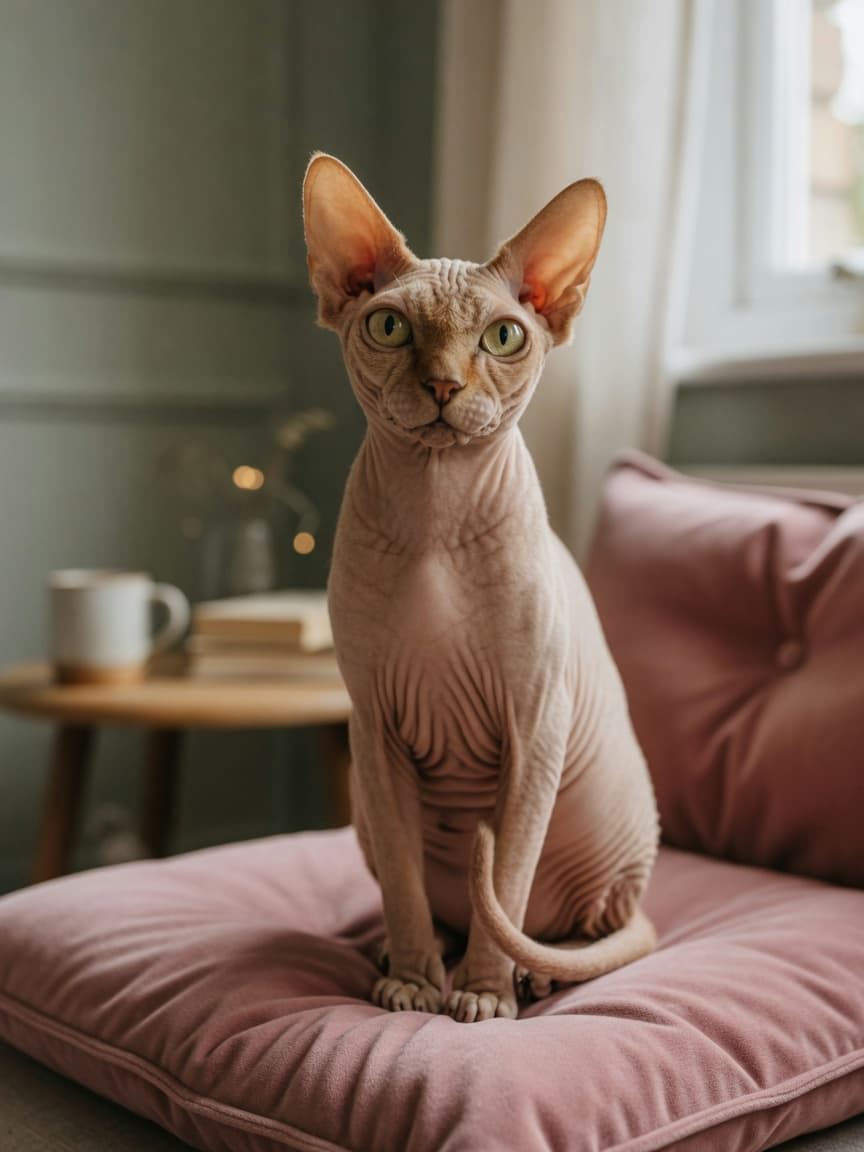
O Sphynx é um gato sem pelo de aspeto marcante, apreciado pela sua natureza afetuosa e orientada para as pessoas e pelo seu desejo quase constante de calor e companhia, o que o torna mais adequado a donos que gostem de um companheiro interativo, quase parecido com um cão. A sua característica definidora é a ausência de pelagem, que traz necessidades específicas de pele, temperatura e higiene, em vez da imagem de baixa manutenção que muitos presumem. A principal preocupação de saúde da raça é a cardiomiopatia hipertrófica (CMH), uma doença cardíaca grave que os futuros donos devem compreender antes de levarem um para casa.
Visão Geral da Raça
- Tamanho: Pequeno a médio; os adultos pesam normalmente entre 3 e 5,5 kg
- Esperança de vida: Geralmente 8 a 14 anos, sendo que muitos chegam aos 15 e poucos anos com bons cuidados
- Pelagem: Parece não ter pelo, mas frequentemente apresenta uma camada fina e aveludada descrita como sendo semelhante ao toque de camurça, pele de chamois ou pele de pêssego; a pele pode ser enrugada, sobretudo em torno da face, do pescoço e das patas
- Origem: Desenvolvida no Canadá na década de 1960 a partir de uma mutação natural de ausência de pelo, mais tarde refinada com linhas de Devon Rex e American Shorthair para estabelecer uma população saudável e estável
Temperamento e Adequação à Família
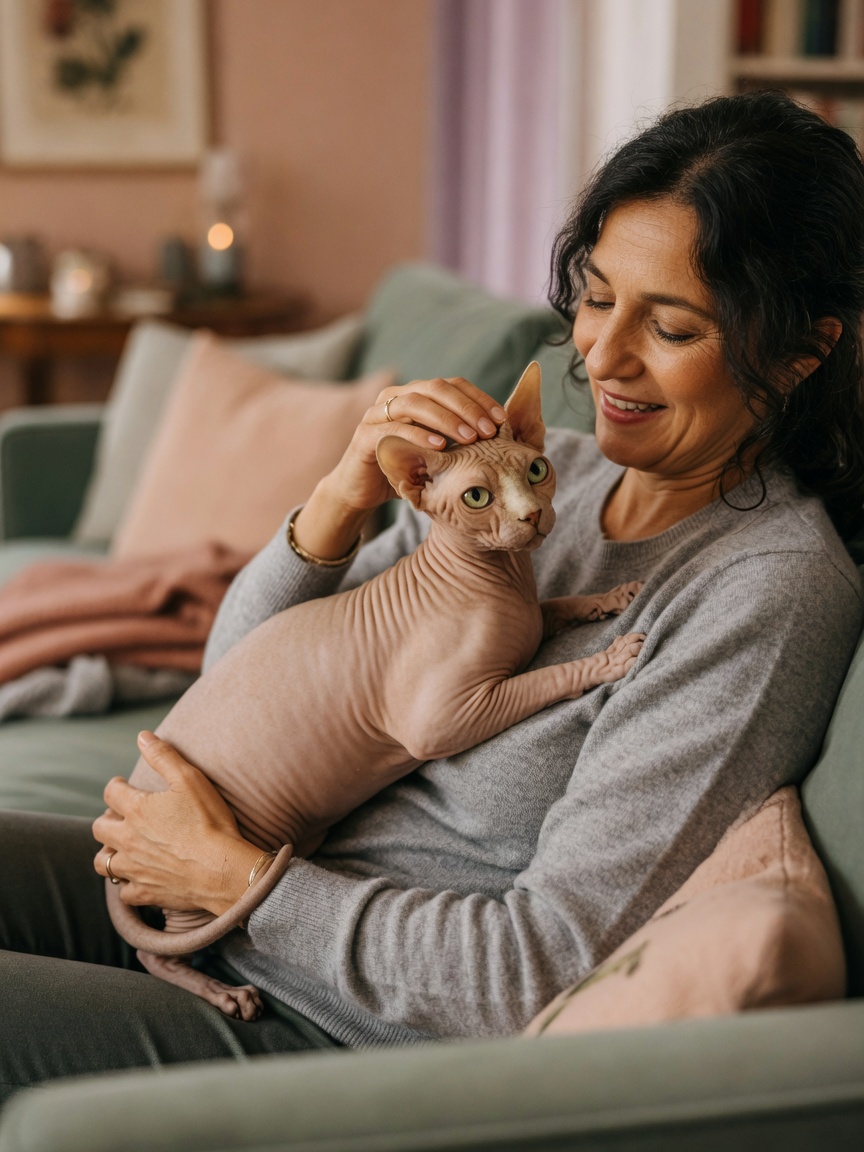
Os gatos Sphynx são conhecidos por serem extrovertidos, afetuosos e invulgarmente carentes de atenção para um gato. São frequentemente descritos como "gatos velcro", porque seguem os donos de sala em sala, sobem para o colo sem convite e não gostam de ficar sozinhos durante longos períodos. Isto faz desta raça uma boa opção para casas onde se passa bastante tempo, famílias com crianças mais velhas que compreendam o manuseamento cuidadoso e donos que procurem um animal altamente interativo.
A raça tende a dar-se bem com outros gatos e até com cães quando as apresentações são feitas corretamente, em parte devido ao seu temperamento sociável e pouco agressivo. São inteligentes e curiosos, aprendendo muitas vezes a abrir portas, armários e até torneiras, pelo que a estimulação mental é importante. Como lhes falta a proteção isolante do pelo, os gatos Sphynx também procuram corpos quentes — humanos ou animais — para se aconchegarem, algo que os donos geralmente acham cativante e não um problema de comportamento.
Em termos vocais, os gatos Sphynx são moderadamente faladores e costumam "conversar" com os donos, particularmente à hora da refeição ou quando procuram atenção. Os futuros donos devem sentir-se confortáveis com um companheiro exigente e sociável, e não com um gato independente e de pouco contacto.
Problemas de Saúde nos Gatos Sphynx
O Sphynx é geralmente uma raça robusta, mas a sua ausência de pelo e o seu historial genético fazem com que determinadas doenças sejam relatadas com maior frequência do que na população felina em geral. Uma criação responsável, exames veterinários regulares e cuidados atentos em casa podem ajudar a gerir estes riscos.
Cardiomiopatia Hipertrófica (CMH)
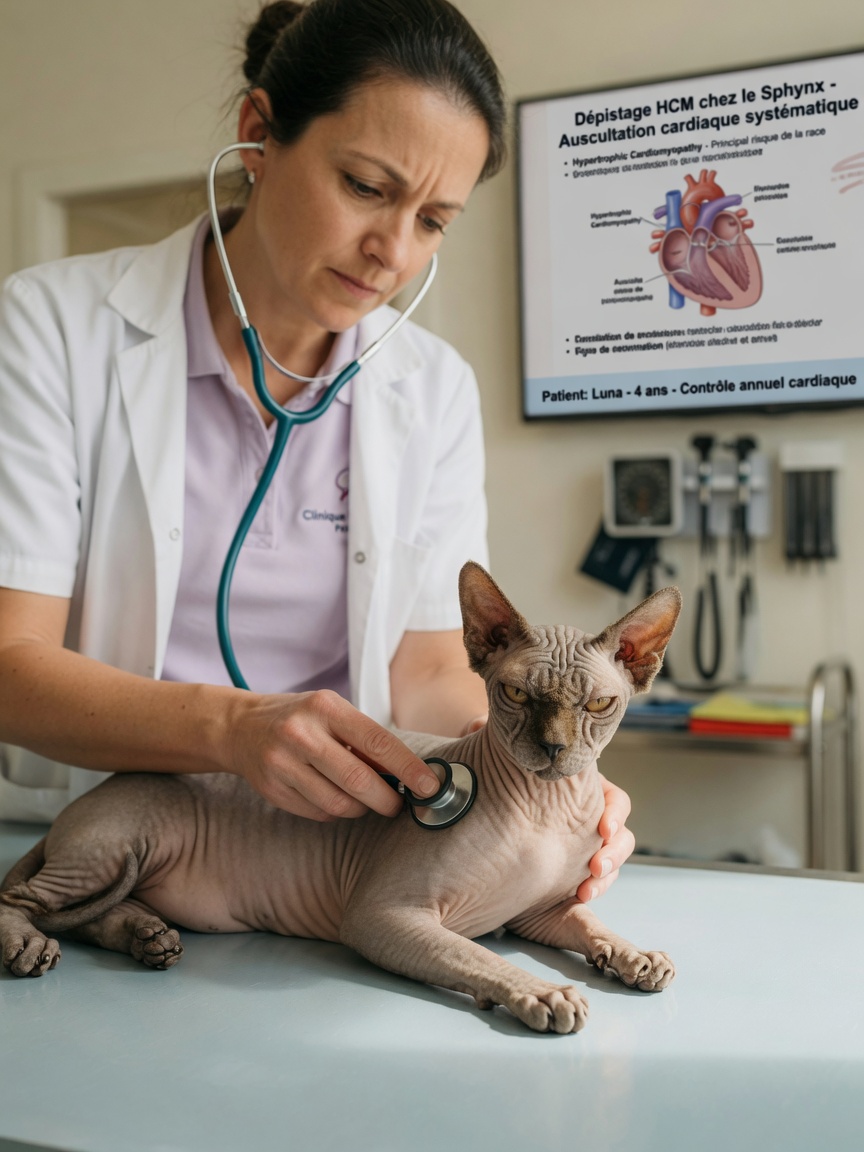
A CMH é um espessamento do músculo cardíaco que reduz a capacidade do coração de bombear de forma eficiente e é a preocupação de saúde mais significativa associada à raça Sphynx. Pode desenvolver-se silenciosamente durante muito tempo antes de surgirem sintomas.
Os sinais iniciais são frequentemente subtis ou inexistentes, mas os donos devem estar atentos a letargia, redução do apetite, respiração difícil ou acelerada, respiração com a boca aberta ou colapso súbito. Em casos avançados, os gatos podem desenvolver líquido nos pulmões ou, raramente, coágulos sanguíneos que afetam os membros posteriores.
Os donos podem apoiar a deteção precoce através de consultas veterinárias regulares que incluam auscultação cardíaca e discutindo o rastreio cardíaco (como a ecocardiografia) com o médico veterinário, em particular nos gatos reprodutores. Como a CMH tem uma componente genética em várias raças, obter gatinhos de criadores que fazem rastreio aos seus reprodutores é uma precaução sensata.
Problemas de Pele e Sensibilidade ao Sol
Sem uma pelagem protetora, a pele do Sphynx está mais exposta a fatores ambientais do que nas raças com pelo. Entre os problemas mais comumente relatados estão as queimaduras solares, a oleosidade que leva a poros obstruídos ou acne e as infeções cutâneas fúngicas ou bacterianas nas pregas de pele.
Os sinais iniciais incluem vermelhidão, manchas rosadas ou escurecidas nas zonas expostas ao sol (especialmente orelhas, nariz e dorso), resíduo oleoso na pele, odor desagradável ou borbulhas e pontos negros visíveis no queixo e na base da cauda.
Os donos podem reduzir o risco limitando a exposição solar direta nas horas de maior intensidade, utilizando proteção solar segura para animais e aprovada pelo médico veterinário quando adequado, e estabelecendo uma rotina de banhos suave para gerir a acumulação natural de oleosidade. Vale a pena discutir com o médico veterinário problemas de pele persistentes ou recorrentes, já que os princípios subjacentes à gestão de pele sensível ou reativa são semelhantes aos abordados em recursos gerais como este guia de alergias cutâneas, ainda que esteja escrito a pensar em cães.
Urticária Pigmentosa
Trata-se de uma doença de pele, observada com maior frequência em gatos Sphynx e Devon Rex, que envolve o desenvolvimento de lesões com crostas e escamas, muitas vezes associadas a uma reação cutânea alérgica ou relacionada com os mastócitos.
Os sinais iniciais incluem pequenas crostas ou escamas, particularmente em torno da cabeça, do pescoço e das patas, por vezes acompanhadas de prurido.
Como esta doença pode assemelhar-se a outros problemas cutâneos alérgicos ou infeciosos, é importante um diagnóstico veterinário (que pode incluir raspagens cutâneas ou biopsia) antes de iniciar o tratamento, que pode variar entre ajustes alimentares e medicação dirigida, dependendo do fator desencadeante subjacente.
Dificuldades de Termorregulação
Os gatos Sphynx não têm o pelo isolante que ajuda a maioria dos gatos a regular a temperatura corporal, o que os torna mais propensos a sentir frio e, em algumas circunstâncias, a sofrer de sobreaquecimento se não conseguirem arrefecer de forma eficaz.
Os sinais iniciais de frio excessivo incluem procurar insistentemente fontes de calor, tremer ou enrolar-se muito em bola; o sobreaquecimento pode manifestar-se como respiração ofegante excessiva ou letargia em condições de calor.
Os donos devem fornecer camas quentes, camas aquecidas para gatos nos meses mais frios e espaços interiores adequadamente isolados, e evitar deixar gatos Sphynx em automóveis, marquises ou áreas exteriores sem sombra durante tempo quente.
Doença Dentária
Como muitos gatos de raça, os gatos Sphynx podem ter predisposição para problemas dentários, incluindo inflamação gengival e acumulação de tártaro, que, se não forem controlados, podem evoluir para doença periodontal mais grave.
Os sinais iniciais incluem mau hálito, gengivas vermelhas ou inchadas, menor interesse na ração seca ou levar a pata à boca.
Os controlos dentários de rotina, a escovagem dos dentes quando o gato a tolerar e as dietas ou snacks dentários recomendados pelo médico veterinário podem ajudar a manter a saúde oral ao longo da vida.
Luxação da Patela e Problemas Musculosqueléticos
Há relatos de que alguns gatos Sphynx sofrem de luxação da patela, em que a rótula sai da sua posição normal, provocando claudicação intermitente ou uma marcha anormal.
Os sinais iniciais incluem um movimento de saltitar ou pular ao caminhar ou correr, claudicação ocasional num membro posterior ou relutância em saltar.
Os donos que notem alterações na marcha devem procurar avaliação veterinária, pois a abordagem varia entre a monitorização dos casos ligeiros e a correção cirúrgica nas luxações mais significativas. Manter um peso corporal saudável também reduz a sobrecarga sobre as articulações.
Miopatia Hereditária
Foi documentada na raça Sphynx uma forma de miopatia hereditária que afeta a função muscular, surgindo geralmente em gatos jovens.
Os sinais iniciais incluem fraqueza muscular, uma marcha invulgar, dificuldade em manter a cabeça erguida ou tremores, habitualmente notados no primeiro ano de vida.
Não existe cura, pelo que a abordagem se centra nos cuidados de suporte e em decisões sobre a qualidade de vida tomadas em conjunto com o médico veterinário; os testes genéticos e uma seleção criteriosa dos reprodutores são as principais ferramentas para reduzir a prevalência ao longo do tempo.
Nutrição e Alimentação
Os gatos Sphynx tendem a ter um metabolismo mais rápido do que muitas outras raças, em parte atribuído à energia adicional necessária para a termorregulação sem uma pelagem isolante. Isto significa que muitos gatos Sphynx beneficiam de dietas ligeiramente mais calóricas em comparação com gatos com pelo de tamanho semelhante, embora as necessidades individuais variem e devam ser discutidas com o médico veterinário.
Um alimento comercial completo e equilibrado, adequado à fase de vida — gatinho, adulto ou sénior — continua a ser a base de uma boa nutrição. Como a pele do Sphynx pode ter tendência para a produção excessiva de oleosidade, alguns donos consideram que a qualidade da dieta influencia o estado da pele e da pelagem, ainda que isto varie entre indivíduos. Se um gato apresentar sinais de sensibilidade alimentar, como agravamentos cutâneos ou perturbações digestivas, o médico veterinário pode sugerir uma abordagem de eliminação ou uma dieta de ingredientes limitados; a lógica subjacente reflete as abordagens utilizadas na nutrição canina, descritas em termos gerais neste guia de dietas hipoalergénicas, devidamente adaptadas às necessidades felinas.
À medida que os gatos Sphynx envelhecem, as necessidades calóricas e a eficiência digestiva podem alterar-se, e a monitorização da condição corporal torna-se cada vez mais importante para evitar tanto o ganho de peso indesejado como a perda de peso involuntária. Alguns dos princípios gerais utilizados na adaptação das dietas para animais em envelhecimento, como os abordados em recursos sobre nutrição de animais sénior, podem ser um bom ponto de partida para conversas com o seu médico veterinário sobre planos alimentares para Sphynx sénior. Deve haver sempre água fresca disponível e os snacks devem manter-se numa proporção sensata da ingestão diária, para apoiar uma gestão saudável do peso.
Higiene e Cuidados
Apesar de não terem pelo visível, os gatos Sphynx exigem mais cuidados de higiene diretos do que a maioria das raças com pelo, porque a sua pele produz oleosidade que normalmente seria absorvida por uma pelagem. Os banhos regulares — muitas vezes semanais ou a cada poucos dias, dependendo do gato — ajudam a prevenir a acumulação de oleosidade, o odor e os problemas de pele associados.
As orelhas também tendem a acumular mais cera e detritos por não terem pelo que os retenha, pelo que é geralmente necessária uma limpeza auricular suave e regular. As unhas devem ser cortadas com regularidade e as pregas de pele verificadas periodicamente à procura de sinais de irritação, vermelhidão ou secreção. Como a pele do Sphynx está exposta e é sensível, os donos devem introduzir as rotinas de higiene gradualmente e usar água tépida e produtos específicos para felinos aprovados pelo médico veterinário, em vez de produtos de cuidado de pele humanos.
A proteção solar é uma consideração verdadeiramente relevante para os gatos Sphynx que gostam de descansar junto às janelas ou de passar tempo no exterior em espaços seguros; disponibilizar zonas de sombra e limitar a exposição durante o sol mais forte do meio-dia ajuda a proteger a sua pele a longo prazo.
Necessidades de Exercício e Treino
Os gatos Sphynx são ativos, brincalhões e frequentemente descritos como mais energéticos e acrobáticos do que muitas outras raças, gostando de trepar, perseguir brinquedos e participar em sessões de brincadeira interativa com os donos. Disponibilizar árvores para gatos, estruturas seguras para trepar e brincadeiras regulares ajuda a satisfazer esta necessidade de envolvimento físico e mental.
São geralmente inteligentes e motivados pela comida, o que torna muitos gatos Sphynx surpreendentemente recetivos ao treino básico, incluindo passeios com trela em ambientes seguros, o uso consistente de um poste de arranhar e até truques simples. O reforço positivo com snacks e elogios costuma funcionar bem, e sessões curtas e regulares são normalmente mais eficazes do que sessões longas e pouco frequentes.
Como prosperam com companhia, os gatos Sphynx geralmente não se adaptam bem a ambientes onde ficam sozinhos durante longos períodos sem estimulação. Comedouros interativos, rotação de brinquedos e prateleiras junto à janela podem ajudar a manter um Sphynx de interior ocupado quando o dono está fora de casa.
Perguntas Frequentes
Os gatos Sphynx são verdaderamente hipoalergénicos?
Nenhuma raça de gato é verdadeiramente hipoalergénica. Os gatos Sphynx produzem as mesmas proteínas alergénicas presentes na saliva e nas secreções cutâneas dos felinos que os outros gatos; a ausência de pelo pode reduzir a dispersão no ar de pelos transportadores de alergénios em algumas casas, mas as pessoas sensíveis podem ainda assim reagir a um gato Sphynx.
Os gatos Sphynx precisam de roupa ou de camisolas?
Muitos donos vestem efetivamente os seus gatos Sphynx com camisolas leves ou mantas, particularmente em casas ou climas mais frios, para ajudar na termorregulação. Trata-se de uma questão prática, e não de uma escolha de moda, dado o isolamento natural limitado da raça.
Com que frequência se deve dar banho a um gato Sphynx?
A frequência varia de gato para gato, mas muitos donos de Sphynx dão banho aos seus gatos aproximadamente uma vez por semana para controlar a oleosidade natural da pele e reduzir o risco de poros obstruídos ou odor. Um médico veterinário ou um criador experiente pode ajudar a estabelecer uma rotina adequada ao tipo de pele de cada gato.
Os gatos Sphynx são propensos a queimaduras solares dentro de casa?
Sim, os gatos Sphynx podem queimar-se com o sol mesmo através das janelas se passarem muito tempo à luz solar direta, uma vez que a exposição a raios UV através do vidro pode ainda assim afetar a pele exposta. Disponibilizar locais de descanso com sombra e limitar a exposição solar prolongada ajuda a reduzir este risco.
Este guia destina-se apenas a fins informativos gerais e não substitui o aconselhamento veterinário individual. Consulte sempre um médico veterinário qualificado relativamente às necessidades específicas de saúde, nutrição e cuidados do seu próprio gato.