
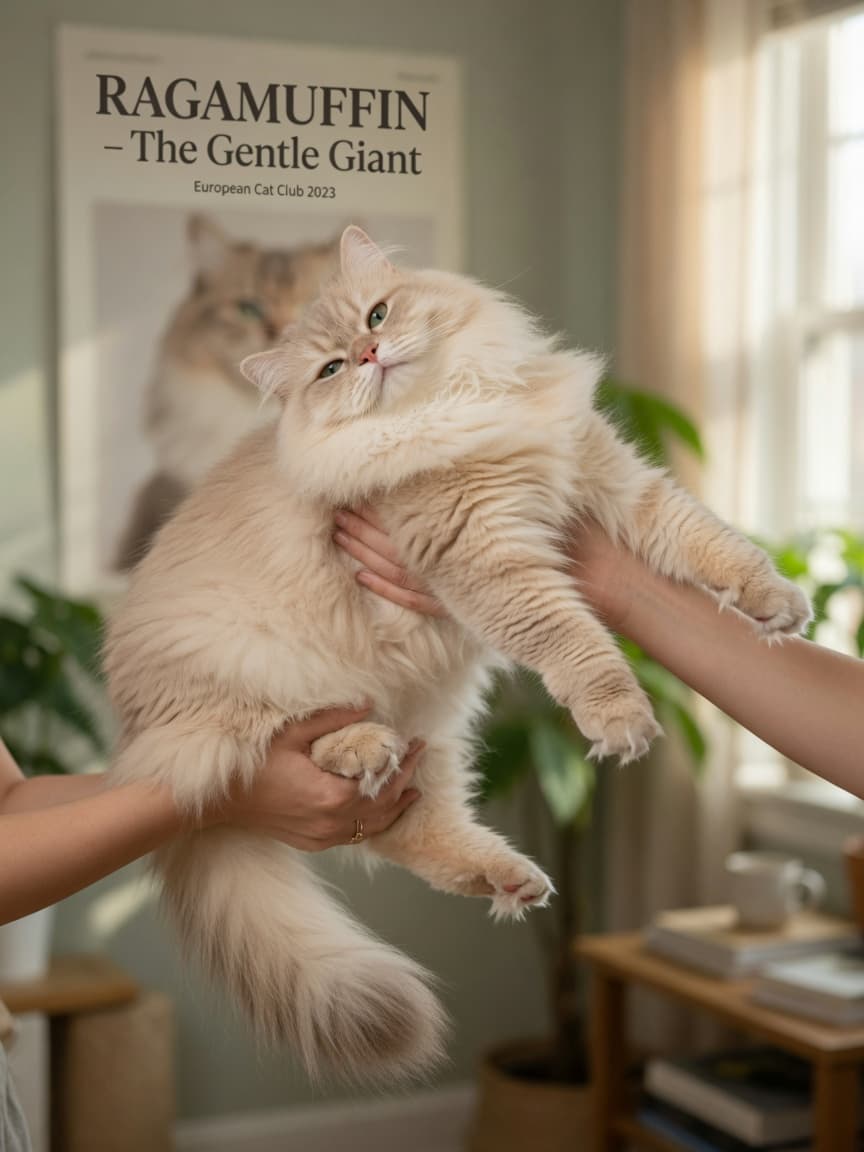
O Ragamuffin é um gato de grande porte, descontraído e de pelagem felpuda, criado para ser meigo e ter um temperamento tranquilo, o que o torna uma excelente escolha para famílias, donos de primeira viagem e casas com vários animais. A sua característica mais marcante é a tendência para ficar completamente mole quando é levantado ao colo, um traço que partilha com o seu parente próximo, o Ragdoll. O principal destaque em termos de saúde nesta raça é a predisposição para cardiomiopatia hipertrófica (CMH), uma doença cardíaca que os criadores responsáveis rastreiam ativamente.
Visão Geral da Raça
- Tamanho: Grande; os machos pesam habitualmente 6,5–9 kg, as fêmeas são um pouco mais pequenas, e a maturidade plena só é alcançada aos 3–4 anos de idade
- Esperança de vida: Habitualmente referida como 12–16 anos com bons cuidados
- Pelagem: Semilonga, sedosa, semelhante ao pelo de coelho, com subpelo mínimo; existe numa grande variedade de cores e padrões
- Origem: Desenvolvida nos Estados Unidos na década de 1990 a partir de gatos do tipo Ragdoll, sendo mais tarde estabelecida como uma raça distinta
Temperamento e Adaptação à Família
Os Ragamuffins são conhecidos pela sua natureza plácida, sociável e muito orientada para as pessoas. Tendem a seguir os donos de sala em sala, recebem as visitas em vez de se esconderem e, de forma geral, toleram bem o manuseamento, o que os torna muito adequados a casas com crianças ou outros animais. Não são uma raça particularmente vocal e a maioria dos indivíduos prefere companhia tranquila a brincadeiras agitadas, embora gostem de jogos interativos e se enrolem com gosto num colo durante horas.
O temperamento calmo desta raça significa também que os Ragamuffins se adaptam bem à vida dentro de casa e, tipicamente, não exigem o enriquecimento ambiental constante de que necessitam raças mais ativas. No entanto, a sua natureza afetuosa faz com que não lidem bem com longos períodos sozinhos, podendo desenvolver stress relacionado com o apego se ficarem isolados com frequência. Em geral, dão-se melhor em casas onde alguém está presente durante boa parte do dia, ou onde tenham companhia felina ou canina.
Problemas de Saúde nos Gatos Ragamuffin
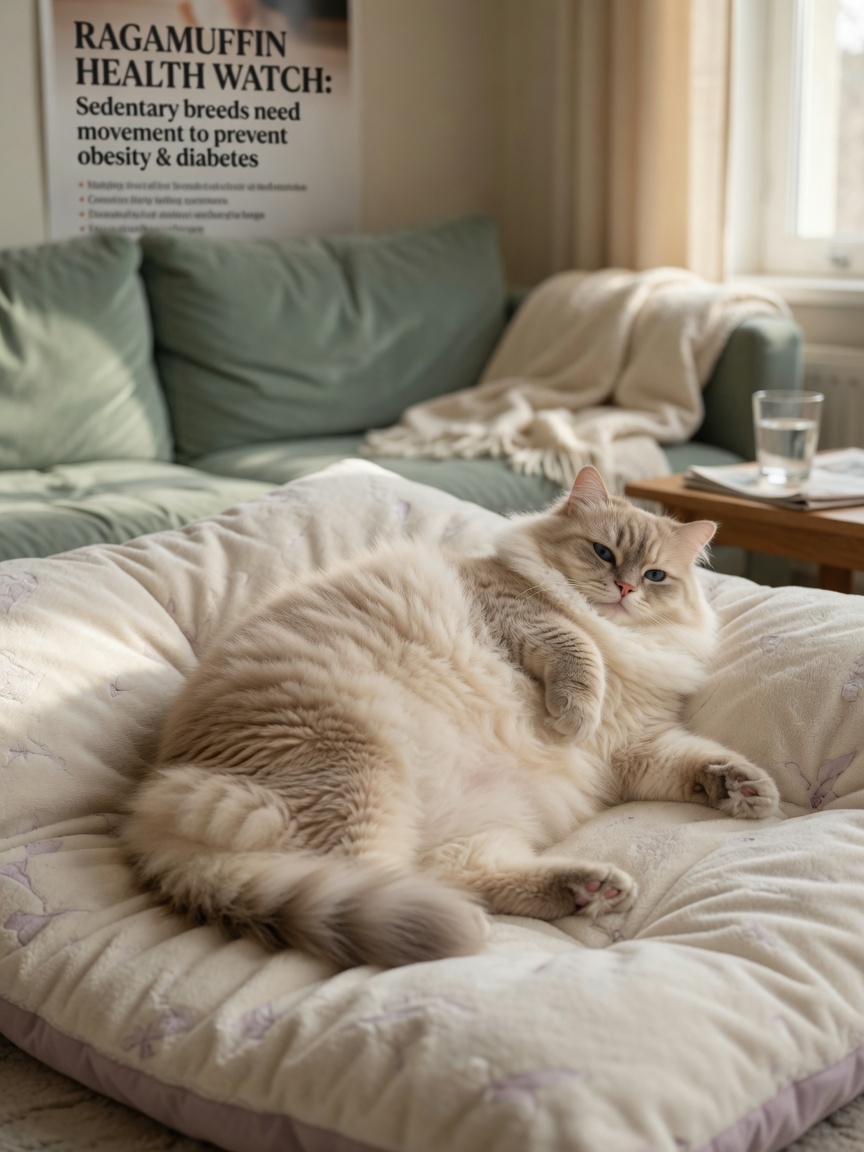
Os Ragamuffins são, em geral, uma raça robusta, mas, como na maioria dos gatos de raça, algumas doenças são relatadas com maior frequência nesta raça e nos seus parentes próximos. Conhecê-las permite aos donos detetar sinais precoces e procurar aconselhamento veterinário atempado.
Cardiomiopatia Hipertrófica (CMH)
A CMH é uma doença em que o músculo cardíaco espessa, reduzindo a capacidade do coração de bombear sangue de forma eficiente. É a doença cardíaca mais frequentemente relatada nos gatos em geral e os Ragamuffins, tal como os seus parentes Ragdoll, são considerados uma raça predisposta. Os sinais precoces são muitas vezes subtis ou inexistentes, razão pela qual a doença pode passar despercebida até estar avançada; alguns gatos apresentam dificuldade respiratória, letargia, redução do apetite ou, em casos graves, colapso súbito devido a coágulos sanguíneos. Os donos devem perguntar aos criadores se os gatos reprodutores foram rastreados por ecocardiograma e agendar consultas veterinárias regulares que incluam auscultação cardíaca, já que a deteção precoce através de rastreio cardíaco periódico oferece a melhor probabilidade de gerir a doença de forma proativa.
Doença Renal Poliquística (DRP)
A DRP é uma doença hereditária na qual se desenvolvem quistos cheios de líquido nos rins, comprometendo gradualmente a função renal ao longo do tempo. Embora esteja mais fortemente associada às raças do tipo Persa, das quais os Ragamuffins descendem em parte, vale a pena estar atento dada a ascendência da raça. Os sinais precoces estão tipicamente ausentes durante anos, surgindo aumento da sede, aumento da urinação, perda de peso e redução do apetite apenas quando a função renal começa a declinar. O rastreio por ecografia dos gatos reprodutores pode ajudar a identificar portadores, e os donos de Ragamuffins adultos e idosos devem mandar avaliar os valores renais nas consultas anuais de bem-estar.
Obesidade e Sobrecarga Articular
Dada a sua natureza descontraída e o gosto por descansar, os Ragamuffins podem ter tendência para ganhar peso se os níveis de atividade não forem estimulados e as porções não forem controladas. O excesso de peso coloca uma sobrecarga adicional nas articulações e pode contribuir para doenças como a artrite nos gatos mais velhos, além de aumentar o risco de diabetes. Os sinais precoces de desconforto articular relacionado com o peso incluem relutância em saltar para os móveis, rigidez após o repouso e menor higiene das zonas de difícil acesso. Manter uma condição corporal magra ao longo da vida, juntamente com brincadeiras regulares e suaves, é uma das medidas preventivas mais eficazes. Os princípios usados na gestão da saúde articular em animais idosos de forma mais ampla, como os abordados no nosso guia sobre gestão da artrite, partilham objetivos semelhantes de controlo do peso e apoio à mobilidade que se aplicam igualmente bem aos gatos.
Displasia da Anca
Ainda que menos estudada nos gatos do que nos cães, a displasia da anca — uma malformação da articulação coxofemoral que leva a instabilidade e, eventualmente, a artrite — é ocasionalmente relatada em raças de gatos de maior porte, incluindo o Ragamuffin. Os sinais podem incluir uma marcha anormal, relutância em saltar ou desconforto evidente quando as ancas são manipuladas. Manter um peso saudável e disponibilizar camas macias e de bom apoio pode ajudar a reduzir o stress articular, e qualquer claudicação persistente deve ser avaliada por um médico veterinário, eventualmente com radiografias das ancas.
Doença do Trato Urinário Inferior dos Felinos (FLUTD)
FLUTD é um termo abrangente para um conjunto de doenças que afetam a bexiga e a uretra e, embora não seja exclusivo desta raça, é frequentemente relatado nos gatos em geral, particularmente nos menos ativos ou com excesso de peso — ambos fatores de risco que podem aplicar-se a uma raça tranquila como o Ragamuffin. Os sinais incluem esforço para urinar, idas frequentes à caixa de areia, sangue na urina ou vocalização durante a urinação, e isto deve ser sempre tratado como urgente, especialmente nos gatos machos, nos quais a obstrução uretral pode tornar-se fatal em poucas horas. Incentivar a ingestão de água, fornecer alimentação adequadamente húmida e assegurar acesso sem stress à caixa de areia são medidas preventivas práticas.
Nutrição e Alimentação
O Ragamuffin é uma raça de maturação lenta, só atingindo o desenvolvimento físico completo por volta dos três a quatro anos de idade, pelo que os gatinhos em crescimento beneficiam de uma dieta especificamente formulada para apoiar um desenvolvimento estável e saudável, em vez de um crescimento rápido. Compreender as fases gerais do crescimento — bem descritas em recursos como o nosso guia das fases de crescimento para animais jovens — pode ajudar os donos a perceber por que razão a nutrição específica para gatinhos é importante durante esta janela de desenvolvimento prolongada, mesmo que as especificidades variem entre espécies.
Na fase adulta, o controlo das porções é particularmente importante nesta raça descontraída, dada a sua tendência para o ganho de peso. Dar refeições medidas em vez de deixar comida sempre disponível, escolher uma dieta de alta qualidade adequada à fase de vida e incluir alimentação húmida para apoiar a hidratação e a saúde urinária são todas estratégias sensatas. Alguns donos exploram o papel dos suplementos de apoio intestinal; embora a maior parte da evidência atual nesta área provenha de estudos em cães, como os abordados na nossa análise sobre a utilização de probióticos, alguns princípios gerais relativos ao apoio da saúde digestiva são relevantes entre espécies e vale a pena discuti-los com o seu médico veterinário. Os gatos com sensibilidades conhecidas podem também beneficiar de conversas com o veterinário sobre dietas de ingredientes limitados ou para digestão sensível, do mesmo modo que os donos de cães com problemas cutâneos ou digestivos podem explorar as opções descritas em guias sobre sensibilidades cutâneas ou formulações especializadas.
À medida que os Ragamuffins entram na terceira idade, torna-se importante ajustar a ingestão calórica à atividade reduzida, assegurando ao mesmo tempo proteína suficiente para preservar a massa muscular. Os princípios usados na formulação de dietas para animais idosos, como os abordados nas orientações sobre nutrição sénior, refletem objetivos semelhantes aos recomendados para gatos idosos: apoio articular, densidade calórica controlada e ingredientes de fácil digestão.
Higiene e Cuidados
Apesar da sua pelagem luxuosamente felpuda, os Ragamuffins têm uma textura semilonga e sedosa com subpelo mínimo, o que significa que formam nós com menos facilidade do que algumas raças de pelo comprido. Ainda assim, recomenda-se escovagem regular duas a três vezes por semana para prevenir emaranhados, remover pelo solto e reduzir a formação de bolas de pelo, sendo necessária uma escovagem mais frequente durante os períodos de muda sazonal.
Os cuidados de rotina devem incluir também o corte regular das unhas, a verificação dos ouvidos quanto à acumulação de cera ou odor, e cuidados dentários como a escovagem ou snacks específicos para os dentes, de modo a reduzir o risco de doença periodontal, que é comum nos gatos em geral. Como os Ragamuffins são muito tolerantes e orientados para as pessoas, a maioria aceita bem as rotinas de higiene desde tenra idade, tornando mais fácil incorporar também exames de saúde regulares em casa, como palpar à procura de nódulos ou monitorizar o peso manualmente.
Necessidades de Exercício e Treino
Os Ragamuffins não são uma raça de energia elevada, mas continuam a beneficiar de brincadeiras regulares e suaves para manter um peso saudável e apoiar a saúde articular e cardiovascular. Brinquedos interativos, varas com penas e sessões curtas de brincadeira diárias são normalmente suficientes, e muitos Ragamuffins gostam de comedouros-puzzle que combinam estimulação mental com uma alimentação mais lenta.
Esta raça é inteligente e, de forma geral, responde bem ao treino com reforço positivo, e muitos donos conseguem ensinar comandos básicos, passeio com trela ou truques simples através de métodos baseados em recompensa. Dada a sua natureza sociável, muitas vezes apreciam tanto a interação que o treino proporciona como a atividade em si. O espaço vertical, como árvores para gatos ou plataformas junto à janela, é também valorizado, oferecendo-lhes uma forma de escalar suavemente sem exigir o exercício vigoroso de que necessitam raças mais atléticas.
Perguntas Frequentes
Os Ragamuffins são hipoalergénicos?
Nenhuma raça de gato é verdadeiramente hipoalergénica, e os Ragamuffins não são exceção. Embora alguns donos relatem menos reações alérgicas devido ao tipo de pelagem da raça, os alergénios são transportados principalmente na saliva e nas células da pele e não apenas no comprimento do pelo, pelo que as pessoas sensíveis devem passar algum tempo com a raça antes de se comprometerem.
Quantos cuidados de higiene precisa realmente um Ragamuffin?
Graças ao seu subpelo mínimo, os Ragamuffins exigem menos manutenção do que muitas raças de pelo comprido, necessitando geralmente de escovagem duas a três vezes por semana, com sessões adicionais durante os períodos de muda mais intensa na primavera e no outono.
Os Ragamuffins dão-se bem com cães e crianças?
Sim, o seu temperamento plácido e tolerante torna-os, em geral, muito adequados a casas com cães, crianças e outros animais, embora se recomendem sempre apresentações supervisionadas e uma socialização gradual, independentemente da raça.
Qual é a maior preocupação de saúde nesta raça?
A cardiomiopatia hipertrófica é a preocupação mais significativa associada à raça, razão pela qual são fortemente aconselhados exames cardíacos veterinários regulares e a aquisição de gatinhos de progenitores com rastreio de saúde.
Este guia tem apenas fins informativos gerais e não substitui o aconselhamento veterinário individual. Consulte sempre um médico veterinário qualificado relativamente às necessidades de saúde específicas do seu animal.