
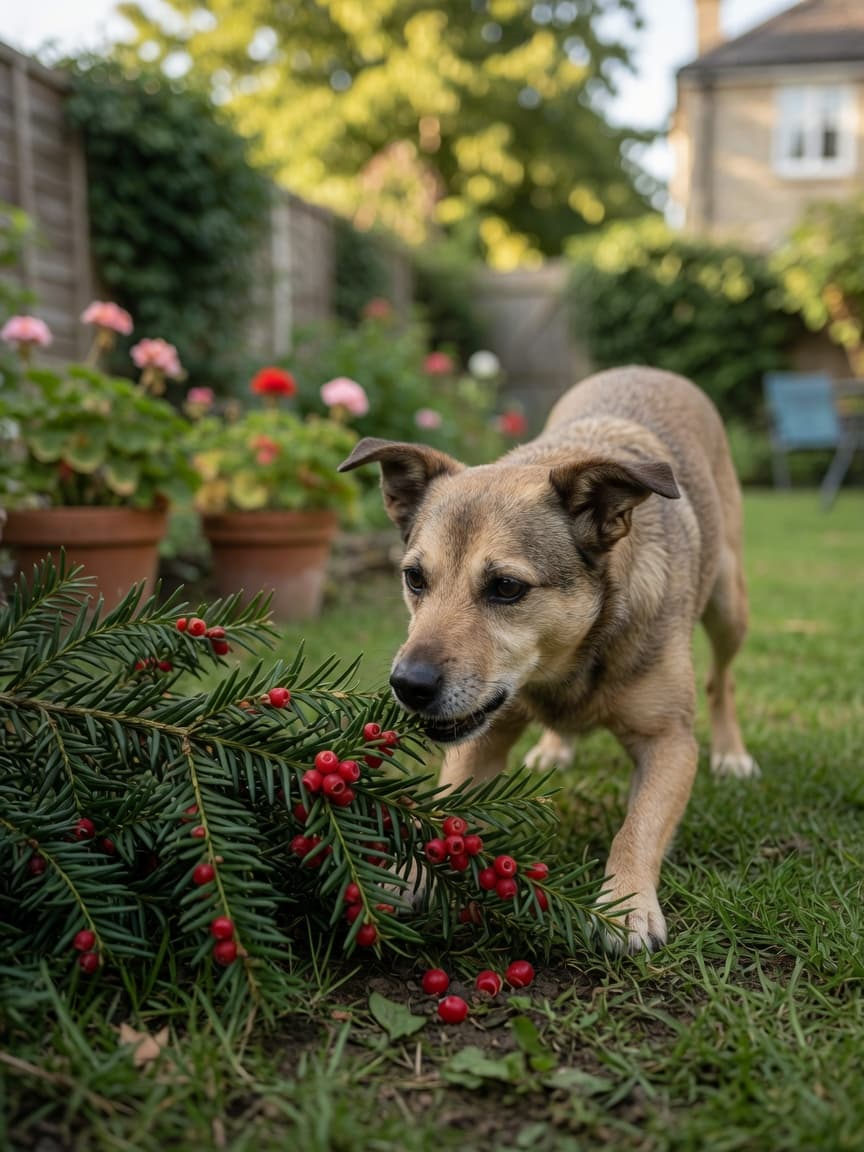
O teixo é tóxico para os cães?
Atualizado: junho de 2026
Teixo: uma das plantas mais letais do planeta
As árvores e arbustos de teixo (Taxus spp.) estão associados à morte ao longo da história humana — os antigos romanos e gregos conheciam as suas propriedades letais, os druidas celtas plantavam teixos nos adros das igrejas como símbolos de morte e renascimento, e Shakespeare referiu o seu veneno em várias obras. Esta reputação sombria é totalmente merecida. As espécies de Taxus estão entre as plantas tóxicas de ação mais aguda conhecidas pela ciência, e o mecanismo da sua toxicidade é devastadoramente eficiente: provocam parada cardíaca praticamente sem aviso.
O que torna o teixo especialmente perigoso para os cães é a sua prevalência nas paisagens. O teixo é um dos arbustos ornamentais e plantas de sebe mais comumente plantados nas regiões temperadas da América do Norte, da Europa e da Ásia. Tolera a sombra, cresce lentamente formando sebes formais densas, mantém as suas agulhas verde-escuras durante todo o ano e produz frutos vermelhos atrativos no outono. Está em todo o lado — em jardins formais, parques, cemitérios, espaços verdes empresariais e sebes residenciais. A probabilidade de qualquer dono de cão num clima temperado viver à distância de uma caminhada de uma plantação de teixo é extremamente elevada.
Absolutamente todas as partes da planta, com uma exceção notável descrita mais abaixo, contêm concentrações letais de alcaloides taxinas. Isto inclui as agulhas, a casca, a madeira e as sementes. Mesmo o material de teixo morto e seco mantém toda a sua toxicidade.
A única exceção — e porque continua a não tornar o teixo «seguro»
O arilo vermelho e carnudo (o revestimento gelatinoso em torno da semente do teixo, que parece um fruto vermelho) é a única parte da planta do teixo que não é agudamente tóxica. A polpa em si contém níveis relativamente baixos de taxina. No entanto — e isto é absolutamente crítico — a semente no interior do arilo vermelho é altamente tóxica. Se um cão engolir um fruto de teixo e mastigar a semente, ingeriu uma dose letal de alcaloides taxinas. Mesmo que engula o fruto inteiro sem o esmagar, o processo digestivo pode ainda assim libertar toxinas da semente.
Não existe forma segura de um cão interagir com uma planta de teixo. A distinção relativa à polpa do fruto é uma nota de pé de página botânica, não uma margem de segurança. Não permita que os cães se aproximem de plantas de teixo, incluindo dos frutos.
Alcaloides taxinas: morte por parada cardíaca
As principais toxinas do teixo são a taxina A e a taxina B, um grupo de alcaloides complexos que são absorvidos eficientemente no trato gastrointestinal e atuam diretamente sobre o músculo cardíaco. As taxinas inibem o transporte de iões de cálcio e sódio nas células do músculo cardíaco — o mecanismo é, de certa forma, semelhante ao de outras toxinas cardíacas (como os glicosídeos do loendro), mas é farmacologicamente distinto e, o que é crucial, não existe antídoto conhecido.
O efeito da taxina sobre o coração é profundo: a condução cardíaca abranda e falha, desenvolvem-se arritmias, o coração perde a capacidade de bombear eficazmente e segue-se a parada cardíaca. Este processo pode desenrolar-se a uma velocidade assustadora. Em alguns casos documentados, cães foram encontrados mortos sem que se tivessem observado sintomas prévios — simplesmente colapsaram e morreram antes de os donos se darem conta de que algo estava errado.
Além dos efeitos cardíacos, as taxinas também têm efeitos diretos sobre o sistema nervoso, e os óleos voláteis da planta podem provocar irritação respiratória.
Sintomas de intoxicação por teixo em cães
A natureza insidiosa da intoxicação por teixo é que os sintomas podem surgir muito subitamente e progredir para a morte em apenas 1-3 horas após a ingestão. Em alguns casos, não existem essencialmente quaisquer sinais de aviso. Quando os sintomas surgem, podem incluir:
- Letargia extrema súbita ou colapso
- Tremores musculares
- Dificuldade respiratória (dispneia)
- Ritmo cardíaco anormal (arritmia) — muitas vezes identificável apenas com equipamento de monitorização cardíaca
- Gengivas pálidas ou azuladas (cianose) — indicando insuficiência cardíaca e privação de oxigénio
- Vómitos e diarreia (podem ocorrer ou não)
- Perda de consciência
- Parada cardíaca e morte
A rapidez da progressão é o que torna o teixo tão mortal. Um cão pode parecer completamente normal num momento e estar em parada cardíaca no momento seguinte. Esta não é uma planta em relação à qual haja tempo para «observar e esperar».
A dose letal é assustadoramente pequena. Estudos em várias espécies demonstraram doses fatais tão baixas como 1-3 agulhas por quilograma de peso corporal em alguns animais. Num cão de pequeno porte, isto pode significar que apenas um punhado de agulhas é suficiente para causar a morte.
Ação de emergência: o que fazer imediatamente
Se tem qualquer motivo para acreditar que o seu cão comeu teixo — se encontrar agulhas mastigadas, se o seu cão esteve perto de uma planta de teixo e está agora a comportar-se de forma anormal, se viu o seu cão comer algo de um arbusto de teixo — trate a situação como a emergência potencialmente fatal que é:
- Ligue imediatamente ao seu médico veterinário ou ao Controlo de Intoxicações da ASPCA pelo (888) 426-4435.
- Se o seu cão apresentar qualquer sintoma — fraqueza, dificuldade respiratória, colapso — dispense a chamada telefónica e conduza diretamente para o hospital veterinário de urgência mais próximo à velocidade máxima segura. Ligue do carro.
- Não induza o vómito a não ser que seja especificamente e imediatamente indicado por um profissional veterinário — em alguns casos, isto pode acelerar a absorção ou causar aspiração num cão comprometido.
- Se possível, leve um ramo da planta ou uma fotografia para confirmação da identificação.
- Anote a hora da suspeita de ingestão e a quantidade aproximada consumida.
Na clínica veterinária: O tratamento é de suporte, já que não existe antídoto específico para os alcaloides taxinas. Pode ser administrado carvão ativado se a ingestão tiver sido muito recente. Serão utilizados fluidos intravenosos, monitorização cardíaca (ECG), medicamentos antiarrítmicos e cuidados intensivos de suporte. O prognóstico é grave em animais que já desenvolveram sintomas cardíacos. Os animais que recebem descontaminação antes de ter ocorrido uma absorção significativa têm melhores probabilidades, mas mesmo com os melhores cuidados veterinários a intoxicação por teixo pode ser fatal.
Prevenção: tolerância zero ao acesso ao teixo
Existe apenas um padrão aceitável no que respeita a cães e plantas de teixo: acesso zero, sempre. Se a sua propriedade tem sebes, arbustos ou árvores de teixo, vede-os por completo — não com uma simples bordadura de jardim simbólica, mas com uma barreira que o seu cão genuinamente não consiga transpor, trepar ou atravessar. As agulhas e os frutos caídos no chão são igualmente perigosos como a planta viva. Varra-os e elimine-os prontamente, longe de qualquer zona a que o seu cão tenha acesso.
Quando passear o seu cão em parques, cemitérios e jardins formais — locais comuns para plantações de teixo — mantenha o seu cão com trela curta e uma vigilância atenta. Nunca permita que o seu cão fareje ao longo da base das sebes ou apanhe frutos do chão em zonas onde possa crescer teixo. Aprenda a identificar o teixo pelas suas agulhas planas de verde-escuro e pelos frutos vermelhos característicos no outono. Em caso de dúvida sobre qualquer planta, trate-a como potencialmente perigosa até haver confirmação em contrário.
Se estiver a ajardinar a sua propriedade, escolha alternativas ao teixo que proporcionem um apelo visual semelhante sem o risco letal. O buxo (Buxus spp. — embora também tóxico, é menos letal de forma aguda), a tuia ou o azevinho (também tóxico — consulte o seu veterinário) são comumente utilizados, mas a escolha mais segura são plantas confirmadas como não tóxicas para animais de companhia. Consulte a Base de Dados de Plantas Não Tóxicas da ASPCA para espécies adequadas à sua região.
Pontos-chave
- O teixo (Taxus spp.) é uma das plantas mais letais com que os cães podem deparar-se. Os alcaloides taxinas provocam parada cardíaca, e a morte pode ocorrer em poucas horas — por vezes sem quaisquer sintomas de aviso.
- A dose tóxica é extraordinariamente baixa — um pequeno número de agulhas pode ser fatal para um cão de pequeno porte.
- TODAS as partes da planta são mortais: agulhas, casca, madeira, sementes e até material morto/seco. A única exceção é a polpa do fruto vermelho — mas a semente no interior é letal.
- Não existe antídoto. O tratamento é apenas de suporte, o que torna a prevenção e a resposta imediata fundamentais.
- Esta é uma emergência absoluta — ligue ao seu veterinário ou ao Controlo de Intoxicações da ASPCA pelo (888) 426-4435 no momento em que suspeitar de ingestão. Se houver sintomas, vá diretamente para um hospital de urgência.
- Os cães têm de ter acesso zero às plantas de teixo em todos os momentos. Vede as plantações existentes e recolha imediatamente as agulhas e os frutos caídos.
Referências
- Wilson CR, Sauer J, Hooser SB. "Taxines: a review of the mechanism and toxicity of yew (Taxus spp.) alkaloids." Toxicon. 2001;39(2-3):175-185. PMID: 10978730
- Panter KE, Welch KD, Gardner DR, Green BT. "Poisonous plants: effects on embryo and fetal development." Birth Defects Research Part C: Embryo Today. 2013;99(4):223-234. PMID: 24677718 (referenciado para dados de dose-resposta da taxina em várias espécies)