

Os Cães Podem Comer Tofu? Soja, Fitoestrogénios & Cães
- Seguro: Pequenas quantidades de tofu firme simples e sem tempero como iguaria pouco frequente para cães adultos saudáveis
- Inseguro: Tofu temperado; tofu com molho de soja, alho, ou cebola; porções grandes ou frequentes; tofu para cães com alergias a soja ou condições hormonais
- Risco: Perturbação do fitoestrogénio em cães inteiros ou hormonalmente sensíveis; risco de gases e inchaço em raças grandes; alergia a soja; possível interferência tiroideia com soja excessiva
- Dose: Alguns cubos pequenos (10–15g) ocasionalmente para cães médios; não uma proteína diária de rotina
Perfil Nutricional do Tofu: O Que Contém
O tofu é feito a partir de grãos de soja coagulando leite de soja e pressionando o coalho resultante em blocos brancos sólidos — um processo não muito diferente de como o queijo lácteo é feito. Nutricionalmente, o tofu firme é uma fonte de proteína vegetal razoável. Uma porção de 100 gramas contém aproximadamente 8 gramas de proteína, cerca de 130 miligramas de cálcio (particularmente em variedades preparadas com cálcio), quantidades modestas de ferro e manganês. É baixo em gordura saturada e não contém colesterol.
Para humanos que seguem dietas baseadas em plantas, o tofu é considerado uma proteína completa — significando que contém os nove aminoácidos essenciais, embora em proporções variáveis. Para cães, porém, a situação é mais complicada. Os cães são omnívoros capazes de derivar nutrição de fontes vegetais, mas o seu metabolismo proteico é otimizado para aminoácidos derivados de animais, que são mais biodisponíveis e melhor adaptados aos requisitos fisiológicos caninos. A proteína de soja, embora adequada em algumas rações comerciais para cães quando apropriadamente formulada, não é equivalente ao frango, carne de vaca ou peixe como fonte de proteína isolada num contexto de alimentação caseira.
Fitoestrogénios na Soja: O Que São e Por Que Importam?

O aspecto mais debatido da soja para cães é o seu conteúdo em fitoestrogénios. Os grãos de soja são ricos em isoflavonas — principalmente genisteína e daidzeína — que são compostos derivados de plantas que podem fraca ligação aos receptores de estrogénio em mamíferos. Não são estrogénio, mas podem imitar a ação do estrogénio a vários graus dependendo do tecido, do subtipo de receptor, dos níveis hormonais do animal individual e da dose.
Em humanos, a pesquisa sobre isoflavonas de soja é complexa e dependente do contexto, com efeitos diferindo entre populações e fases da vida. Em cães, a situação é ainda menos clara, em parte porque há muito menos pesquisa. O que sabemos de endocrinologia é que qualquer composto capaz de interagir com receptores de estrogénio carrega preocupação teórica para animais com sistemas reprodutivos intactos ou desequilíbrios hormonais pré-existentes. Para cadelas inteiras — particularmente aquelas propensas a falsas gestações ou irregularidades no ciclo hormonal — o consumo regular de soja é algo a discutir com um veterinário antes de incorporar na dieta. Da mesma forma, cães machos inteiros e aqueles com condições influenciadas por hormonas sexuais merecem cautela.
Para cães castrados ou esterilizados sem preocupações hormonais de saúde, tofu ocasional é improvável que produza efeitos estrogénicos significativos. A palavra-chave é "ocasional" — alguns cubos uma ou duas vezes por semana é uma exposição muito diferente de refeições diárias pesadas em soja. O consumo crónico de soja em doses elevadas também está associado em alguns estudos animais com interferência na síntese de hormona tiroideia, particularmente quando a ingestão de iodo é marginal. Os cães que comem uma ração comercial completa e equilibrada com iodo adequado são improváveis de serem afetados por uma iguaria ocasional de tofu, mas esta é outra razão para não a tornar um alimento de rotina na dieta.
Risco de Inchaço: Uma Consideração Séria para Raças Grandes
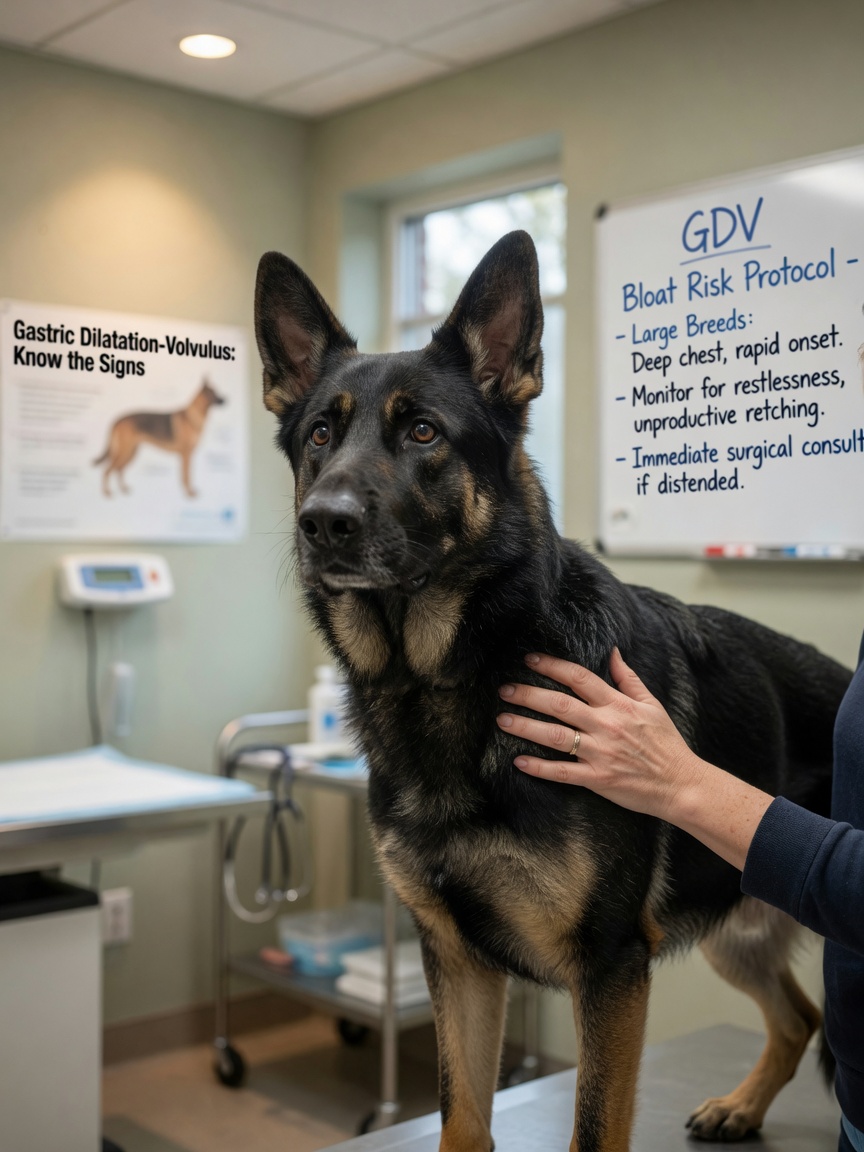
A dilatação gástrica-vólvulo (DGV) — comummente chamada inchaço — é uma condição de emergência com risco de vida na qual o estômago se enche com gás e pode torcer-se sobre si mesmo. Raças grandes e de peito profundo incluindo Great Danes, Pastor Alemão, Caniche Padrão, Weimaraner e Setter Irlandês estão em risco significativamente elevado. As causas exatas de DGV são multifatoriais e não totalmente compreendidas, mas os fatores dietéticos que promovem produção de gás no intestino são considerados potenciais contribuintes.
O tofu fermenta relativamente rapidamente no trato gastrointestinal, produzindo gás como subproduto. Esta é uma característica que partilha com muitas leguminosas e alimentos vegetais ricos em fibra. Para cães pequenos ou cães com risco basal baixo de inchaço, o gás ocasional de um pequeno cubo de tofu é tipicamente um incómodo minor no máximo. Para raças grandes ou gigantes já predispostas a DGV, introduzir um alimento que produz gás — mesmo em quantidades moderadas — é um risco que vale a pena considerar cuidadosamente. Muitos veterinários que trabalham com raças propensas a inchaço aconselham minimizar leguminosas e outras proteínas vegetais fermentáveis precisamente por esta razão. Se você possui um cão grande de peito profundo, o tofu é um daqueles alimentos onde uma breve conversa com o seu veterinário é genuinamente válida antes de o oferecer.
Alergia a Soja em Cães: Reconhecendo os Sinais
A soja é um dos alérgenos alimentares mais comuns em cães. As alergias alimentares em cães tipicamente manifestam-se como sinais gastrointestinais (fezes cronicamente moles, gases, vómito) ou sinais de pele (comichão, vermelhidão, infeções recorrentes nos ouvidos, mastigação das patas), ou uma combinação de ambos. Porque a soja já é um ingrediente em muitas rações comerciais para cães — onde aparece sob nomes como farinha de soja, proteína de soja