
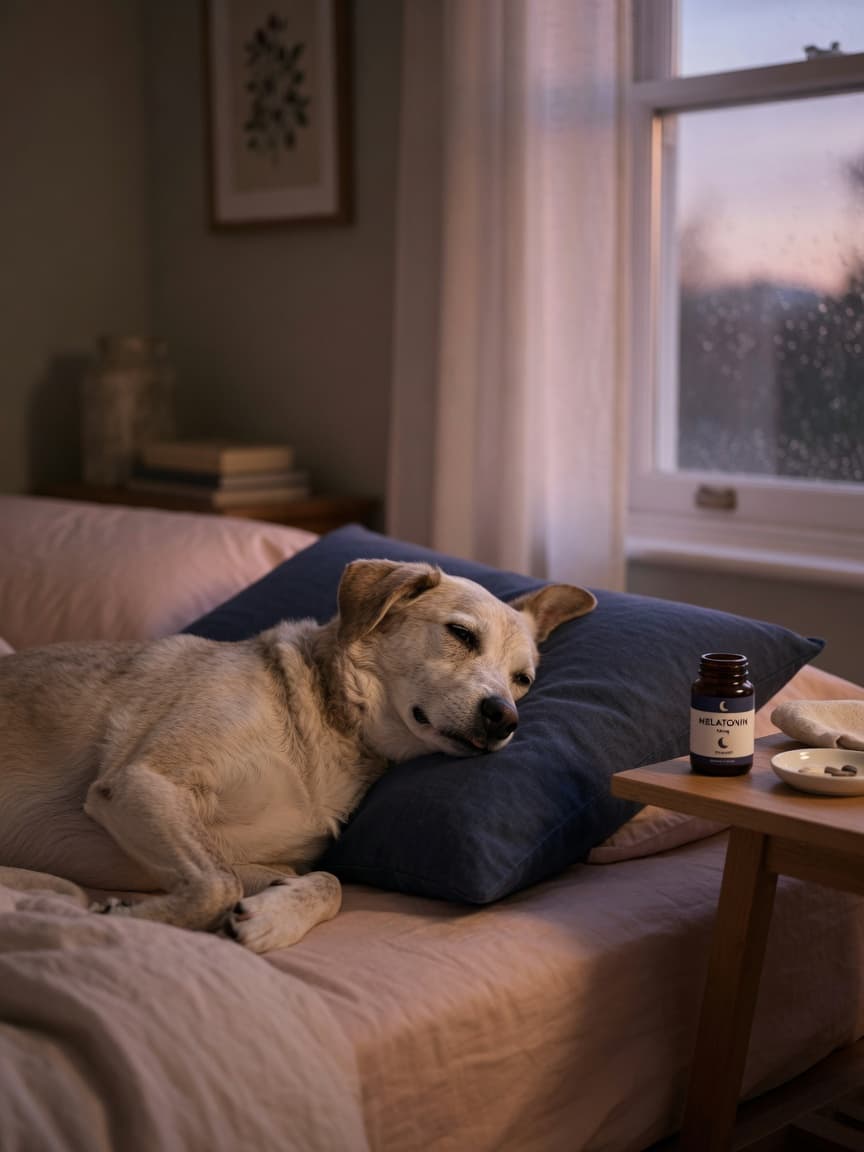
Melatonine voor honden: gids voor slaap, angst & veilige dosering
Melatonine bevindt zich in een bijzondere positie onder de supplementen voor honden: het is zowel een natuurlijk voorkomend zoogdierhormoon als een breed verkrijgbaar vrij verkoopbaar product. Het is een van de weinige niet-medicamenteuze kalmerende middelen die praktiserende dierenartsen met enige regelmaat aanbevelen, en het wordt genoemd in leerboeken over veterinaire farmacologie. Toch blijven er belangrijke vragen bestaan over de optimale dosering, de veiligheid op lange termijn en welke honden er het meest van zullen profiteren.
Dit artikel bespreekt het huidige bewijs eerlijk — inclusief waar de data sterk zijn, waar ze zijn geëxtrapoleerd uit onderzoek bij mensen, en waar werkelijke onzekerheid blijft bestaan.
De biologie van melatonine: wat het van nature doet
Bij honden wordt melatonine, net als bij mensen, door de pijnappelklier aangemaakt, hoofdzakelijk als reactie op duisternis. De afgifte volgt een circadiaan ritme: de waarden stijgen in de avond, pieken in de nacht en dalen bij blootstelling aan ochtendlicht. Daardoor is melatonine een centrale regulator van de slaap-waakcyclus en van seizoensgebonden biologische ritmes.
Naast slaap beïnvloedt melatonine de seizoensgebondenheid van de reproductie bij honden (niet-gesteriliseerde teven kunnen veranderingen in hun cyclus ervaren bij melatonine-implantaten), de immuunmodulatie en de antioxidatieve activiteit. Melatonine is een directe vrije-radicalenvanger en verhoogt de activiteit van lichaamseigen antioxidatieve enzymen — een eigenschap die interesse heeft gewekt in onderzoek naar veroudering en neurodegeneratie, hoewel de klinische toepassing bij honden nog verkennend is.
Melatoninereceptoren (MT1 en MT2) komen in de hele hersenen voor, waaronder in de nucleus suprachiasmaticus (de centrale biologische klok), de hippocampus en limbische structuren die betrokken zijn bij de verwerking van angst. Deze receptorverdeling verklaart waarom melatonine zowel de slaaparchitectuur als de emotionele regulatie kan beïnvloeden.
Bewijs voor angst- en vreesreacties
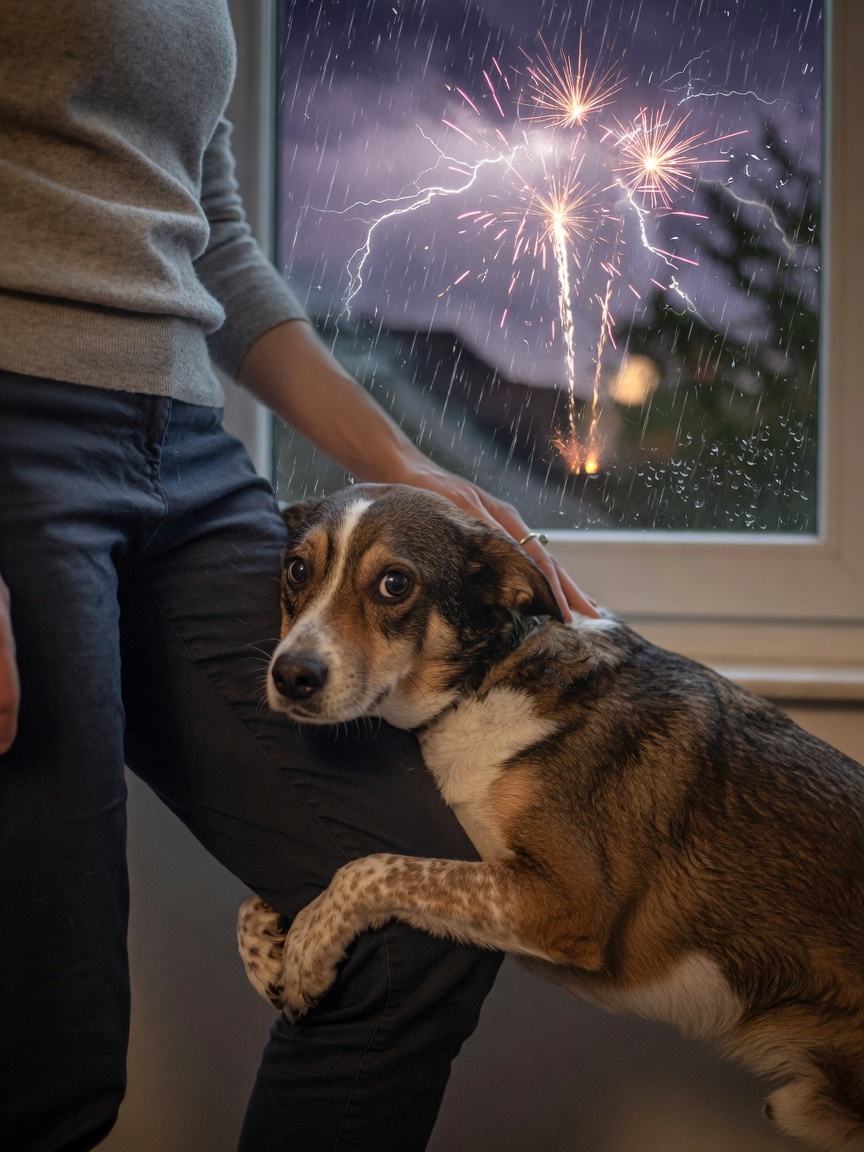
Geluidsfobie en angst voor vuurwerk
Dit is de meest onderzochte toepassing van melatonine bij honden. Dierenartsen gebruiken melatonine sinds het begin van de jaren 2000 bij geluidsfobie, grotendeels op basis van klinische ervaring in plaats van grote gecontroleerde studies. De onderliggende werkingsverklaring is solide: de angstremmende eigenschappen van melatonine berusten vermoedelijk op GABAerge routes, interacties met benzodiazepinereceptoren en modulatie van de serotonine-omzetting in limbische gebieden.
Aronson (1999) rapporteerde in een veel geciteerde casusreeks een subjectief kalmerend effect bij honden met onweers- en geluidsfobie die 3 mg melatonine oraal kregen, 30 minuten vóór een verwachte stressprikkel. Hoewel casusreeksen naar moderne maatstaven bewijs van lage kwaliteit vormen, zijn de observaties consistent gebleken binnen klinische praktijken wereldwijd. Een studie uit 2003 door Crowell-Davis et al. naar multimodale benaderingen van onweersfobie nam melatonine op als onderdeel van behandelprotocollen en beschreef gunstige beoordelingen door clinici, hoewel het methodologisch moeilijk was om de bijdrage van melatonine afzonderlijk vast te stellen.
Verlatingsangst en algemene situationele stress
Het bewijs is hier zwakker. Melatonine kan de piek in opwinding bij mild angstige honden verminderen, maar er zijn geen gerandomiseerde gecontroleerde studies die werkzaamheid aantonen specifiek voor verlatingsangst. Voor deze indicatie hebben gedragstherapie en receptplichtige medicijnen zoals fluoxetine of clomipramine een aanzienlijk sterkere onderbouwing.
Bewijs voor slaapstoornissen bij oudere honden
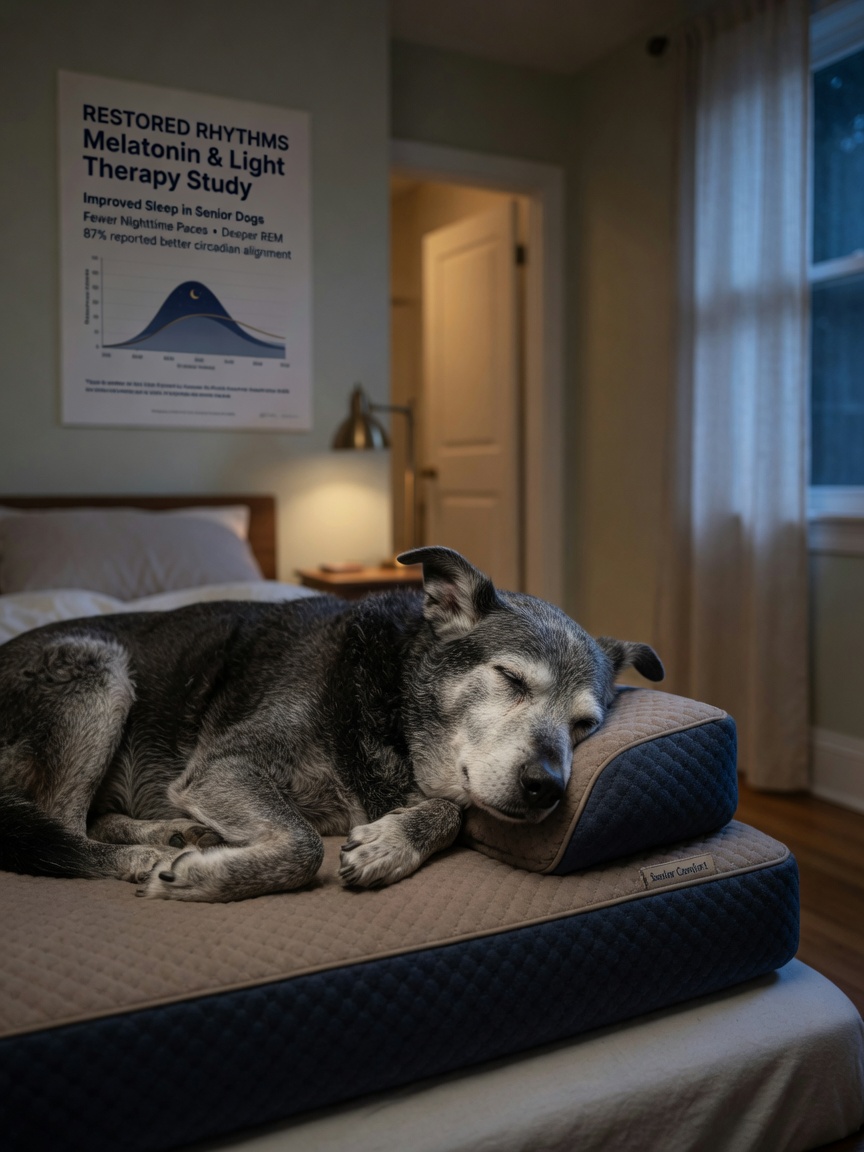
Cognitief disfunctiesyndroom (CDS) — het hondenequivalent van dementie — treft naar schatting 14–35% van de honden ouder dan 8 jaar. Verstoorde slaap-waakcycli, nachtelijke onrust en omgekeerde dag-nachtactiviteitspatronen zijn kenmerkende verschijnselen. Deze symptomen veroorzaken aanzienlijk leed bij zowel honden als hun eigenaren.
Omdat melatonine direct betrokken is bij de circadiane regulatie, is het een logische kandidaat om slaapverstoring bij CDS aan te pakken. Onderzoek in diermodellen van neurodegeneratie bij nagers laat zien dat melatonine de integriteit van het circadiane ritme behoudt en de amyloïdbelasting vermindert. Onderzoek naar alzheimer bij mensen omvat kleine gerandomiseerde studies waaruit blijkt dat melatonine de slaapefficiëntie verbetert en nachtelijke gedragsverstoringen vermindert. Specifiek veterinair bewijs blijft beperkt, maar gezien de gedeelde biologie en het lage risicoprofiel beschouwen de meeste veterinaire neurologen een proefbehandeling met melatonine als redelijk bij oudere honden met een aan CDS gerelateerde slaapstoornis.
Alopecia X: een onverwachte toepassing
Een van de beter gedocumenteerde veterinaire toepassingen van melatonine is bij Alopecia X — een slecht begrepen, cosmetische haaruitvalaandoening die vooral wordt gezien bij noordelijke rassen (pomeranians, chow chows, samojeden, husky's). De aandoening gaat gepaard met een afwijkende activiteit van bijniergeslachtshormonen en leidt tot symmetrisch haarverlies op de romp zonder systemische ziekte.
Het vermogen van melatonine om hormoonroutes van de reproductie te beïnvloeden en haargroei te stimuleren is bij deze aandoening onderzocht. Verschillende casusreeksen rapporteren gedeeltelijke tot volledige terugkeer van de vacht bij aangedane honden die werden behandeld met orale melatonine of onderhuidse implantaten. De responspercentages in gepubliceerde casusreeksen variëren van 40–60%, waardoor het een redelijke eerstekeuzeoptie is voordat er meer invasieve diagnostiek of behandelingen worden ingezet.
Doseringsrichtlijnen
| Formaat hond | Gewicht | Dosis | Frequentie |
|---|---|---|---|
| Klein | < 10 kg | 1 mg | Elke 8–12 uur of naar behoefte |
| Middelgroot | 10–25 kg | 1,5–3 mg | Elke 8–12 uur of naar behoefte |
| Groot | >25 kg | 3–6 mg | Elke 8–12 uur of naar behoefte |
Bij situationele angst (onweer, vuurwerk, reizen): geef het 30–60 minuten vóór de verwachte stressprikkel.
Bij slaapstoornissen bij oudere honden: geef het 30 minuten voor het gewenste slaapmoment.
Deze marges komen overeen met wat in veterinaire naslagwerken staat en wat in de klinische praktijk gewoonlijk wordt aangeraden. Het is goed om op te merken dat deze grotendeels op consensus zijn gebaseerd en niet zijn afgeleid uit gecontroleerde dosisbepalende studies bij honden — een hiaat in het bewijs dat benoemd moet worden.
Belangrijke veiligheidswaarschuwing: xylitol in melatoninepreparaten voor mensen
Andere veiligheidsoverwegingen
- Effecten op de reproductie: Melatonine beïnvloedt de hypothalamus-hypofyse-gonadenas. Niet-gesteriliseerde teven kunnen veranderde loopsheidcycli ervaren. Wees voorzichtig bij honden die bedoeld zijn voor de fokkerij.
- Interacties met medicijnen: Melatonine kan de werking van andere kalmerende middelen versterken. Informeer uw dierenarts over alle supplementen voordat nieuwe medicijnen worden voorgeschreven. Op basis van farmacologische gegevens bij mensen bestaat er ook een theoretische interactie met antistollingsmiddelen en immunosuppressiva.
- Diabetes: Sommig onderzoek suggereert dat melatonine de insulinegevoeligheid kan verminderen of het glucosemetabolisme kan beïnvloeden bij hogere doseringen. Wees voorzichtig bij diabetische honden en controleer de bloedglucose.
- Auto-immuunaandoeningen: De immuunmodulerende eigenschappen van melatonine zijn over het algemeen ontstekingsremmend, maar het bewijs is complex. Overleg met uw dierenarts als uw hond een actieve auto-immuunaandoening heeft.
- Langdurig gebruik: Gegevens over de veiligheid van continue, langdurige melatoninesuppletie bij honden ontbreken. Voor het beheersen van chronische angst is het beter om melatonine naar behoefte te gebruiken of in afgebakende behandelperiodes met herbeoordeling door de dierenarts.
Het juiste product kiezen
Melatoninepreparaten voor mensen verschillen enorm in het werkelijke melatoninegehalte. Onafhankelijke tests door organisaties zoals ConsumerLab vonden producten met tussen 83% minder en 478% meer melatonine dan op het label staat. Door deze variatie is dosering met niet-gecontroleerde merken onbetrouwbaar. Zoek naar producten met certificering door een onafhankelijke partij (NSF International, USP Verified of vergelijkbaar) en geef de voorkeur aan producten met zo weinig mogelijk toegevoegde ingrediënten. Pure melatoninetabletten zonder vulstoffen, kleurstoffen of zoetstoffen zijn de veiligste keuze voor gebruik bij honden.
Wanneer melatonine niet genoeg is
Bij honden met matige tot ernstige angst — vooral verlatingsangst, gegeneraliseerde angststoornis of ernstige geluidsfobie die leidt tot zelfverwonding of vernieling van eigendommen — is melatonine alleen niet toereikend. Deze honden hebben een uitgebreid gedragsplan nodig, vaak met betrokkenheid van een erkend veterinair gedragsdeskundige, en hebben regelmatig baat bij receptplichtige medicatie. Melatonine kan onderdeel zijn van een multimodaal protocol, maar mag een passende professionele beoordeling niet uitstellen wanneer angst de kwaliteit van leven aanzienlijk beïnvloedt.
- Melatonine is een natuurlijk voorkomend zoogdierhormoon met een aannemelijk werkingsmechanisme voor zowel slaapregulatie als angstvermindering.
- Het beste bewijs ondersteunt gebruik bij geluidsfobie, situationele angst, slaapstoornissen bij oudere honden en Alopecia X.
- Controleer melatoninepreparaten voor mensen altijd op xylitol — het is giftig voor honden en zit in veel gummy-formuleringen.
- De dosering is gewichtsafhankelijk: 1–6 mg afhankelijk van de grootte, 30–60 minuten vóór het benodigde moment gegeven.
- Wees voorzichtig bij niet-gesteriliseerde teven, diabetische honden en honden die middelen gebruiken die het centrale zenuwstelsel onderdrukken.
- Matige tot ernstige angst vereist een gedragsbeoordeling en waarschijnlijk receptplichtige medicatie — melatonine alleen is niet voldoende.
- Aronson L. Animal behavior case of the month. Use of melatonin to treat sleep disorders in dogs and cats. Journal of the American Veterinary Medical Association. 1999;215(8):1130–1134. PMID: 10550583.
- Crowell-Davis SL, Seibert LM, Sung W, Parthasarathy V, Curtis TM. Use of clomipramine, alprazolam, and behavior modification for treatment of storm phobia in dogs. Journal of the American Veterinary Medical Association. 2003;222(6):744–748. PMID: 12661867.
- Frank D, Gauthier A, Bergeron R. Placebo-controlled double-blind clonidine trial for the treatment of anxiety or fear in beagles during veterinary examinations. Veterinary Dermatology. 2006;17(4):278–290. PMID: 16827681.