
Door Julia Wrenfield, Onderzoeker & Schrijver Dierenwelzijn — 24 juni 2026
Appels zijn een gezonde, caloriearm tussendoortje voor honden. U moet echter de pitten en het klokhuis verwijderen voordat u ze serveert. Appelpitten bevatten amygdaline, een stof die cyanide vrijgeeft bij vertering. Het vruchtvlees en de schil zijn volkomen veilig en voedzaam.
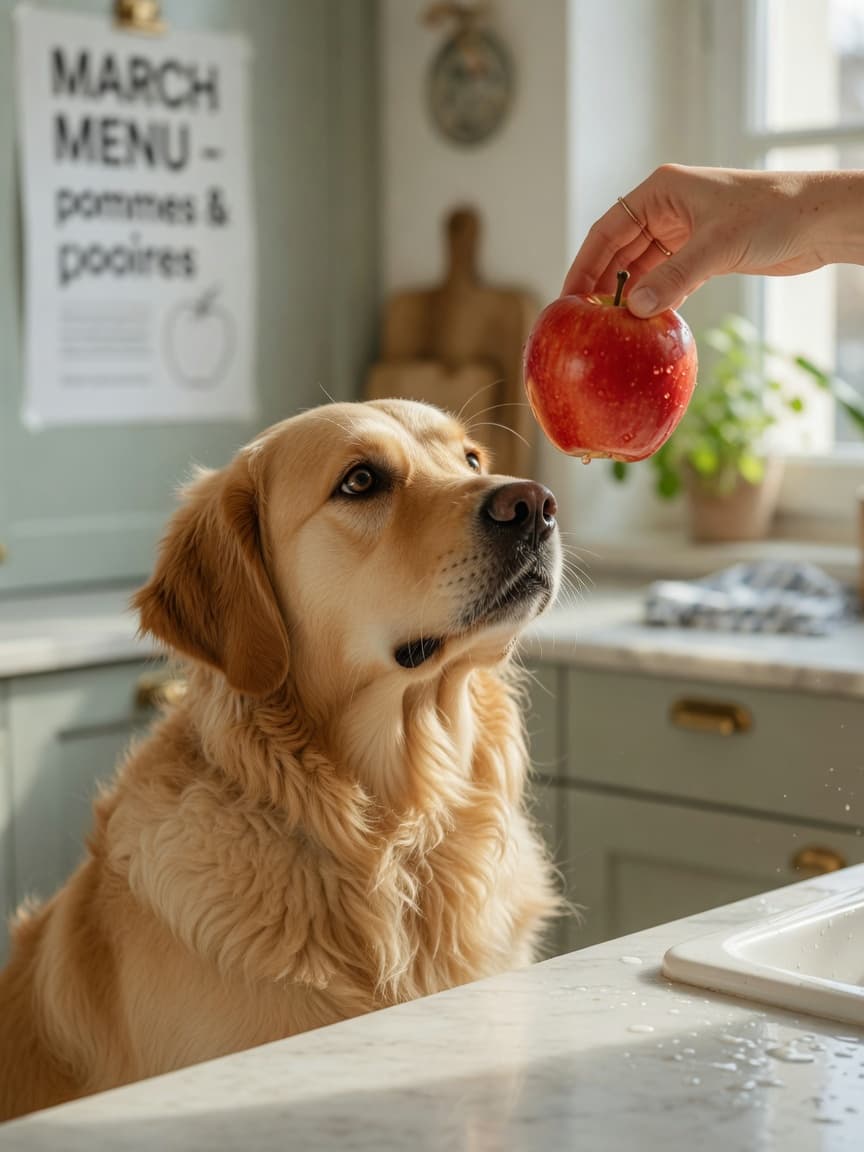
Appels zijn één van de populairste vruchten ter wereld, en als u ooit in de buurt van uw hond een appel hebt gegeten, hebt u waarschijnlijk al die hoopvolle ogen naar u zien staren. Het goede nieuws is dat appels echt goed zijn voor honden — vol vitamines, vezels en antioxidanten. Het belangrijkste is te weten hoe u ze veilig bereidt, zodat uw hond alle voordelen krijgt zonder risico's.
In deze gids behandelen we alles wat u moet weten: welke delen van de appel veilig zijn, hoeveel u kunt geven op basis van de grootte van uw hond, en hoe u appels op creatieve manieren serveert die uw hond zal liefhebben.
Zijn appels veilig voor honden?
Ja — het vruchtvlees en de schil van een appel zijn volledig veilig voor honden om te eten. Appels zijn niet giftig en staan op de ASPCA-lijst met huisdier-veilige voedingsmiddelen. Het gevaar ligt uitsluitend in de pitten en het klokhuis.
Appelpitten bevatten amygdaline, een cyanogene glucoside. Wanneer ze worden gekauwd en gemetaboliseerd, breekt amygdaline af en geeft waterstofcyanide vrij. Hoewel een hond een aanzienlijke hoeveelheid pitten zou moeten consumeren om acute vergiftiging te ondervinden, is het niet voordelig om pitconsumptie toe te staan, en chronische blootstelling kan in de loop van de tijd ophopen. De regel is eenvoudig: verwijder altijd het klokhuis en pit de appel voordat u deze aan uw hond aanbiedt.
Het klokhuis vormt een ander risico — het is taai, vezelig en kan een verstikkingsgevaar vormen, vooral voor kleine rassen. Het kan ook bijdragen tot darmverstopping als het in stukken wordt ingeslikt. Verwijder het volledig.
De schil is, in tegenstelling tot enkele mythe, veilig en zelfs voordelig. Het bevat quercetine en andere polyfenolen die de immuunfunctie ondersteunen. Zorg er alleen voor dat de appel goed wordt gewassen om eventuele pesticideresten te verwijderen.
Voedingswaarde van appels voor honden
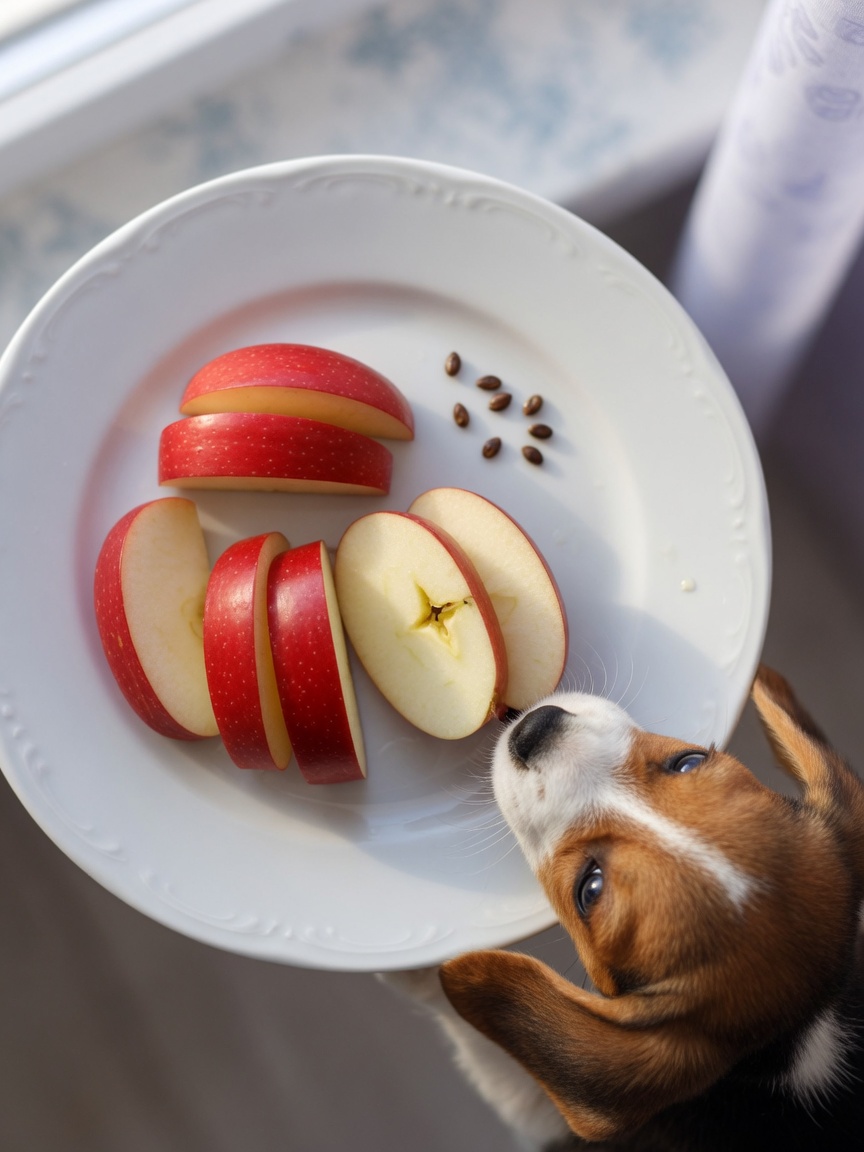
Appels bieden een verrassend solide voedingsprofiel als tussendoortje. Dit krijgt uw hond van een portie verse appel:
- Vitamine A (als bètacaroteen): Ondersteunt gezondheid van de huid, kwaliteit van de vacht, immuunfunctie en zicht. Bètacaroteen is een krachtig antioxidant dat vrije radicalen op cellulair niveau neutraliseert.
- Vitamine C: Hoewel honden hun eigen vitamine C aanmaken, kunnen aanvullende voedingsbronnen de immuunrespons ondersteunen tijdens perioden van stress of ziekte. Het werkt ook als antioxidant.
- Voedingsvezels: De pectine in appelvruchtvlees ondersteunt gezonde darmbewegingen en kan helpen bloedsuikerspiegels te reguleren. Het voert ook nuttige darmbacteriën, wat bijdraagt aan een gebalanceerd microbioom.
- Lage caloriedichtheid: Appels bestaan voor ongeveer 86% uit water en bevatten ongeveer 52 calorieën per 100g — wat ze een schuldvrij tussendoortje maakt voor honden die op gewichtsbeheer volgen.
- Appelzuur: Dit milde zuur kan helpen bacteriën op tandoppervlakken te verminderen, wat frissere adem en minder tandsteenvorming tussen tandschoonmaakbehandelingen ondersteunt.
- Fosfor en calcium: In bescheiden hoeveelheden aanwezig, dragen deze mineralen bij aan bot- en tandgezondheid.
Appels zijn ook van nature vrij van vet en natrium, wat ze een superieur alternatief maakt ten opzichte van veel commerciële tussendoortjes voor honden met hartaandoeningen of pancreatitis.
Hoe u appels aan uw hond serveert
Voorbereiding is eenvoudig, maar het volgen van deze stappen elke keer zorgt voor de veiligheid van uw hond:
- Was de appel grondig onder stromend water. Kies indien mogelijk biologische appels om pesticideblootstelling tot een minimum te beperken.
- Verwijder het klokhuis volledig. Gebruik een appelboorder of snijd eromheen. Het klokhuis omvat de zaadholte en de taaie centrale vezelige kolom.
- Verwijder alle pitten. Controleer elke schijf dubbel. Pitten kunnen zich in het vruchtvlees dicht bij het klokhuis verstoppen.
- Snijd in passende grootten. Voor kleine honden in dunne hapklare stukjes snijden. Voor middelgrote en grote honden werken grotere schijven of partjes prima. Geef geen hele of halve appel — het risico dat de hond in pitten of klokhuis bijt neemt dramatisch toe.
- Vers serveren. Vermijd appelmoes (bevat vaak toegevoegde suiker of xylitol), appelsap (geconcentreerde suikers, geen vezels), gedroogde appels (calorierijk) of appelsmaakproducten (kunstmatige smaakstoffen, additieven).
Leuke serveerideeën:
- Vries appelschijven in voor een verfrissend zomerse tussendoortje
- Meng kleine appelstukjes door het normale voer van uw hond als topping
- Vul een Kong-speeltje met appelstukjes en wat pindakaas (xylitolvrij)
- Gebruik kleine appelkubusjes als waardevol tussendoortje