
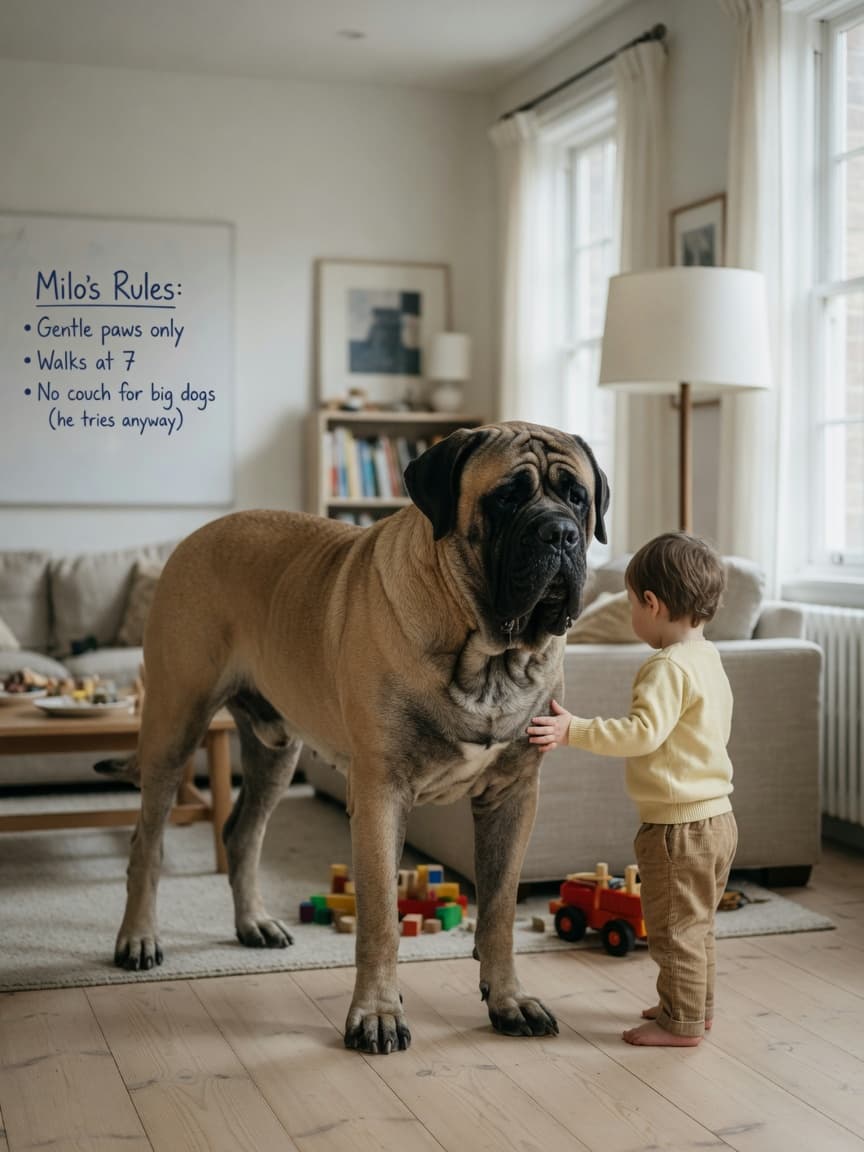
Il Mastino inglese è una razza gigante dal carattere mite, più adatta a proprietari con case spaziose e esperienza nella gestione di cani di taglia grande, apprezzata per la sua lealtà calma e affettuosa verso la famiglia. Il suo tratto più distintivo è l'enorme taglia combinata con un temperamento sorprendentemente placido. La principale preoccupazione sanitaria per questa razza è la durata di vita ridotta rispetto ai cani più piccoli, dovuta in gran parte alle malattie articolari e a una predisposizione a certi tumori e a patologie cardiache.
Panoramica della razza
- Taglia: Una delle razze canine riconosciute più pesanti; i maschi superano spesso i 70 kg, con le femmine un po' più leggere. L'altezza varia in genere da 70–90 cm al garrese.
- Aspettativa di vita: Comunemente riportata come 6–10 anni, più breve rispetto alla maggior parte delle razze a causa delle esigenze fisiche di una grande taglia corporea.
- Mantello: Corto, denso e liscio, con colori che includono fulvo, albicocca e tigrato, sempre con maschera nera.
- Origine: Un'antica razza britannica con un lignaggio che risale a secoli fa, usata storicamente per la guardia di proprietà e bestiame, e in seguito raffinata nel compagno gentile che si vede oggi.
Temperamento e idoneità familiare
Il Mastino inglese è spesso descritto come un "gigante gentile", e questa reputazione è ben meritata. Nonostante una presenza fisica imponente, la maggior parte dei Mastiff è calma, paziente e profondamente devota alle proprie famiglie, formando spesso stretti legami con i bambini quando è adeguatamente socializzata. Tendono a essere vigili piuttosto che aggressivi, usando la loro taglia e un abbaio basso e rimbombante per dissuadere i visitatori indesiderati piuttosto che agire con ostilità.
Questa razza non è naturalmente ad alta energia ed è in genere soddisfatta di un esercizio moderato, il che la rende una scelta ragionevolmente buona per i proprietari che vogliono un compagno leale senza le esigenze di una razza da lavoro altamente attiva. Tuttavia, la loro mole significa che la socializzazione precoce e l'addestramento di base all'obbedienza sono essenziali — un Mastiff adulto che tira al guinzaglio o salta addosso può essere davvero difficile da gestire, indipendentemente da quanto sia di buon carattere. A causa della loro taglia, le famiglie dovrebbero anche considerare aspetti pratici come lo spazio per i mobili, le dimensioni del veicolo per il trasporto e il costo dell'alimentazione e delle cure veterinarie.
I Mastiff in genere vanno d'accordo con altri animali domestici se cresciuti insieme, sebbene la sola taglia significhi che la supervisione intorno a bambini piccoli e animali di piccola taglia è consigliabile, semplicemente per evitare urti accidentali piuttosto che per una qualsiasi aggressività innata.
Problemi di salute nei Mastini inglesi
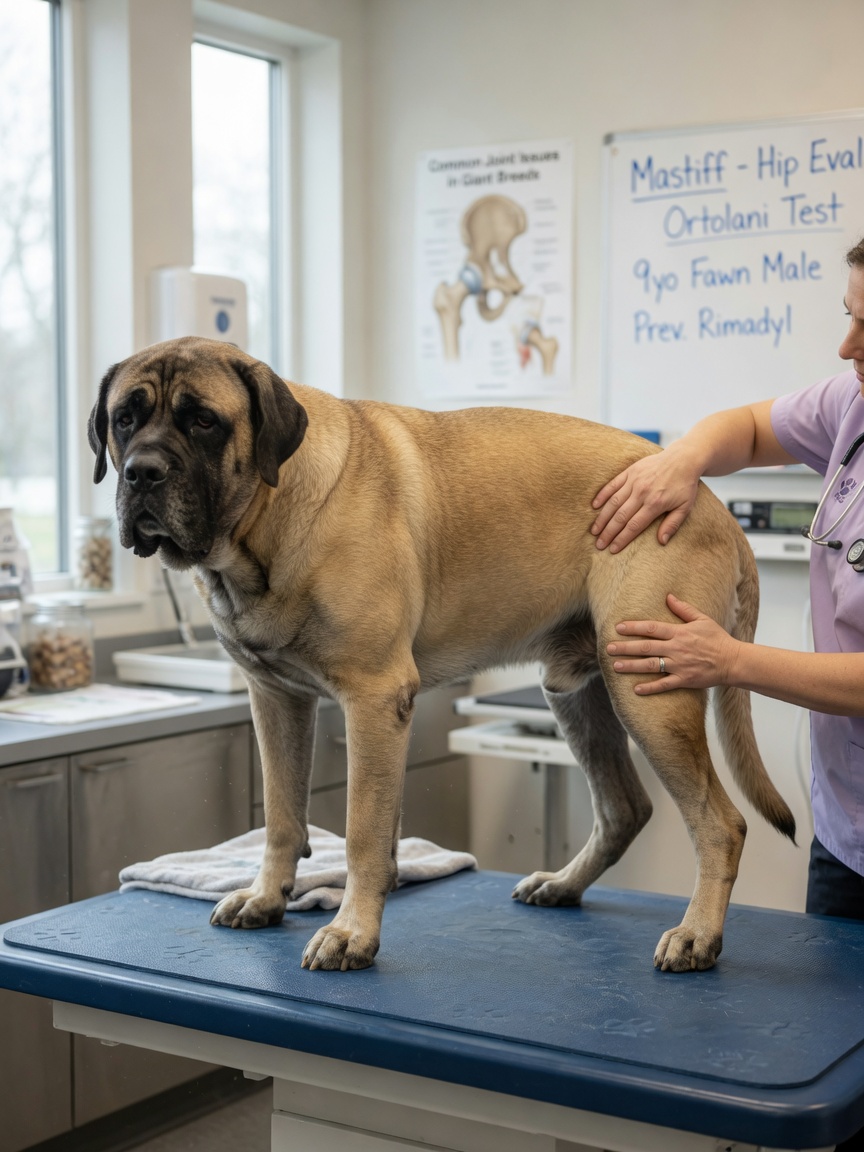
Come per la maggior parte delle razze giganti, il profilo di salute del Mastino inglese è fortemente influenzato dalla sua taglia e dal rapido ritmo di crescita. I proprietari attuali e quelli potenziali traggono beneficio dal comprendere le predisposizioni comunemente documentate della razza, così da poter osservare i primi segni e collaborare in modo proattivo con il proprio veterinario.
Displasia dell'anca e del gomito
La displasia dell'anca e del gomito sono condizioni articolari dello sviluppo in cui le ossa dell'articolazione non si adattano tra loro in modo fluido come dovrebbero, causando un'usura anomala nel tempo. Questo è comunemente riportato nelle razze giganti come il Mastiff, in gran parte a causa dello sforzo che la crescita rapida impone alle articolazioni in sviluppo.
I primi segni possono includere rigidità dopo il riposo, riluttanza a saltare in auto, un'andatura a coniglio, o zoppia che può andare e venire. Poiché i cuccioli crescono così rapidamente, monitorare da vicino il ritmo di crescita e la condizione corporea durante il primo anno è una delle cose più utili che un proprietario possa fare; la nostra guida alle fasi di crescita del cucciolo spiega come si presenta uno sviluppo sano in ogni fase. I veterinari possono raccomandare lo scoring dell'anca e del gomito per i cani da riproduzione, e l'esercizio controllato, diete adatte alle articolazioni e il mantenimento di una condizione corporea magra per tutta la vita possono tutti contribuire a ridurre lo sforzo sulle articolazioni in sviluppo. Se la displasia si sviluppa, le opzioni di gestione vanno dal controllo del peso e dalla fisioterapia alla chirurgia nei casi più gravi.
Osteoartrite
In parte come conseguenza di condizioni articolari come la displasia, e in parte semplicemente a causa del carico meccanico che un corpo molto pesante esercita sulle articolazioni nel tempo, l'osteoartrite è un problema frequentemente osservato nei Mastiff anziani. Comporta una degenerazione progressiva della cartilagine articolare, che porta a dolore e ridotta mobilità.
I proprietari notano spesso per primi cambiamenti sottili: più lenti ad alzarsi al mattino, esitazione sulle scale, o riluttanza a fare passeggiate più lunghe. Mantenere un Mastiff a un peso sano per tutta la vita è una delle misure preventive più efficaci, poiché il peso in eccesso aumenta significativamente lo stress articolare in una razza che già porta una massa corporea sostanziale. La nostra guida alla gestione dell'artrite nel cane copre strategie pratiche, dal letto di supporto agli integratori articolari e alla gestione del dolore guidata dal veterinario, che possono aiutare a mantenere la qualità della vita con l'invecchiamento dei cani.
Dilatazione-volvolo gastrico (gonfiore)
La dilatazione-volvolo gastrico, comunemente nota come gonfiore, è un'emergenza potenzialmente letale in cui lo stomaco si riempie di gas e può ruotare su se stesso, interrompendo l'afflusso di sangue. Le razze giganti dal torace profondo come il Mastiff sono comunemente riportate come a rischio più elevato rispetto alle razze più piccole e dal torace più stretto.
I segni da osservare includono un addome visibilmente gonfio o teso, conati improduttivi, irrequietezza e improvviso disagio — questa è sempre un'emergenza che richiede immediata attenzione veterinaria, poiché la condizione può progredire rapidamente. Somministrare pasti più piccoli e più frequenti piuttosto che un unico pasto giornaliero abbondante, evitare l'esercizio vigoroso immediatamente prima o dopo i pasti e usare ciotole a alimentazione lenta può aiutare a ridurre il rischio. Alcuni proprietari discutono con il veterinario della gastropessi preventiva (una procedura chirurgica per fissare lo stomaco in posizione), in particolare se il loro cane ha altri fattori di rischio.
Cardiomiopatia dilatativa (DCM) e altre patologie cardiache
La cardiomiopatia dilatativa è una condizione cardiaca in cui il muscolo cardiaco si indebolisce e le camere si allargano, riducendo la capacità del cuore di pompare il sangue in modo efficiente. È tra le patologie cardiache comunemente riportate nelle razze giganti, incluso il Mastiff.
I primi segni sono spesso sottili e facili da non notare, tra cui ridotta resistenza, tosse, respiro affannoso o episodi di svenimento. Poiché i sintomi possono svilupparsi gradualmente, i controlli veterinari di routine che includono l'ascolto di soffi cardiaci o ritmi irregolari sono preziosi, e alcuni proprietari di razze a rischio scelgono di effettuare screening cardiaci periodici come gli ecocardiogrammi. Mantenere una dieta equilibrata e appropriata ed evitare formulazioni boutique o grain-free non comprovate senza indicazione veterinaria è inoltre opportuno, dato l'interesse della ricerca in corso sui collegamenti tra certe diete e la salute cardiaca nei cani.
Tumori (incluso osteosarcoma e linfoma)
Le razze giganti, incluso il Mastiff, sono comunemente riportate come aventi una maggiore suscettibilità a certi tumori, tra cui l'osteosarcoma (tumore osseo) e il linfoma, rispetto a molte razze più piccole. Si ritiene che ciò sia in parte correlato alla loro grande taglia corporea e alla crescita rapida.
I proprietari dovrebbero osservare la comparsa di noduli inspiegabili, zoppia persistente non collegata a un trauma evidente, linfonodi ingrossati, perdita di peso inspiegabile o letargia. Controlli regolari a casa — passando le mani sul corpo per palpare nuovi noduli — combinati con una pronta attenzione veterinaria per qualsiasi sintomo persistente o inspiegabile, offrono la migliore possibilità di rilevazione e trattamento precoci.
Dermatite delle pieghe cutanee e allergie
La pelle lassa e grinzosa del Mastiff, in particolare intorno al viso e al collo, può trattenere umidità e detriti, rendendo la dermatite delle pieghe cutanee un problema comunemente riportato. Alcuni Mastiff soffrono anche di allergie cutanee generali, che possono causare prurito, arrossamento o infezioni ricorrenti delle orecchie.
I primi segni includono un odore acre proveniente dalle pieghe cutanee, arrossamento o irritazione visibile, insieme a grattamento eccessivo o leccamento delle zampe nei cani con più ampie sensibilità allergiche. La pulizia e l'asciugatura regolari delle pieghe facciali, in particolare dopo mangiato o bevuto, aiutano a prevenire la proliferazione batterica o di lieviti. Per i cani che mostrano segni di una più ampia sensibilità cutanea, la nostra guida alle allergie cutanee del cane spiega come identificare i fattori scatenanti e gestire i sintomi in collaborazione con un veterinario.
Entropion e altre patologie oculari
L'entropion, una condizione in cui la palpebra si ripiega verso l'interno e fa sì che le ciglia sfreghino contro la superficie dell'occhio, è comunemente riportato nei Mastiff, in parte a causa della loro struttura facciale. Se non trattato, può causare irritazione cronica o danni alla cornea.
I segni includono lacrimazione eccessiva, occhi socchiusi, arrossamento o sfregamento visibile degli occhi. La correzione chirurgica è in genere semplice e spesso raccomandata se la condizione causa un disagio persistente, e una valutazione veterinaria precoce aiuta a prevenire complicazioni secondarie.
Nutrizione e alimentazione
Alimentare correttamente una razza gigante è una delle cose più importanti che un proprietario possa fare, in particolare durante l'età di cucciolo. I cuccioli di Mastiff dovrebbero essere alimentati con una dieta formulata specificamente per cuccioli di razza grande o gigante, progettata per sostenere una crescita ossea più lenta e costante piuttosto che la crescita rapida che può sottoporre a sforzo le articolazioni in sviluppo. Sovralimentare o integrare calcio in modo inappropriato in questa fase può peggiorare il rischio di problemi scheletrici, quindi seguire le indicazioni veterinarie sulle porzioni e sui controlli della crescita è prezioso.
In età adulta, mantenere una condizione corporea magra è probabilmente l'obiettivo nutrizionale di maggiore impatto, dato quanto direttamente il peso in eccesso influisca sulla salute articolare, sul carico di lavoro cardiaco e sull'aspettativa di vita complessiva nelle razze giganti. I pasti sono spesso meglio suddivisi in due o più porzioni più piccole al giorno piuttosto che in un unico pasto abbondante, in parte per favorire la digestione e in parte come precauzione contro il gonfiore. L'acqua fresca dovrebbe essere sempre disponibile, sebbene alcuni proprietari scelgano di limitare grandi sorsate d'acqua immediatamente intorno all'esercizio.
Quando i Mastiff entrano negli anni senior — che arrivano prima rispetto alle razze più piccole — i fabbisogni nutrizionali cambiano di nuovo, spesso beneficiando di nutrienti di supporto articolare e di un contenuto calorico adattato per corrispondere all'attività ridotta. La nostra guida al miglior cibo per cani anziani offre indicazioni utili su questa transizione. I cani con sensibilità cutanee diagnosticate possono anche beneficiare di approcci su misura descritti nella nostra guida al cibo ipoallergenico per cani, e alcuni proprietari esplorano i probiotici per cani per sostenere la salute digestiva, idealmente dopo averne discusso l'idoneità con il veterinario.
Toelettatura e cura
Il mantello corto del Mastiff è relativamente di facile manutenzione in termini di toelettatura, richiedendo in genere solo una spazzolatura settimanale per rimuovere il pelo morto e mantenere la pelle sana, con spazzolature più frequenti durante i periodi di muta stagionale. Il bagno può essere fatto secondo necessità piuttosto che secondo un programma fisso.
Maggiore attenzione è di solito necessaria per le pieghe facciali e le guance soggette a bava, che dovrebbero essere pulite e asciugate regolarmente per prevenire irritazioni cutanee o odori. Le orecchie dovrebbero essere controllate settimanalmente per segni di arrossamento, accumulo di cerume o odore, poiché le razze con orecchie pendenti possono essere più predisposte alle otiti. Le unghie dovrebbero essere tagliate regolarmente, poiché unghie troppo lunghe possono influire sull'andatura e sul comfort, in particolare dato il notevole peso corporeo del cane che grava su ciascun piede.
La cura dentale di routine, compreso lo spazzolamento regolare dei denti, sostiene anche la salute a lungo termine e può aiutare a cogliere i primi segni di malattia dentale prima che influisca sull'alimentazione o sul benessere generale.
Esigenze di esercizio e addestramento
Nonostante la loro taglia, i Mastini inglesi non sono una razza ad alta energia e in genere stanno bene con un esercizio quotidiano moderato piuttosto che con attività intense o prolungate. Due passeggiate più brevi al giorno, combinate con un po' di tempo libero in un giardino sicuro, sono di solito sufficienti per i cani adulti. I cuccioli in particolare dovrebbero avere l'esercizio attentamente limitato durante la fase di crescita, poiché salti eccessivi, corsa su superfici dure o lunghe passeggiate forzate possono sottoporre a uno stress eccessivo le articolazioni in sviluppo — un altro motivo per cui comprendere i normali schemi di crescita è importante fin dall'inizio.
L'addestramento dovrebbe iniziare presto, idealmente dall'età di cucciolo, concentrandosi sull'obbedienza di base, sulle buone maniere al guinzaglio e sui saluti calmi. Poiché un Mastiff adulto è fisicamente potente, insegnare un buon comportamento al guinzaglio prima che il cane raggiunga la taglia piena rende la vita quotidiana considerevolmente più facile e sicura per tutti i coinvolti. I Mastiff in genere rispondono bene ai metodi di rinforzo positivo e sono desiderosi di compiacere i propri proprietari, sebbene la loro talvolta vena testarda significhi che pazienza e costanza sono qualità preziose nelle sessioni di addestramento.
La stimolazione mentale, attraverso puzzle feeder, giochi di addestramento delicati o semplicemente routine quotidiane strutturate, può aiutare a mantenere questa razza riflessiva soddisfatta, in particolare con l'età e il naturale declino della capacità di esercizio fisico.
Domande frequenti
I Mastini inglesi vanno d'accordo con i bambini?
In generale, sì — i Mastiff sono spesso noti per la loro natura gentile e paziente con i bambini quando sono adeguatamente socializzati dall'età di cucciolo. Detto questo, la loro mole significa che la supervisione è importante, principalmente per prevenire urti o inciampi accidentali piuttosto che per tendenze aggressive.
Quanto mangiano i Mastini inglesi?
Le quantità esatte variano in base a taglia, età e livello di attività individuali, ma i Mastiff richiedono in genere porzioni di cibo sostanzialmente più grandi rispetto alle razze di taglia media, suddivise in due o più pasti al giorno. Un veterinario o un nutrizionista veterinario può aiutare a calcolare le porzioni appropriate in base al peso e alla condizione corporea del singolo cane.
Perché i Mastiff hanno un'aspettativa di vita più breve rispetto ai cani più piccoli?
Le razze giganti come il Mastiff hanno comunemente un'aspettativa di vita più breve, e questo è generalmente attribuito al combinato sforzo fisico di portare un corpo molto grande, insieme a una maggiore predisposizione a certi tumori, patologie cardiache e malattie articolari rispetto alle razze più piccole.
I Mastini inglesi sbavano molto?
Sì, la bava è un tratto ben noto della razza, in particolare intorno alle guance lasse, e tende ad aumentare dopo mangiato, bevuto o esercizio. Pulire regolarmente la zona della bocca aiuta a mantenere le pieghe cutanee pulite e confortevoli.
Questa guida è destinata esclusivamente a scopi informativi generali e non sostituisce il parere veterinario personalizzato. Consultare sempre un veterinario qualificato per qualsiasi problema di salute o prima di apportare modifiche significative alla dieta, all'esercizio o alla routine di cura del proprio cane.