
Pourquoi mon chien tremble-t-il ?
Mise à jour : juin 2026
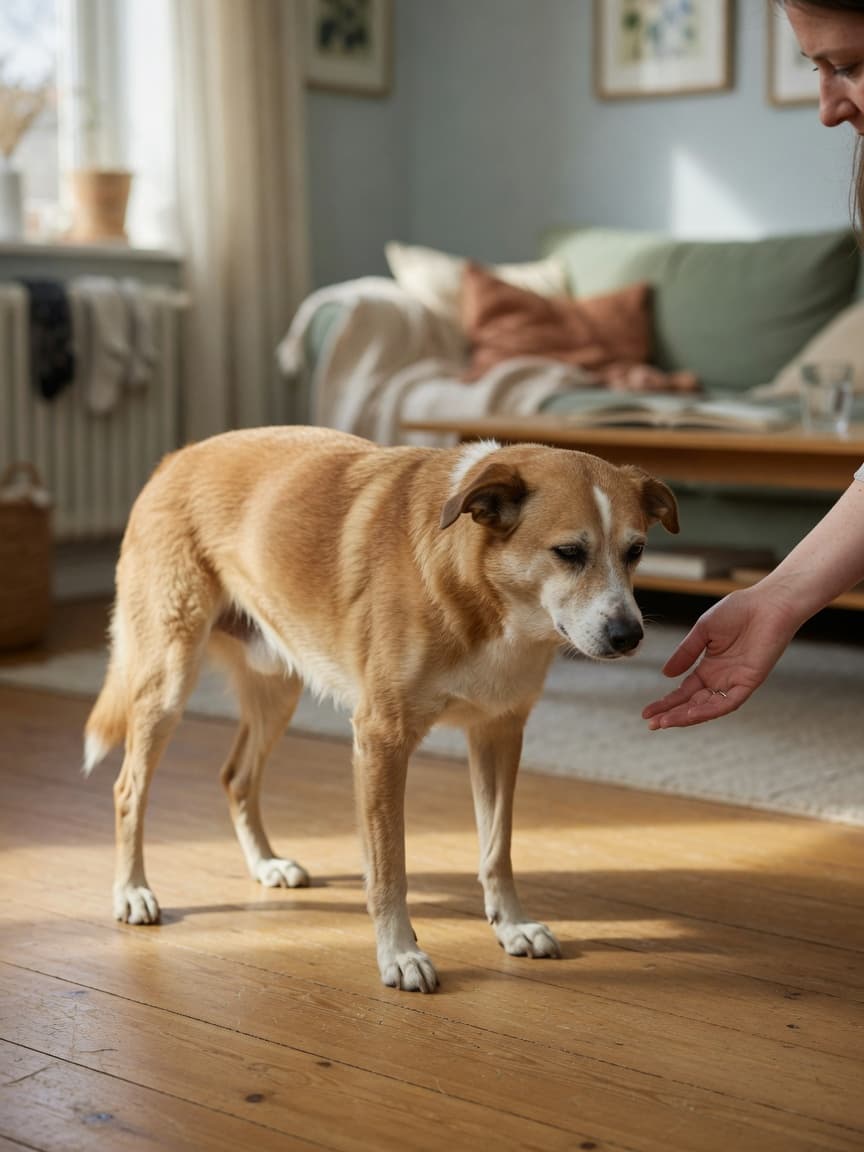
Un chien qui tremble est l'un des spectacles les plus alarmants pour un propriétaire d'animal, et pourtant les causes vont de totalement bénignes (votre chien a simplement froid ou il est excité) à réellement mortelles (ingestion de toxine ou crise neurologique). La clé pour savoir comment réagir réside dans le contexte : quand le tremblement a-t-il commencé, combien de temps dure-t-il et que se passe-t-il d'autre ? Ce guide vous présente les raisons les plus fréquentes pour lesquelles les chiens tremblent et tremblent, et vous indique exactement quand vous devez agir vite.
1. Le froid ou l'humidité
L'explication la plus simple est souvent la bonne. Les chiens frissonnent quand ils ont froid, tout comme les humains — il s'agit d'une contraction musculaire involontaire destinée à produire de la chaleur corporelle. Les petites races, les chiens à poil court, les chiots et les chiens âgés ont moins de masse corporelle et une fourrure moins isolante, ce qui les rend particulièrement sujets aux frissons liés à la température. Un chien qui est resté dehors par temps froid ou humide, ou qui a nagé, frissonnera fréquemment jusqu'à ce qu'il se réchauffe. Un séchage à la serviette, une couverture chaude et du temps passé à l'intérieur constituent tout le traitement nécessaire. Si les frissons persistent après le réchauffement, il faut envisager une autre cause.
2. La peur et l'anxiété

La peur est l'un des déclencheurs les plus fréquents des tremblements chez le chien. Les orages, les feux d'artifice, les visites chez le vétérinaire, les trajets en voiture et les rencontres avec des personnes ou des animaux inconnus peuvent tous provoquer une réaction de stress incluant des tremblements. Parmi les autres signes de peur : queue rentrée, oreilles plaquées, halètement, bâillements, léchage des babines et tentatives de se cacher. Les troubles anxieux — anxiété de séparation, trouble anxieux généralisé — peuvent provoquer des tremblements chroniques pendant les périodes de stress. Pour les chiens souffrant de phobie sévère des bruits ou d'anxiété, les options vétérinaires comprennent la modification comportementale, les compléments apaisants, les diffuseurs de phéromones et, dans certains cas, des médicaments anxiolytiques.
3. L'excitation
Du côté réjouissant du spectre, certains chiens tremblent lorsqu'ils sont surexcités — avant les repas, quand leur propriétaire rentre à la maison, ou en anticipation d'une promenade ou d'une séance de jeu. C'est parfaitement normal et, en général, il n'y a pas lieu de s'inquiéter. Le tremblement est provoqué par une décharge d'adrénaline et disparaît généralement en quelques minutes, dès que le chien se calme. Les chiots et les races très énergiques sont particulièrement sujets aux tremblements d'excitation. Si votre chien ne tremble que dans des situations clairement excitantes et ne montre aucun autre signe de détresse, c'est probablement l'explication.
4. La douleur
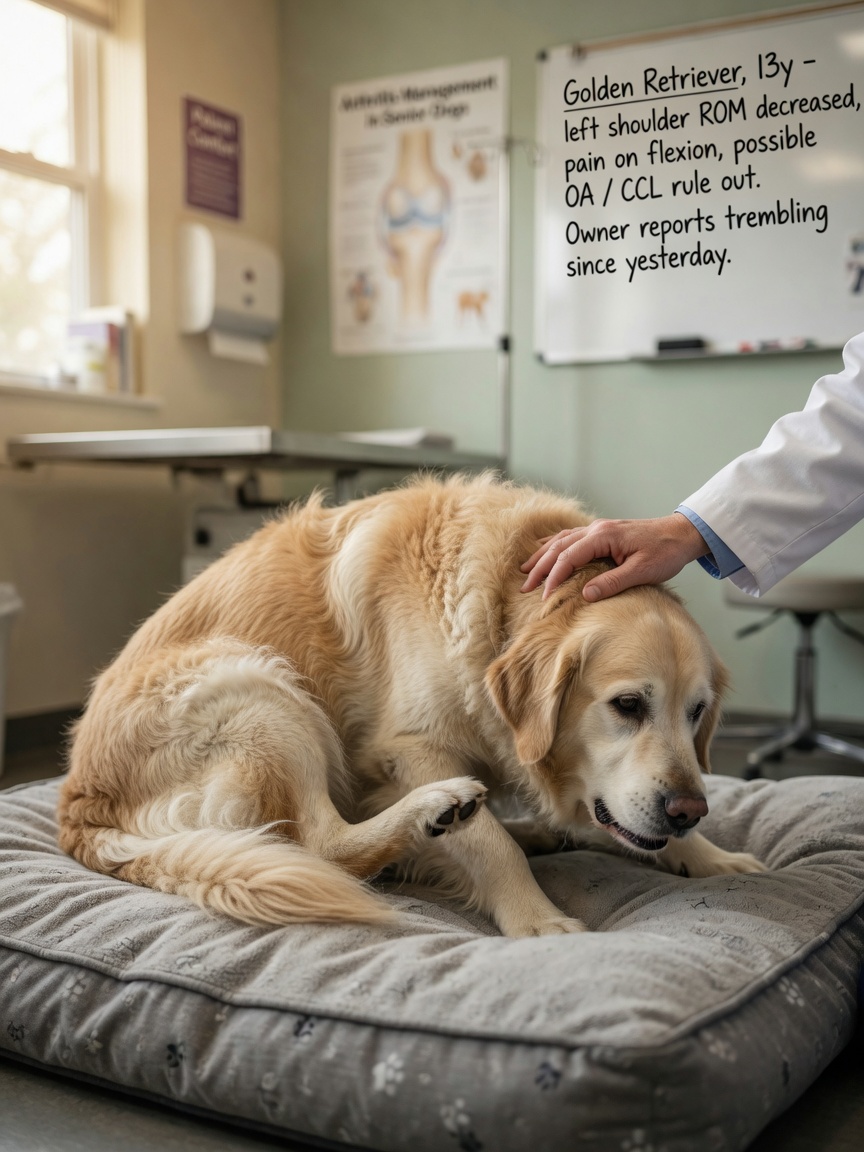
La douleur — quelle qu'en soit l'origine — peut faire trembler les chiens. Qu'il s'agisse d'arthrose, d'une blessure, d'une douleur abdominale ou d'une maladie interne, la réaction de l'organisme à la douleur comprend une tension musculaire et des tremblements. Un chien qui tremble de douleur peut aussi présenter d'autres signes : réticence à se déplacer, sensibilité au toucher, modifications de la posture, gémissements ou plaintes, ou changement soudain de comportement. Soyez attentif au fait que le tremblement soit localisé à un membre ou à une partie du corps en particulier, ce qui peut aider à en identifier l'origine. Les tremblements liés à la douleur ne cessent généralement pas lorsque le chien est réchauffé ou calme, ce qui les distingue des tremblements liés au froid ou à la peur.
5. La faiblesse musculaire ou la fatigue
Le surmenage peut provoquer une fatigue musculaire et des tremblements chez le chien après un exercice intense, en particulier chez les chiens qui ne sont pas habitués à une activité soutenue. C'est généralement temporaire et cela disparaît avec le repos. Cependant, une faiblesse musculaire progressive associée à des tremblements — en particulier chez les chiens âgés — peut indiquer une maladie neuromusculaire, une myélopathie dégénérative, une myasthénie grave ou d'autres affections touchant les nerfs et les muscles. Si les pattes de votre chien semblent trembler ou se dérober régulièrement, surtout à l'arrière-train, un bilan neurologique et orthopédique complet est justifié.
6. L'hypoglycémie (glycémie basse)
Une glycémie basse est une urgence médicale, en particulier chez les chiots de races miniatures et les chiens diabétiques. Le cerveau dépend presque exclusivement du glucose pour son énergie et, lorsque la glycémie chute, des symptômes neurologiques apparaissent rapidement : tremblements, faiblesse, désorientation, démarche titubante et, dans les cas graves, convulsions et perte de conscience. Les races miniatures (chihuahuas, yorkshires, bichons maltais) peuvent développer une hypoglycémie si l'intervalle entre les repas est trop long. Les chiens diabétiques sous insuline peuvent présenter une hypoglycémie s'ils reçoivent trop d'insuline ou s'ils ne mangent pas après leur injection. Si une hypoglycémie est suspectée, frottez du sirop de glucose ou du miel sur les gencives et consultez immédiatement un service d'urgence.
7. L'ingestion de toxines
De nombreuses toxines provoquent des tremblements chez le chien. Les mycotoxines issues d'aliments moisis (ce que l'on appelle souvent la « toxicose des poubelles ») sont un coupable fréquent : elles provoquent de violents tremblements musculaires pouvant évoluer vers des convulsions. Parmi les autres toxines provoquant des tremblements, on trouve le métaldéhyde (anti-limaces), la perméthrine (traitements antipuces formulés pour les chats, toxiques pour les chiens), certains champignons, le cannabis, la caféine et le xylitol. Les tremblements causés par des toxines ont tendance à être continus, progressifs et accompagnés d'autres signes neurologiques tels que vomissements, hypersalivation ou désorientation. Il s'agit toujours d'une urgence — si une ingestion de toxine est suspectée, contactez immédiatement un centre antipoison animal ou un vétérinaire d'urgence.
8. Les troubles convulsifs (épilepsie)
Les crises d'épilepsie peuvent ressembler à des tremblements ou à des convulsions généralisées. L'épilepsie idiopathique se manifeste typiquement pour la première fois entre 1 et 5 ans chez des chiens par ailleurs en bonne santé. Pendant une crise, un chien peut perdre conscience, pédaler des pattes, saliver abondamment, uriner ou déféquer. Après une crise (la phase post-critique), les chiens sont souvent désorientés, temporairement aveugles et épuisés. Une crise unique et brève (moins de 2 à 3 minutes) n'est généralement pas immédiatement fatale, mais toute crise durant plus de 5 minutes (état de mal épileptique) est une urgence médicale. Les crises en série — plusieurs crises en 24 heures — nécessitent également une prise en charge vétérinaire d'urgence.
9. La maladie de Carré
Le virus de la maladie de Carré peut provoquer des symptômes neurologiques comprenant des contractions musculaires, des crises dites de « mâchonnement » et des tremblements généralisés, généralement des semaines à des mois après l'infection respiratoire initiale. La maladie de Carré est rare dans les populations vaccinées, mais elle reste un risque pour les chiens non vaccinés. Si votre chien non vacciné développe des tremblements neurologiques — surtout avec des antécédents de maladie respiratoire — la maladie de Carré doit être envisagée. Il n'existe pas de traitement curatif ; la prise en charge est un traitement de soutien et le pronostic est réservé.
10. Le syndrome de tremblement généralisé (maladie du chien blanc tremblant)
Malgré son surnom, le syndrome de tremblement généralisé (STG) touche les chiens de toutes les couleurs de robe et il est plus fréquent chez les petites races telles que le bichon maltais, le West Highland White Terrier et le caniche. La cause serait une inflammation à médiation immunitaire du système nerveux central. Les chiens développent généralement des tremblements de tout le corps entre 9 mois et 2 ans. Ils restent alertes et conscients pendant les épisodes, contrairement à ce qui se produit lors d'une crise convulsive. Le STG répond bien au traitement immunosuppresseur (corticoïdes) et la plupart des chiens s'améliorent nettement en 1 à 2 semaines de traitement.
Quand consulter immédiatement votre vétérinaire
- Tremblement continu et incontrôlable qui ne s'arrête pas
- Tremblement associé à des vomissements, une désorientation ou une perte de conscience
- Suspicion d'ingestion de toxine (aliments moisis, anti-limaces, perméthrine, etc.)
- Suspicion de crise convulsive, en particulier durant plus de 2 à 3 minutes
- Tremblement chez un chiot de race miniature — écartez immédiatement une hypoglycémie
- Un chien diabétique qui tremble après une dose d'insuline
- Des tremblements de cause inconnue chez n'importe quel chien — n'attendez pas de voir
À retenir
- Le froid, la peur et l'excitation sont les causes les plus fréquentes — et les moins dangereuses — de tremblements chez le chien.
- Des tremblements continus et inexpliqués qui ne cessent pas lorsque le chien se réchauffe ou se calme nécessitent une évaluation vétérinaire.
- L'ingestion de toxines (en particulier aliments moisis, anti-limaces) peut provoquer de graves tremblements et constitue toujours une urgence.
- Un chiot de race miniature qui tremble peut être en hypoglycémie — frottez du miel sur les gencives et rendez-vous immédiatement chez un vétérinaire.
- Le syndrome de tremblement généralisé se traite avec des corticoïdes et répond rapidement chez la plupart des chiens.
- Maintenez les vaccinations de votre chien à jour — la maladie de Carré est évitable et provoque une atteinte neurologique grave.
Références
- Garosi LS, Platt SR, De Stefani A, Shelton GD. Bilateral facial nerve paresis and white dog shaker syndrome. J Small Anim Pract. 2005;46(12):586–590. PMID: 16354198
- Podell M. Seizures in dogs. Vet Clin North Am Small Anim Pract. 1996;26(4):779–809. PMID: 8818557