
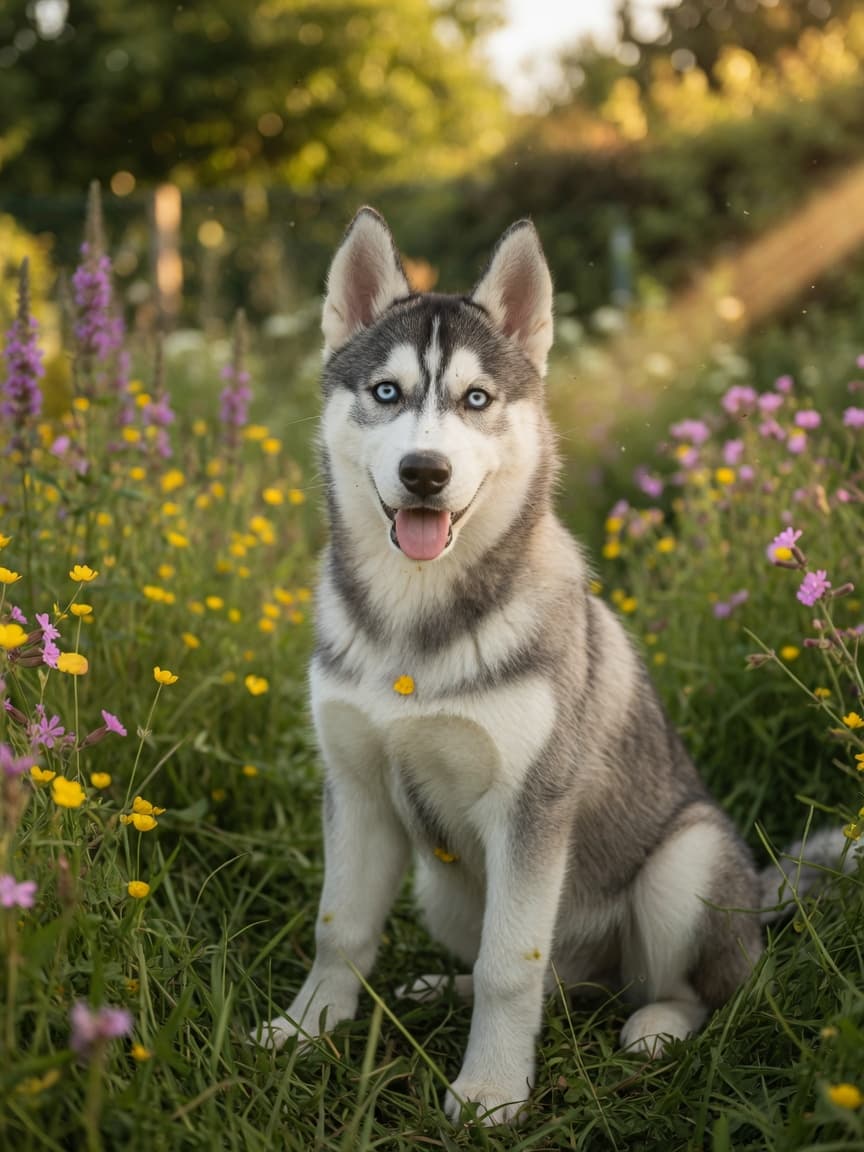
Santé du Husky Sibérien : Conditions Oculaires, Hanche et Nutrition
Mise à jour juin 2026
- Espérance de vie : 12–15 ans
- Principaux Risques de Santé : Cataractes héréditaires, atrophie progressive de la rétine, dysplasie de la hanche, hypothyroïdie, dermatose réactive au zinc
- Tests Génétiques Recommandés : Test ADN HC (cataracte héréditaire), test ADN PRA-X, examen oculaire CAER, évaluation de la hanche OFA, panel thyroïdien
Le Husky Sibérien est une race athlétique spectaculaire avec une riche histoire de chien de traîneau du peuple Tchouktche de Sibérie, affinée au cours des siècles pour couvrir de vastes distances dans des conditions difficiles avec une nourriture minimale. Cet héritage a façonné un métabolisme remarquablement efficace et une constitution généralement robuste. Cependant, la race porte des conditions héréditaires spécifiques — particulièrement autour des yeux — qui nécessitent des tests ADN et une surveillance ophtalmologique régulière tout au long de la vie du Husky. Combinées à leurs besoins nutritionnels très spécifiques, les Huskies sont une race qui récompense la propriété éclairée par une excellente santé à long terme.
Problèmes de Santé les Plus Courants chez les Huskies Sibériens
Les cataractes héréditaires et l'atrophie progressive de la rétine sont les conditions génétiques les plus importantes chez les Huskies Sibériens, la race ayant l'un des taux les plus élevés de maladie oculaire héréditaire de tous les chiens. La dysplasie de la hanche, bien que moins prévalente que chez certaines autres races, justifie néanmoins une surveillance chez cette race active de travail. L'hypothyroïdie — thyroïde insuffisante — est plus courante chez les Huskies que dans la population moyenne de chiens. La dermatose réactive au zinc, une affection cutanée unique par sa fréquence chez les Huskies et les Malamutes, reflète les besoins nutritionnels spécifiques de la race. La dysplasie folliculaire, causant des anomalies du pelage et la perte de cheveux, est une autre affection reconnue spécifique à la race.
Cataractes Héréditaires
Les cataractes héréditaires (HC) chez les Huskies Sibériens sont causées par une mutation du gène HSF4 et sont héritées selon un mode récessif autosomique. Contrairement aux cataractes liées à l'âge chez les autres races, l'HC chez les Huskies peut se développer chez les jeunes chiens — parfois dès l'âge de six mois — et affecte généralement le cortex lenticulaire postérieur de manière bilatérale. Les tests ADN identifient de manière fiable les chiens clairs, porteurs et affectés. Les porteurs (une copie de la mutation) ne sont cliniquement pas affectés et peuvent être reproduits avec des chiens clairs ; les chiens affectés (deux copies) développeront des cataractes. La chirurgie de la cataracte (phacoémulsification) peut restaurer la vision chez les chiens affectés, avec de bons résultats lorsqu'elle est effectuée par un ophtalmologue vétérinaire avant que ne survienne une inflammation significative induite par la lentille. Des examens oculaires annuels CAER (Fondation de Registre Oculaire Canin) sont recommandés pour tous les Huskies reproducteurs.
Atrophie Progressive de la Rétine (PRA-X)
PRA-X est une forme liée à l'X de l'atrophie progressive de la rétine qui est unique aux Huskies Sibériens. Les mâles affectés (hémizygotes) développent une perte de vision progressive, tandis que les femelles porteuses peuvent présenter des changements légers et tardifs ou rester cliniquement normales. Parce qu'elle est liée à l'X, la stratégie de reproduction nécessite de tester les femelles comme porteuses ainsi que les mâles pour le statut affecté. Les chiens affectés montrent généralement une vision réduite de nuit aux stades précoces, progressant vers la cécité diurne sur des mois à des années. L'électrorétinographie (ERG) est utilisée dans les établissements spécialisés pour détecter les changements précoces avant que les signes cliniques apparaissent. Il n'existe aucun traitement pour arrêter la progression, mais les chiens affectés s'adaptent remarquablement bien aux environnements familiers avec le soutien du propriétaire.
Dysplasie de la Hanche et Santé Musculosquelettique
La dysplasie de la hanche chez les Huskies Sibériens a une prévalence rapportée d'environ 2–3% selon les données OFA — considérablement inférieure à celle de nombreuses autres races de taille comparable, probablement en raison de leur héritage en tant que chiens de travail maigres et efficaces plutôt que races de compagnie aux muscles massifs. Néanmoins, parce que les Huskies sont censés être physiquement actifs tout au long de leur vie, même une dysplasie de la hanche modérée a un impact fonctionnel significatif. La certification OFA des reproducteurs, l'alimentation d'un régime alimentaire maigre (en évitant le surpoids même léger) et le conditionnement par l'exercice progressif construisent la masse musculaire qui soutient la stabilité articulaire. Les Huskies ayant une légère dysplasie gérée correctement peuvent continuer à participer à des compétitions de canicross et à d'autres sports canins avec la surveillance vétérinaire appropriée.
Dermatose Réactive au Zinc et Besoins Nutritionnels
Les Huskies Sibériens et les Malamutes de l'Alaska ont une tendance héréditaire à développer une dermatose réactive au zinc — une affection cutanée caractérisée par une croûte et une desquamation autour du museau, des yeux, des oreilles et des points de pression, causée par une absorption ou une utilisation du zinc altérée. Les chiens affectés s'améliorent considérablement lorsqu'ils sont supplémentés en zinc (généralement méthionine de zinc ou sulfate de zinc sous supervision vétérinaire), mais rechutent si la supplémentation est arrêtée. Séparément, les Huskies ont une efficacité métabolique unique — élevés pour maintenir les performances avec une consommation calorique relativement faible — et sont sujets à l'obésité avec des quantités d'alimentation standard pour les chiens de leur taille. Leur régime alimentaire doit être contrôlé en calories, avec une protéine de haute qualité et enrichi en oméga-3.
Prévention et Soins Proactifs
Tous les Huskies Sibériens utilisés pour la reproduction doivent être testés par ADN pour HC et PRA-X et avoir des examens oculaires annuels CAER. Les certifications OFA de la hanche et thyroïdiennes sont recommandées. L'état du pelage et de la peau doit être surveillé étroitement ; toute croûte ou desquamation justifie une évaluation des niveaux de zinc. Compte tenu du métabolisme du chien de travail de la race, maintenez soigneusement le poids du corps — un Husky doit paraître maigre, avec les côtes facilement palpables. Les panels thyroïdiens annuels à partir de l'âge de quatre ans aident à détecter précocement l'hypothyroïdie, avant que les changements de poids et de pelage qu'elle provoque ne s'installent.
Suppléments Recommandés pour les Huskies Sibériens
Les acides gras oméga-3 (huile de poisson, 30–40 mg/kg EPA+DHA) sont particulièrement précieux pour les Huskies compte tenu de la prévalence des affections inflammatoires de la peau et de la maladie de la hanche chez la race. Ils soutiennent la qualité du pelage, la fonction de la barrière cutanée et l'inflammati ```