
Cómo enseñar a un perro a sentarse, quedarse quieto y venir: método sin fuerza
Por Julia Wrenfield, investigadora en bienestar animal — 25 de junio de 2026
- Habilidades tratadas: Sentado, Quieto y Ven (llamada)
- Método: refuerzo positivo sin fuerza — funciona a cualquier edad y con cualquier raza
- Duración de la sesión: 3–5 minutos, 2–3 veces al día
- Material necesario: Premios de alto valor, clicker (opcional), espacio de adiestramiento tranquilo
- Plazos: Sentado básico en 1–2 días; quieto y llamada fiables en 4–8 semanas
Sentado, quieto y ven no son simples trucos de fiesta: son la base de un perro seguro y con buenos modales, y de una relación sólida entre persona y perro. Enseñarlos mediante refuerzo positivo sin fuerza no solo es más amable: produce resultados más rápidos y fiables que los métodos coercitivos. La investigación demuestra de forma constante que los perros adiestrados con métodos basados en recompensas aprenden más rápido, generalizan mejor entre entornos y muestran menos conductas relacionadas con el estrés que los adiestrados con castigo. Aquí tienes una guía completa paso a paso para enseñar las tres señales.
Antes de empezar: preparar el terreno para el éxito
La calidad del adiestramiento importa más que la cantidad. Las sesiones cortas y divertidas son mejores que las largas y tediosas. Antes de cada sesión:
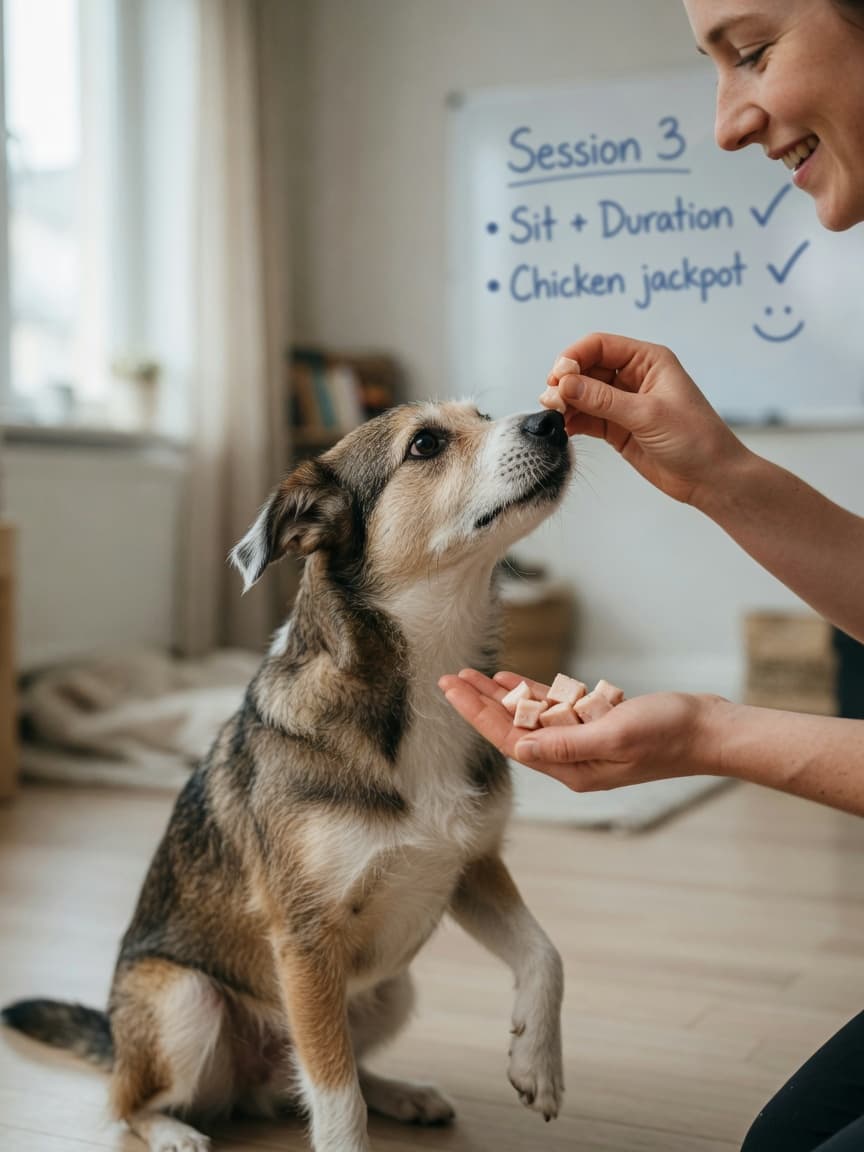
- Usa premios de alto valor: pequeños (del tamaño de un guisante), blandos y realmente apetecibles. Piensa en trocitos pequeños de pollo, queso o premios de adiestramiento comerciales. El premio debe hacer que a tu perro le brillen los ojos.
- Adiestra antes de las comidas, cuando el perro tenga algo de hambre, no justo después de comer.
- Empieza en un entorno con pocas distracciones (una habitación tranquila, el jardín) y aumenta la dificultad de forma gradual.
- Mantén las sesiones en un máximo de 3–5 minutos para cachorros y hasta 10 minutos para perros adultos.
- Termina con un éxito: acaba siempre con algo que el perro sepa hacer bien.
Enseñar el «sentado»
Paso 1: Guiar el sentado con el señuelo
Sujeta un premio a la altura del hocico de tu perro. Muévelo despacio hacia arriba y hacia atrás por encima de su cabeza: al seguir el hocico el premio hacia arriba, el tren posterior baja de forma natural al suelo. En el momento en que el trasero toca el suelo, marca con un «¡sí!» (o un clic del clicker) y entrega el premio de inmediato. El momento del marcador es fundamental: estás marcando el instante exacto del sentado, no un segundo después.
Repite 5–10 veces por sesión. La mayoría de los perros comprenden el movimiento del señuelo en la primera sesión.
Paso 2: Añadir la señal verbal
Cuando el perro se siente de forma fiable al guiarlo con el señuelo (8 de cada 10 intentos), empieza a añadir la palabra «sienta» justo antes de iniciar el movimiento del señuelo. Di «sienta» y después guía. Tras 20–30 repeticiones a lo largo de varias sesiones, empieza a decir «sienta» y haz una breve pausa para ver si el perro ofrece la conducta antes de añadir el señuelo.
Paso 3: Retirar el señuelo
El señuelo debe retirarse progresivamente o el perro aprenderá a responder al premio que tienes en la mano, no a la señal verbal. Empieza a usar la mano vacía con el mismo movimiento y entrega el premio con la otra mano después del marcador. Reduce poco a poco el movimiento de la mano hasta que baste con una señal verbal dicha en voz baja.
Enseñar el «quieto»

El «quieto» se enseña en tres dimensiones, llamadas las tres D: Duración (cuánto tiempo), Distancia (a qué distancia) y Distracción (cuánto ocurre a su alrededor). Es fundamental trabajar solo una D a la vez: aumentar las tres simultáneamente aboca al perro al fracaso.
Construir la duración
Pide un sentado. Espera un segundo. Si el perro se mantiene, marca y recompensa. Alarga poco a poco: 2 segundos, 3, 5, 8, 12 segundos. Si el perro rompe la posición, simplemente vuelve a pedir el sentado sin ninguna reacción negativa y prueba con una duración más corta. La palabra de liberación («vale» o «libre») indica el final del quieto: dila con claridad cada vez para ayudar al perro a entender que el quieto termina solo cuando se le libera.
Añadir distancia
Cuando la duración sea sólida en torno a los 30 segundos, introduce la distancia. Da un paso atrás alejándote del perro mientras mantiene el sentado-quieto. Vuelve hacia él (aún no lo llames), marca y recompensa en la posición del perro. Aumenta la distancia de forma gradual: un paso por sesión. En esta fase, mantén la duración más corta mientras trabajas la distancia.
Añadir distracción
Introduce distracciones de bajo nivel: un juguete en el suelo cerca, otra persona que pasa caminando. Trabaja en un nivel de dificultad en el que el perro acierte el 80 % de las veces. Los «quieto» en el mundo real (en el veterinario, en una calle concurrida) llegan después de que el perro sea sólido en entornos con pocas distracciones.
Enseñar el «ven» (llamada)
Una llamada fiable puede salvarle la vida a tu perro. Debe construirse sobre la base de que acudir a ti siempre equivale a algo maravilloso: nunca a un castigo, nunca a quedarse encerrado, nunca al final de la diversión.
Paso 1: Convertirte en lo más emocionante de la habitación
Llama a tu perro por su nombre con una voz alegre y entusiasta. Cuando te mire, retrocede manteniendo la energía alta. Cuando llegue hasta ti, dale un premio en cascada: 5–10 premios pequeños entregados uno tras otro, elogios y caricias. Llegar hasta ti debe ser lo mejor que le ha pasado en todo el día, cada vez.
Paso 2: Añadir la señal
Cuando el perro te persiga con entusiasmo, añade la señal: «¡Ven!» o «¡[Nombre], ven!» justo cuando empieces a retroceder. Marca y recompensa siempre la llegada. Nunca llames al perro para algo desagradable. Si necesitas hacer algo que al perro no le gusta (cortar las uñas, el baño), ve a buscarlo: no lo llames.
Paso 3: Consolidar la llamada
Practica en el jardín, con una línea larga (4,5–9 metros), en distintos lugares. Introduce distracciones de forma gradual. Una línea larga permite libertad al perro garantizando su seguridad durante la fase de consolidación: nunca practiques la llamada sin correa en una zona no vallada hasta que la llamada sea muy fiable en entornos controlados.
Tabla de progresión del adiestramiento
| Semana | Objetivo de sentado | Objetivo de quieto | Objetivo de llamada |
|---|---|---|---|
| Semana 1 | Sentado a la señal con señuelo, en interior | Quieto de 3–5 segundos, con el guía a 1 paso | Llamada entusiasta en una habitación |
| Semana 2 | Sentado sin señuelo, retirando el señuelo | Quieto de 10–15 segundos, con el guía a 3 pasos | Llamada de un extremo a otro de la casa |
| Semanas 3–4 | Sentado en lugares nuevos | Quieto de 30 segundos, con distracciones leves | Llamada en el jardín con línea larga |
| Semanas 5–8 | Sentado en público con distracciones | Quieto de 1–2 min, con el guía fuera de la vista | Llamada con distracciones y línea larga |
Errores habituales que debes evitar
- Repetir la señal: si dices «sienta, sienta, ¡SIENTA!», enseñas al perro a responder a la tercera orden. Dila una vez, espera y ayúdalo si es necesario.
- Liberar del quieto llamándolo con «ven»: esto enseña al perro que el quieto termina cuando lo llamas, lo que debilita ambas señales. Usa una palabra de liberación aparte.
- Castigar las llamadas fallidas: una sola vez destruye semanas de entrenamiento de la llamada. Nunca castigues a un perro por acudir a ti.
- Adiestrar solo en casa: los perros no generalizan automáticamente. Practica cada habilidad en al menos 5–10 lugares distintos.
- Guía el sentado con el señuelo y después retíralo: la señal verbal debe funcionar sin un premio en la mano.
- Enseña el quieto trabajando Duración, Distancia y Distracción por separado: nunca aumentes las tres a la vez.
- La llamada debe predecir siempre algo maravilloso: nunca llames a tu perro para nada desagradable.
- Las sesiones cortas (3–5 min), los premios de alto valor y terminar con un éxito producen el aprendizaje más rápido.
- Generaliza cada señal en al menos 5–10 lugares para lograr fiabilidad en el mundo real.
Referencias
- Hiby EF, Rooney NJ, Bradshaw JWS. (2004). Dog training methods: their use, effectiveness and interaction with behaviour and welfare. Animal Welfare, 13(1), 63–69.
- Deldalle S, Gaunet F. (2014). Effects of 2 training methods on stress-related behaviors of the dog and on the dog-owner relationship. Journal of Veterinary Behavior, 9(2), 58–65.
- Herron ME, Shofer FS, Reisner IR. (2009). Survey of the use and outcome of confrontational and non-confrontational training methods in client-owned dogs. Applied Animal Behaviour Science, 117(1–2), 47–54. PMID: 19245592