
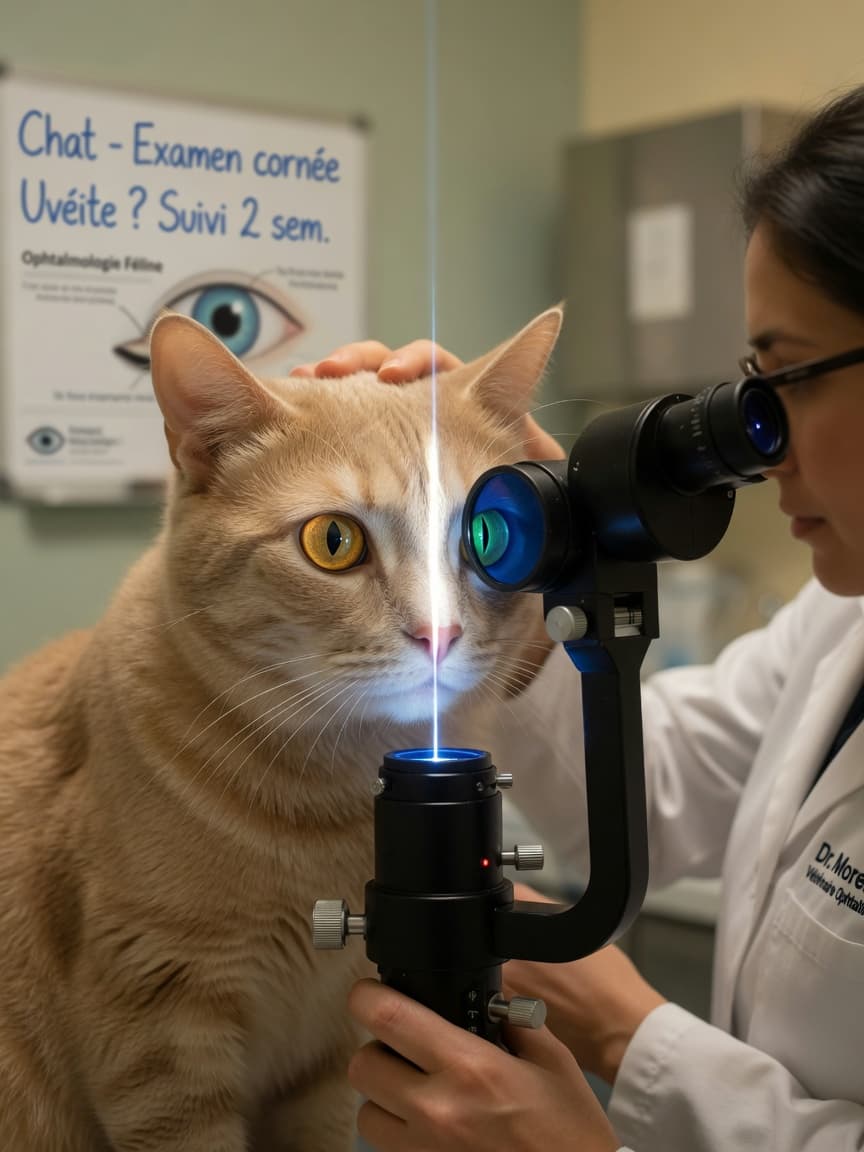
Why Eye Health Matters in Cats
A cat's eyes are among its most expressive and sensitive features, and changes to their appearance or behaviour can be the first sign of something going wrong — sometimes locally, sometimes as a reflection of a systemic disease elsewhere in the body. The challenge is that cats are notoriously stoic, and by the time an owner notices squinting, discharge, or clouding, the condition may already be well established. Knowing what to look for makes a real difference to outcomes.
Conjunctivitis: The Most Common Feline Eye Problem
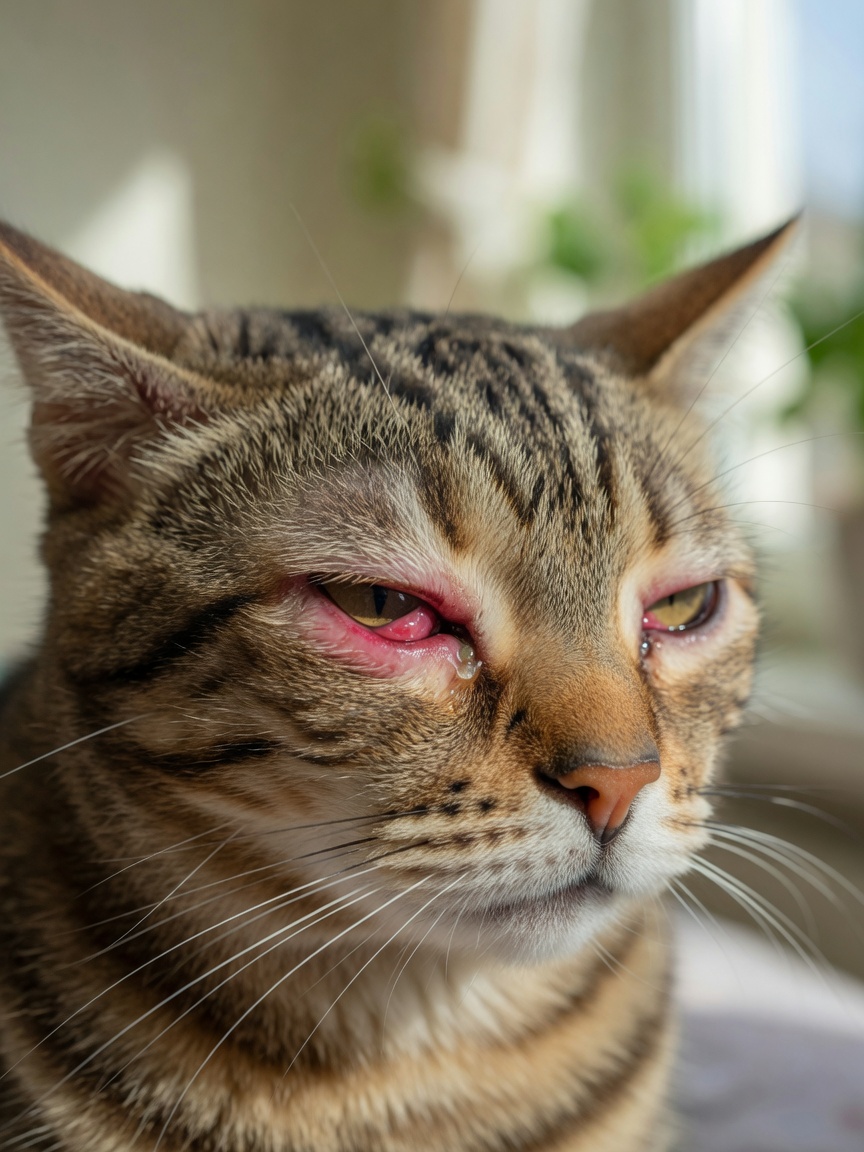
Conjunctivitis — inflammation of the moist tissue lining the eyelids and surrounding the eyeball — is the most frequently seen eye condition in cats. Signs include redness, swelling, discharge (which may be clear, yellow, or green), and squinting. The causes fall into a few main categories.
Feline Herpesvirus (FHV-1)
Herpesvirus is one of the most common causes of feline conjunctivitis, particularly in kittens and in cats that have been through the stress of rehoming or illness. Once a cat is infected, the virus remains latent in the nervous system for life and can reactivate during periods of stress or immunosuppression. Antiviral eye drops or oral lysine supplementation may be used alongside supportive care, though evidence on lysine efficacy is mixed and your vet will guide you on the best approach for your individual cat.
Bacterial Conjunctivitis
Secondary bacterial infections often accompany herpesvirus infections and are treated with topical antibiotic drops or ointment. Pure bacterial conjunctivitis can also occur independently. It typically produces more purulent (thick, yellow-green) discharge than viral cases.
Chlamydophila Felis
Chlamydophila felis is a bacterial organism that causes a specific form of conjunctivitis, often with pronounced chemosis — a jelly-like swelling of the conjunctiva. It tends to start in one eye before spreading to the other. Doxycycline is the antibiotic of choice and is usually given for several weeks. Vaccination against Chlamydophila is available and may be recommended for cats in multi-cat households or catteries.
Corneal Ulcers: Painful and Requiring Prompt Attention
A corneal ulcer is a defect in the surface of the eye — the transparent layer at the front — and it is extremely painful. Cats with corneal ulcers will typically squint severely, hold the eye shut, and may paw at their face. The eye may water excessively and appear cloudy or hazy.
Diagnosis is made using a fluorescein stain — a harmless orange dye that is dropped into the eye and illuminated with a blue light. Healthy corneal tissue repels the stain, but areas of ulceration absorb it and glow bright green. This test is simple and reliable and should be performed by your vet any time a cat presents with a painful, squinting eye. Treatment depends on the depth and cause of the ulcer and may include topical antibiotic drops, pain relief, and in some cases surgical intervention. Never use corticosteroid eye drops in a cat with a suspected corneal ulcer — steroids impair healing and can cause serious deterioration.
Uveitis: When the Interior of the Eye Is Inflamed
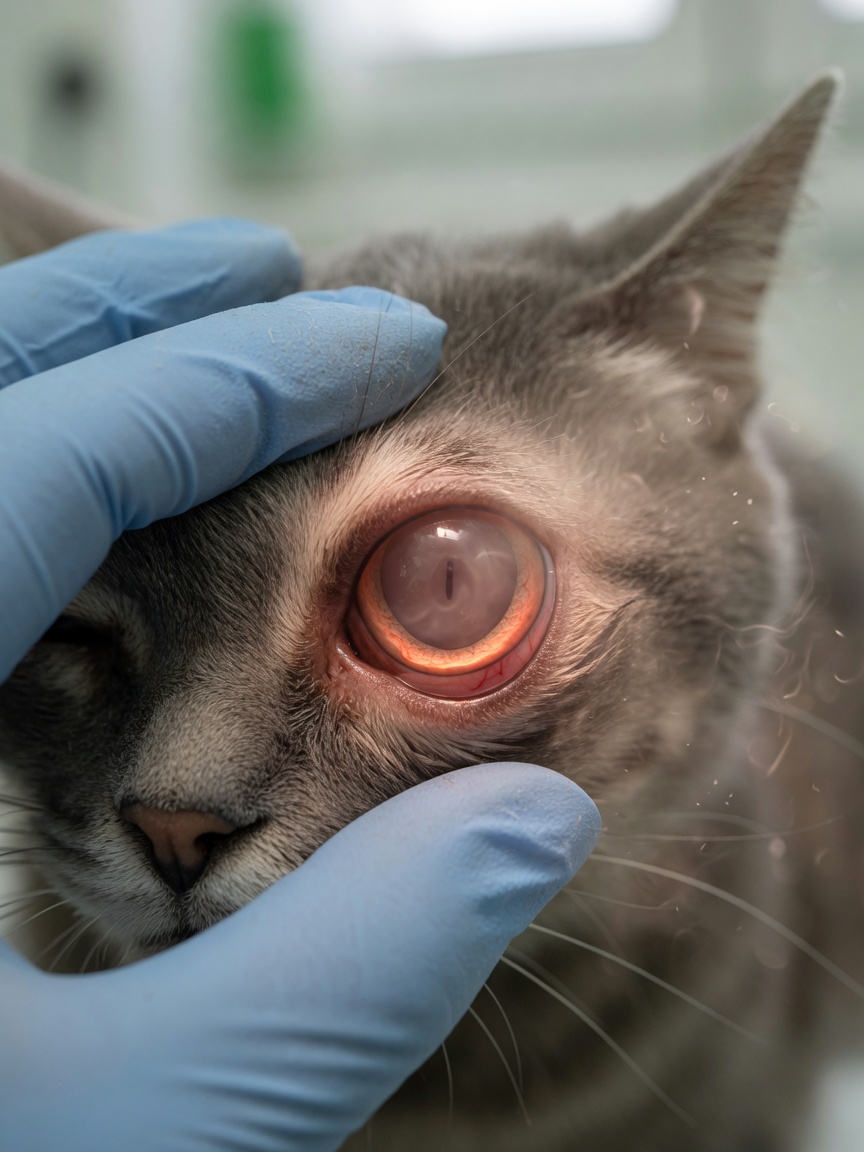
Uveitis refers to inflammation of the uveal tract — the vascular structures inside the eye including the iris, ciliary body, and choroid. It is one of the more serious feline eye conditions because it can lead to secondary glaucoma, cataracts, or permanent vision loss if not addressed, and because it almost always signals an underlying systemic problem that needs to be investigated.
Clinical signs of uveitis include a small, constricted pupil (miosis), cloudiness or a reddish haze within the eye (aqueous flare — caused by protein and cells leaking into the fluid inside the eye), and blepharospasm — the involuntary squinting and twitching of the eyelids that indicates significant pain. The eye may appear sunken or the cat may be reluctant to have the head touched.
Common underlying causes include feline leukaemia virus (FeLV), feline immunodeficiency virus (FIV), toxoplasmosis, feline infectious peritonitis (FIP), bartonellosis, and fungal infections. Your vet will recommend a systemic workup including blood tests and potentially further imaging to identify the root cause. Treatment targets both the inflammation itself — usually with topical or systemic anti-inflammatory drugs — and the underlying disease.
Iris Melanoma vs Benign Iris Melanosis
Many cat owners notice dark spots or patches developing on the iris as their cat ages. The distinction between benign iris melanosis and malignant melanoma is important — and not always straightforward.
Benign melanosis typically appears as flat, dark brown or black freckle-like patches on the iris surface. They are commonly seen in middle-aged to older cats and do not affect vision. Malignant melanoma, by contrast, tends to cause changes in the texture of the iris, may make the surface appear raised or irregular, and can alter the shape of the pupil. Over time, melanoma can spread to other parts of the eye and — in some cases — metastasise to other organs.
Any new or changing pigmented lesion on the iris should be assessed by a veterinary ophthalmologist. Monitoring with regular photographs is common practice for smaller, stable lesions. Enucleation (removal of the eye) may be recommended if the lesion is growing or showing concerning features, as this remains the most reliable way to prevent spread.
Hypertensive Retinopathy: A True Emergency
High blood pressure — systemic hypertension — is a serious and underdiagnosed condition in cats, particularly those over ten years of age and those with chronic kidney disease or hyperthyroidism. One of the most dramatic consequences of uncontrolled hypertension is damage to the blood vessels of the retina at the back of the eye.
Hypertensive retinopathy can cause sudden, complete blindness. An owner may notice their cat walking into furniture, becoming disoriented, or appearing startled and confused. The pupils may be widely dilated and non-responsive to light. This is a genuine emergency.
If your cat develops sudden blindness, blood pressure must be measured immediately. Blood pressure in cats is typically assessed using an inflatable cuff on the leg or tail and a Doppler device. If hypertension is confirmed, antihypertensive medication — most commonly amlodipine — is started straight away. In some cases, if treated quickly enough, some vision can be restored as retinal detachments reattach. Delay significantly worsens the prognosis. Any cat with known kidney disease or hyperthyroidism should have routine blood pressure monitoring as part of their ongoing care.
When to Seek Veterinary Advice
- Any eye that is held shut or squinting persistently
- Visible discharge, cloudiness, or redness in or around the eye
- A change in pupil size or symmetry between eyes
- New dark spots or changes to existing iris pigmentation
- Sudden disorientation, bumping into objects, or apparent vision loss
- Pawing at the face or sensitivity to light
Eye conditions in cats can deteriorate rapidly. When in doubt, a same-day veterinary appointment is always the safest approach.