
Ancient Breed, Specific Medical Profile
Afghan Hounds are among the oldest recognised dog breeds, developed over centuries as coursing hounds in the mountainous terrain of Afghanistan. Their lean, muscular build, remarkably low body fat, and exceptional speed are all assets in the field — but they also underpin three health concerns that every Afghan owner should understand: a breed-specific susceptibility to chylothorax, a tendency towards inherited cataracts, and a well-documented sensitivity to certain anaesthetic agents that carries real clinical risk.
Chylothorax: Fluid in the Chest
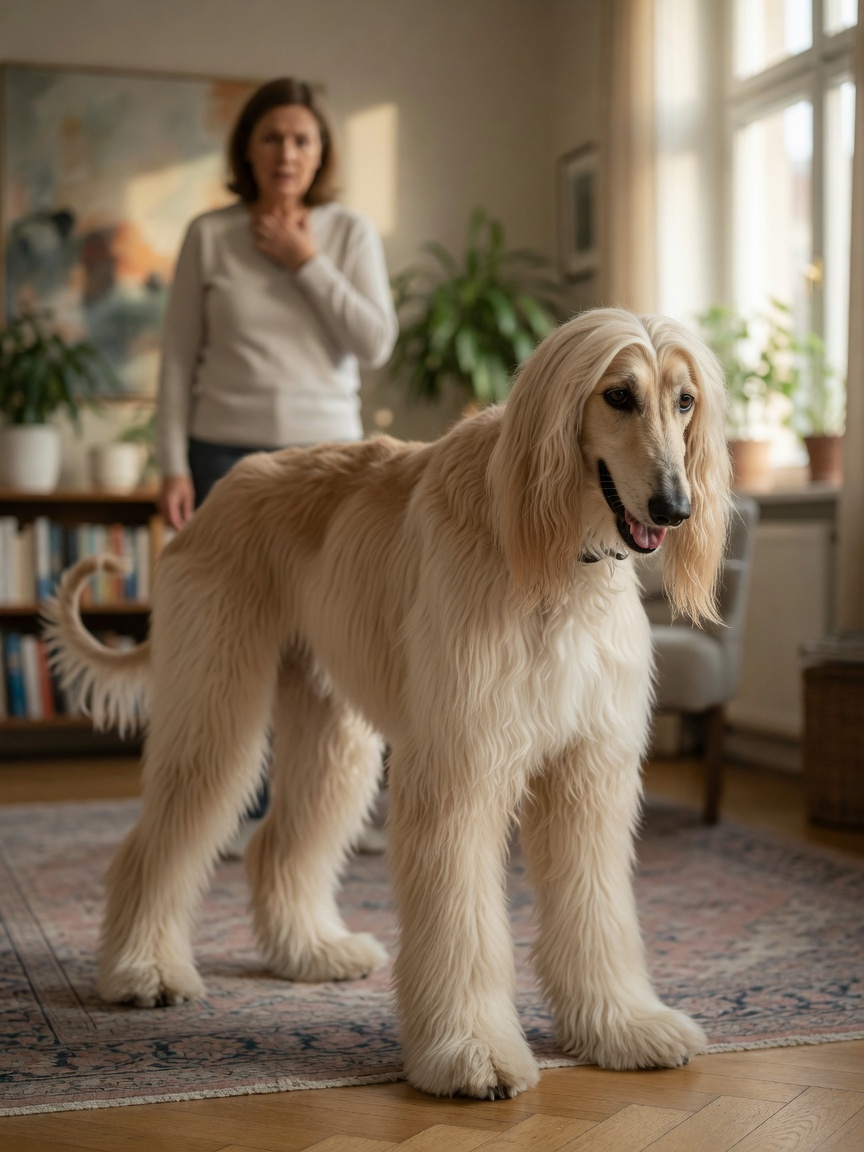
Chylothorax is a condition in which chyle — a milky, fat-rich lymphatic fluid — accumulates abnormally in the pleural cavity, the space surrounding the lungs. As fluid builds, the lungs cannot expand fully, causing progressive respiratory compromise. Afghan Hounds are one of the breeds most frequently reported with idiopathic chylothorax, meaning no underlying cause can be identified.
Recognising Respiratory Compromise
- Increased respiratory rate at rest
- Laboured or shallow breathing
- Exercise intolerance — tiring quickly or refusing activity
- Muffled heart sounds detected during a routine check
- Occasional coughing
Because Afghan Hounds are naturally lean and athletic, even modest respiratory changes can be noticeable as a reduction in stamina or willingness to move. Do not dismiss these changes as ageing.
Diagnosis and Treatment Options
Diagnosis is confirmed via chest radiographs and analysis of the fluid obtained by needle aspiration — the characteristic milky, triglyceride-rich fluid is distinctive. Management depends on severity and recurrence. Dietary modification — specifically, a very low-fat diet with medium-chain triglyceride supplementation — can reduce chyle production and is typically the first approach. Surgical options, including thoracic duct ligation and pericardectomy, are considered in cases that do not respond to medical management. Prognosis varies considerably; some dogs achieve long-term remission, whilst others have recurrent disease. Ongoing monitoring with your vet is essential.
Cataracts: Inherited Lens Opacity
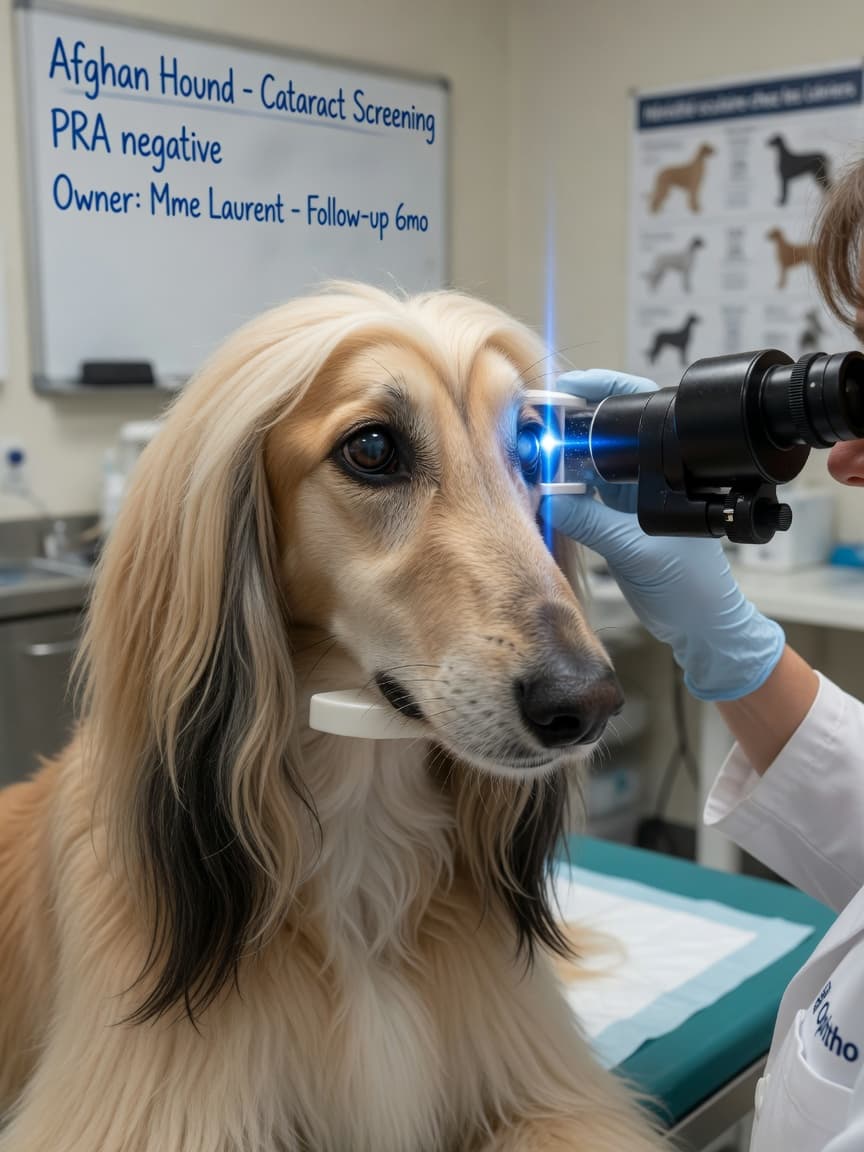
Cataracts — opacities in the lens of the eye — occur in Afghan Hounds at higher rates than in the general dog population, with a hereditary form recognised in the breed. Inherited cataracts typically appear earlier in life than age-related lens changes, sometimes in dogs as young as two or three years old, and can progress to significant visual impairment.
What Owners Can Observe
- A bluish, grey, or white cloudiness visible within the pupil
- Hesitation in unfamiliar environments or at night
- Bumping into objects, particularly in low light
- Reluctance to use stairs or jump
Management and Surgical Options
Not all cataracts progress at the same rate, and early, non-progressive cataracts may cause minimal functional impairment for years. Regular eye examinations by a veterinary ophthalmologist allow monitoring of progression. Phacoemulsification — the same surgical technique used in human cataract surgery — is the definitive treatment and can restore functional vision in appropriate candidates. Secondary complications, including lens-induced uveitis (inflammation) and glaucoma, can occur alongside cataracts and may require treatment in their own right. Breeders should use eye certification schemes to reduce the prevalence of inherited cataracts across generations.
Anaesthesia Sensitivity: A Critical Safety Consideration
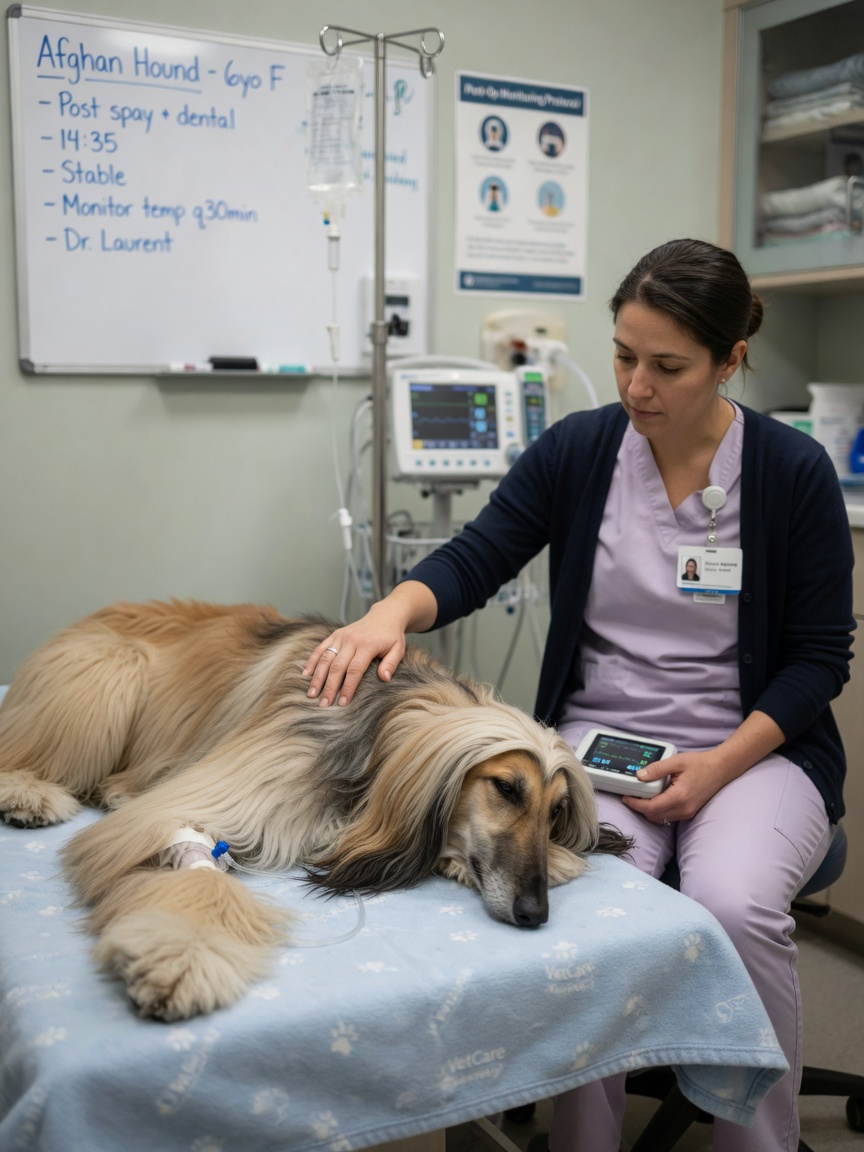
Afghan Hounds, in common with Greyhounds and other sighthound breeds, metabolise certain anaesthetic and sedative drugs differently from the broader dog population. This is primarily due to their exceptionally low body fat percentage and their liver's reduced ability to metabolise particular compounds rapidly. The practical consequence is that standard drug doses based on body weight can cause prolonged or dangerously deep anaesthesia in sighthounds.
Specific Concerns
Barbiturate-based anaesthetic agents, including thiopental, are particularly problematic and should be avoided in sighthounds. Certain pre-medications and sedatives also require dose adjustment. Extended recovery times following anaesthesia — an Afghan still unconscious or deeply sedated an hour or more after a procedure that would normally allow a mixed-breed dog to recover in twenty minutes — are not unusual in unaware hands and can cause serious complications including hypothermia and aspiration.
What to Tell Your Vet
- Always inform any veterinary team that your dog is an Afghan Hound or sighthound before any procedure involving sedation or general anaesthesia
- Confirm that the team is familiar with sighthound anaesthetic protocols
- Ask about recovery monitoring arrangements — extended post-operative observation is appropriate
- For routine procedures, seek a practice with experience of sighthound breeds where possible
This concern applies not only to surgical procedures but to routine sedation for imaging, dental procedures, and minor interventions. Being proactive and specific with your veterinary team is the single most important step an Afghan owner can take in this area.
Keeping an Afghan Hound Healthy Long Term
- Schedule annual eye examinations, ideally with a veterinary ophthalmologist, from early adulthood
- Monitor breathing at rest periodically and report any change promptly
- Feed a balanced, moderate-fat diet and avoid high-fat meals that may exacerbate chylothorax risk
- Always flag sighthound anaesthetic sensitivity before any veterinary procedure involving sedation
- Choose breeders who eye-test their breeding stock and record health outcomes
- Consult your vet before introducing any new supplement or making significant dietary changes