
Why Cats Stop Eating When Ill
A cat that refuses food for more than 24 to 48 hours is a genuine medical concern. Unlike dogs, cats that go without calories for even a short period are at risk of hepatic lipidosis — a serious liver condition in which fat is mobilised from body stores too rapidly and overwhelms the liver's ability to process it. This makes nutritional support during illness not just helpful, but often critical.
Sick cats stop eating for several interconnected reasons. Nausea suppresses appetite, altered sense of smell from respiratory infection removes the olfactory trigger that drives feline eating behaviour, and pain or weakness makes the physical effort of eating unappealing. Syringe feeding bridges the gap when a cat needs calories but will not eat voluntarily, and it is a skill every cat owner caring for an ill pet should understand.
This guide assumes your vet has already assessed your cat and either recommended or approved syringe feeding at home. Always confirm this with your veterinary team before beginning.
What You Will Need
- One or more 5ml or 10ml syringes — available from any vet practice or pharmacy
- Prescription liquid convalescent food or a high-quality wet food blended to a smooth liquid consistency
- A blender or food processor if using wet food
- Warm water or warm low-sodium chicken broth to thin the mixture if needed
- A towel for swaddling and cleanup
- Paper towels and a clean feeding area
The food must pass freely through the syringe without needing excessive force. If you need to strain hard on the plunger, the mixture is too thick — add a small amount of warm water and blend again. Lumps that block the syringe mid-feeding are stressful for both cat and carer.
Preparing the Food
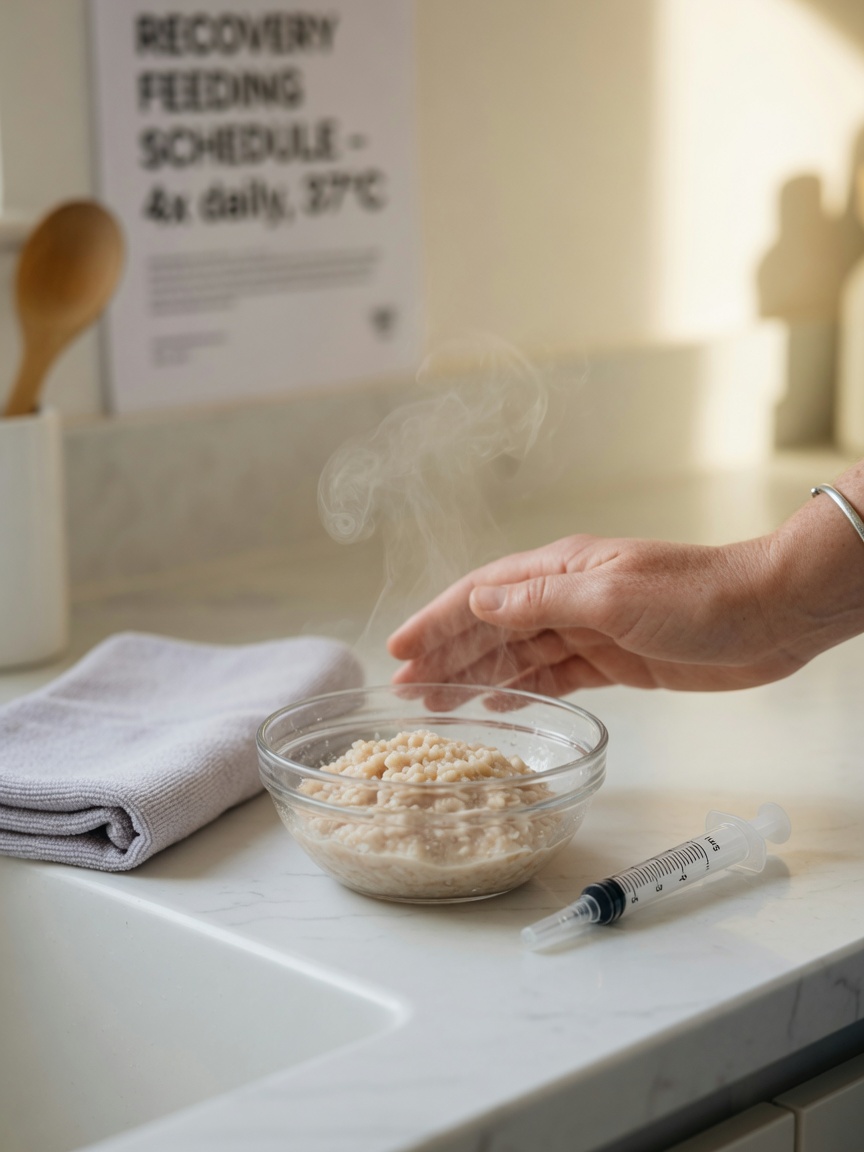
Warm the food gently before feeding. Cats are more responsive to food that is close to body temperature — around 37 to 38 degrees Celsius. Cold food from the refrigerator is frequently refused even during syringe feeding, as the temperature itself can trigger a rejection response.
Test the temperature on the inside of your wrist as you would with infant formula. It should feel warm, not hot. Never use a microwave to heat the food without stirring thoroughly and checking for hot spots.
If your vet has prescribed a specific convalescent diet such as Hill's a/d or Royal Canin Recovery, follow the dilution instructions on the packaging. These products are specifically formulated for syringe feeding and have the caloric density and nutrient profile appropriate for recovery.
Positioning Your Cat
Correct positioning is essential for safety. Syringe feeding a cat that is struggling or incorrectly positioned carries a real risk of aspiration — food entering the airway rather than the oesophagus — which can cause aspiration pneumonia, a potentially life-threatening complication.
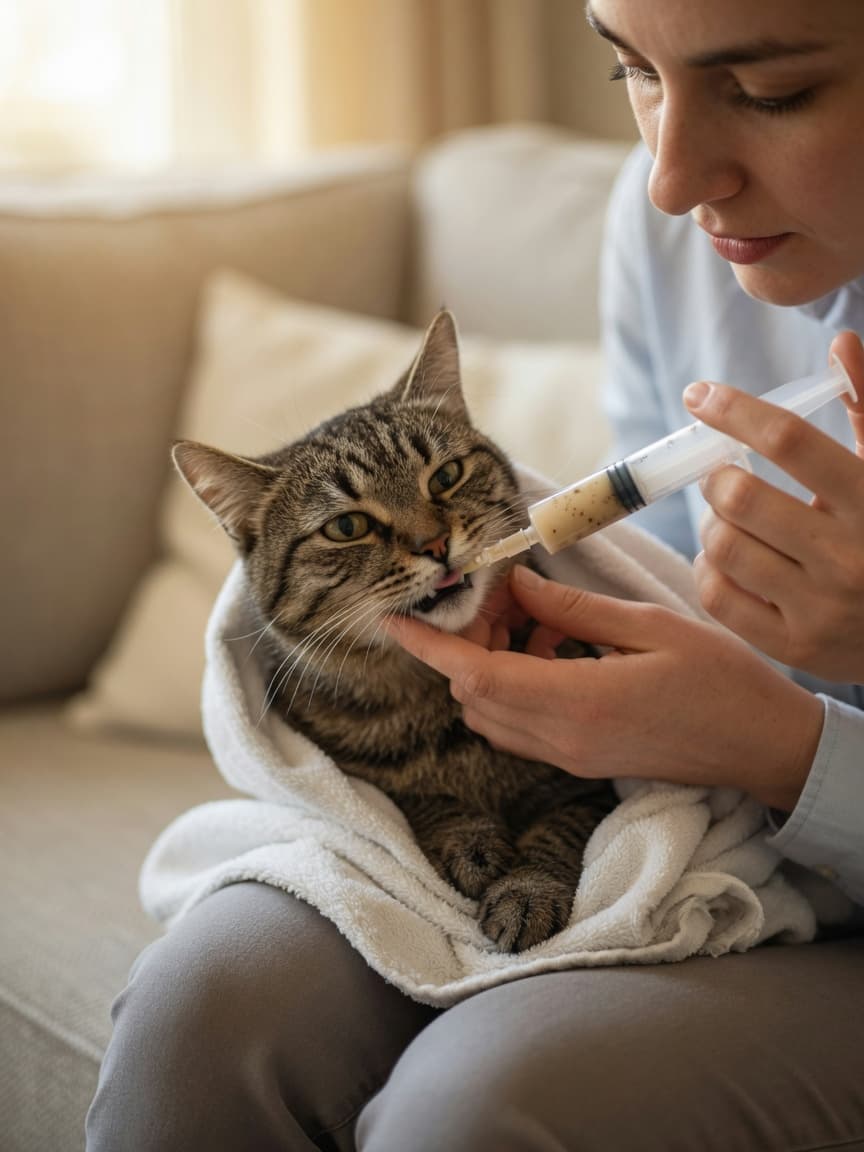
- Sit on a chair or the floor with your cat facing away from you or sideways, never on their back
- Wrap nervous or wriggly cats in a towel with only the head exposed — this reduces struggle and makes the process safer
- Keep the cat upright or in a natural sitting position with the head level or very slightly elevated
- Do not tip the head back — this makes swallowing harder and increases aspiration risk
The Feeding Technique
Work slowly and methodically. The goal is never to complete the feeding as quickly as possible but to deliver food safely, with minimal stress.
- Fill the syringe with no more than 2 to 3ml of food at a time
- Approach from the side of the mouth, not the front — insert the syringe tip gently into the gap between the cheek and the teeth, aimed towards the back of the mouth
- Depress the plunger slowly, releasing a small amount at a time
- Allow your cat to swallow before delivering more — you will see the throat move
- If food spills from the mouth, slow down further
- Pause every few syringes to allow your cat to rest and swallow comfortably
Stop immediately if your cat shows signs of distress, begins coughing, or makes unusual breathing sounds. These can indicate the food is going the wrong way and require you to stop and let your cat recover fully before attempting again, or to contact your vet.
How Much and How Often
Your vet will give you specific volume targets based on your cat's weight and condition. As a general reference, a 4kg cat typically needs around 200 to 250 calories per day to meet basic resting energy requirements. Hill's a/d provides approximately 180 calories per 156g tin, which gives you a working baseline.
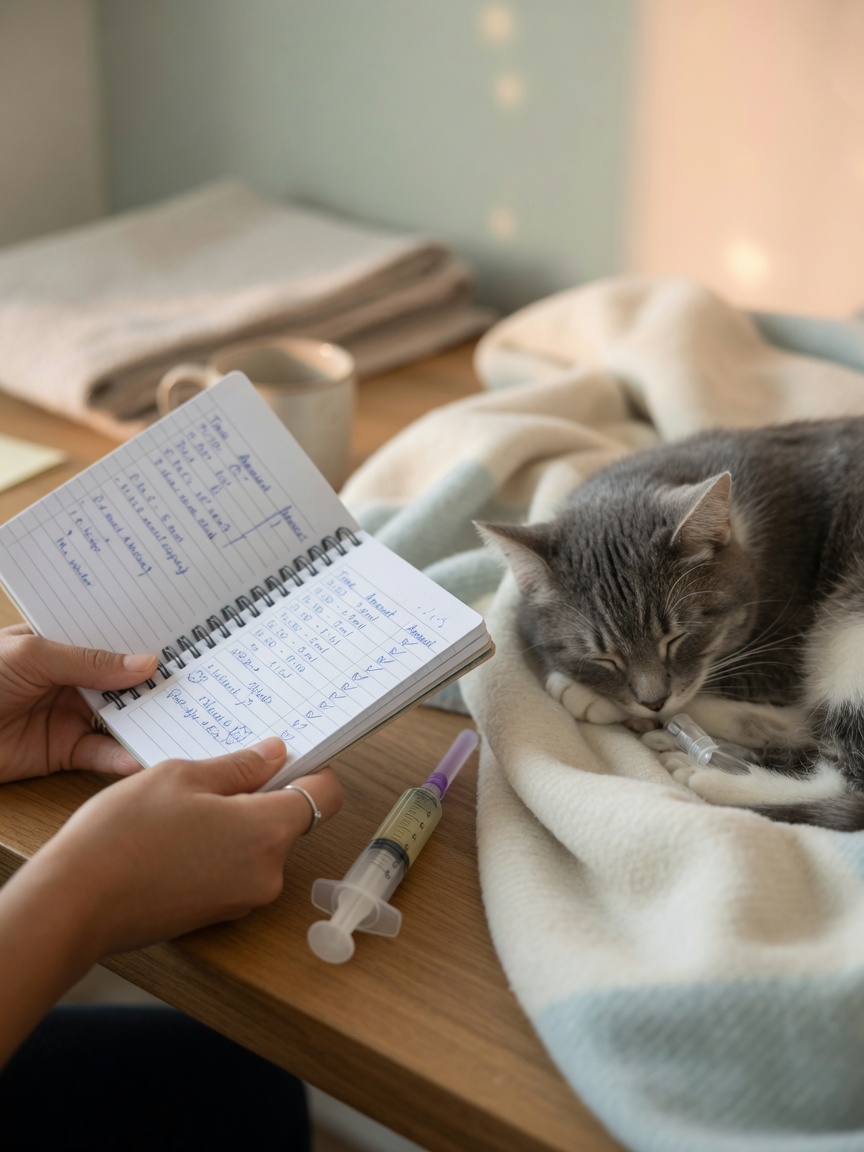
Divide the daily amount into four to six small meals rather than two or three larger ones. Small, frequent feeds are easier for a nauseated cat to tolerate and reduce the risk of regurgitation. Keep a simple feeding log noting the time, amount offered, and amount actually consumed — this information is invaluable when you report back to your vet.
Caring for Yourself During the Process
Syringe feeding a sick cat is time-consuming and emotionally draining, particularly when progress is slow. It is entirely normal for your cat to resist, to spit food back, or to eat less than the target amount on difficult days. Celebrate small wins, take breaks when you need them, and keep in close contact with your veterinary team. Most cats who begin syringe feeding at home do begin to eat independently again as they recover — the goal is to keep them nourished long enough to reach that point.