
Por Julia Wrenfield, Investigadora y Redactora de Bienestar Animal — Junio 2025
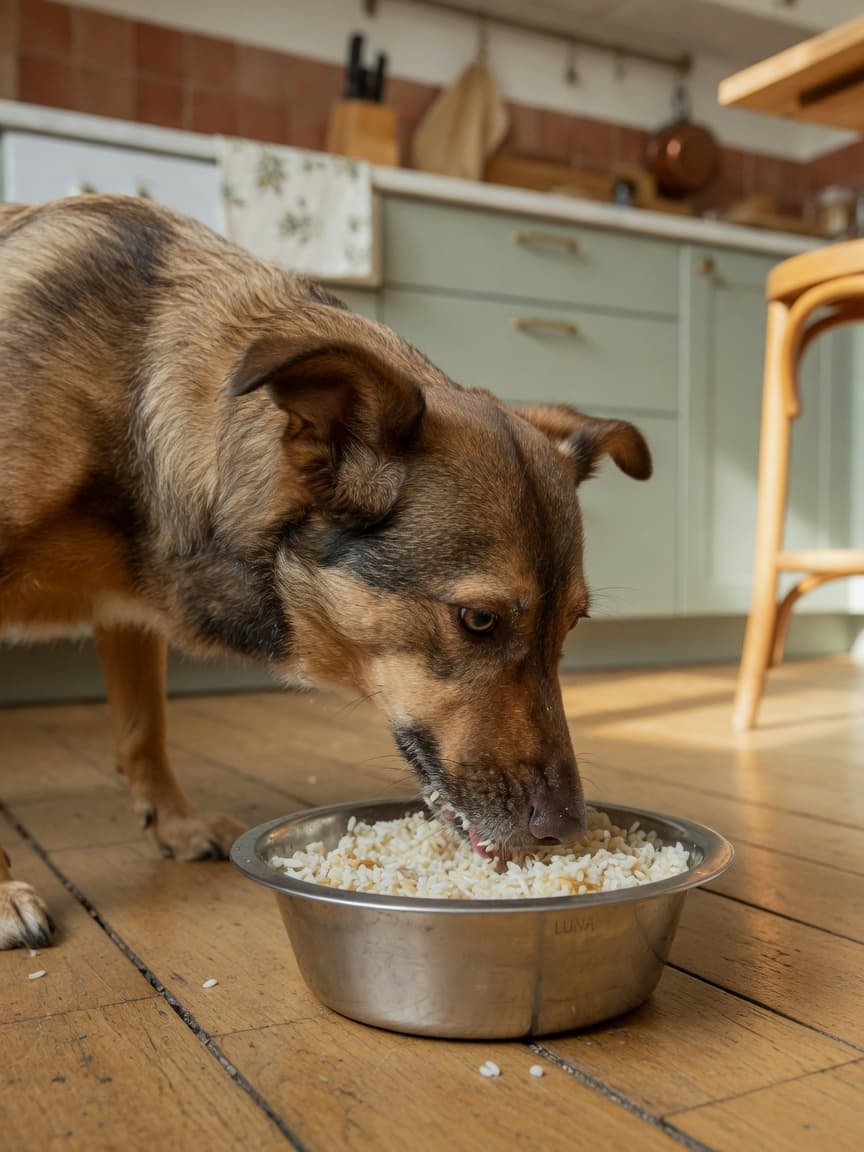
El arroz blanco cocido sin condimentos es uno de los alimentos más seguros y beneficiosos que puedes dar a tu perro. Es la piedra angular de la dieta blanda clásica que los veterinarios recomiendan para trastornos digestivos, diarrea y recuperación gastrointestinal. Seguro para incluirlo regularmente a largo plazo en una dieta equilibrada.
¿Es seguro el arroz para los perros?
Si hay un alimento humano que ha ganado aprobación casi universal de veterinarios y nutricionistas animales, ese es el arroz blanco cocido sin condimentos. No solo es seguro, sino que es activamente terapéutico para los perros que experimentan malestar digestivo. Entra en cualquier clínica veterinaria y pregunta qué alimentar a un perro con diarrea o un estómago alterado, y "pollo hervido y arroz" será la respuesta en la gran mayoría de los casos.
El arroz es una fuente de hidratos de carbono altamente digerible que es suave con el tracto gastrointestinal, lo suficientemente insípido como para no irritar el revestimiento del estómago inflamado, y efectivo para compactar las heces sueltas. No contiene compuestos tóxicos para perros, no causa reacciones alérgicas en la gran mayoría de los perros, y se puede incorporar en la dieta regular de un perro sin preocupación cuando se ofrece en proporciones apropiadas.
La única distinción que vale la pena hacer: el arroz blanco y el arroz integral se comportan de manera diferente en el sistema digestivo canino, y para los perros que experimentan problemas gastrointestinales, el arroz blanco es significativamente más apropiado. Más sobre eso a continuación.
Por qué los veterinarios recomiendan arroz para estómagos alterados
La "dieta blanda" — pollo hervido sin condimentos y arroz blanco — ha sido un pilar de la orientación dietética veterinaria para perros con trastornos gastrointestinales durante décadas. Hay razones específicas y bien entendidas por las que el arroz se merece esta recomendación:
- Alta digestibilidad. El arroz blanco se despoja de sus capas externas de salvado y germen, dejando principalmente almidón fácilmente digerible. El sistema digestivo puede procesarlo con esfuerzo mínimo, reduciendo la carga de trabajo en un tracto gastrointestinal ya estresado.
- Efecto compactador en heces sueltas. El arroz blanco cocido absorbe agua en el tracto intestinal y ayuda a compactar las heces blandas o líquidas, proporcionando alivio directo de la diarrea.
- Riesgo mínimo de irritación. La naturaleza insípida y baja en fibra del arroz blanco significa que es extremadamente improbable que cause más irritación en el revestimiento intestinal inflamado.
- Sustento calórico. Un perro enfermo aún necesita energía. El arroz proporciona una fuente de hidratos de carbono limpia y fácilmente absorbible que respalda la recuperación sin abrumar el sistema digestivo.
- Palatabilidad. Incluso los perros que han perdido el apetito debido a náuseas a menudo aceptarán arroz simple, ayudando a mantener la ingesta calórica durante los períodos de recuperación.
Arroz blanco vs. arroz integral: ¿Cuál es mejor para perros?
Esta es una pregunta que vale la pena abordar claramente, porque muchos propietarios conscientes de la salud asumen que el arroz integral es automáticamente superior. Para la nutrición humana, esa lógica es mayormente sólida — el arroz integral conserva su capa de salvado, que proporciona fibra adicional, vitaminas y minerales. Pero para los perros, particularmente aquellos con sensibilidades digestivas, la imagen es más matizada.
El arroz integral es más alto en fibra, lo que significa que pasa por el sistema digestivo más lentamente y puede empeorar la diarrea en algunos perros al estimular la motilidad intestinal. Para un perro con un estómago alterado o diarrea activa, el arroz integral es la opción equivocada — el menor contenido de fibra del arroz blanco y su mayor digestibilidad lo hacen mucho más efectivo terapéuticamente.
Para perros saludables sin problemas digestivos, el arroz integral es una adición perfectamente fina a la dieta y ofrece densidad nutricional marginalmente mejor. Pero para el caso de uso principal — malestar digestivo y recuperación — el arroz blanco es el claro ganador.
Perfil nutricional del arroz para perros
El arroz blanco es principalmente una fuente de hidratos de carbono en lugar de una potencia de micronutrientes, pero contribuye algunos nutrientes útiles:
- Hidratos de carbono — fuente de energía rápida y limpia para la recuperación y la actividad diaria.
- Vitamina B1 (Tiamina) — apoya el metabolismo energético y la función neurológica.
- Vitamina B3 (Niacina) — involucrada en la producción de energía y la salud de la piel.
- Manganeso — mineral traza que apoya el desarrollo óseo y la función enzimática.
- Selenio — mineral antioxidante que apoya la función tiroidea y la salud inmunológica.
- Fósforo — esencial para la estructura ósea y dental.
- Bajo contenido en grasas — lo hace apropiado para perros con pancreatitis o problemas de sensibilidad a las grasas.
Cómo preparar arroz de forma segura para tu perro
- Cócelo sin condimentos. Hierve arroz blanco solo en agua — sin sal, sin mantequilla, sin caldo de pollo comercial (los caldos comerciales a menudo contienen cebolla o polvo de ajo), sin condimentos de ningún tipo.
- Cocínalo bien. El arroz debe estar completamente cocido y ligeramente suave — sobrecocido es mejor que poco cocido para perros con estómagos sensibles. El arroz ligeramente pastoso es ideal para malestar gastrointestinal.
- Déjalo enfriar antes de servir. Siempre deja que el arroz se enfríe a temperatura ambiente antes de ofrecerlo a tu perro para evitar quemaduras en la boca y el tracto digestivo.
- Mezcla con proteína para la dieta blanda. Para la dieta blanda veterinaria clásica, combina arroz blanco hervido sin condimentos con pecho de pollo hervido sin condimentos (sin piel, sin huesos, sin condimentos) en una proporción aproximada de 3:1 de arroz a pollo.
- Transición gradual de vuelta a la comida normal. Después de 2–3 días en una dieta blanda, reintroduce gradualmente la pienso regular mezclándola con el arroz/pollo durante 3–4 días para evitar otro episodio de malestar digestivo.
```
Lecturas relacionadas