
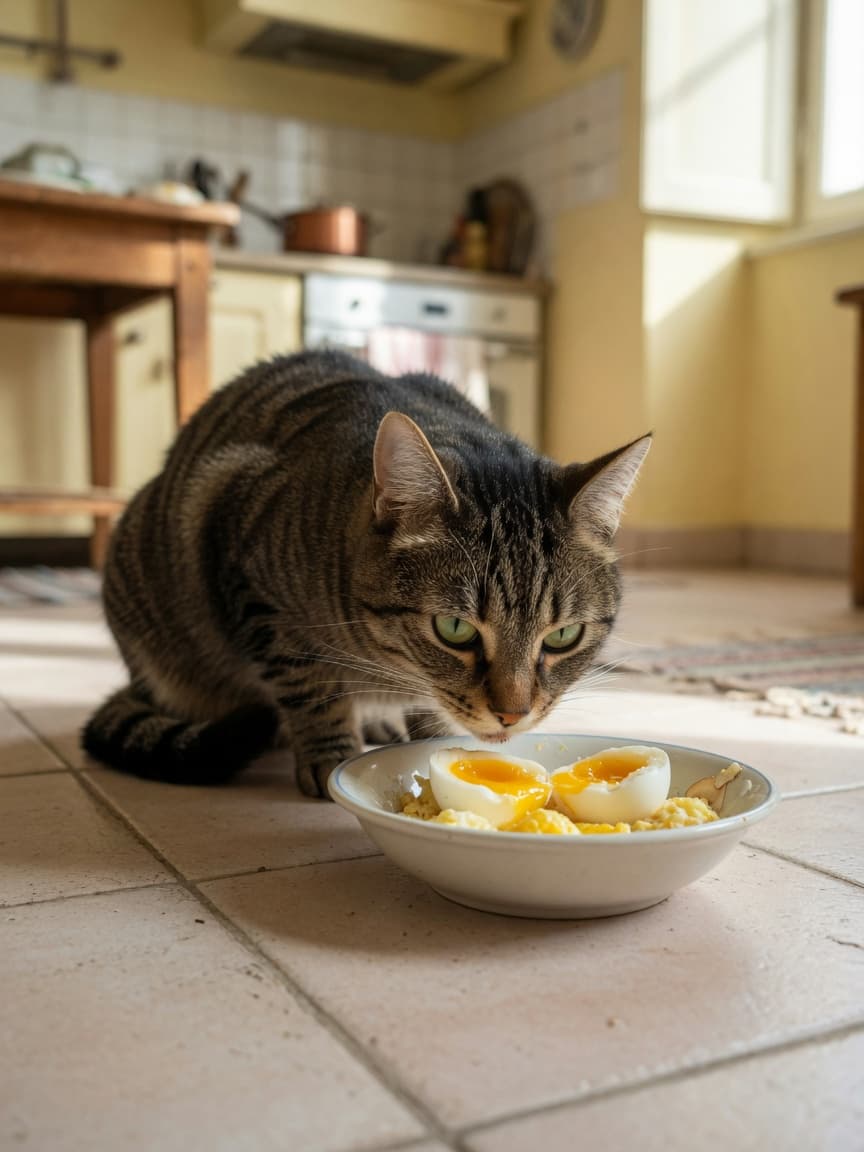
¿Pueden Comer Huevos los Gatos? Cocinados vs. Crudos — Lo Que Todo Propietario de Gatos Debe Saber
Huevos y el Carnívoro Obligado
Los gatos son carnívoros obligados — sus sistemas digestivos y vías metabólicas están optimizados para la nutrición de origen animal. Los huevos son uno de los alimentos de origen animal más nutricionalmente completos disponibles, razón por la cual pueden ser una valiosa adición ocasional a la dieta de un gato. A diferencia de las fuentes de proteína de origen vegetal, los huevos proporcionan un complemento completo de aminoácidos esenciales en formas que los gatos pueden absorber y utilizar fácilmente.
Los huevos también contienen ácido araquidónico (un ácido graso omega-6 que los gatos no pueden sintetizar a partir del ácido linoleico, a diferencia de muchos mamíferos), colina para la salud neurológica y vitaminas liposolubles incluyendo A, D y B12 — todo entregado en una matriz animal que los sistemas digestivos felinos manejan eficientemente.
El Problema de la Avidina: Por Qué las Claras de Huevo Crudo Son Arriesgadas
Aquí está el problema clave con los huevos crudos: las claras de huevo contienen una glucoproteína llamada avidina que se une muy fuertemente a la biotina (vitamina B7) en el tracto digestivo, impidiendo su absorción. La biotina es esencial para el metabolismo de ácidos grasos, el crecimiento celular y la salud de la piel y el pelaje. Un gato que come regularmente claras de huevo crudo puede desarrollar deficiencia de biotina con el tiempo.
Los signos de deficiencia de biotina en gatos incluyen pelaje opaco y escamoso, pérdida de cabello, piel con escamas y letargo. La condición es reversible cuando se detecta, pero pueden pasar semanas o meses de consumo regular de huevo crudo antes de que aparezcan síntomas — facilitando que pase desapercibido hasta que se acumule una deficiencia significativa.
La buena noticia: la cocción desnaturaliza la avidina completamente. Una clara de huevo completamente cocinada no tiene actividad de avidina y no presenta riesgo de absorción de biotina. Esta es la razón por la que la regla es simple — siempre cocina los huevos antes de ofrecérselos a tu gato.
La yema no contiene avidina, y las yemas crudas son menos arriesgadas en ese sentido. Sin embargo, las yemas crudas aún conllevan riesgo de salmonela, y ofrecer solo yemas crea un snack pesado en grasas sin proteína equilibrada, por lo que los huevos enteros cocinados siguen siendo la recomendación sensata.
Riesgo de Salmonela en Huevos Crudos
Los huevos crudos — como la poultería cruda — pueden estar contaminados con Salmonella enterica. Los gatos pueden contraer salmonelosis, que causa vómitos, diarrea, fiebre y letargo. Más allá del riesgo para el gato mismo, los miembros del hogar pueden estar expuestos a través del contacto con una mascota infectada o superficies contaminadas — una preocupación particular para niños, ancianos o cualquier persona con un sistema inmunológico comprometido.
Cocinar huevos elimina el riesgo de salmonela. Los huevos revueltos, duros o escalfados (simples, sin aditivos) son todos métodos de preparación apropiados.
Cómo Preparar Huevos de Forma Segura para Gatos
- Revueltos: Cocina en una sartén antiadherente seca sin mantequilla, aceite, sal o pimienta. Los huevos revueltos simples son una de las formas más fáciles de servir huevo a un gato.
- Duros: Simplemente hierve el huevo hasta que esté completamente cocinado, pela y deja enfriar. Retira la cáscara — la cáscara de huevo no es dañina en pequeñas cantidades (es principalmente carbonato de calcio) pero no sirve para nada y puede ser un riesgo de asfixia.
- Escalfados: Escalfa sin vinagre o sal, y asegúrate de que la clara esté completamente cuajada.
- Nunca añadas: sal, pimienta, ajo, cebolla, cebolletas, salsa picante, queso, crema o cualquier otro ingrediente. Muchos aditivos comunes son tóxicos para los gatos.
¿Cuánto Huevo Puede Comer un Gato?
Un huevo grande entero contiene aproximadamente 70–80 kcal. Para un gato adulto promedio de 4 kg con una necesidad calórica diaria de alrededor de 200 kcal, incluso medio huevo representaría aproximadamente 17–20% de la ingesta diaria — ya excediendo la pauta típica de 10% de golosinas. En la práctica, una pequeña porción (una cucharada de huevo revuelto o un cuarto de huevo duro) es un tamaño de porción apropiado para una golosina ocasional.
Los huevos son densos en calorías y ricos en proteína, lo que los hace una buena golosina de alto valor para entrenamiento o como acompañamiento de comida para estimular el apetito en gatos que son comedores reacios. Pero no deben reemplazar una dieta comercial completa y equilibrada formulada para satisfacer todas las necesidades de micronutrientes de un gato — particularmente sus requisitos de taurina, que debe provenir del tejido animal.
Ver alimentos para gatos en Zooplus →Alergias al Huevo en Gatos — Raras Pero Posibles
Las alergias alimentarias en gatos, aunque menos comunes que en perros, sí ocurren. El huevo no está entre los alérgenos felinos más comunes (la carne de res y el pescado figuran más prominentemente), pero cualquier fuente de proteína puede teóricamente desencadenar una respuesta inmunológica. Si tu gato desarrolla picazón, lesiones en la piel, vómitos o malestar digestivo después de comer huevo, discontinúa su uso y consulta a tu veterinario. Una prueba de dieta de eliminación es típicamente requerida para confirmar alergia alimentaria.
Situaciones Especiales: Gatitos y Gatos Mayores
Los gatitos tienen mayores demandas de energía y proteína relativas al peso corporal, y los huevos cocinados pueden ser un suplemento denso en calorías útil durante el crecimiento — pero solo como suplemento a una fórmula completa para gatitos, no como fuente de proteína primaria. Los gatos mayores con apetito reducido pueden beneficiarse de una pequeña cantidad de huevo como acompañamiento palatable. Los gatos con enfermedad renal deben mantener el huevo al mínimo debido a su contenido de proteína concentrado — siempre bajo consejo veterinario.
Resumen: Lo Que Necesitas Saber
Los huevos cocinados son un complemento nutritivo ocasional seguro para gatos. Son ricos en proteína de alta calidad, aminoácidos esenciales y vitaminas que apoyan la salud felina. Siempre:
- Cocina completamente (revueltos, duros o escalfados)
- Sirve sin sal ni condimentos
- Mantén las porciones pequeñas (menos del 10% de la ingesta calórica diaria)
- Usa como complemento ocasional, no como alimento básico
- Evita completamente los huevos crudos debido al riesgo de avidina y salmonela
Si tienes dudas sobre si los huevos son apropiados para tu gato específico — especialmente si tiene condiciones de salud preexistentes — consulta a tu veterinario. Como con todos los nuevos alimentos, introduce los huevos gradualmente en pequeñas cantidades para monitorear la tolerancia digestiva.
```