
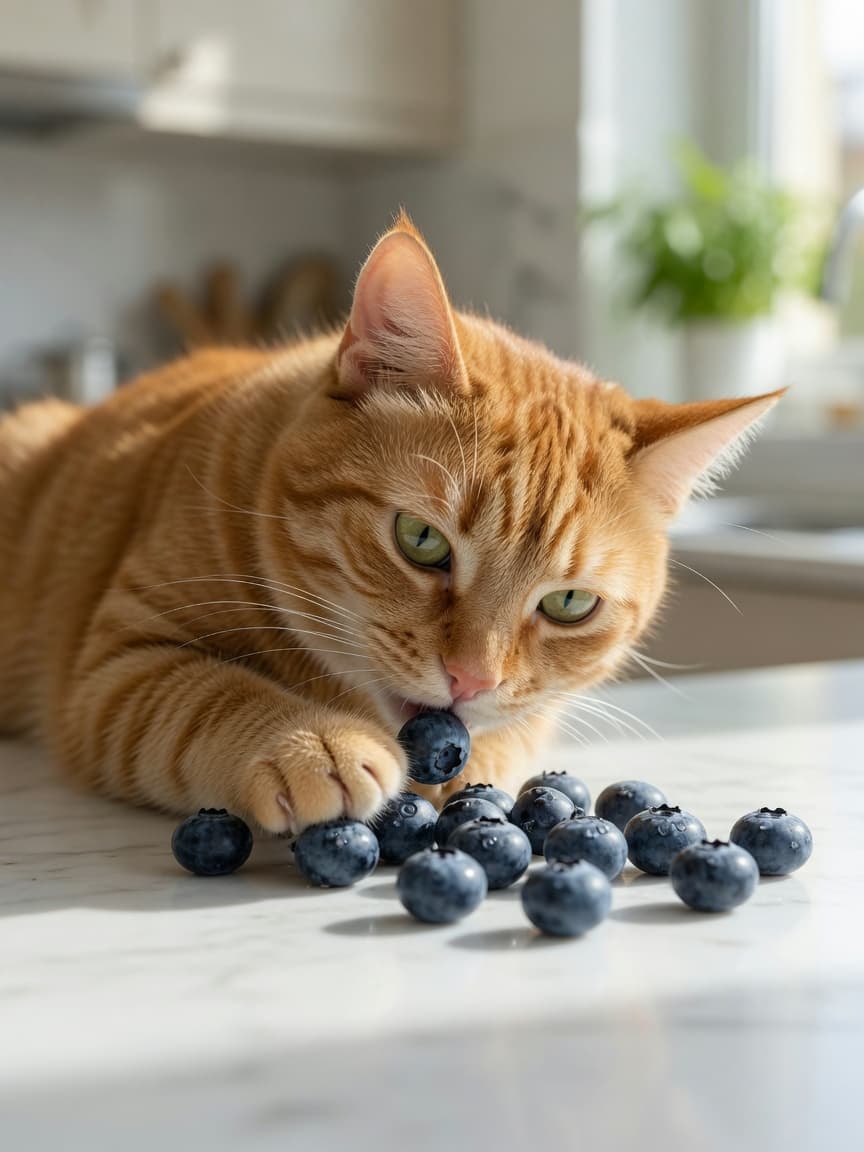
¿Pueden Comer Arándanos los Gatos? Lo Que Necesitas Saber
¿Son Seguros los Arándanos para los Gatos?
Los arándanos no aparecen en ninguna de las listas principales de toxicología veterinaria — no son tóxicos para los gatos. La ASPCA no clasifica los arándanos como un peligroso alimento para felinos. Por lo tanto, si tu gato ha arrebatado un arándano de la encimera o muestra curiosidad por la fruta, no necesitas entrar en pánico.
Dicho esto, "no tóxico" no es lo mismo que "beneficioso". La conversación sobre arándanos y gatos requiere una comprensión clara de la biología felina, que es fundamentalmente diferente a la nuestra.
Por Qué los Gatos No Pueden Realmente Beneficiarse de los Antioxidantes en los Arándanos
Los arándanos son celebrados en la nutrición humana por su alto contenido de antocianinas — antioxidantes de origen vegetal vinculados a la reducción de la inflamación y la protección celular. El marketing de pienso para mascotas ha tomado este enfoque para promover "superalimentos" para animales, incluidos gatos.
El problema es que los gatos son carnívoros obligados. Sus sistemas digestivos y vías metabólicas evolucionaron completamente alrededor de proteína animal y grasa. A diferencia de los humanos o incluso de los perros, los gatos:
- Carecen de suficiente amilasa en su saliva para comenzar a descomponer eficientemente los almidones vegetales.
- Tienen un tracto intestinal acortado que limita la fermentación y absorción de compuestos vegetales.
- No pueden sintetizar ciertos nutrientes esenciales (taurina, ácido araquidónico, vitamina A a partir de betacaroteno) de fuentes vegetales en absoluto.
Esto significa que los antioxidantes en los arándanos, por impresionantes que sean en un contexto humano, son en gran medida irrelevantes para la salud de tu gato. La investigación sobre el metabolismo del carbono único en carnívoros estrictos confirma que las vías utilizadas para procesar muchos micronutrientes derivados de plantas simplemente no funcionan de la misma manera en los gatos que en los omnívoros.
¿Les Gustan Realmente los Arándanos a los Gatos?
Los gatos carecen de receptores funcionales de sabor dulce — son uno de los pocos mamíferos que literalmente no pueden saborear la dulzura. La mayoría de los gatos no muestran interés en la fruta en absoluto. Si tu gato investiga o come un arándano, casi ciertamente está respondiendo a la textura, el olor, o simplemente a la novedad de un objeto nuevo, no a ningún atractivo de sabor.
Algunos gatos comerán casi cualquier cosa que se coloque frente a ellos por curiosidad. Esto no significa que el alimento sea apropiado para el consumo regular.
Riesgos Potenciales de Alimentar a los Gatos con Arándanos
Aunque un solo arándano es poco probable que cause daño, hay algunos puntos a tener en cuenta:
- Riesgo de asfixia: Los arándanos enteros son redondos y firmes. Para gatos pequeños o gatitos, pueden presentar un riesgo menor de asfixia. Si ofreces uno, considera cortarlo por la mitad.
- Contenido de azúcar: Los arándanos contienen azúcares naturales. Los gatos no necesitan azúcar en su dieta, y la exposición regular — incluso en pequeñas cantidades — podría ser una preocupación para gatos propensos a la obesidad o la diabetes.
- Malestar gastrointestinal: Cualquier alimento desconocido puede causar heces sueltas o vómitos en gatos sensibles. Si tu gato come un arándano y desarrolla síntomas digestivos, descontinúa y monitorea.
- Desplazamiento de la nutrición adecuada: Ofrecer premios — incluso inofensivos — demasiado frecuentemente puede reducir el apetito de un gato por alimento nutricionalmente completo.
¿Cuántos Arándanos Puede Comer un Gato?
Si quieres dejar que tu gato pruebe un arándano, limítalo a 1–2 arándanos pequeños ocasionalmente — no diariamente, no semanalmente. No hay razón de salud para incluir arándanos en la dieta de tu gato en absoluto. No proporcionan ningún nutriente esencial que una dieta basada en carne no suministre ya en una forma más biodisponible.
Piénsalo de esta manera: si tu gato muestra interés, un arándano de vez en cuando no causa daño. Pero no hagas un esfuerzo especial para añadir fruta a las comidas de tu gato.
¿Qué Pasa con el Pienso para Gatos o Premios con Sabor a Arándano?
Algunos premios comerciales para gatos incluyen extracto de arándano o sabor a arándano. Estos generalmente están presentes en cantidades diminutas y es poco probable que causen daño. Sin embargo, su inclusión es más una decisión de marketing que una nutricional. Al elegir premios o pienso para tu gato, prioriza alimentos de alto contenido en proteína animal.
```