
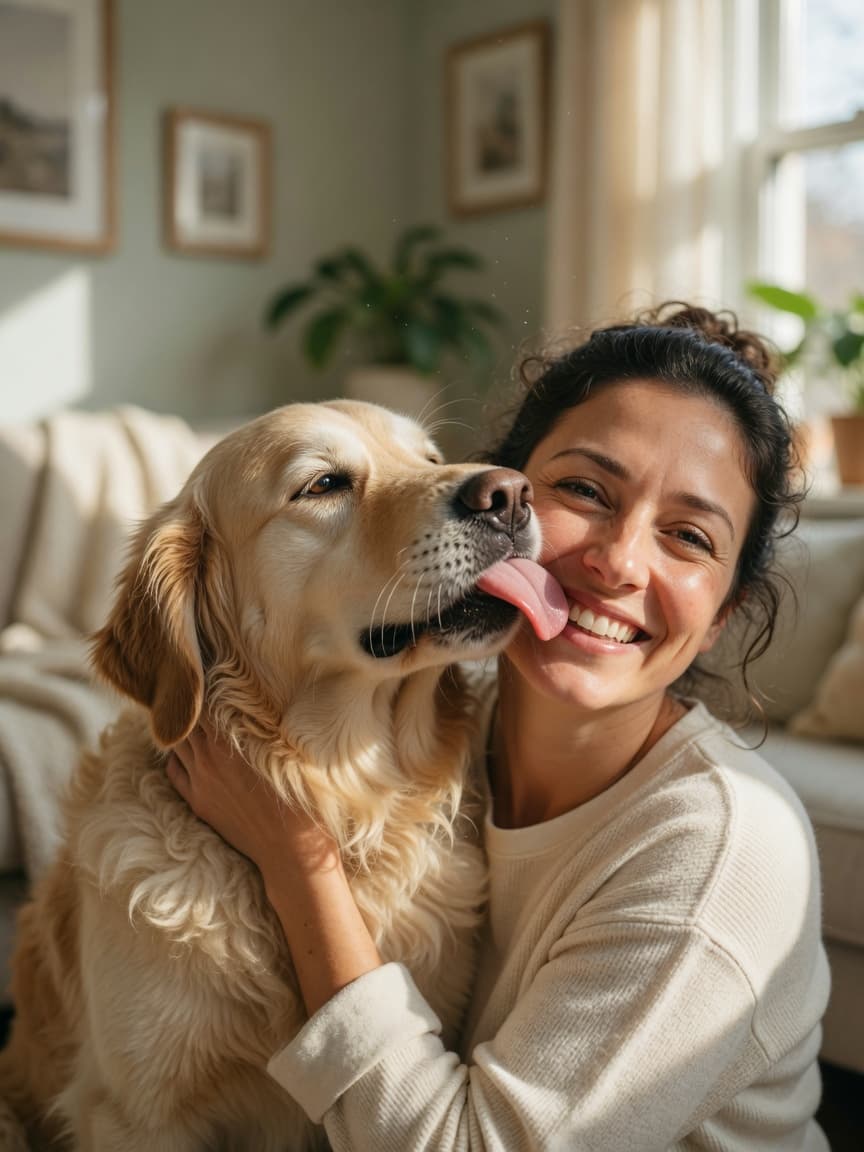
Licking Is a Dog's Native Language
If you have ever been greeted by an enthusiastic dog with its tongue leading the way, you will know that licking is a powerful part of canine communication. Dogs lick each other, they lick objects, and they lick the people they live with. While it can sometimes feel excessive or poorly timed — particularly when directed at your face first thing in the morning — licking is rarely without meaning. Understanding the different reasons behind this behaviour helps you interpret what your dog is telling you.
Social Bonding and the Chemistry of a Lick
One of the most significant reasons dogs lick their owners is to reinforce social bonds. Licking is a behaviour that begins in the first hours of a dog's life, when its mother licks it to stimulate breathing, encourage elimination, and provide warmth. From this earliest experience, licking is associated with comfort, safety, and connection.
Research has found that licking triggers the release of oxytocin in both the dog doing the licking and the person receiving it. Oxytocin is sometimes called the bonding hormone; it plays a central role in mother-infant attachment in mammals, in pair bonding, and in the sense of trust and calm that comes from close contact with someone familiar. When your dog licks you and you respond warmly, both of you are experiencing a small but genuine biochemical moment of connection. This is one reason why the human-dog relationship has proven so robust across thousands of years of co-evolution.
Your Skin Tastes Interesting
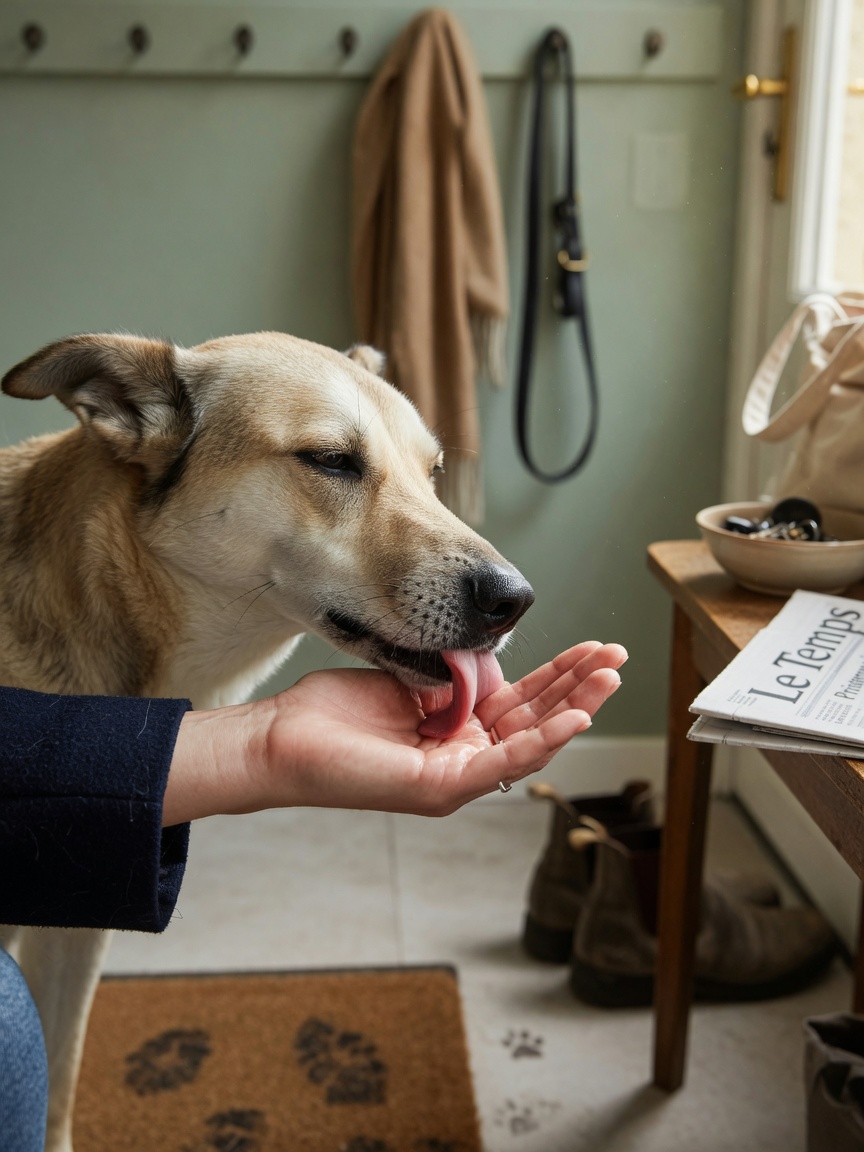
A more straightforward explanation for licking is that human skin is genuinely interesting to dogs from a sensory perspective. Skin carries salt from sweat, traces of food, lotions, and a complex chemical signature unique to each individual. Dogs have an extraordinary sense of smell and taste, and licking allows them to gather detailed information about where you have been, what you have eaten, and how you are feeling.
This investigative licking is often seen when you return home — your dog is essentially reading the story of your day through scent and taste. It is also common after exercise, when sweat increases the concentration of salt and other compounds on the skin surface. Some dogs show a marked preference for licking specific areas, such as the hands, arms, or feet, where sweat glands are more concentrated.
Submissive Behaviour and Social Signalling
In canine social groups, lower-ranking individuals lick higher-ranking ones as a gesture of deference and appeasement. Dogs that are uncertain about their social standing, or that are trying to communicate that they pose no threat, will often lick the muzzle or face of a more dominant individual. This behaviour transfers directly into interactions with humans.
A dog that licks your face when you lean down to greet it may be performing a greeting ritual rooted in this submissive signalling. It is not necessarily an expression of low confidence — many well-adjusted, confident dogs engage in face licking as a form of enthusiastic social greeting — but in combination with other signals such as a lowered body posture, tucked tail, or averted gaze, it can indicate that the dog is seeking reassurance rather than simply expressing joy.
Learned Reinforcement: You Taught This
Dogs are exceptionally good at learning which behaviours produce positive outcomes. If licking your hand at any point resulted in attention, laughter, praise, or even gentle pushing away — all of which can function as social rewards from a dog's perspective — your dog has learned that licking you works. It gets a response.
This learned component is one reason why licking can escalate over time. What begins as occasional social licking can become a persistent demand for attention if it is consistently rewarded, even inadvertently. If you find your dog's licking excessive and wish to reduce it, the most effective approach is consistent non-reinforcement — removing your attention calmly and completely the moment licking begins, rather than pushing the dog away or saying anything (both of which count as responses).
When Licking Signals Anxiety
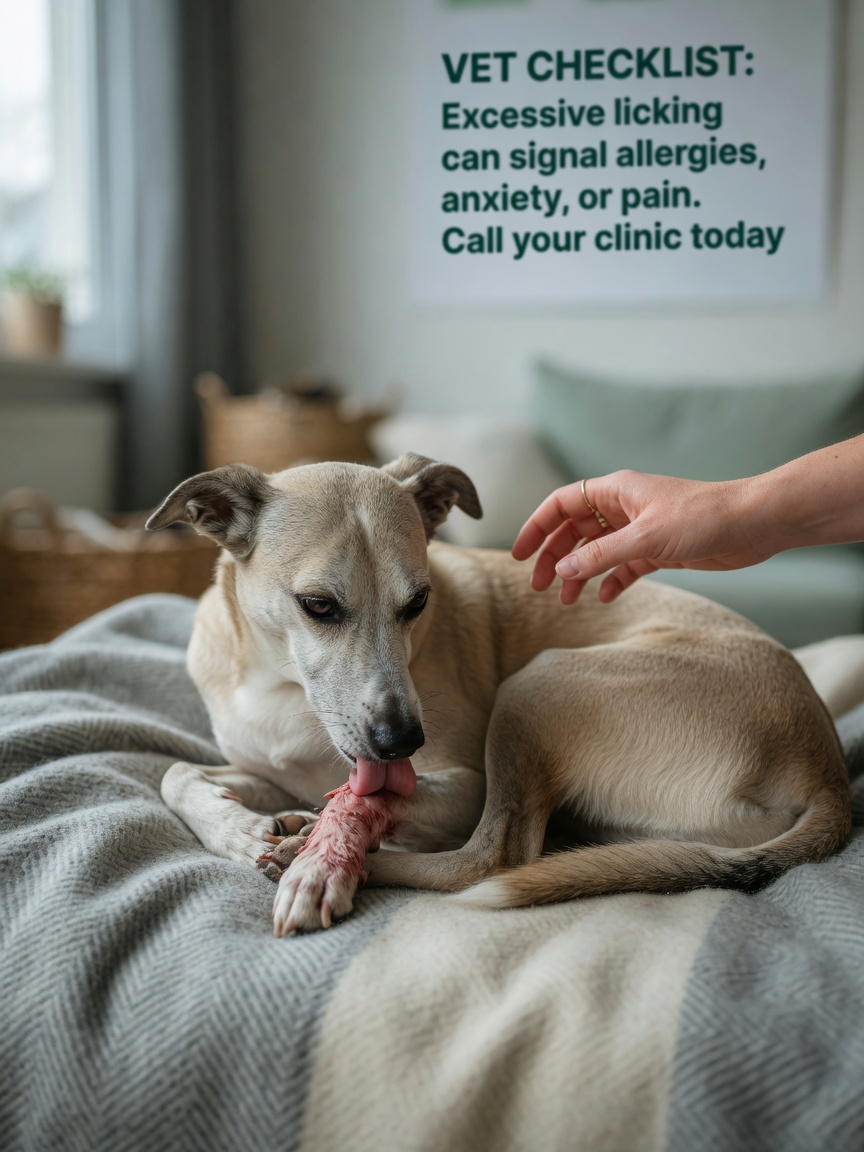
Excessive licking — particularly if it is sudden in onset, occurs in situations the dog finds stressful, or is directed compulsively at one part of your body or at itself — can be a signal of anxiety. Dogs that are under-stimulated, experiencing separation-related distress, or coping with pain or illness sometimes develop repetitive licking as a self-soothing behaviour.
Signs that licking may have an anxiety component include:
- Licking that intensifies when the dog is left alone or anticipates being left.
- Licking combined with panting, pacing, or yawning in contexts that are not physically tiring.
- Self-directed licking that creates bald patches or skin irritation — a condition known as acral lick dermatitis or lick granuloma.
- A sudden increase in licking behaviour in a dog that was previously moderate in this behaviour, which can occasionally indicate pain or nausea.
If you suspect anxiety is driving licking behaviour, speaking with your vet is a sensible first step. They can rule out medical causes and, if necessary, refer you to a qualified behaviourist.
Licking Wounds: A Dangerous Myth
There is a persistent belief that dogs licking their own wounds helps them heal. In reality, while saliva contains some antimicrobial compounds, the mechanical action of licking delays wound healing, introduces bacteria from the mouth, and can prevent closure of surgical sites. Dogs that lick wounds excessively can cause serious infections and tissue damage.
If your dog has a wound, surgical incision, or skin condition and is licking at it, an appropriately sized protective collar is necessary to prevent access. This is particularly important in the days following any surgical procedure, when the temptation to lick is highest and the consequences of doing so are most severe.
Should You Allow Your Dog to Lick Your Face?
This question comes up often, and the answer depends partly on personal preference and partly on hygiene considerations. Dogs explore the world with their mouths and can carry bacteria, intestinal parasites, and other pathogens that they pick up from soil, faeces, and other animals. The risk of transmission to a healthy adult through face licking is generally low but not zero, and it is higher for young children, elderly individuals, or anyone who is immunocompromised.
There is no need to make your dog feel rejected for attempting to lick your face — a gentle redirect to an acceptable alternative, such as offering your hand or standing up to break the interaction, is sufficient. Consistency in what you allow is the key to not confusing your dog about where the boundaries lie.
Licking is a rich, layered behaviour that tells you a great deal about your dog's emotional state and social instincts. Taking the time to notice when, where, and how your dog licks — and what might trigger changes in the behaviour — will deepen your understanding of your dog considerably.