
Why Dogs Hide Pain
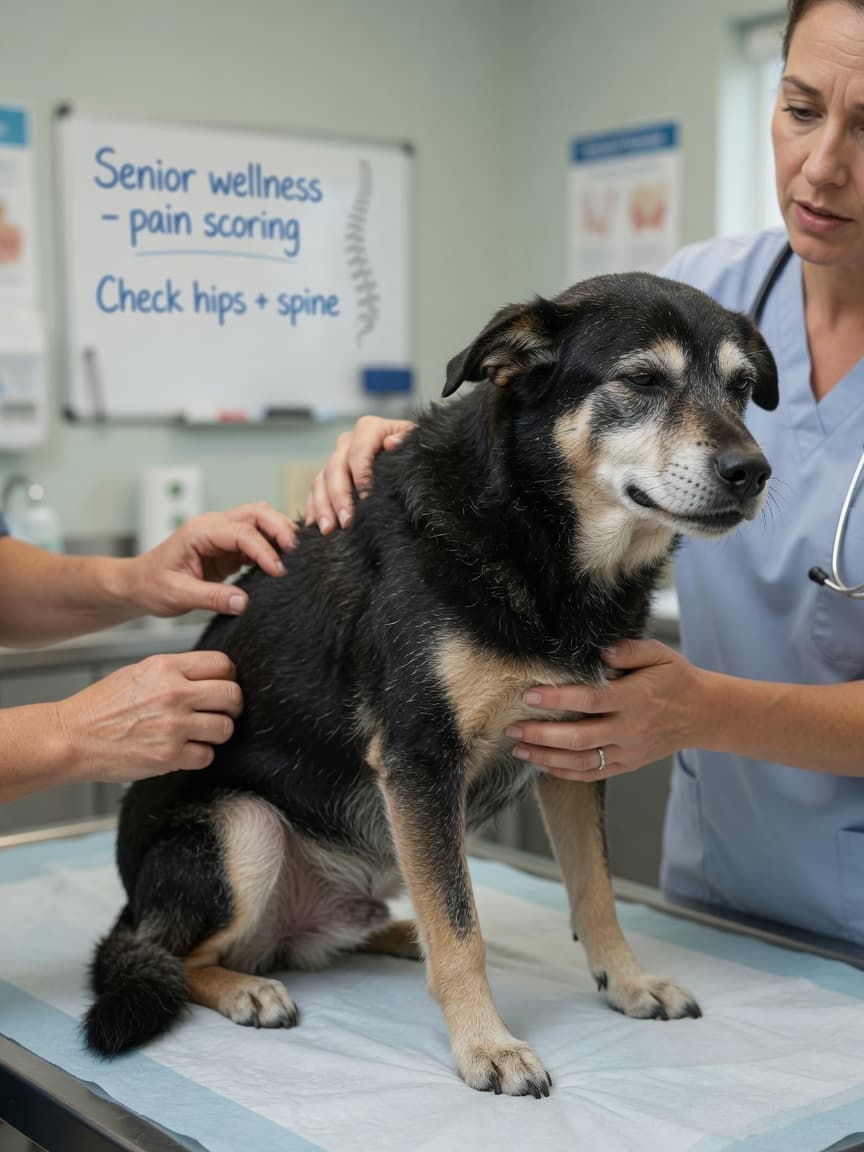
Dogs evolved as prey animals as well as predators, and in the wild, showing weakness invites attack. An injured animal that broadcasts its vulnerability is at higher risk from competitors and predators. This evolutionary inheritance means that domestic dogs often conceal pain with remarkable efficiency, continuing to eat, greet their owners, and behave relatively normally even when suffering significantly. It is one of the reasons why owners are often shocked to discover that their dog has been in considerable discomfort — sometimes for months — from a condition such as arthritis or a dental abscess. Knowing what to look for can make an enormous difference to how early a problem is identified and treated.
The Glasgow Composite Pain Scale
The Glasgow Composite Pain Scale (GCPS) is a validated clinical tool developed by researchers at the University of Glasgow and used by vets worldwide to assess pain in dogs. It evaluates a combination of behavioural, postural, and physiological indicators rather than relying on a single sign. Understanding the categories it uses helps owners recognise the same patterns at home.
Behavioural Signs of Pain
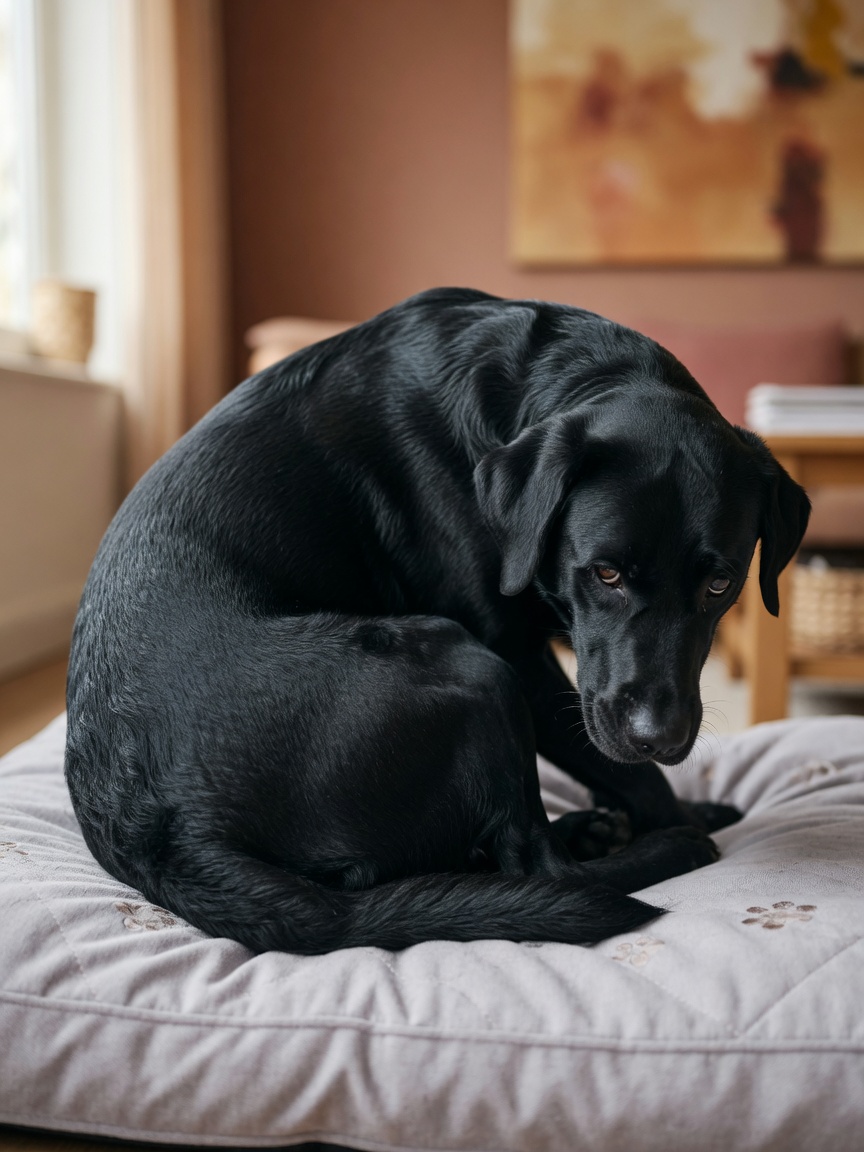
Changes in behaviour are often the first thing owners notice, though they are frequently attributed to other causes — ageing, boredom, a bad day. If several of these signs appear together, or if there has been a noticeable change from your dog's normal personality, pain should be considered.
- Reduced activity, reluctance to go on walks, or cutting walks short when previously enthusiastic.
- Reluctance to get up after resting, stiffness when first moving that eases off after a few minutes — a hallmark of joint pain.
- Aggression, snapping, or growling when touched in a particular area or when approached while resting. A dog who was not previously aggressive and is now reacting this way is very likely in pain.
- Changes in eating or drinking habits. A dog with dental pain may drop food, chew only on one side, or show less interest in meals. Some dogs in pain drink more; others less.
- Vocalisation — whimpering, yelping, or groaning, particularly when moving or when the affected area is touched. Note that many dogs do not vocalise even when in significant pain, so the absence of noise does not mean the dog is comfortable.
- Restlessness, inability to settle, repeatedly getting up and lying down in different positions.
- Changes in sleep patterns or sleeping more than usual.
Postural Signs of Pain
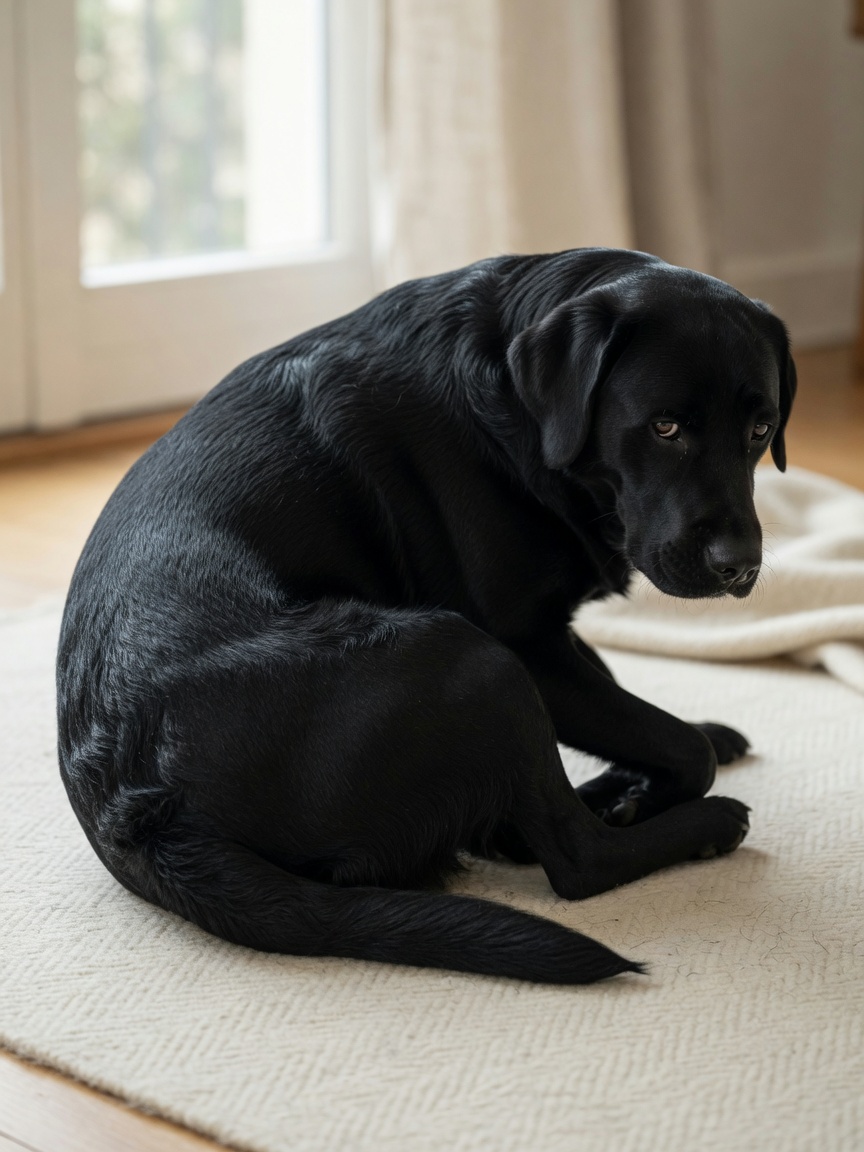
How a dog holds its body can tell you a great deal. Compare your dog's current posture with how they normally stand and move.
- Hunched or rounded back, particularly common in dogs with abdominal pain, spinal pain, or pancreatitis.
- Tucked tail, even in breeds or individuals that normally carry their tail upright.
- Guarding a specific body part — holding a leg up, turning away when a particular area is touched, tensing visibly when the area is approached.
- Unusual positions — lying in a position that would normally be uncomfortable, or avoiding positions they usually favour. A dog who normally sleeps curled up but now only lies flat may be experiencing spinal pain.
- Shifting weight repeatedly from one leg to another when standing.
Facial Signs: The GCPS Pain Face
The GCPS places specific emphasis on facial expression as a reliable indicator of pain in dogs. The following facial changes are associated with pain:
- Tension across the forehead, creating a furrowed or worried-looking brow.
- Orbital tightening — a subtle squinting or tightening around the eyes that changes their shape from round to slightly almond-shaped.
- Ear position — ears drawn back, flattened against the head, or held lower than is normal for that individual.
- Tension around the muzzle, with the lips drawn slightly back or the jaw held tightly rather than relaxed.
Learning to read your individual dog's baseline facial expression makes it much easier to spot these subtle changes. Photographs of your dog when relaxed and comfortable are a useful reference point.
Changes in Habits
Long-term or chronic pain often shows itself not in dramatic signs but in the quiet erosion of normal behaviours:
- No longer jumping up onto the sofa, bed, or favourite chair after previously doing so routinely.
- Difficulty or hesitation going up or down stairs.
- No longer meeting you at the door when you arrive home.
- Reduced interest in play, toys, or social interaction.
- Reduced grooming in areas the dog cannot comfortably reach due to restricted movement.
Physiological Signs
In acute or severe pain, you may observe physical changes including rapid, shallow breathing that is out of proportion to any recent exercise, an elevated heart rate, trembling or shaking (particularly in small dogs), and dilated pupils. These signs in combination with behavioural changes are a strong indicator of significant pain and warrant prompt veterinary attention.
Acute Versus Chronic Pain
Acute pain comes on suddenly — typically associated with injury, surgery, or an acute illness — and tends to produce more obvious, dramatic signs. Chronic pain develops gradually and persists over time, as is common with arthritis, dental disease, or intervertebral disc problems. Because chronic pain develops slowly and dogs adapt their behaviour incrementally, owners sometimes attribute the changes to normal ageing rather than pain. If your older dog seems less lively, less interested, or less mobile than they were a year ago, pain is a very plausible explanation and worth discussing with your vet.
Important: Never Give Human Pain Medication to Dogs
Ibuprofen and paracetamol are both toxic to dogs and must never be given under any circumstances. Ibuprofen can cause severe gastrointestinal ulceration, kidney failure, and is potentially fatal even in relatively small doses. Paracetamol damages red blood cells and the liver and can be lethal to dogs. If your dog is in pain, contact your vet for appropriate veterinary pain relief — do not attempt to manage it with anything from your own medicine cabinet.
When to Call Your Vet
Contact your vet the same day if your dog is showing several of the signs described in this article but is still able to move and is not in obvious distress. Seek emergency veterinary care immediately if your dog is unable to stand or walk, is crying out continuously, has collapsed, is breathing with difficulty, or has sustained a visible injury. The faster pain is identified and treated, the better the outcome for your dog and the easier it is to prevent acute pain from becoming a long-term problem.