
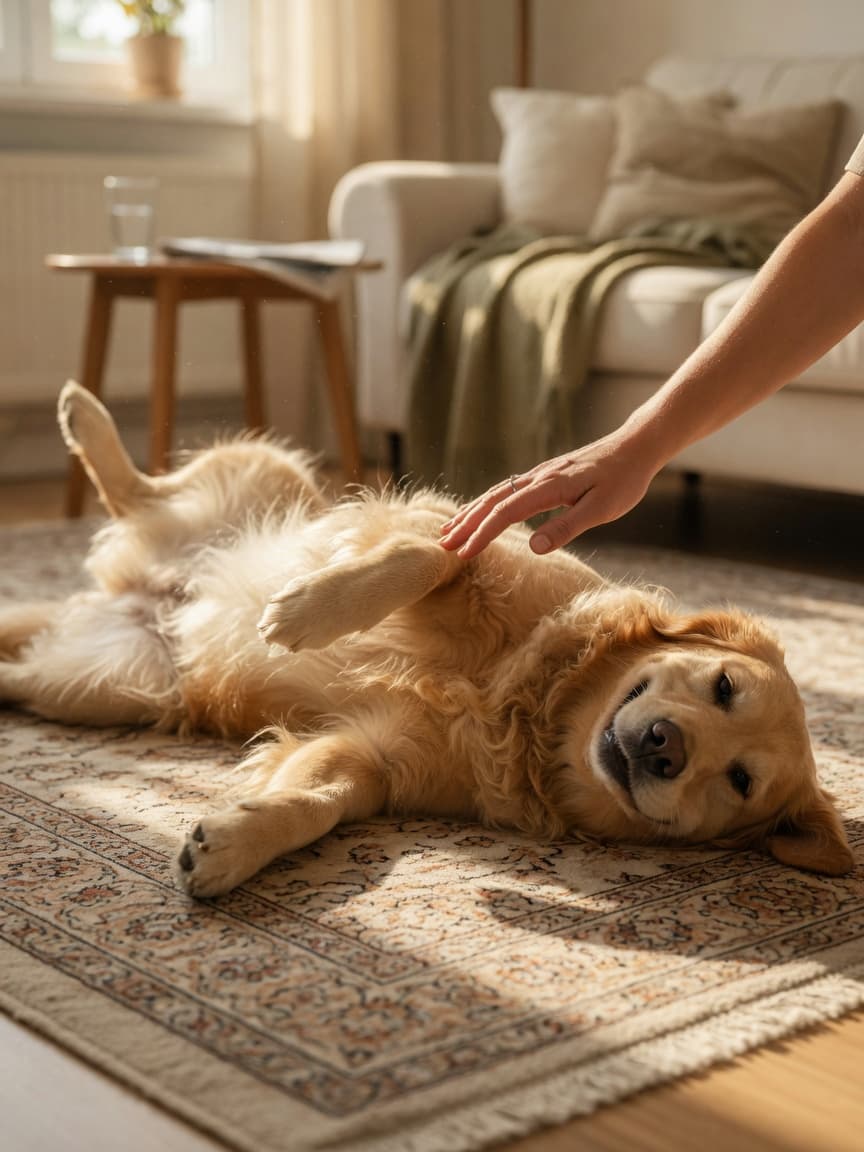
If you've ever noticed your beloved dog flipping onto their back with their legs in the air, you might have wondered what they're communicating. This endearing behaviour is far more than just a silly moment – it's actually one of the most fascinating ways dogs express themselves. Whether your dog is seeking affection, cooling down, or signalling trust, understanding the reasons behind this behaviour helps you strengthen your bond and recognise your pet's needs more effectively.
The Submission and Trust Signal
One of the most common reasons dogs roll onto their backs is to demonstrate submission and trust. When a dog exposes their belly – the most vulnerable part of their body – they're essentially saying "I trust you completely." This behaviour is rooted in canine pack dynamics, where lower-ranking pack members would show submission to their superiors.
In your household, when your dog rolls onto their back during playtime or when you arrive home, they're showing that they recognise you as a trusted authority figure. This is particularly true if their tail is wagging and their face appears relaxed. It's a genuine compliment to your relationship.
Seeking Attention and Affection
Many dogs have learned that rolling on their backs is an effective way to capture their owner's attention. They've discovered that this adorable posture typically results in belly rubs, scratches, and verbal praise. This is perfectly normal behaviour and actually demonstrates that your dog understands what makes you respond positively.
If your dog regularly performs this move when you're sitting on the sofa or after you've come home from work, they're likely asking for interaction. Rewarding this behaviour with gentle petting reinforces the positive association and strengthens your emotional connection.
Temperature Regulation and Comfort
Dogs also roll onto their backs to help regulate their body temperature. The belly area has less fur than other parts of their body, and exposing it to cooler air helps them cool down on warm days. You'll often notice this behaviour more frequently during summer months or after exercise.
Additionally, rolling on their back can be a comfortable resting position for some dogs, especially those with back or joint discomfort. If your dog frequently assumes this position and struggles to get up, it's worth mentioning to your veterinarian to rule out any underlying musculoskeletal issues.
Playfulness and Excitement
During play sessions, dogs often roll onto their backs as part of their play behaviour. This is a natural part of how dogs interact with each other and with their owners. Combined with a play bow (front legs stretched forward, rear end elevated), back rolling signals that your dog wants to engage in fun activity.
This is particularly common in puppies and younger dogs who have abundant energy and enthusiasm. Encouraging safe play during these moments helps your dog expend energy whilst building a positive relationship.
Scent Marking and Grooming
Dogs sometimes roll on their backs as a form of self-grooming or to scratch areas they can't easily reach with their teeth. Rolling can also be an instinctive way to cover themselves in scents from their environment, a behaviour inherited from their wolf ancestors.
If your dog rolls specifically after a bath or near other animals, they may be attempting to mask the "unnatural" smell or pick up interesting scents. This is completely natural behaviour and nothing to worry about.
Key Takeaways
- Back rolling typically indicates trust, submission, and comfort with their surroundings
- It's often a learned behaviour that successfully gets owner attention and affection
- During warm weather, belly exposure helps dogs regulate body temperature
- Playful back rolling combined with other play signals shows your dog wants interaction
- Always observe your dog's overall body language to understand the specific context
- Encourage this behaviour as it demonstrates a secure, trusting relationship with your pet
Understanding why your dog rolls on their back deepens your appreciation for their unique communication style. By recognising these signals and responding appropriately, you're not only meeting your dog's immediate needs but also nurturing a stronger, more trusting bond. Next time your furry friend flips onto their back, you'll know exactly what they're trying to tell you.