
Why Do Cats Bring You Dead Animals? It's Actually a Compliment
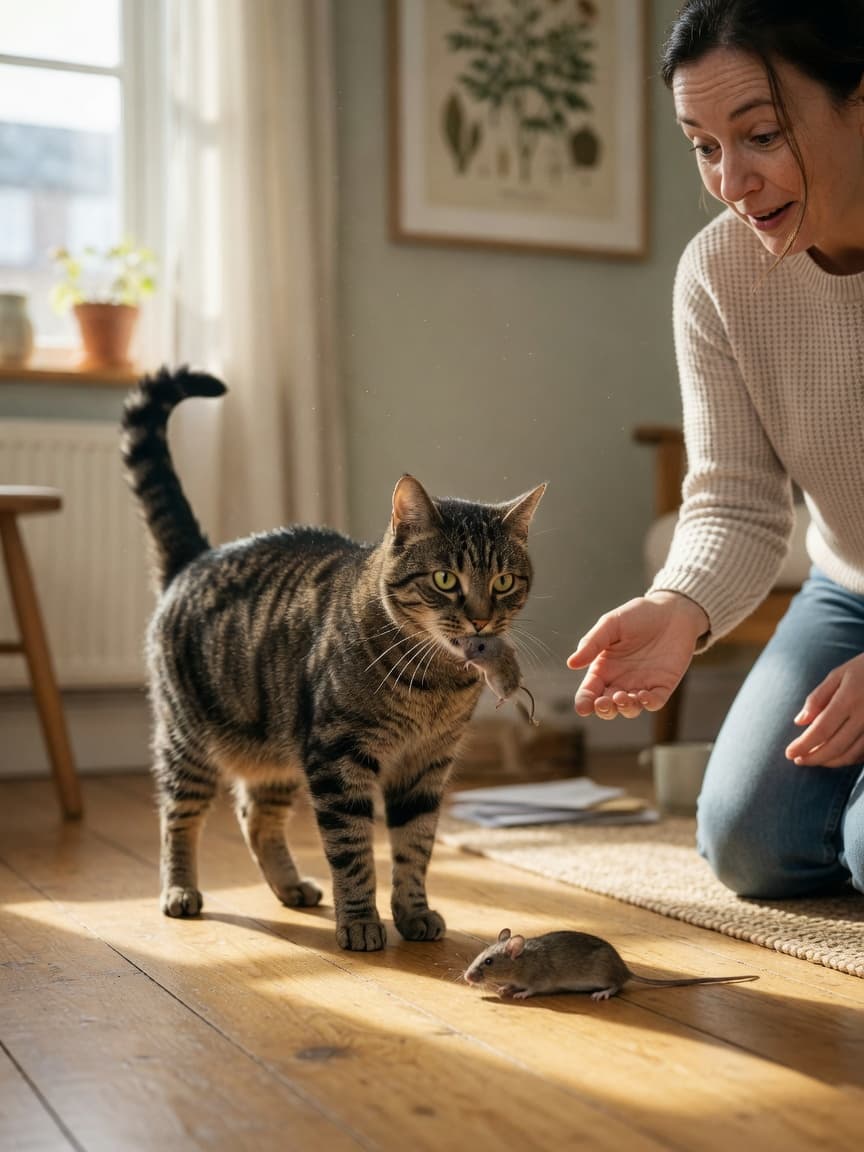
Your cat depositing a mangled mouse at your feet — or worse, on your pillow at 3am — is not a threat, a protest, or a random act of chaos. It is, by most interpretations of feline behaviour, a genuine gift. Your cat considers you part of their family group, they have assessed your hunting abilities and found them lacking, and they are doing something about it. You should feel flattered. Also, maybe slightly horrified. Both are valid.
The Teaching Instinct
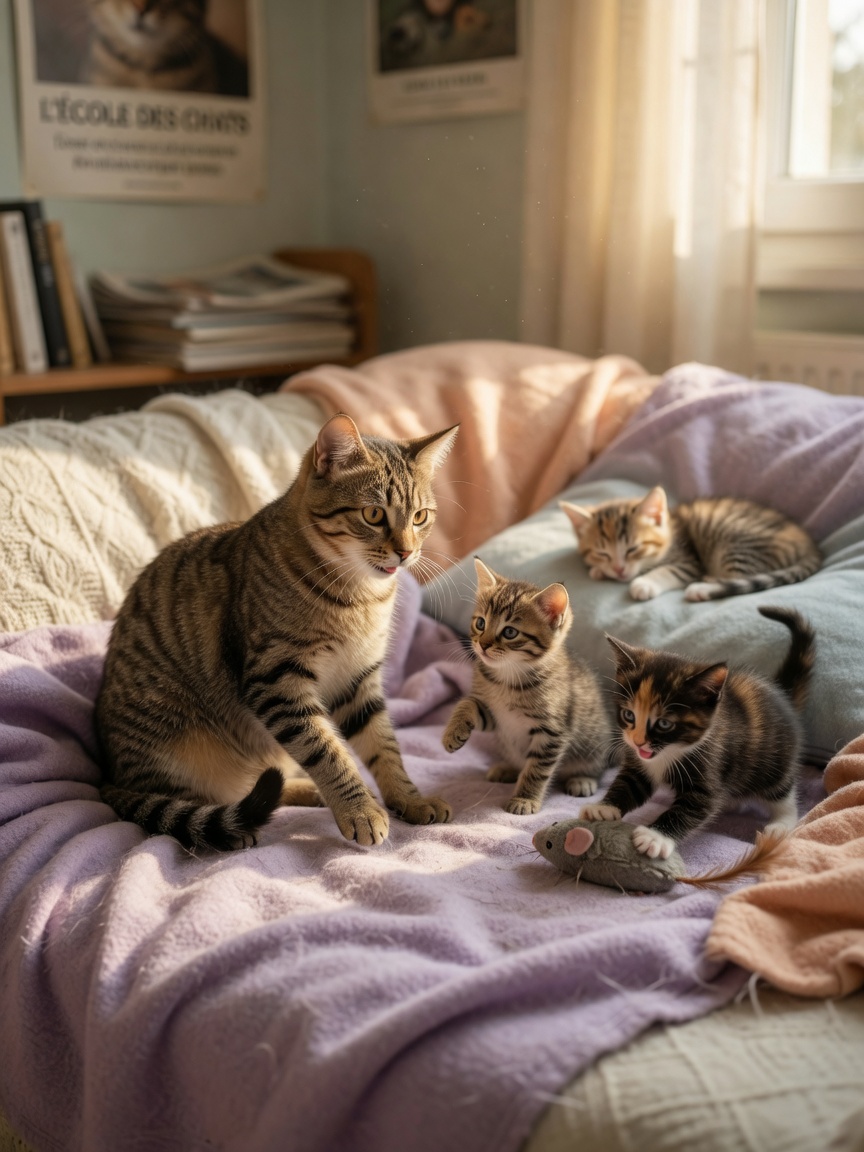
In the wild, mother cats don't just hunt for their kittens — they also bring live, injured, or dead prey back to the nest as a progression of hunting lessons. They start with dead prey, then injured prey the kittens can practise finishing, then live prey for full-circuit hunting practice. It's a carefully graduated curriculum. When your cat brings you a dead mouse, they may be following the same instinctive programme — starting you at lesson one. The fact that you've never progressed past "dead mouse on the doormat" says a lot about how your cat rates your learning curve.
Resource Sharing and Social Bonding
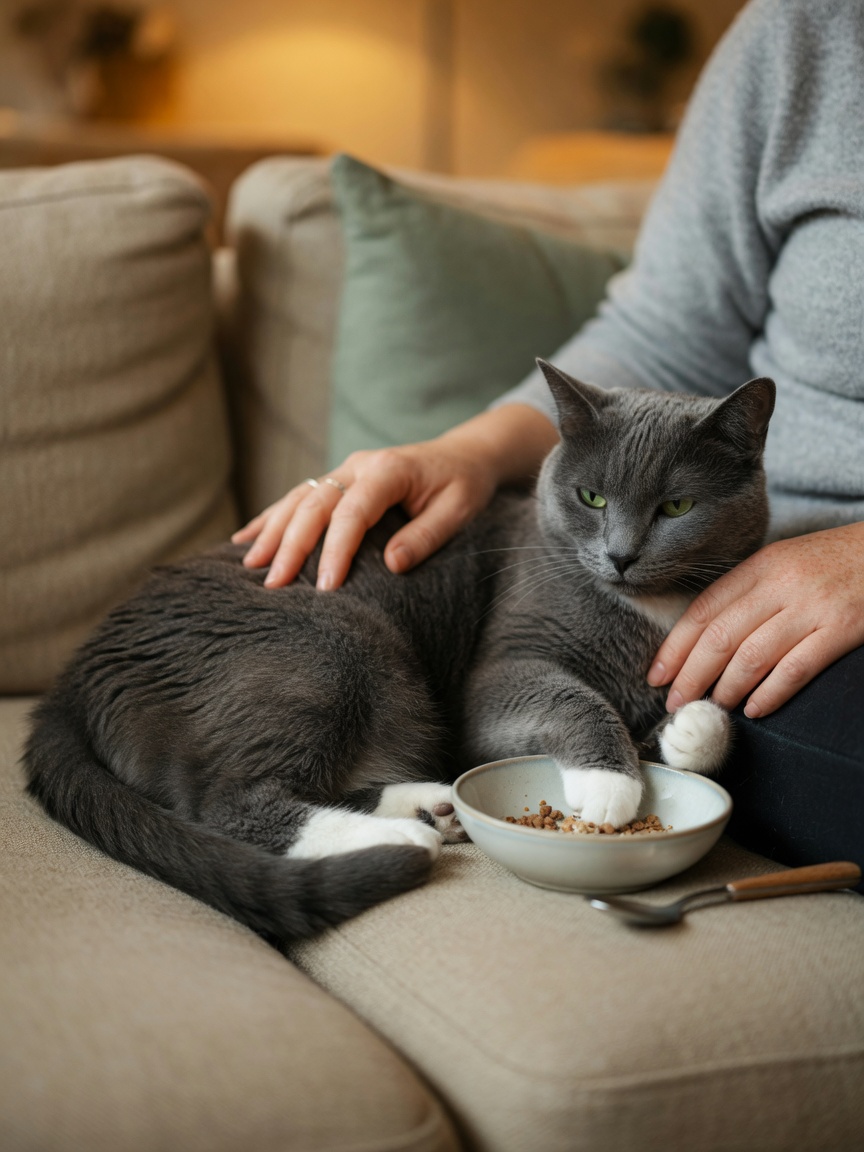
Cats in social groups — whether feral colonies or domestic households — will share food resources with individuals they are bonded to. Bringing prey is an act of social investment: "I have caught more than I need, and I am sharing it with you because you are in my group." This is particularly meaningful because cats are obligate carnivores for whom food has significant survival value. Choosing to share rather than simply eat the prey themselves signals a genuine social bond. Your cat is not just fond of you — they're treating you as core family, worth feeding.
Your Cat Thinks You're Useless (Lovingly)
Here's the interpretation that stings a little. Many behavioural researchers suggest that cats bring prey specifically to humans because they have observed that their human does not hunt. You come and go. You sometimes bring food from outside. But you never bring back anything you've caught yourself. From your cat's perspective, this is a concerning gap in your survival skill set. Bringing you prey is a corrective gesture — they are supplementing your diet and possibly trying to model the behaviour they'd like to see from you. It is simultaneously insulting and the most caring thing they know how to do.
The Hunting Drive Is Separate from Hunger
A crucial thing to understand is that in cats, hunting and eating are neurologically separate systems. A cat can be completely full and still hunt with full intensity — because the trigger for hunting is prey-like movement, not an empty stomach. This is why well-fed indoor-outdoor cats still kill birds and mice: satiation doesn't switch off the hunt circuit. It also means that the gift isn't motivated by them having caught surplus food — they may have had no intention of eating it at all. The prey was caught because it moved in a prey-like way, and bringing it to you is the natural social follow-through.
Why Birds More Than Mice Sometimes?
Cats that bring birds tend to be especially skilled hunters — birds are significantly harder to catch than small rodents because they can see and hear threats coming and can escape in three dimensions. A cat that regularly brings you birds is showing off advanced hunting achievement. Some behaviourists suggest there's an element of genuine pride in these presentations — the cat bringing an unusually challenging catch to a social group member to display competence. Watch their body language when they deliver it: head high, tail up, often vocalising with a specific chirping trill. That's not guilt. That's victory lap energy.
Mostly-Dead Deliveries and Live Releases
The nightmare scenario for most cat owners isn't the dead delivery — it's the live or mostly-alive delivery that gets released indoors. This happens most often with prey the cat got bored of mid-hunt, or with prey that played dead and then made a sudden break for it inside the house. Cats that bring live prey indoors and then seem to lose interest may be attempting the "teaching" behaviour — bringing live prey for their family to practise on. If this becomes a regular occurrence, bells on the collar (which reduce hunting success rates by warning prey of approach) or supervised outdoor time can help reduce it.
How to Respond Without Discouraging the Bond
The wrong response is to yell at your cat or make a dramatic negative scene — they will not understand why their generous gift is being rejected, and it may genuinely confuse and upset them. The right response is to acknowledge the gift calmly (yes, looking at it and making a sound counts), then remove it while your cat is distracted or away from the room. Wearing gloves for removal is sensible given the risk of parasites and bacteria. Never punish the behaviour — you'd be punishing an act of social affiliation, which damages the bond without addressing the instinct at all.
Should You Be Worried About Wildlife Impact?
From a wildlife conservation perspective, domestic cat predation on birds and small mammals is a genuine environmental concern — particularly for ground-nesting bird species. Studies estimate that domestic cats in the UK kill between 55 and 100 million birds and mammals per year. If your cat is a prolific hunter and you're in an area with sensitive wildlife, a quick-release safety collar with a bell is the most evidence-backed intervention. It won't eliminate hunting but can reduce successful kills by 30–50%. Keeping cats indoors at dawn and dusk — peak bird activity times — also makes a significant difference.
Key Takeaways
- Cats bring prey gifts as an act of social bonding, resource sharing, and instinctive "teaching" — it's a genuine compliment.
- Female cats do it most often, mirroring their role as hunting teachers to kittens in the wild.
- Hunting and hunger are separate neurological systems — a full cat will still hunt and gift prey.
- Never punish the behaviour — respond calmly, acknowledge the gift, remove it quietly.
- A belled collar can reduce successful hunting kills by 30–50% for cats with high predation rates.
Sources
- Loyd KAT, Hernandez SM, Carroll JP, Abernathy KJ, Marshall GJ. "Quantifying free-roaming domestic cat predation using animal-borne video cameras." Biological Conservation. 2013;160:183-189. doi:10.1016/j.biocon.2013.01.008.
- Turner DC, Bateson P, eds. "The Domestic Cat: The Biology of Its Behaviour." 3rd ed. Cambridge University Press; 2014. PubMed PMID: 24423619.
Written by Julia Wrenfield, Pet Wellness Researcher | ForPetsHealthcare.com