
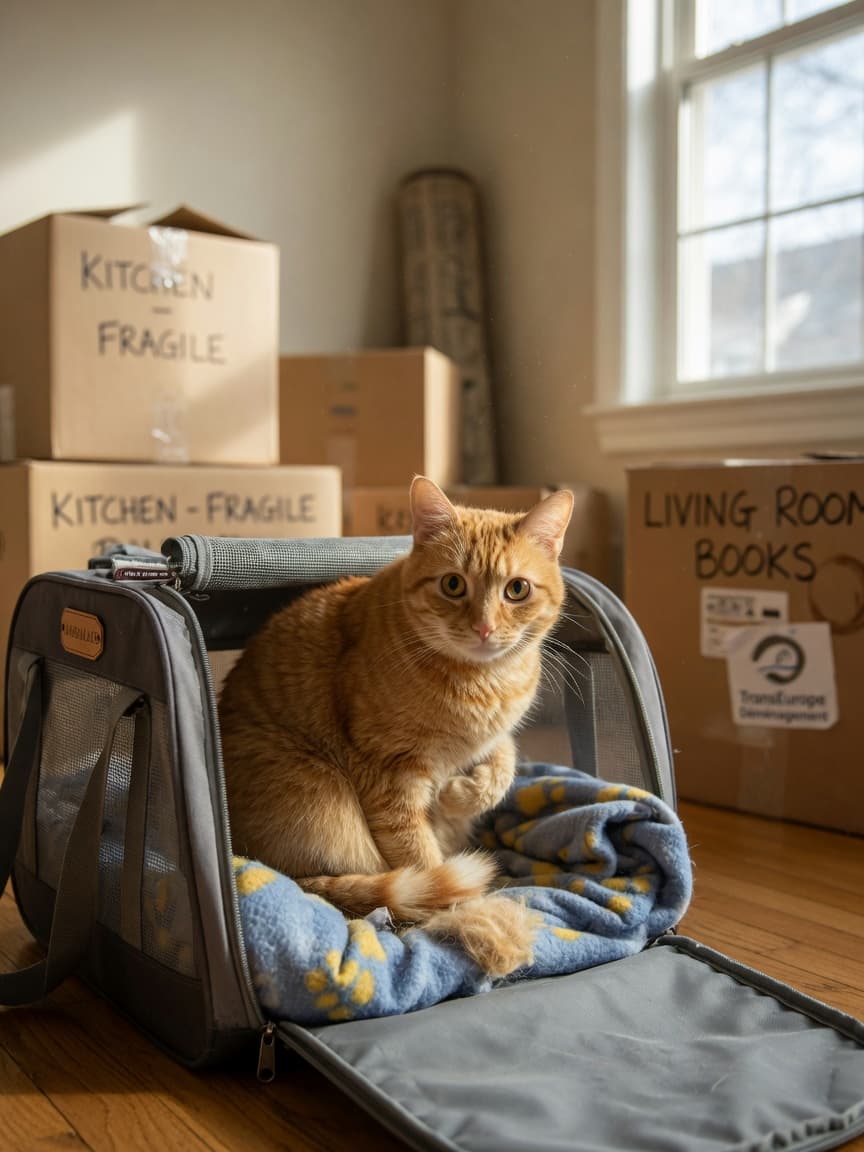
Long-Distance Moving With Cats: Preparation, Travel, and Resettlement
Cats are territorial animals with a profound attachment to the spaces they know. A long-distance move, whether across the country or internationally, disrupts every element of the sensory world they rely on for security. The smells, layout, sounds, and routines of their environment form the foundation of a cat's sense of safety. Understanding this is the starting point for managing a relocation that minimises distress and supports a healthy resettlement.
Preparation Before Moving Day
The most effective preparation begins well before the removal lorry arrives. Cats pick up on the stress of packing and the disruption of furniture arrangements. If you can maintain at least one undisturbed room for as long as possible, do so. That room should contain the cat's core resources: food, water, litter tray, bedding, and familiar objects. It also serves as a safe space on moving day itself, where the cat can be kept secure while doors open and close and strangers move through the house.
Carrier training is worth beginning weeks in advance if your cat is not already comfortable in its carrier. Leave the carrier open in a frequently used room with familiar bedding inside. Feed occasional treats near and inside it. The goal is for the carrier to be associated with neutrality or mild positivity rather than veterinary visits. A cat that enters its carrier without a struggle is significantly less stressed before travel even begins.
Schedule a pre-move veterinary check. Confirm vaccinations are current, request a health certificate if crossing international or regional borders, and ask about options for travel anxiety if your cat has a history of severe stress responses. Some cats benefit from a short course of medication for the travel period; this should only be used under veterinary guidance and ideally trialled before the journey itself to assess the cat's individual response.
Choosing Your Travel Method
For journeys within the UK, car travel is the most common and usually the most manageable option. Position the carrier securely in the footwell or on a seat with a seatbelt passed through the handle. Avoid placing the carrier in a boot area where vibration is increased and visual reassurance from the driver is impossible.
Cover the carrier partially with a light blanket to reduce visual stimulation while allowing airflow. Synthetic feline facial pheromone sprays applied to the carrier bedding around thirty minutes before travel can reduce anxiety. Do not feed a large meal immediately before travel but ensure the cat has access to water at any stop of reasonable length.
For longer journeys requiring overnight stops, a pop-up pet tent that fits inside a hotel room provides containment without relying on the room being secure. Pack a portable litter tray and familiar food items. Even if the cat does not eat during travel, having familiar smells available is valuable.
For international moves, research the destination country's import requirements thoroughly and well in advance. Some countries require months of preparation including specific vaccinations, parasite treatments, blood titre tests, and official documentation. The UK Pet Travel Scheme has specific rules for cats entering and re-entering Great Britain. Non-compliance can result in quarantine, which is deeply distressing for cats and expensive for owners.
On Moving Day
Keep the cat in its designated safe room with a clear note on the door asking all removal staff to keep it shut. Once the property is empty and the removal team has left, move the cat last. Place the carrier in the car before transferring the cat into it, so the transition from house to vehicle is quick and the cat is not left in a carrier in an empty, echoing house any longer than necessary.
At the new property, reverse the process. Place the cat in a single, quiet room before any unpacking begins. Set up core resources immediately: litter tray, water, food, and bedding with familiar scents. Allow the cat to explore this room in its own time before gradually introducing access to the rest of the property.
The Resettlement Period
Many owners underestimate the length of the resettlement period. Some cats adapt within days; others take several weeks or months to display their normal behaviour fully. During this time, restrict outdoor access entirely, regardless of the cat's previous outdoor lifestyle. A cat given outdoor access too soon in a new location risks becoming lost or attempting to navigate back towards the previous territory, which can result in serious harm over long distances.
Most feline welfare organisations recommend a minimum of four weeks indoors before any supervised outdoor access begins. The first outdoor excursions should ideally take place just before a mealtime, when the cat has motivation to return. Accompany the cat for initial outdoor sessions and keep them brief. Gradually extend time and range as the cat demonstrates comfortable familiarity with the immediate garden area.
Signs That Resettlement Is Progressing Well
- The cat is eating and drinking at normal levels
- Litter tray use is regular and consistent
- The cat seeks out interaction or contact with familiar people
- Grooming behaviour has returned to normal frequency
- The cat is beginning to explore new areas of the property voluntarily
Signs That Warrant Veterinary Attention
- Complete food refusal for more than twenty-four to forty-eight hours
- Signs of urinary straining or blood in the urine, which may indicate stress-induced cystitis
- Persistent hiding without any engagement, even for food or the owner
- Excessive vocalisation that does not reduce with time
- Significant weight loss within the first weeks
Pheromone diffusers plugged in at the new property before the cat arrives can support the transition. Rubbing a soft cloth gently around your cat's face and then around doorframes and furniture corners at the cat's height helps distribute familiar scent throughout the new space, which is one of the primary ways cats establish a sense of ownership and safety in an environment. A move managed with patience and preparation is one that most cats negotiate successfully, given sufficient time and a consistent, calm household around them.