
When the Clock Begins to Show
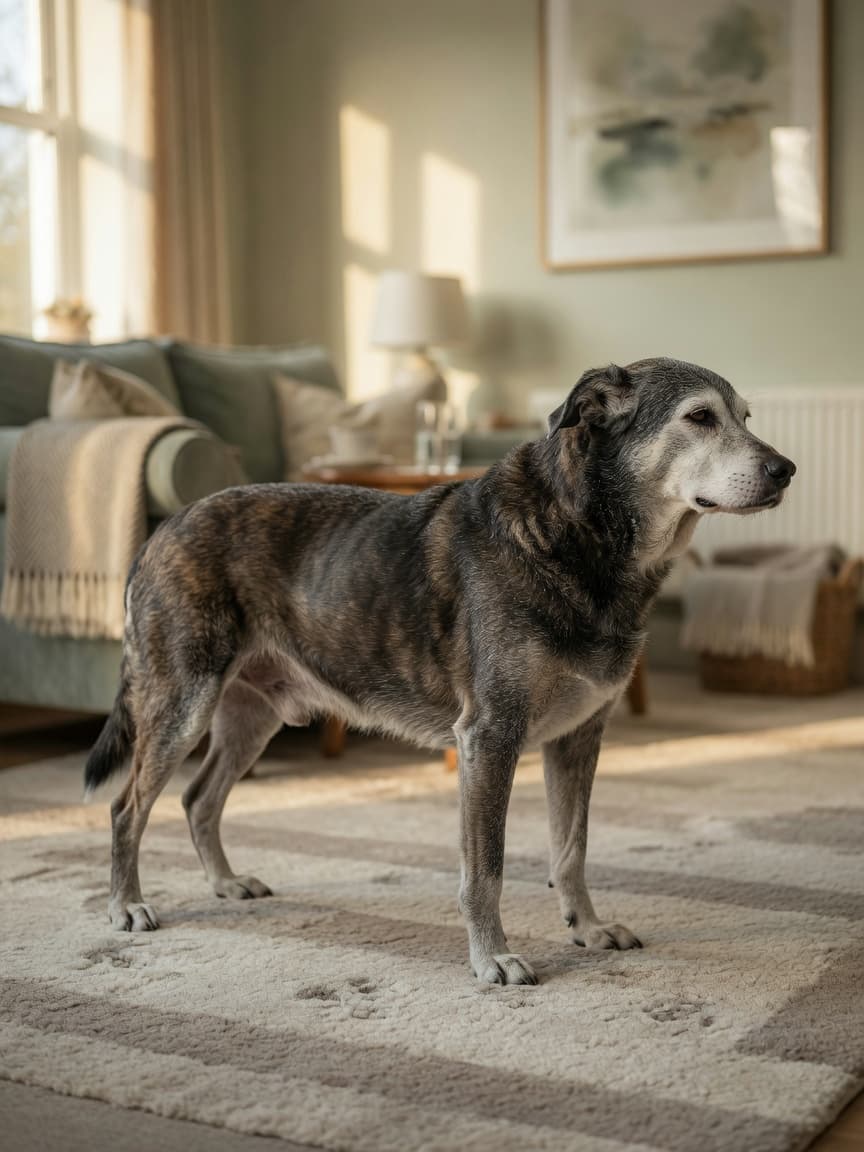
Seven is not a magic number — some large breeds show age-related changes earlier, some small breeds later — but somewhere in the vicinity of seven years, most dogs begin a noticeable physical transition. The changes are usually gradual enough that owners who see their dog every day can miss them accumulating. Looking back at photos from two or three years prior often makes the shift more obvious: a greying muzzle, a slightly broader back, eyes that look somehow older.
Understanding what these changes mean physiologically, and which ones are simply ageing versus which ones signal pathology, is one of the most useful things a dog owner can know. It allows for early action where action helps, and peace of mind where change is normal and expected.
The Greying Muzzle and Coat Changes
Greying around the muzzle and eyes is one of the most visible early signs of ageing. It is caused by a reduction in melanocyte activity — the cells responsible for pigment production — and is the direct canine equivalent of human greying hair. It carries no health implications in itself and tends to begin earlier in some breeds and colour patterns than others.
More functionally significant coat changes can also occur with age. The coat may become coarser, drier, or thinner as sebaceous gland activity changes and skin turnover slows. These changes are normal, but they can also be symptoms of underlying conditions — particularly hypothyroidism, Cushing's disease, or nutritional deficiencies. If coat quality changes rapidly or is accompanied by other symptoms such as weight gain, increased drinking, or lethargy, veterinary investigation is appropriate rather than assuming normal ageing.
Muscle Mass and Body Composition
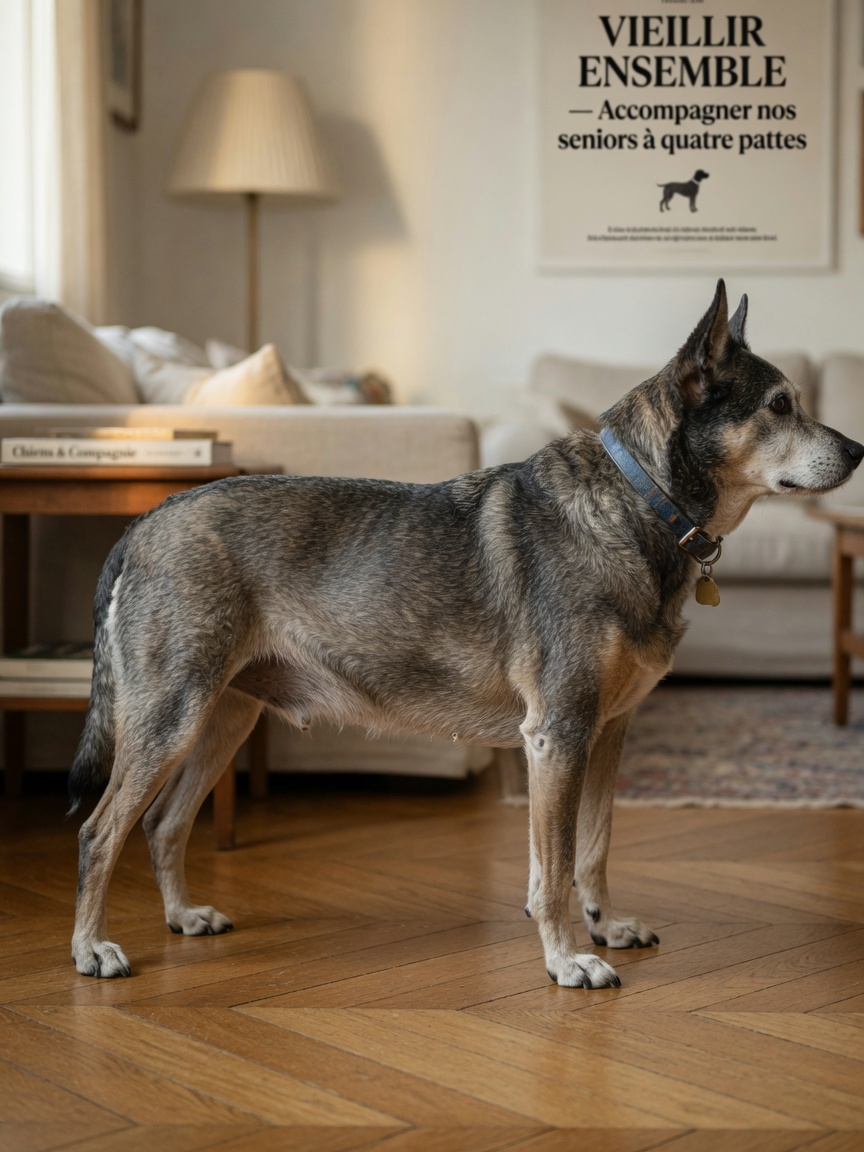
Sarcopenia — the age-related loss of muscle mass — is well documented in dogs and typically becomes noticeable after seven. The topline may lose some of its firmness, the haunches can appear less substantial, and the overall silhouette of the dog shifts subtly. This happens even in dogs who are receiving adequate protein and appropriate exercise, though both diet and activity strongly influence the rate at which it progresses.
Protein requirements actually increase in older dogs, contrary to the outdated belief that senior dogs should receive less protein to protect the kidneys. Current evidence does not support protein restriction as a preventive measure for healthy older dogs, and reduced protein intake can accelerate muscle loss. Dogs with confirmed kidney disease require individual dietary assessment, but healthy older dogs benefit from high-quality, highly digestible protein sources maintained at or above adult maintenance levels.
Joint Stiffness and Mobility Changes
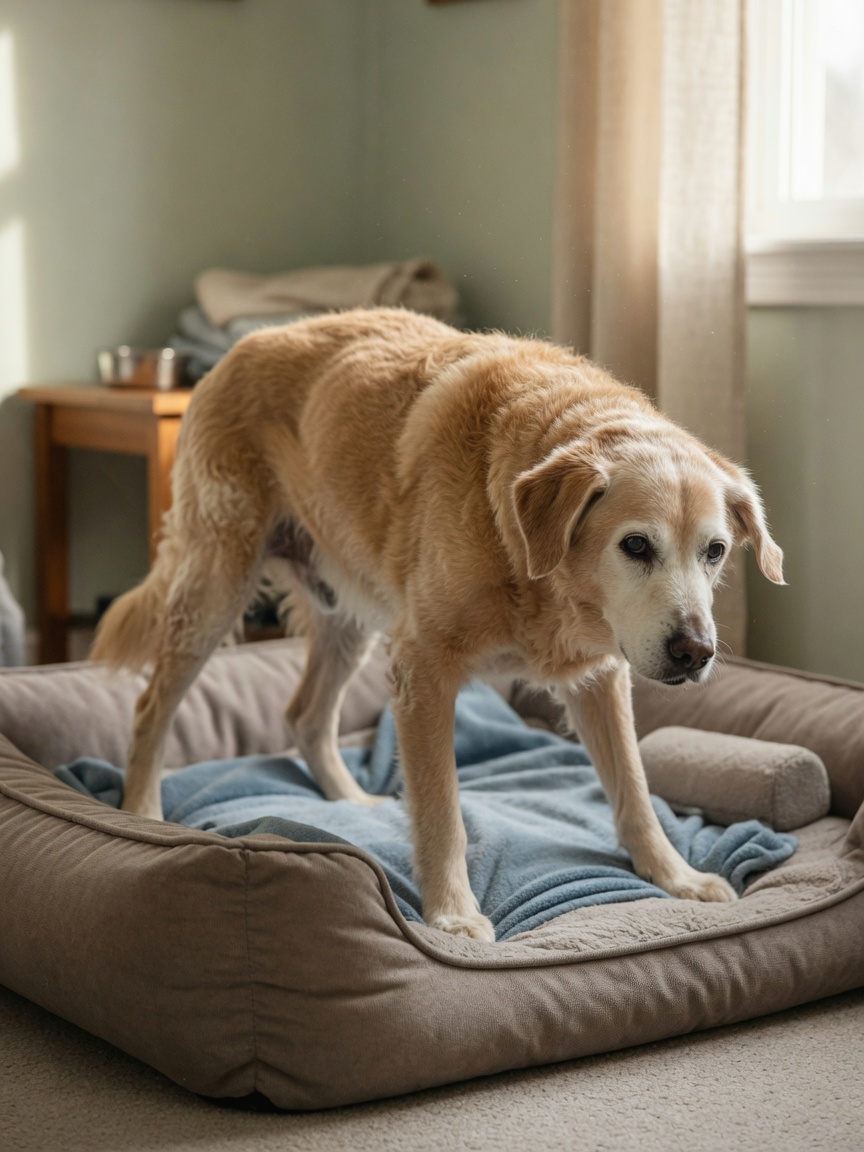
Osteoarthritis is arguably the most prevalent age-related condition in dogs. By some estimates, over 80 per cent of dogs over eight years old have evidence of it radiographically, though clinical signs vary enormously. The progression that becomes noticeable after seven includes morning stiffness, hesitation before rising, reluctance to navigate stairs or jump, altered gait on hard surfaces, and reduced willingness to sustain exercise.
The difficulty for owners is that dogs adapt to chronic pain with remarkable stoicism. A dog may not vocalise or appear dramatically lame and still be experiencing significant daily discomfort. Behavioural changes — increased irritability, withdrawal, reduced greeting behaviour, altered sleep positions — can all be pain-associated and should not automatically be attributed to personality shifts or "just getting old."
Modern veterinary pain management for osteoarthritis has improved considerably. A range of options now exists — from joint-supportive nutrition and weight management through to non-steroidal anti-inflammatory medications, newer modalities such as monoclonal antibody therapy targeting pain pathways, physiotherapy, and hydrotherapy. None of these require the dog to have reached crisis level before being considered.
Sensory Changes: Eyes and Ears
Lenticular sclerosis — the bluish, hazy appearance of the lens that commonly develops from middle age — does not significantly impair vision in most dogs. Cataracts, which cause more substantial opacity and vision loss, may also develop and can be surgically addressed in appropriate candidates. Dogs adapt well to reduced vision, particularly in familiar environments, and owners often do not notice gradual visual decline until it is quite advanced.
Age-related hearing loss in dogs follows a similar pattern to that in humans — higher frequencies are typically lost first, with lower frequencies maintained longer. A dog who seems to be ignoring you may genuinely not be hearing you as clearly as before. Testing hearing formally requires specialist equipment, but practical observation — does the dog respond to sounds that are not accompanied by visual cues? — gives a reasonable indication.
Digestive and Metabolic Changes
Digestive efficiency tends to decline with age, meaning that older dogs may absorb nutrients less effectively even on the same diet that served them well for years. This can manifest as changes in stool consistency, increased flatulence, or gradual weight loss despite maintained appetite. Highly digestible diets with quality protein sources help compensate for reduced absorptive capacity.
Metabolic rate slows, typically reducing caloric requirements by somewhere between ten and twenty per cent compared with young adulthood. Dogs who are fed at the same quantity as in their prime years will gain weight, and that weight gain will then accelerate joint deterioration and other age-related conditions. Adjusting caloric intake proactively — before weight gain occurs rather than after — is considerably more effective than trying to reduce body weight once it has accumulated.
Sleeping, Cognition, and the Inner Clock
Older dogs sleep more, and this is normal. What is less normal — and warrants attention — is sleep pattern disruption, particularly nighttime restlessness or reversal of the sleep-wake cycle. These can be early signs of canine cognitive dysfunction syndrome, the dog equivalent of dementia, which affects a significant proportion of dogs over ten but can begin showing subtle signs considerably earlier.
- Coat and pigment changes are expected but rapid or symptomatic changes warrant investigation
- Increase protein quality (not necessarily quantity) to help offset age-related muscle loss
- Behavioural changes are often pain-related — do not attribute them to personality without ruling out physical causes
- Adjust caloric intake proactively as metabolic rate slows
- Nighttime restlessness or cognitive changes may indicate early cognitive dysfunction syndrome