
Tick Species in Europe That Affect Dogs
Several tick species are relevant to dog owners across the UK and Europe, and their distribution, activity seasons, and disease-carrying potential differ. Understanding which ticks are present in your area is the first step towards appropriate prevention.
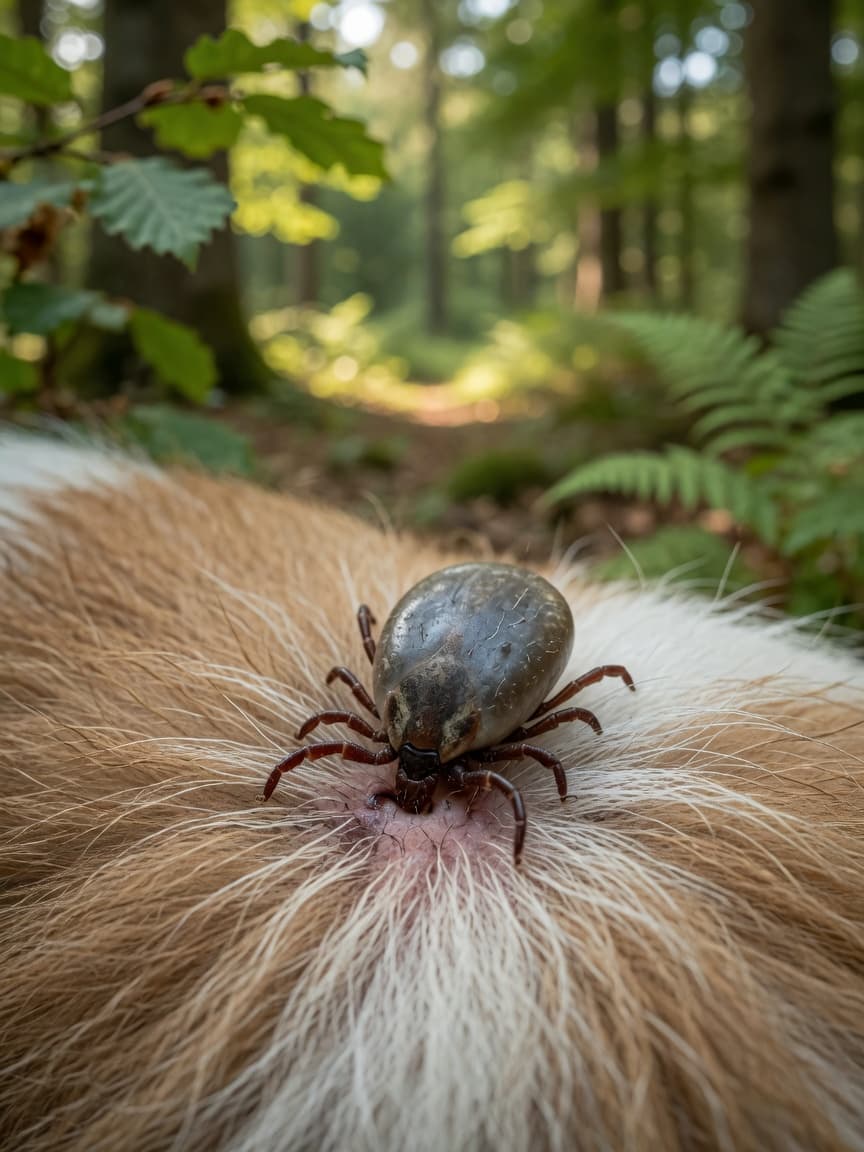
Ixodes ricinus, commonly known as the castor bean tick or sheep tick, is the most widespread tick species in the UK and across Northern and Central Europe. It is active from late winter through to autumn, with peak activity in spring and again in autumn, though in mild winters it can be found throughout the year. This tick is the primary vector of Lyme disease in Europe.
Ixodes hexagonus, the hedgehog tick, is also present in the UK. It tends to inhabit areas where hedgehogs are common and can affect dogs that explore such habitats.
Dermacentor reticulatus and Dermacentor marginatus are ornate ticks associated with grassland habitats. They are endemic across much of Southern and Eastern Europe and are spreading northwards — including into parts of Northern France, Belgium, and the Netherlands — driven by climate change and the movement of animals. These ticks are vectors of canine Babesiosis, a serious and potentially fatal disease.
Rhipicephalus sanguineus, the brown dog tick, is found primarily in Mediterranean regions and is associated with warmer climates and kennels. It can survive indoors in heated environments and transmits Ehrlichiosis, among other diseases.
Tick-Borne Diseases in Dogs

Lyme Disease
Lyme disease, caused by the bacterium Borrelia burgdorferi, is the most common tick-borne disease in the UK and is transmitted by Ixodes ricinus. It is widespread across woodlands, heathlands, moorlands, and even urban parks where deer and small mammals are present. Peak risk periods are spring and autumn, when tick activity is highest. In dogs, signs of Lyme disease include joint swelling and lameness, lethargy, loss of appetite, and fever. More serious complications can affect the kidneys. Diagnosis involves blood testing, and treatment is with antibiotics. Not all infected dogs show symptoms, but the disease can cause significant long-term health problems if untreated.
Babesiosis
Canine Babesiosis, caused by Babesia canis, is transmitted by Dermacentor ticks and is endemic across Southern and Eastern Europe — including Spain, France, Italy, and Romania. Cases have been recorded in the UK in dogs that had not travelled abroad, suggesting the disease may be establishing locally. Babesiosis destroys red blood cells, causing anaemia, fever, weakness, dark-coloured urine, and jaundice. It can be fatal without prompt treatment. Dogs travelling to mainland Europe, particularly Southern and Eastern regions, are at significant risk.
Ehrlichiosis and Anaplasmosis
Ehrlichia canis causes Ehrlichiosis, transmitted by the brown dog tick and more common in Mediterranean and Southern European countries. Anaplasma phagocytophilum, transmitted by Ixodes ricinus, causes Anaplasmosis and is present across much of Europe including the UK. Both conditions cause fever, lethargy, bleeding disorders, and joint pain, and require antibiotic treatment.
ESCCAP Prevention Guidelines
ESCCAP — the European Scientific Counsel Companion Animal Parasites — produces evidence-based parasite control guidelines for vets and pet owners across Europe. Their GL1 guideline on ectoparasite control recommends year-round tick prevention for dogs in most parts of Europe. This is because even outside peak tick season, individual ticks can be active in mild weather, and the risk of disease transmission is too significant to leave to chance.
Prevention should begin before your dog's first exposure to risk areas. If you are acquiring a new dog or puppy, discuss tick prevention with your vet at the first health check. For ESCCAP country-specific guidance, visit the ESCCAP Europe website, which provides region-by-region parasite risk maps and product recommendations.
Tick Prevention Products
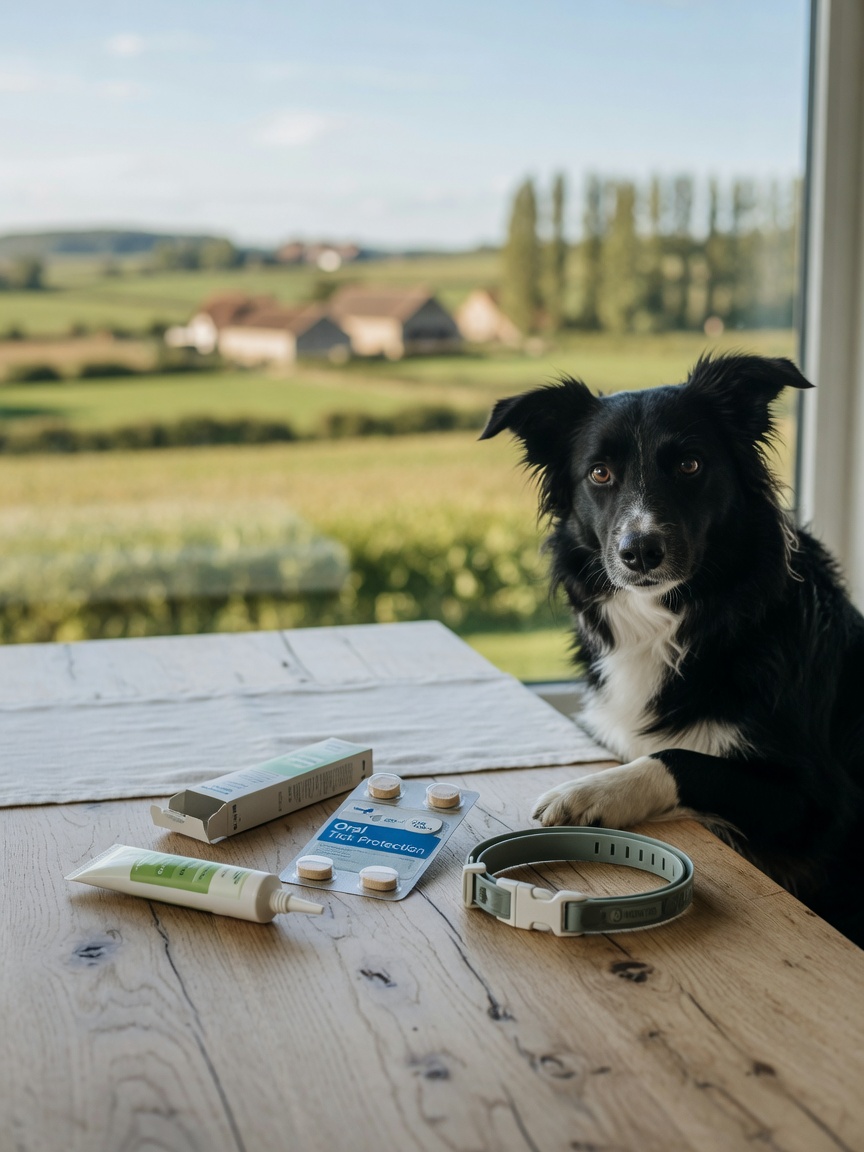
A range of effective tick prevention products is available for dogs. Discussing the most suitable option with your vet is important, as some products require a prescription and not all products are equally effective against all tick species.
Spot-on treatments applied to the skin between the shoulder blades include products such as Frontline (fipronil), Advantix (imidacloprid and permethrin — note: never use permethrin-containing products on cats or in households with cats), and Bravecto spot-on. These vary in whether they kill ticks on contact or require the tick to begin feeding before acting. Some also have repellent properties.
Oral products, including Bravecto tablets (fluralaner), NexGard (afoxolaner), Simparica (sarolaner), and Credelio (lotilaner), are taken by mouth and work systemically. They require a prescription in the UK. These products are highly effective and convenient, particularly for dogs that swim frequently or are bathed regularly.
Tick collars, such as the Seresto collar, provide long-lasting protection (up to 8 months) via slow release of active ingredients. They are effective against both ticks and fleas and are a practical option for many owners.
How to Remove a Tick Safely
Even with prevention in place, ticks may occasionally attach to your dog. Prompt and correct removal reduces the risk of disease transmission, as most tick-borne pathogens require several hours of feeding before they are transmitted.
Use a fine-tipped tick remover or a specialised twisting tick removal tool, available from pet shops and vets. These devices are designed to disengage the tick's mouthparts without leaving them embedded in the skin. Grasp the tick as close to the skin surface as possible and use a steady, straight pull or a gentle twisting motion as directed by your tool's instructions.
Never use petroleum jelly, nail polish, heat, or any other substance to try to make the tick release. Never squeeze the tick's body, twist it off with bare fingers, or crush it — these actions can force infectious material into the wound. After removal, clean the bite area with an antiseptic wipe. Dispose of the tick in a sealed bag or by flushing it. Monitor the bite site and your dog's general health for several weeks.
Tick Checks After Every Walk
Tick prevention products significantly reduce the risk but do not eliminate it entirely. Get into the habit of checking your dog for ticks after every walk, particularly in woodland, heathland, long grass, or areas where deer and livestock are present. Run your fingers through the coat and pay close attention to areas where ticks prefer to attach: around and inside the ears, between the toes, in the groin and armpits, under the collar, and around the tail.
Travelling to Southern Europe
Dogs travelling to Southern European countries face a significantly higher tick burden and a wider range of tick-borne diseases, including Babesiosis, Ehrlichiosis, and Leishmaniasis (transmitted by sandflies rather than ticks). Speak to your vet well in advance of travel to discuss appropriate additional preventive measures. The ESCCAP Europe website provides country-specific guidance that can help you prepare for travel to specific destinations.