
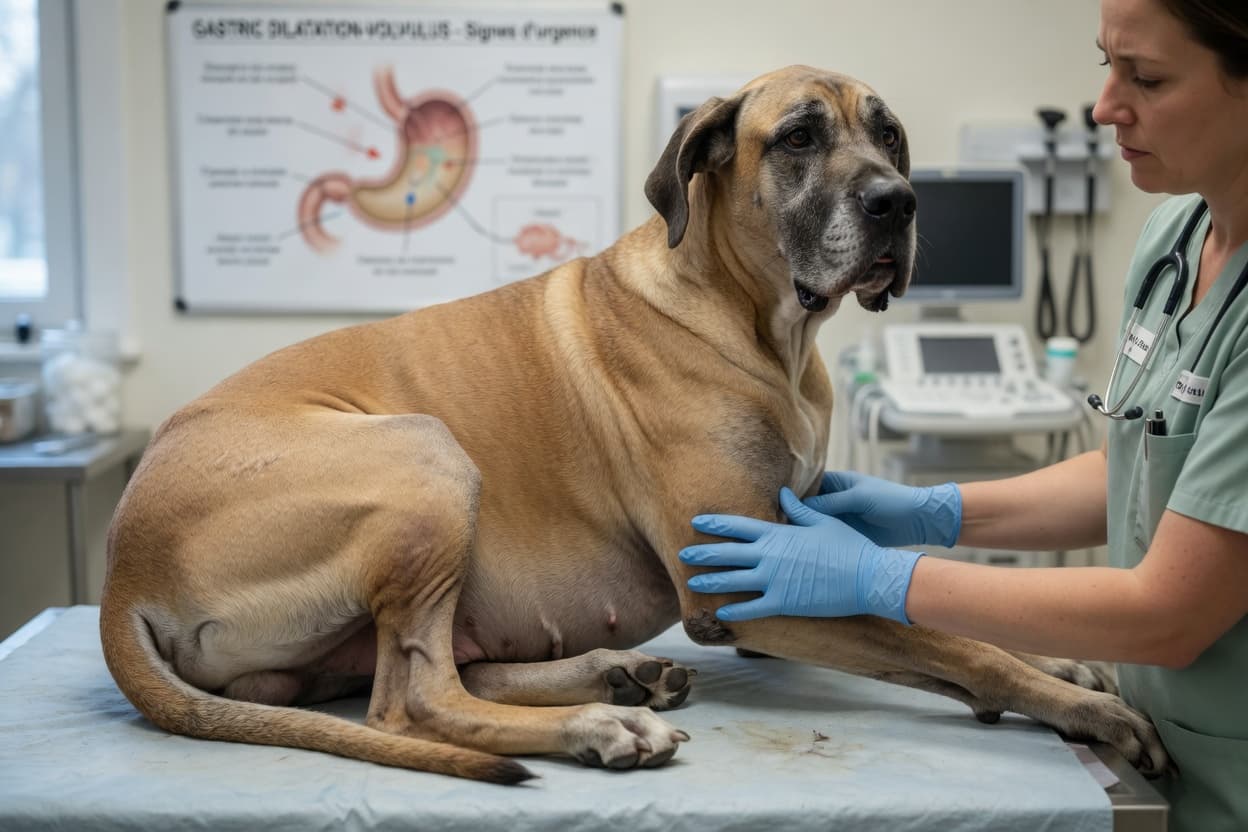
What Is Dog Bloat and Why Is It So Dangerous?
Bloat in dogs refers to a condition called gastric dilatation-volvulus, commonly known as GDV. It begins when the stomach fills with gas, food, or fluid and expands to an abnormal size. In many cases, the distended stomach then rotates on its axis, twisting the oesophagus at one end and the small intestine at the other. Once this rotation occurs, nothing can enter or leave the stomach, and blood supply to the organ is cut off.
The consequences are rapid and severe. As the stomach swells, it places pressure on surrounding organs and major blood vessels, leading to a dangerous drop in blood pressure, tissue death, and shock. Without emergency surgical intervention, GDV is fatal. Even with prompt treatment, the mortality rate remains significant, which is why recognising the early signs and understanding prevention is so important for dog owners.
Which Breeds Are Most at Risk?
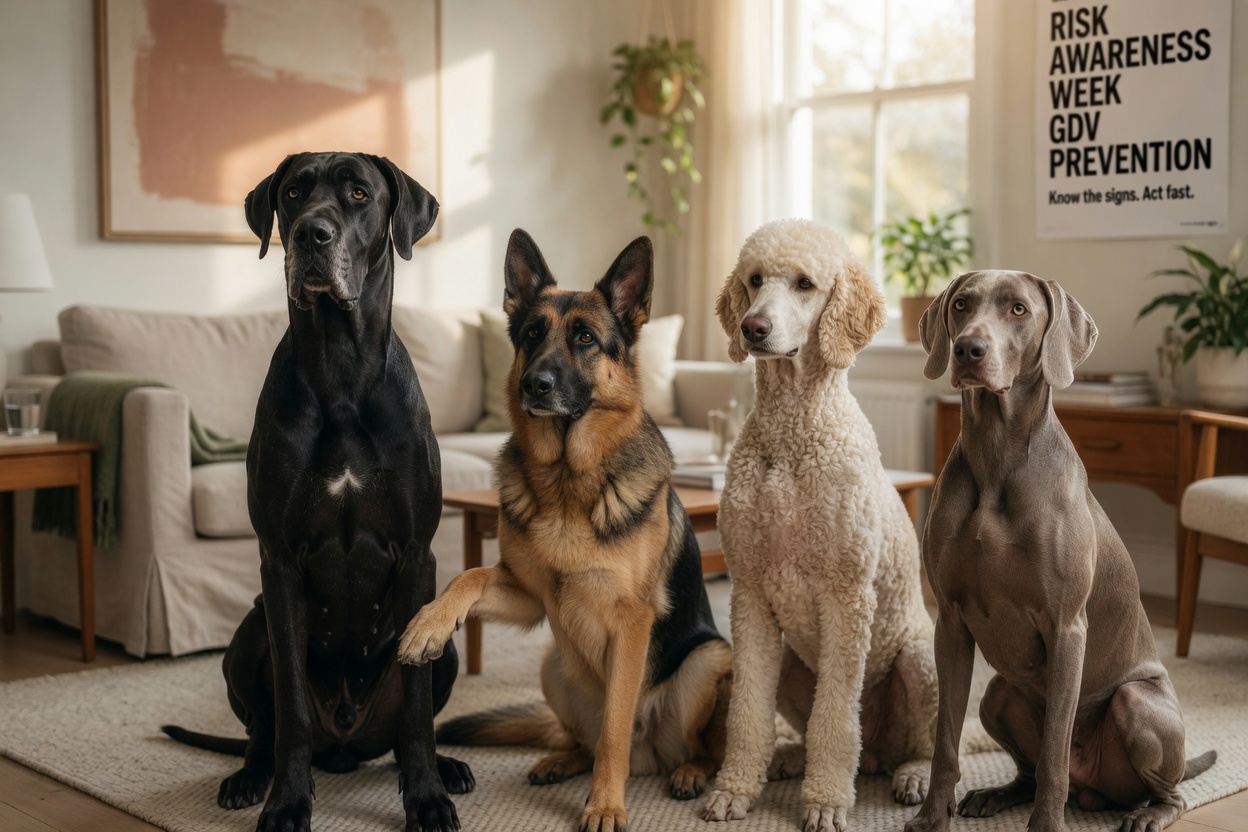
GDV predominantly affects large and giant breeds with deep, narrow chests. The anatomy of these dogs means their stomachs have more physical room to rotate, making them inherently more vulnerable. Breeds that are considered high risk include:
- Great Dane
- German Shepherd
- Standard Poodle
- Weimaraner
- Irish Setter
- Dobermann Pinscher
- Boxer
- Bloodhound
Age is also a contributing factor. Older dogs are at greater risk than younger ones, and males appear to be affected more frequently than females. Dogs with a first-degree relative who has experienced GDV are also considered to be at elevated risk, suggesting a hereditary component to the condition.
Recognising the Symptoms of GDV
GDV progresses quickly, often within a matter of hours. Knowing what to look for can make the difference between life and death for your dog. The most common signs include:
- A visibly distended or swollen abdomen, particularly on the left side
- Unproductive retching, where the dog attempts to vomit but brings nothing up
- Restlessness and an inability to settle or get comfortable
- Excessive drooling
- Signs of pain, such as hunching, whimpering, or flinching when the abdomen is touched
- Rapid, shallow breathing
- Pale or greyish gums
- Sudden weakness or collapse
If your dog displays any of these symptoms, do not wait to see whether they improve. Contact your emergency vet immediately. GDV is a time-critical condition, and every minute counts. Do not attempt to treat it at home.
Exercise After Meals: A Well-Founded Warning
One of the most widely accepted preventative recommendations is to avoid vigorous exercise in the period immediately surrounding mealtimes. Allowing your dog to run, jump, play energetically, or engage in any strenuous activity shortly before or after eating may increase the risk of the stomach shifting position.
The general guidance is to wait at least one hour after your dog has eaten before permitting any significant physical activity. Similarly, it is sensible to let your dog rest for a short period before meals if they have been exercising heavily. A calm, settled environment around feeding time is beneficial for dogs at risk of GDV.
The Truth About Raised Food Bowls
For many years, raised feeding bowls were commonly recommended as a preventative measure for GDV in large-breed dogs. The reasoning was that eating from a raised position would reduce the amount of air swallowed and ease digestion. However, the scientific evidence does not support this recommendation and, in some studies, the use of raised bowls has actually been associated with an increased risk of GDV.
A notable study published in the Journal of Veterinary Internal Medicine found that raised bowls were linked to a higher incidence of GDV in large and giant breed dogs. Current veterinary guidance does not recommend elevated bowls as a prevention strategy. If you currently use one, speak to your vet about whether it is appropriate for your individual dog.
Feeding Strategies That May Help
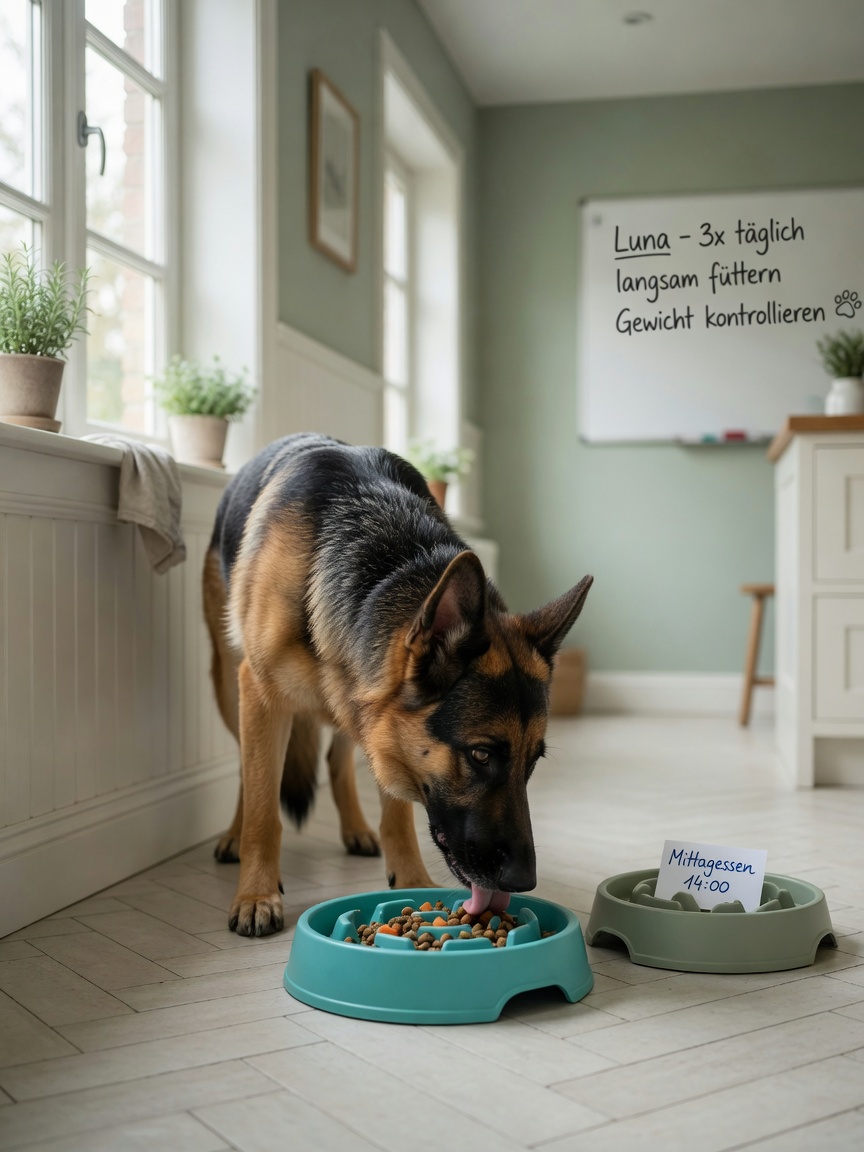
Rather than one large meal per day, feeding your dog two or three smaller meals spread throughout the day is a commonly advised approach for reducing bloat risk. A smaller volume of food in the stomach at any one time reduces the degree of distension and may lower the likelihood of gas accumulating.
Stress around mealtimes has also been identified as a potential contributing factor. Dogs that eat in competitive environments, such as alongside other dogs that may cause them to rush their food, may swallow more air and eat more hastily. Feeding your dog in a calm, quiet space away from other animals and household commotion is a sensible precaution. Slow-feeder bowls can also help dogs that tend to eat quickly, encouraging a more measured pace of eating.
Prophylactic Gastropexy: Surgical Prevention for High-Risk Dogs
For breeds at the highest risk of GDV, veterinary surgeons may recommend a procedure called a prophylactic gastropexy. In this operation, the stomach is surgically attached to the abdominal wall to prevent it from rotating. While the stomach can still dilate with gas, it cannot twist, which eliminates the most dangerous aspect of GDV.
Gastropexy is often performed at the time of neutering, reducing the need for a separate anaesthetic procedure. It can also be carried out laparoscopically, which is a minimally invasive approach with a shorter recovery time. If you own a Great Dane, Weimaraner, Standard Poodle, or another high-risk breed, it is worth having a detailed conversation with your vet about whether preventative gastropexy is appropriate.
When to Act: Do Not Delay
GDV is a genuine veterinary emergency. Unlike many conditions where a watchful wait is reasonable, suspected bloat requires immediate professional attention. If you recognise the symptoms in your dog, do not try home remedies, do not offer food or water, and do not delay seeking help to see if things improve.
Call your vet or an out-of-hours emergency clinic the moment you suspect GDV. Tell them you are coming and describe the symptoms so they can prepare for your arrival. Treatment involves stabilising the dog with intravenous fluids and pain relief before surgery to decompress and reposition the stomach. The sooner a dog reaches veterinary care, the better the prognosis.
Knowing the risks, understanding the warning signs, and having a clear plan of action are the most powerful tools you have as an owner. For high-risk breeds in particular, speaking with your vet about preventative options before an emergency arises could one day save your dog's life.