
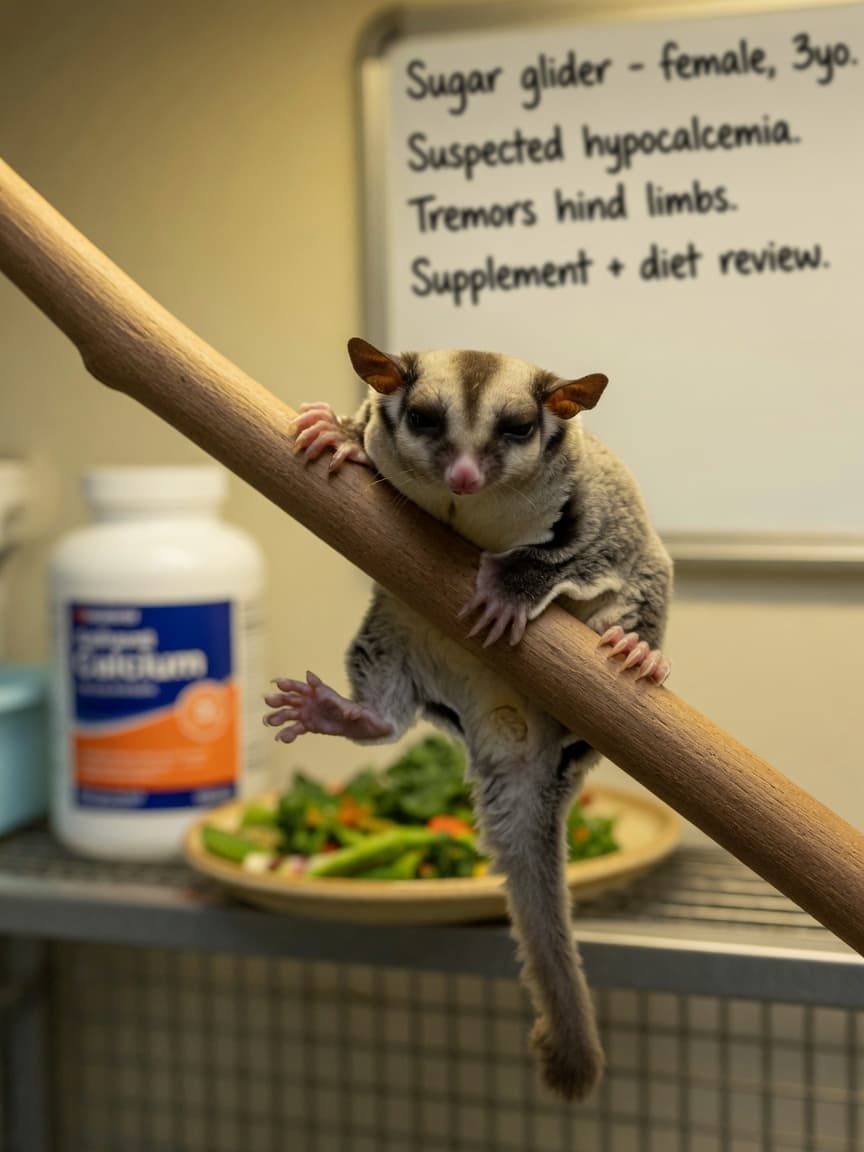
Understanding the Sugar Glider's Demanding Health Profile
Sugar gliders are marsupials, not rodents, and their care requirements reflect this entirely different biological heritage. Veterinary surveys consistently identify nutritional disease as the leading cause of illness and early death in captive sugar gliders. At the same time, behavioural conditions including self-mutilation represent some of the most distressing presentations seen in exotic small mammal practice. Neither issue is inevitable — but both require owners to engage seriously with species-specific care from the outset.
Metabolic Bone Disease: A Nutritional Crisis
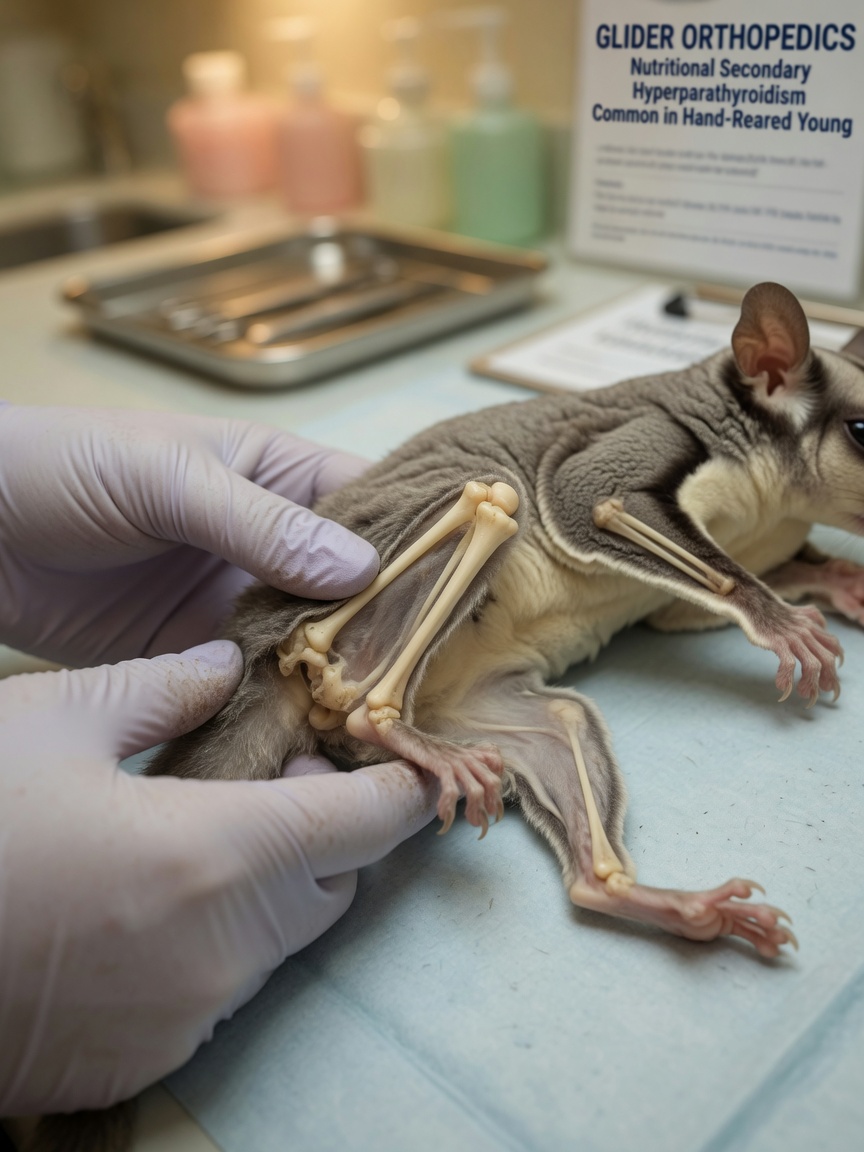
Metabolic bone disease (MBD) is an umbrella term for a range of skeletal disorders caused by calcium and phosphorus imbalance, vitamin D deficiency, or both. In sugar gliders, it is one of the most commonly diagnosed conditions and one of the most preventable. The disease causes bones to become soft, deformed, and prone to fracture — a profound welfare problem in an animal that relies on its entire skeleton to glide and climb.
Why Calcium Deficiency Is So Common in Sugar Gliders
Wild sugar gliders eat a varied diet of nectar, pollen, insects, and tree sap, obtaining a naturally balanced array of minerals. In captivity, many owners feed diets centred on fruit, sweet foods, or commercial treats that are high in phosphorus and low in calcium. Calcium and phosphorus must be maintained in approximately a 2:1 ratio. When phosphorus significantly exceeds calcium — as occurs with diets heavy in meat, fruit, or seeds — the body draws calcium from bone to maintain blood levels. Over time, the skeleton becomes dangerously depleted.
Signs of Metabolic Bone Disease
- Limb weakness, tremors, or paralysis — particularly of the hind legs
- Spontaneous fractures during normal activity
- Inability to grip or climb
- Soft or visibly deformed bones
- Lethargy and reduced appetite
Advanced MBD can result in permanent disability. Diagnosis involves radiographs and blood calcium measurement. Treatment includes calcium supplementation, corrected diet, and in some cases vitamin D supplementation, always under veterinary supervision as over-supplementation also carries risks.
Feeding a Sugar Glider Correctly
Several peer-reviewed diets exist for captive sugar gliders. The Bourbon's Modified Leadbeater's (BML) diet and the TPG (The Pet Glider) Fresh Diet are among the most widely validated. These diets are formulated to achieve the correct calcium-to-phosphorus ratio and provide adequate protein, complex carbohydrates, and micronutrients. Consulting a vet with exotic species experience or a certified animal nutritionist before choosing a diet plan is strongly advisable — dietary advice on general pet forums varies enormously in quality and accuracy.
Calcium Deficiency Beyond Bone: Systemic Effects
Calcium is not only structural. It is essential for nerve transmission, muscle contraction, and cardiac function. Chronically low calcium can cause muscle spasms, abnormal nerve firing, and heart irregularities. This is why the early signs of deficiency — trembling, unsteady movement, weakness — can be subtle and easily confused with other conditions. Any sugar glider displaying these signs should be seen by a vet promptly.
Self-Mutilation: A Serious Behavioural and Medical Emergency
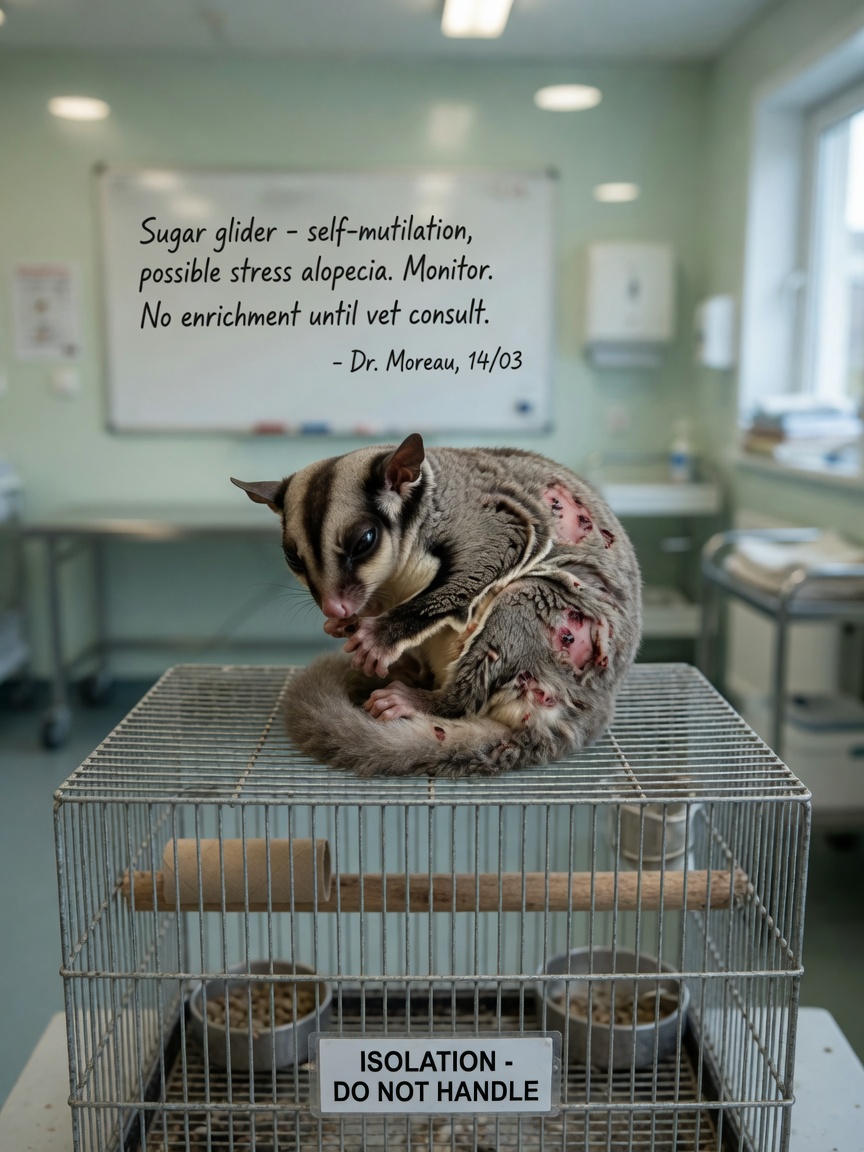
Self-mutilation in sugar gliders — where the animal bites or wounds its own body, genitalia, or pouching area — is one of the most alarming things an owner can witness. It is not a single-cause condition. Understanding the underlying driver is essential to addressing it.
Common Causes
- Infection or abscess in the cloaca, pouch, or genitalia causing pain and compulsive licking or biting
- Post-neutering complications in males — scrotal wounds are a common site of self-trauma after neutering
- Severe psychological stress from isolation, improper housing, or lack of social contact (sugar gliders are highly social colony animals)
- Nutritional deficiencies contributing to neurological dysregulation
- Pain from injuries or internal disease
A glider engaging in self-mutilation should be treated as a veterinary emergency. Wounds can deepen rapidly and become infected. An Elizabethan collar may be fitted temporarily to prevent further damage while the underlying cause is investigated. A thorough examination, including assessment of the reproductive tract and cloaca, is necessary before a cause can be identified.
The Role of Social Isolation
Sugar gliders housed alone — without any conspecific companion — face chronic social stress. In the wild, they live in stable social groups. Solitary housing is widely considered a welfare concern and a contributing factor in behavioural disorders including self-mutilation. Keeping gliders in bonded pairs or small groups, with adequate space and environmental enrichment, significantly reduces the risk of stress-driven self-harm.
Practical Summary for Sugar Glider Owners
- Use a validated, species-appropriate diet that maintains a 2:1 calcium-to-phosphorus ratio — do not improvise or rely on fruit-heavy feeding
- House sugar gliders in pairs or groups wherever possible; solitary housing is a welfare risk
- Any limb weakness, trembling, or inability to grip warrants an urgent vet appointment
- Self-mutilation is a veterinary emergency — do not wait to see if it resolves
- Find a vet experienced with marsupials before you need one — sugar glider medicine is a specialist field
- Annual health checks are a minimum; twice-yearly checks allow earlier detection of nutritional and dental problems
Sugar gliders are extraordinary animals with complex needs. The owners who provide for those needs consistently — with correct nutrition, appropriate social housing, and proactive veterinary care — are rewarded with a species that is engaging, long-lived, and genuinely bonded to its human carers.