
Shih Tzu Breed Guide
The Shih Tzu is one of the world's oldest companion breeds, with a history stretching back to the royal courts of Tibet and Imperial China. Known for its flowing coat, friendly temperament, and confident manner, the breed has maintained enormous popularity across Europe and beyond. However, the Shih Tzu is a brachycephalic (flat-faced) breed, and prospective owners must understand the significant health implications this brings before committing to one. This guide provides a comprehensive overview of the breed's characteristics, health conditions, and care requirements.
Origins and History
The Shih Tzu — whose name translates roughly from Mandarin as "lion dog" — has roots in Tibet, where small dogs were bred by Buddhist monks and offered as gifts to Chinese emperors. The breed became a treasured companion in the Forbidden City during the Ming and Qing dynasties. It was almost unknown in the West until the early 20th century, when breeding dogs were brought to Europe. The Kennel Club granted the breed recognition in 1946. The Shih Tzu is classified under FCI Group 9 (Companion and Toy Dogs), and breed clubs throughout Europe, including Germany, actively promote health testing and responsible breeding.
Temperament
The Shih Tzu is an outgoing, friendly, and affectionate dog that typically gets along well with people of all ages, including children. It is not a timid breed — the Shih Tzu carries itself with a self-assured confidence that belies its small size. The breed bonds closely with its family and dislikes being left alone for extended periods. It is adaptable to both flat and house living provided it receives sufficient company and moderate daily exercise.
Shih Tzus are not generally known for excessive prey drive or territorial aggression, which makes them suitable for multi-pet households. They are reasonably trainable with positive reinforcement, though they have an independent streak and may test boundaries if training is inconsistent. The breed's sociability and manageable exercise requirements make it genuinely suitable for first-time owners, provided those owners commit to sourcing from health-tested stock.
Size and Physical Characteristics
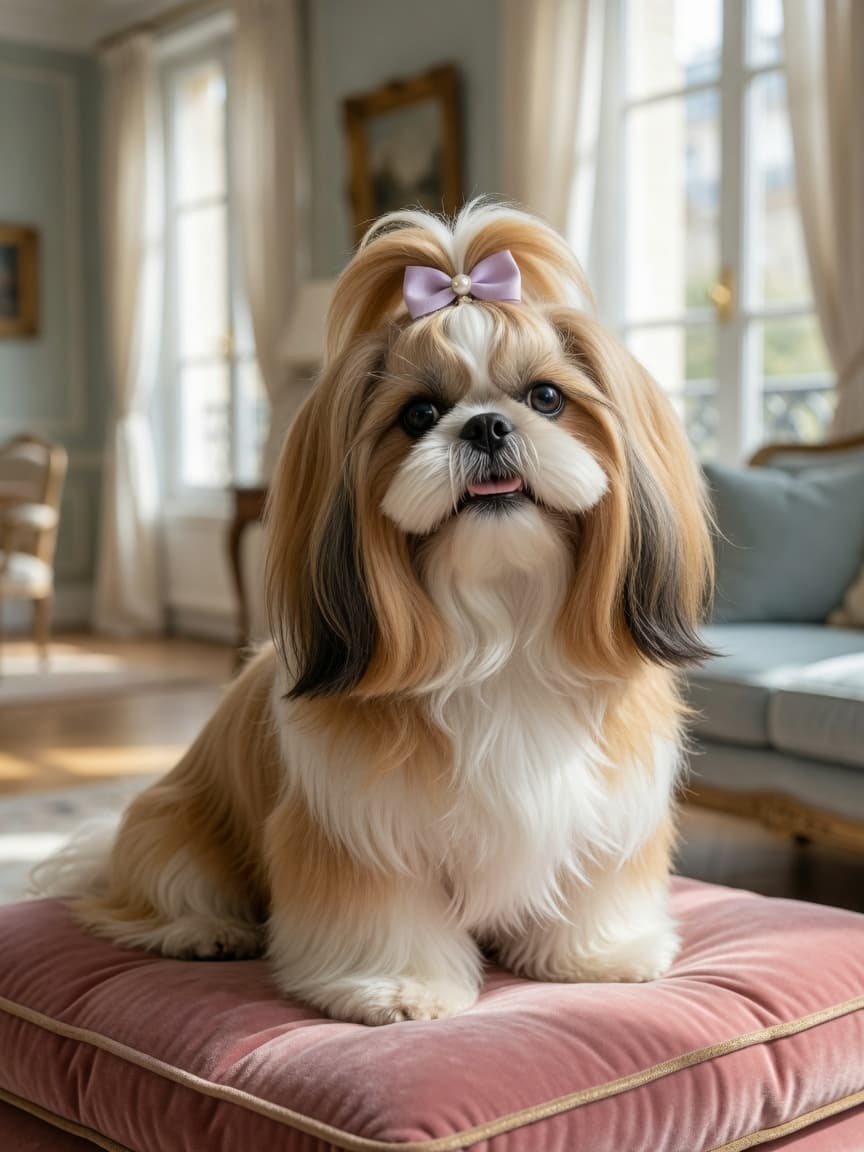
The Shih Tzu typically weighs between 4 and 7 kg and stands approximately 20 to 28 cm at the shoulder. The broad, round head with a very short muzzle and large, round eyes are characteristic of the brachycephalic conformation that has been selectively exaggerated over generations of breeding for appearance. The long, double coat flows to the ground in a variety of colours including gold, white, black, and liver. The tail is carried high and arched over the back. The topknot is a traditional feature in the show ring, with the facial hair tied up to keep it clear of the eyes.
Key Health Conditions
Brachycephalic Obstructive Airway Syndrome (BOAS)
Brachycephalic Obstructive Airway Syndrome is the most significant welfare concern associated with the Shih Tzu. BOAS results from the combination of anatomical features caused by the flat-faced conformation, including stenotic nares (narrow, pinched nostrils that restrict airflow), an elongated soft palate (which extends too far into the throat and partially obstructs the airway), and, in more severe cases, a hypoplastic trachea (an abnormally narrow windpipe). Together, these abnormalities mean that affected dogs must work harder to breathe, particularly during exercise, in warm weather, and when excited.
Clinical signs of BOAS include noisy breathing, snoring, sleep apnoea, exercise intolerance, and — in severe cases — episodes of respiratory distress or collapse. The condition is graded from 0 (unaffected) to 3 (severely affected) under schemes such as the BVA/KC BOAS Assessment Scheme. Surgical intervention — widening the nostrils, shortening the soft palate, and in some cases widening the trachea — can significantly improve quality of life for affected dogs, but prevention through responsible breeding is far preferable to surgical correction.
Prospective buyers should only purchase Shih Tzu puppies from parents that have been BOAS graded, and should prioritise lines with grade 0 or grade 1 results. Dogs with grade 2 or grade 3 BOAS should not be used for breeding. The Shih Tzu's flat face also means that heat regulation is impaired — the breed should not be exercised in hot weather and should never be left in a warm car. All exercise should be kept moderate and timed for cooler parts of the day.
Renal Dysplasia
Hereditary renal dysplasia — abnormal development of the kidneys — is a serious condition recorded in Shih Tzus. Affected dogs may develop signs of kidney failure at a young age, including increased thirst and urination, weight loss, vomiting, and lethargy. There is currently no DNA test for renal dysplasia in Shih Tzus, making it difficult to screen breeding stock definitively. Responsible breeders monitor their lines carefully, remove dogs from breeding programmes if renal dysplasia appears in offspring, and are transparent with buyers about the condition. Buyers should ask breeders directly about the health history of the lines they produce.
Progressive Retinal Atrophy
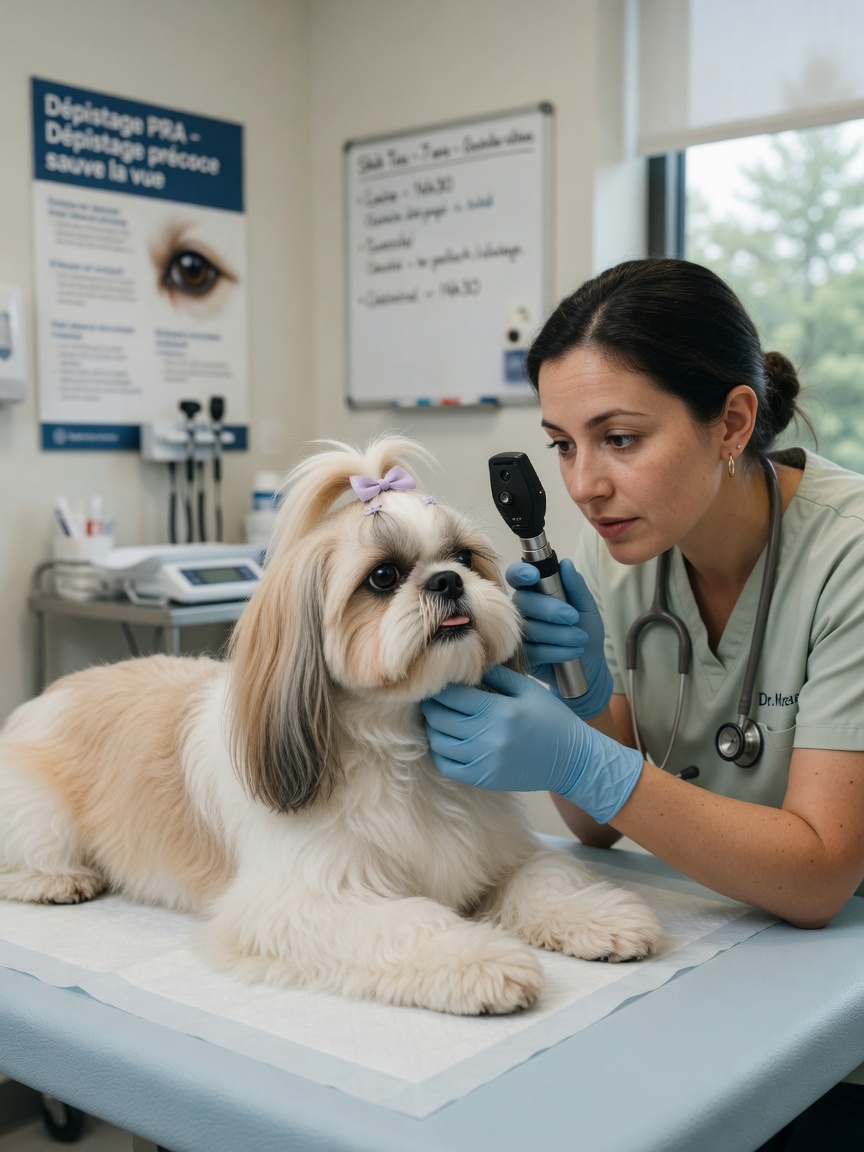
Progressive retinal atrophy (PRA) causes the gradual degeneration of the photoreceptor cells in the retina, leading to progressive loss of vision and eventual blindness. The condition is painless but irreversible. A DNA test for the form of PRA affecting Shih Tzus is available, allowing breeders to identify clear, carrier, and affected dogs. Responsible breeders DNA test both parents before mating and can provide certificates confirming that puppies will not be affected. Buyers should request PRA DNA test results as a condition of purchase.
Dental Crowding
The Shih Tzu's small jaw must accommodate the same 42 adult teeth as any other dog. The result is significant overcrowding, with teeth growing at abnormal angles, overlapping one another, and creating sites where plaque and tartar accumulate rapidly. Periodontal disease in Shih Tzus can develop early and progress quickly. Daily tooth brushing with a dog-safe toothpaste is essential from puppyhood. Professional dental cleaning under anaesthesia should be expected regularly throughout the dog's life. Retained deciduous (milk) teeth are common and may need extraction if they do not fall out naturally.
Hypothyroidism
Underactivity of the thyroid gland has been reported in Shih Tzus. Signs include weight gain without increased food intake, lethargy, a dull coat, and cold intolerance. Diagnosis is via blood test, and treatment with daily levothyroxine supplementation is effective and well tolerated in most cases.
Grooming
The Shih Tzu's long double coat requires daily brushing to prevent matting, particularly behind the ears, in the armpits, and around the collar area. Many pet owners choose to keep their Shih Tzu in a "puppy clip" — a shorter, more manageable trim maintained by a groomer every six to eight weeks — rather than maintaining the full show coat. This significantly reduces the daily grooming commitment. The facial fold above the nose should be cleaned and dried regularly to prevent skin fold dermatitis.
Is the Shih Tzu Right for You?
The Shih Tzu is a genuinely affectionate and adaptable companion, well suited to a variety of households including those with older children and other pets. However, the breed's health vulnerabilities — particularly BOAS — require that buyers do their research thoroughly and insist on health-tested parents. A Shih Tzu sourced from untested stock carries a significantly higher risk of breathing problems, inherited kidney disease, and eye conditions. Choosing a responsible breeder who prioritises health over exaggerated conformation is the single most important decision a prospective Shih Tzu owner can make.