
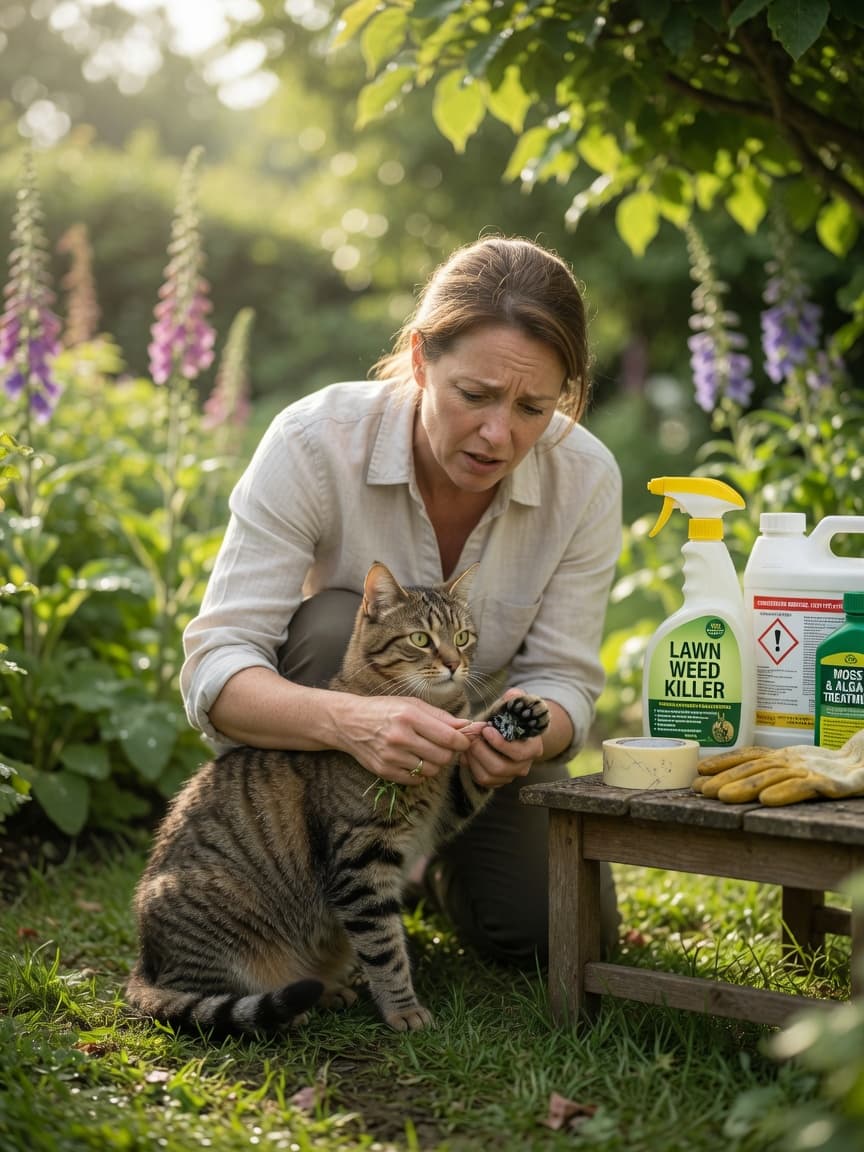
Cats and Garden Chemicals: Herbicides, Pesticides, and Slug Pellets
Gardens are full of potential hazards for cats, and chemical products are among the most serious. Cats are notoriously sensitive to many compounds that are relatively harmless to humans or even dogs, primarily because they lack certain liver enzymes required to metabolise specific substances safely. Understanding which garden chemicals pose a risk — and how to respond if your cat is exposed — could save their life.
Why Cats Are Uniquely Vulnerable
Cats are obligate carnivores, and their metabolism reflects this evolutionary history. They have reduced glucuronidation capacity compared to most other mammals — a liver process involved in breaking down and excreting a wide range of chemicals. This means substances that other species can process efficiently accumulate to toxic levels in cats far more quickly.
Cats are also meticulous groomers. A product absorbed through the paws or coat will often be ingested when the cat subsequently grooms itself. This is a critical route of exposure that owners frequently overlook — a cat walking across a freshly treated lawn does not need to eat the chemical directly to be poisoned by it.
Slug and Snail Pellets
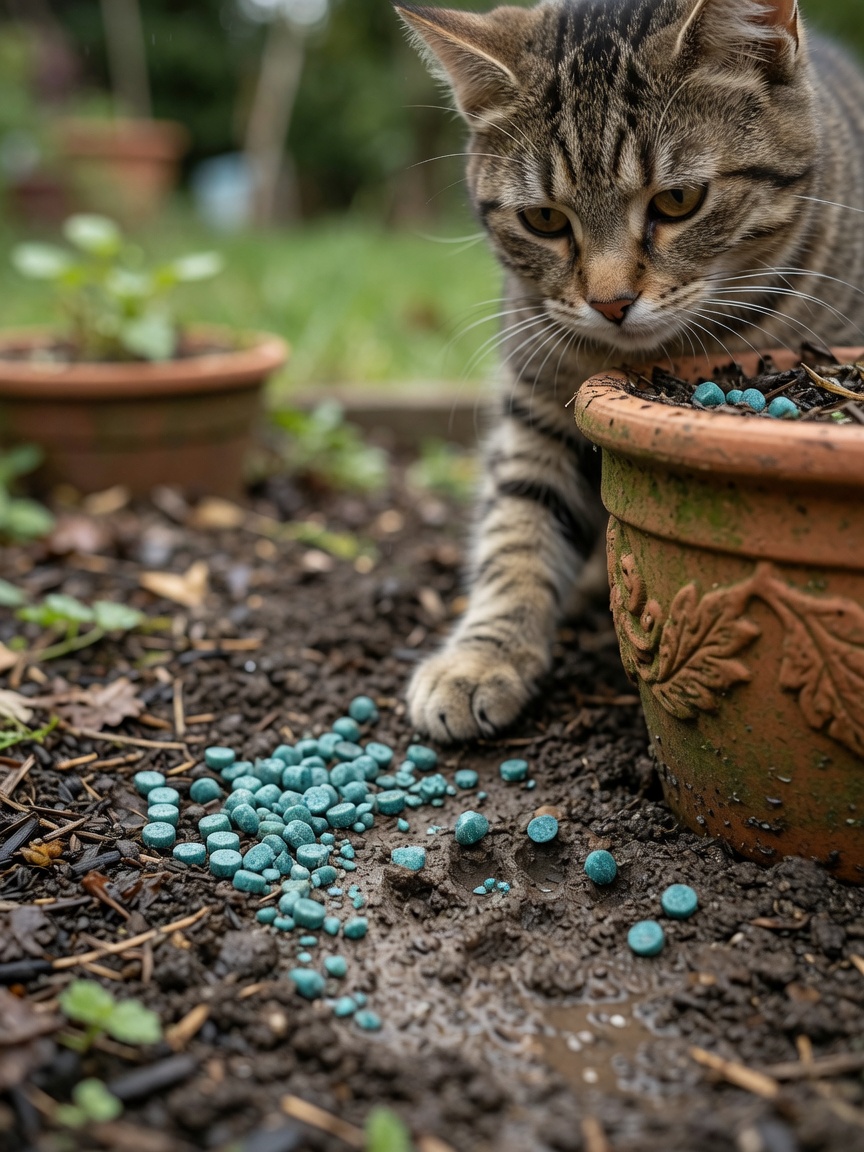
Metaldehyde-based slug pellets have been used in UK gardens for decades and represent one of the most serious garden chemical risks to cats. Although a phased-out ban on metaldehyde pellets was introduced in the UK in 2022, older stocks may remain in sheds, and the chemical continues to appear in gardens.
Metaldehyde is a potent neurotoxin. Ingestion causes rapid onset of tremors, incoordination, hypersalivation, and seizures. Cats may ingest pellets directly, or secondary poisoning can occur when a cat eats a poisoned slug. There is no specific antidote — treatment is supportive, focusing on controlling seizures and preventing further absorption.
Ferric phosphate pellets, now the more commonly available alternative, are generally considered much safer for cats and wildlife, though no slug control product should be considered entirely risk-free.
Herbicides
Glyphosate, the active ingredient in products such as Roundup, is the world's most widely used herbicide. Regulatory bodies including the European Food Safety Authority have classified it as unlikely to be carcinogenic at relevant exposures, though debate continues. In cats, direct exposure to glyphosate-based products can cause gastrointestinal signs — vomiting, diarrhoea, excessive salivation — particularly if a cat walks through a freshly sprayed area and then grooms.
Phenoxy herbicides such as 2,4-D are used in lawn weedkillers and are more concerning. There is epidemiological evidence in dogs linking lawn herbicide exposure to certain cancers, and cats should similarly be kept off treated areas until the product has dried and ideally until the area has been watered in.
As a general rule, always read the product label for guidance on when an area is safe for pets to re-enter. The label is a legal document and the guidance on it is based on toxicological data.
Insecticides and Pesticides
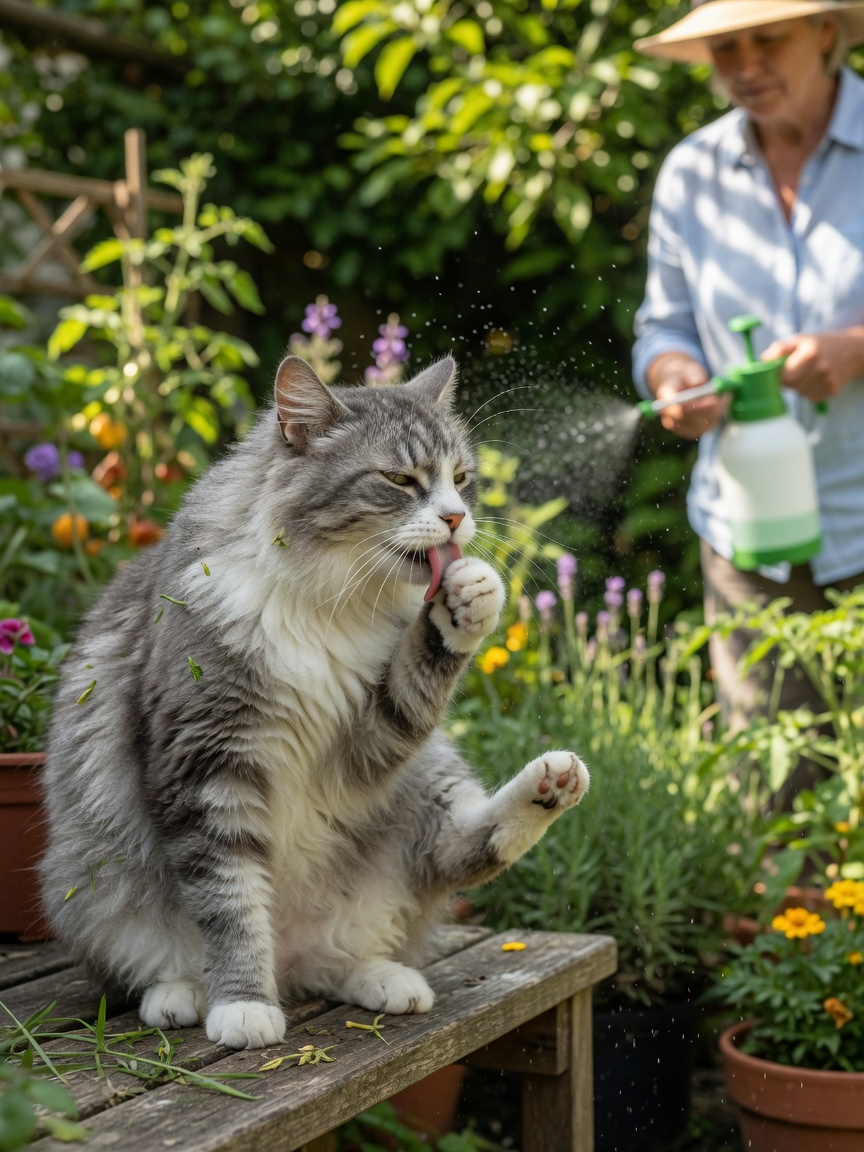
Organophosphate and carbamate insecticides inhibit acetylcholinesterase — an enzyme essential for normal nerve function. Both classes can cause severe toxicity in cats, presenting with excessive salivation, muscle tremors, constricted pupils, vomiting, diarrhoea, difficulty breathing, and seizures.
Pyrethrins and pyrethroids deserve special mention because they are commonly used in garden sprays, flea treatments, and household insecticides. While pyrethrins derived from chrysanthemums are relatively low in toxicity to mammals, synthetic pyrethroids — including permethrin — are highly toxic to cats. Permethrin is found in many dog flea treatments and garden insecticides. Exposure in cats, even from grooming a recently treated dog, can cause severe neurological signs and is a veterinary emergency.
- Never apply dog flea products to cats
- Keep cats away from recently treated dogs until the product has fully dried
- Avoid permethrin-based garden sprays in households with cats
Signs of Chemical Poisoning
Symptoms of garden chemical poisoning vary depending on the substance involved, but common warning signs include:
- Sudden vomiting or diarrhoea
- Excessive drooling
- Tremors or muscle twitching
- Seizures
- Dilated or constricted pupils
- Difficulty breathing
- Extreme lethargy or collapse
- Disorientation or incoordination
If you suspect chemical exposure, contact your vet immediately. If possible, take the product packaging with you or photograph the label, as knowing the active ingredient significantly aids treatment decisions.
Practical Steps to Reduce Risk
The simplest protective measure is to keep cats indoors for an appropriate period after any garden chemical is applied, and to ensure treated areas have dried or been watered in before allowing access.
Choosing pet-safer alternatives where possible makes a meaningful difference. Ferric phosphate slug control, manual weeding, and physical pest barriers are all options that eliminate chemical risk entirely. If you do use chemical products, store them securely, dispose of containers responsibly, and never leave diluted solutions in open containers that a cat could drink from.
If a neighbour treats their garden and your cat has access, this is harder to control — but discussing the issue with neighbours, particularly if you have cats that roam widely, is a reasonable step. Many pet owners are simply unaware of the risks their products pose to neighbouring animals.