
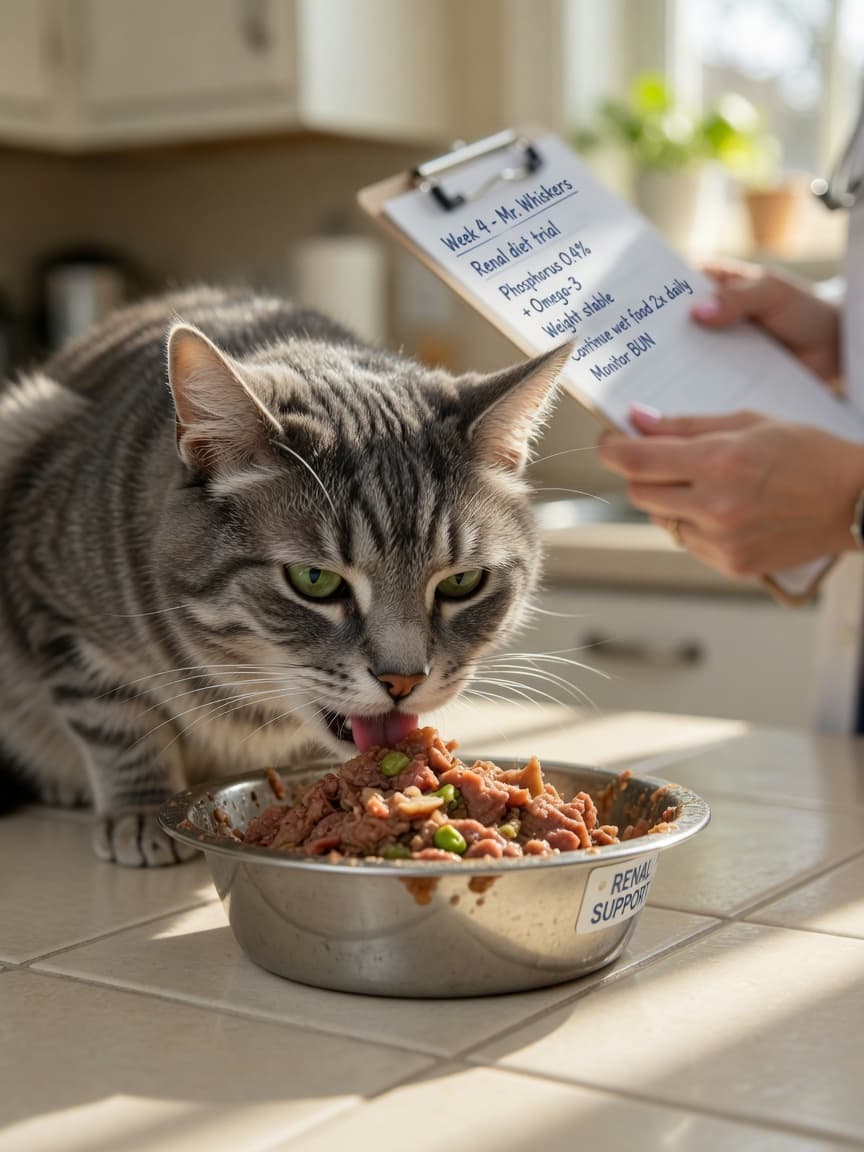
Senior Cat Kidney Diet: Foods to Eat, Foods to Avoid
Chronic kidney disease (CKD) is one of the most common conditions in cats over age 7. Dietary management is a cornerstone of treatment. Always work with your veterinarian or a board-certified veterinary nutritionist to design a kidney diet plan tailored to your cat's specific IRIS stage and bloodwork.
By Julia Wrenfield, Pet Wellness Researcher
The kidneys are among the hardest-working organs in a cat's body, filtering waste products from the blood, regulating fluid and electrolyte balance, and producing hormones essential for red blood cell production. As cats age, kidney function inevitably declines — and for roughly 30 to 40 percent of cats over age 10, that decline crosses the threshold into chronic kidney disease (CKD).
Diet is arguably the single most powerful non-pharmaceutical tool for managing CKD in cats. The right nutritional approach can slow disease progression, reduce the toxic accumulation of metabolic waste, improve quality of life, and potentially extend survival. Understanding what to feed — and what to avoid — is essential knowledge for any caregiver of a senior cat.
How Kidney Disease Changes a Cat's Nutritional Needs
In a healthy cat, the kidneys efficiently filter phosphorus, nitrogen waste (from protein metabolism), and other solutes. When kidney function is reduced, these substances accumulate in the bloodstream — a state called uremia. Elevated phosphorus is particularly damaging: it accelerates kidney deterioration by depositing in renal tissue and triggering further inflammation and scarring.
CKD staging by the International Renal Interest Society (IRIS) uses creatinine, SDMA, and urine specific gravity to categorize severity from Stage 1 (minimal dysfunction) to Stage 4 (severe failure). Dietary recommendations become more restrictive as staging advances, which is why regular bloodwork monitoring is essential — not just at diagnosis, but every 3 to 6 months thereafter.
Phosphorus Restriction: The Top Priority
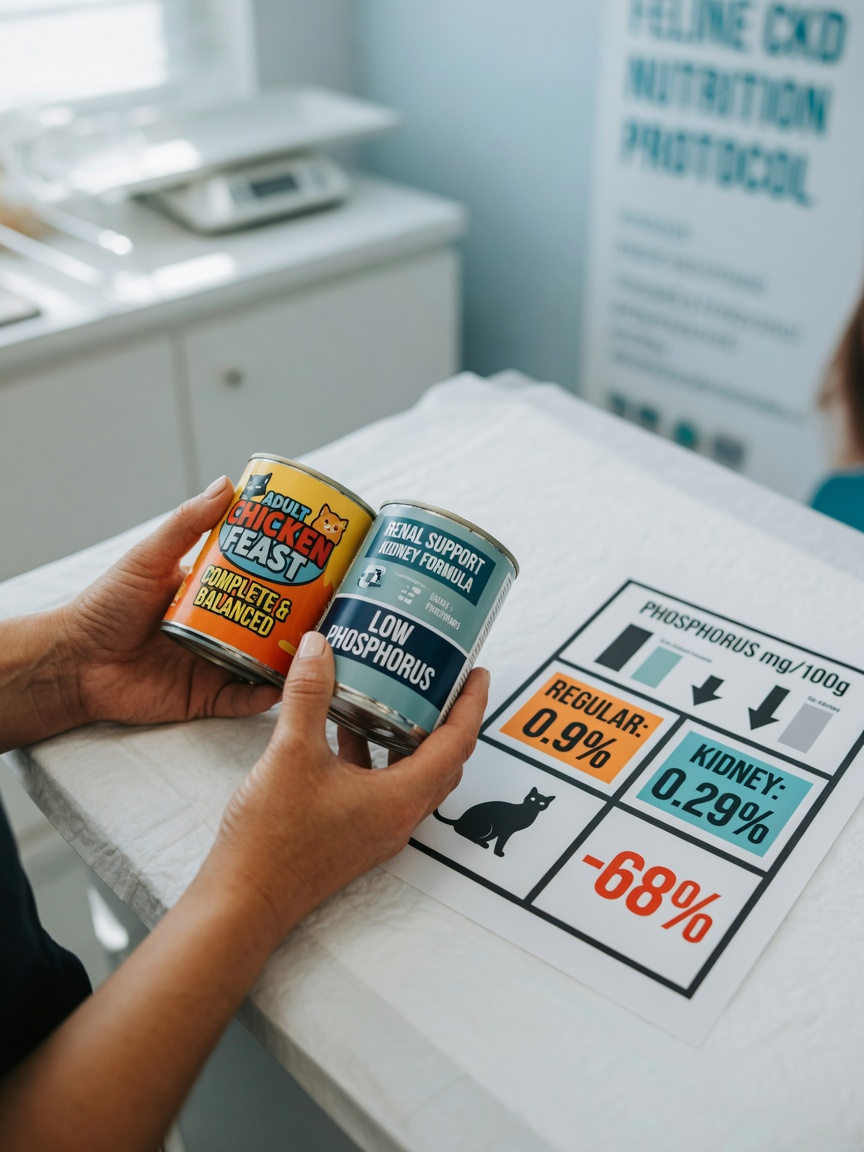
Phosphorus restriction is the most evidence-supported dietary intervention for CKD cats. Studies have consistently shown that limiting dietary phosphorus slows the progression of kidney disease and reduces mortality. The target phosphorus level in the diet depends on the cat's IRIS stage, but generally:
- IRIS Stage 1–2: Aim for 0.3–0.6% phosphorus on a dry matter basis
- IRIS Stage 3–4: Aim for 0.2–0.5% phosphorus on a dry matter basis
Foods highest in phosphorus to avoid include organ meats (liver, kidney), dairy products, fish (especially canned fish in brine), processed meat treats, and any food containing dicalcium phosphate or other phosphate additives. Read ingredient labels carefully — phosphate preservatives are common in commercial pet foods and treats.
Phosphate binders (such as aluminum hydroxide, lanthanum carbonate, or chitosan-based products) prescribed by a vet can be added to food to bind phosphorus in the gut before absorption, offering an additional layer of control when diet alone is insufficient.
Protein: Quality Over Restriction
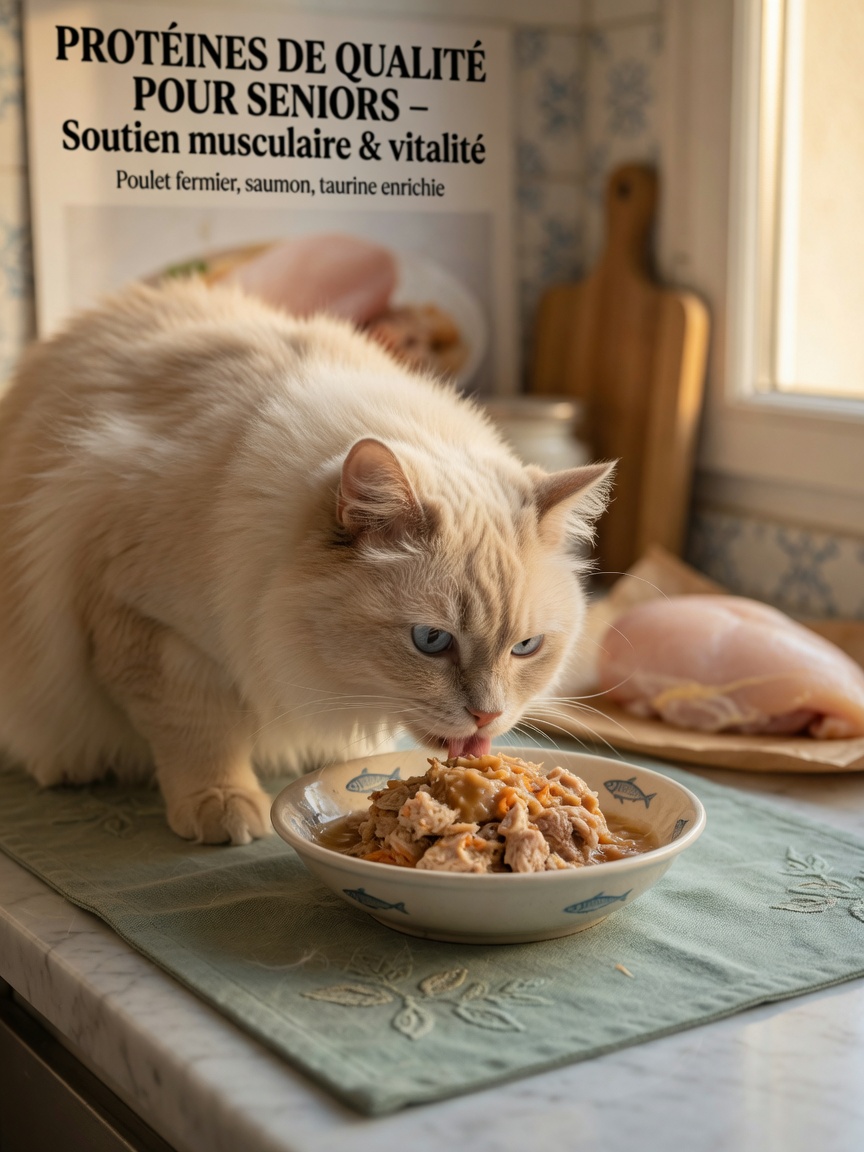
Protein management in CKD cats is nuanced and has evolved significantly in recent years. Traditional thinking held that severely restricting protein would reduce nitrogen waste and protect the kidneys. Current veterinary consensus, however, is more cautious: cats are obligate carnivores with a high metabolic requirement for protein, and excessive restriction leads to muscle wasting, malnutrition, and reduced immune function — outcomes that shorten lifespan independently of CKD.
The current approach prioritizes protein quality over aggressive quantity restriction, particularly in early to mid-stage CKD. High biological value proteins — those that deliver a complete amino acid profile and are efficiently metabolized — produce less nitrogen waste than low-quality proteins. Chicken, turkey, and egg are generally preferred over plant-derived proteins or low-grade meat by-products.
In advanced CKD (Stage 3–4), some protein reduction may become necessary to manage uremic signs. This is best guided by serial bloodwork and clinical assessment rather than a one-size-fits-all approach.
Hydration: Wet Food Is Non-Negotiable
Cats with CKD are at high risk of dehydration, which concentrates toxins in the bloodstream and places additional strain on already-compromised kidneys. Hydration is therefore as important as any other dietary variable.
Dry food contains only 8–12% moisture; wet food contains 70–80%. For CKD cats, transitioning to an all-wet diet is strongly recommended by most veterinary nephrologists. The increased water intake from wet food significantly supports kidney perfusion and helps dilute uremic toxins.
Strategies to encourage water intake include:
- Adding warm water or low-sodium chicken broth (no onion or garlic) to wet food
- Providing multiple water stations around the home
- Using a cat water fountain, which many cats prefer for fresh running water
- Slightly warming food to enhance aroma and palatability
Some cats in advanced CKD benefit from subcutaneous fluid administration at home, a technique taught by most veterinary teams that allows owners to provide an additional 100–200ml of fluid daily under the skin.
Commercial Renal Diets: What to Look For
Several veterinary therapeutic diets have been specifically formulated for feline CKD and carry clinical evidence for slowing disease progression. These include Hill's Prescription Diet k/d, Royal Canin Renal Support, and Purina Pro Plan Veterinary Diets NF. These diets are typically lower in phosphorus, adjusted in protein, and enhanced with B vitamins (often depleted in CKD due to increased urinary loss) and omega-3 fatty acids.
For cat owners seeking high-quality complementary products, Zooplus offers a wide selection of renal-supportive wet cat foods from reputable European brands, often at competitive prices with subscription delivery. Their range includes phosphorus-controlled options from brands like Purina and Royal Canin that are suitable for CKD management.
If your cat refuses therapeutic renal diets — a common challenge, as these foods are sometimes less palatable — speak to your vet about a gradual transition strategy or alternative formulations. A diet your cat will actually eat is always preferable to a theoretically perfect diet they refuse.
For natural supplements that complement a renal diet, HolistaPet offers omega-3 and CBD formulations that may help manage inflammation and support comfort in cats with CKD-related discomfort — always confirm with your vet before adding supplements to a therapeutic diet protocol.
Potassium, Sodium & B Vitamins
Cats with CKD frequently develop hypokalemia (low potassium), which causes muscle weakness, poor appetite, and neck ventroflexion. Potassium gluconate supplementation is commonly prescribed. Renal diets typically include added potassium.
Sodium should be moderate — not severely restricted as in human heart disease diets, but avoiding high-sodium foods, treats, and flavored broths. B vitamins (particularly B1, B6, and B12) are lost in the increased urine output of CKD cats and are routinely supplemented in therapeutic diets or as standalone supplements.
Key Takeaways
- Phosphorus restriction is the most evidence-supported dietary intervention for slowing CKD progression — target levels depend on IRIS stage.
- Prioritize protein quality over aggressive restriction; obligate carnivores need protein, and muscle wasting shortens lifespan.
- Wet food is essential for CKD cats — its high moisture content supports kidney perfusion and toxin dilution.
- Veterinary therapeutic diets (Hill's k/d, Royal Canin Renal) have clinical backing; Zooplus offers convenient access to quality renal food options.
- Monitor potassium, B vitamins, and hydration regularly — bloodwork every 3–6 months is essential for CKD management.
References
- Ross SJ, Osborne CA, Kirk CA, Lowry SR, Koehler LA, Polzin DJ. Clinical evaluation of dietary modification for treatment of spontaneous chronic kidney disease in cats. JAVMA. 2006;229(6):949-957. PMID: 16978113
- Elliott J, Syme HM, Reubens E, Markwell PJ. Assessment of acid-base status of cats with naturally occurring chronic renal failure. Journal of Small Animal Practice. 2003;44(2):65-70. PMID: 12592582