
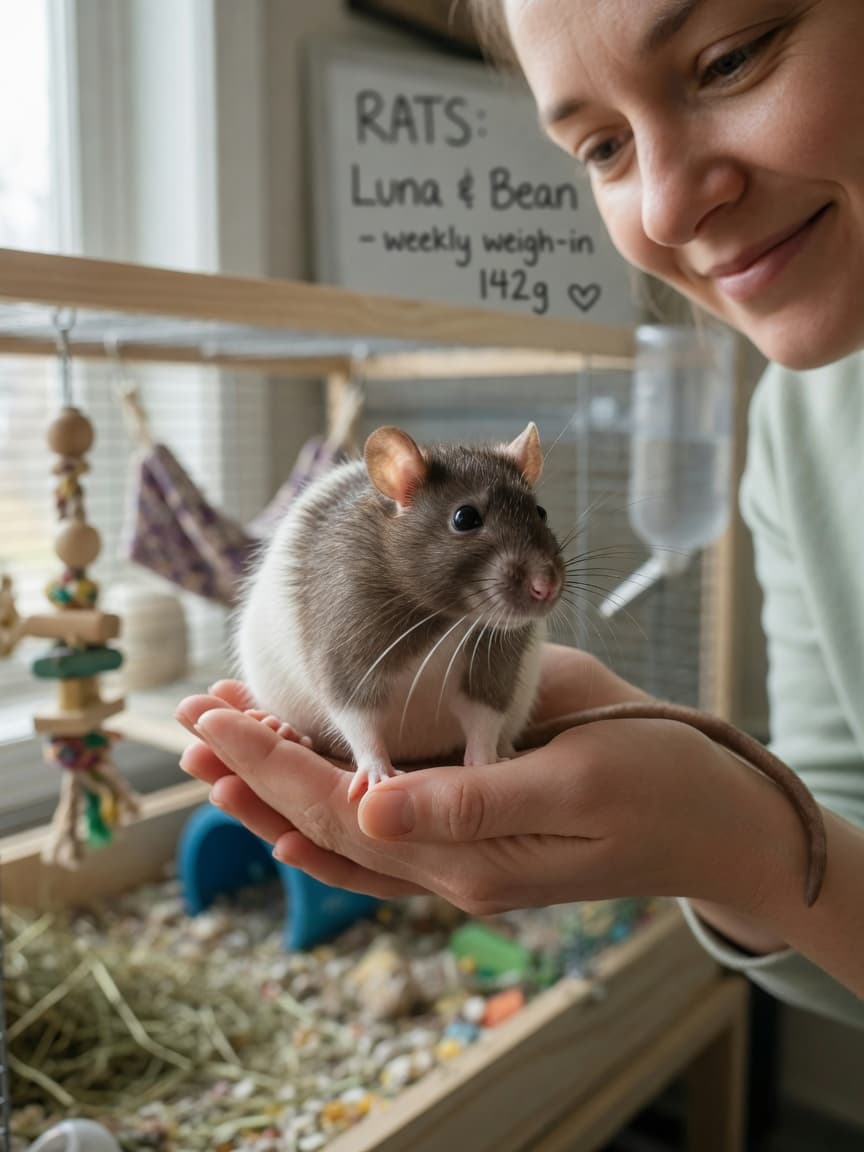
Why Rats Make Exceptional Pets
The domestic rat (Rattus norvegicus) is one of the most cognitively advanced small mammals kept as a companion animal. Rats can learn their names, recognise their owners, solve puzzles, and demonstrate empathy — studies have shown that rats will free a trapped companion even when doing so offers them no personal reward. They are affectionate, active, and capable of forming strong bonds with the people who care for them.
Their lifespan is short — typically two to three years — which is both a practical reality and an emotional consideration for prospective owners. Within that time, rats are susceptible to several health conditions that owners should understand thoroughly. Good husbandry and prompt veterinary attention can make a significant difference to both length and quality of life.
The Social Imperative: Never Keep a Rat Alone
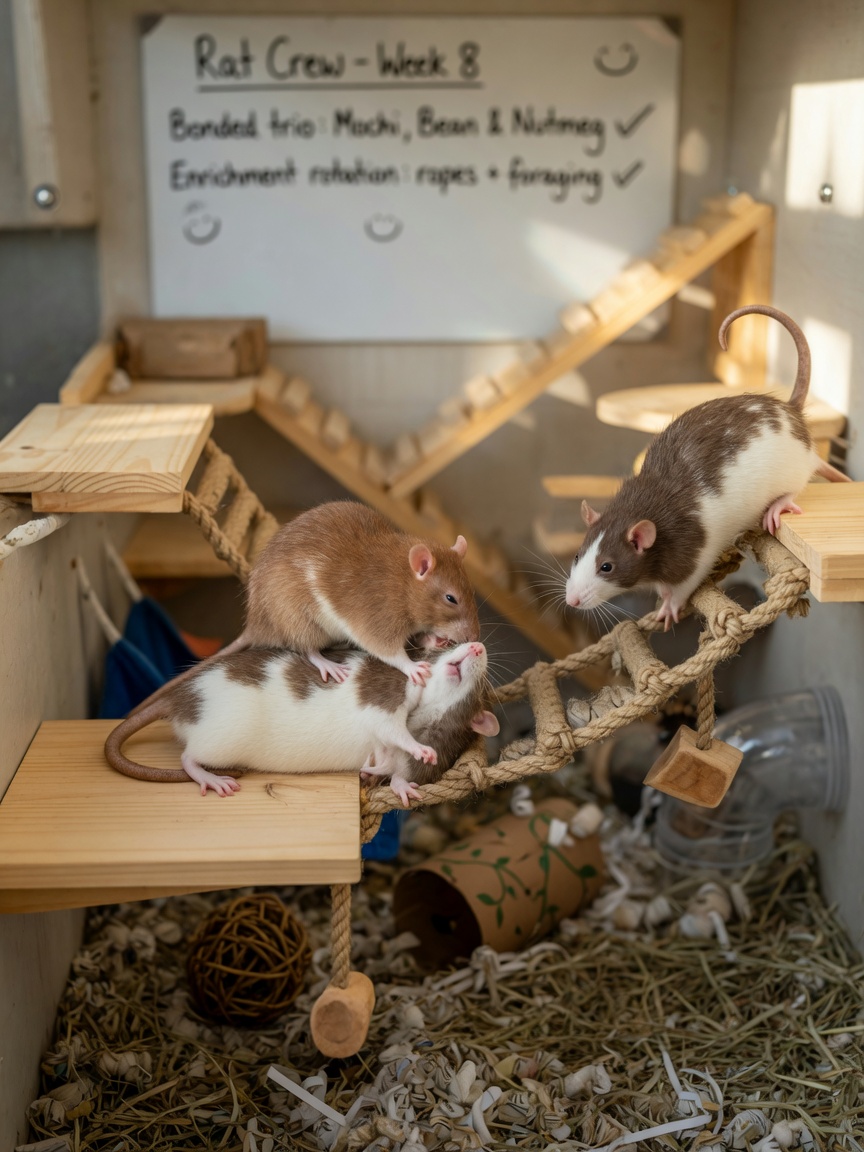
Rats are highly social animals that evolved to live in groups. A lone rat is a rat under chronic stress, regardless of how much human interaction it receives. Isolation leads to anxiety, depression, and suppressed immune function. The minimum for pet rats is a pair; three or more is ideal. Same-sex groups work well — two or more females or a group of males housed together from a young age are typically compatible with appropriate introductions.
Introducing new rats to an established group requires careful neutral-territory introductions over several days. Rushing this process risks serious fighting. If you lose one rat from a pair and the surviving animal is young and healthy, rehoming it with another rat — or adopting a companion — is strongly preferable to solitary housing.
Respiratory Mycoplasmosis: The Disease Every Rat Owner Must Know
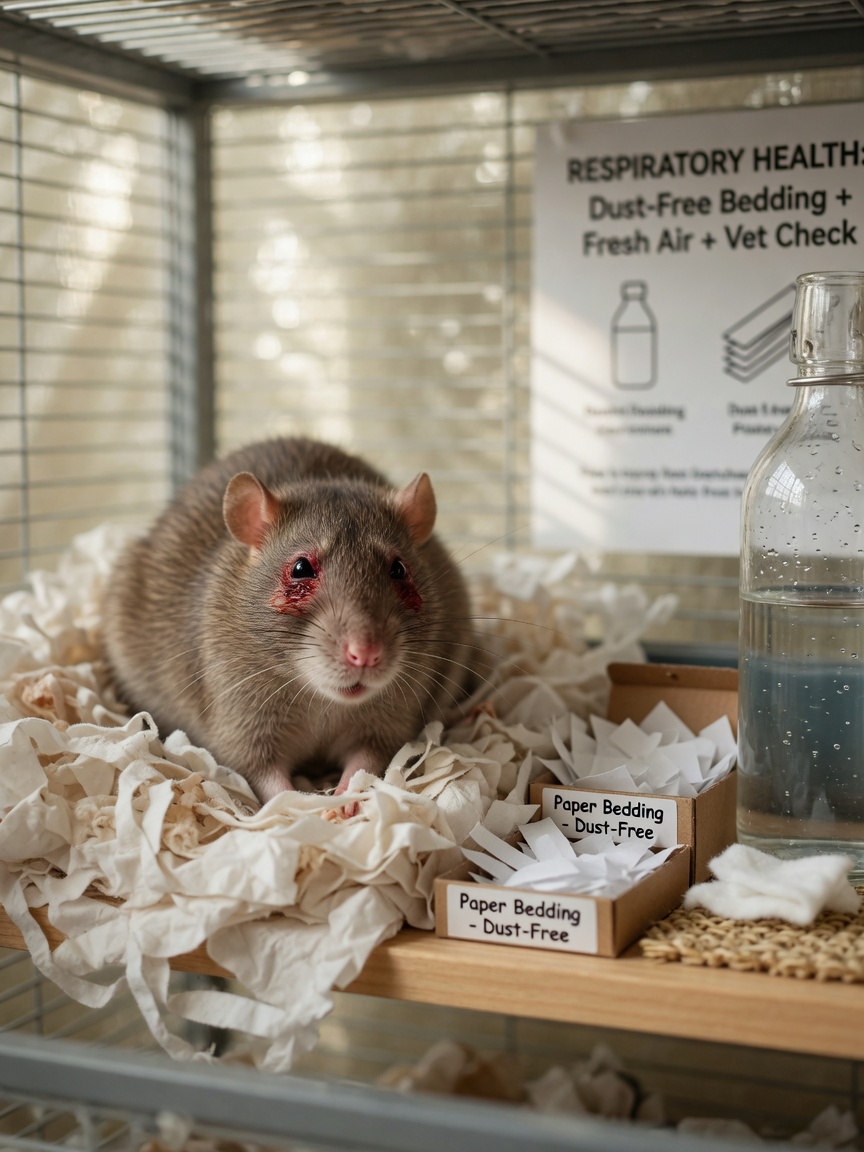
Mycoplasma pulmonis is a bacterial pathogen that is present in virtually every domestic rat population. Unlike many infections, this is not a disease you can prevent through quarantine or biosecurity — rats are almost universally colonised at birth through contact with their mother. The question is not whether your rat carries Mycoplasma, but whether the infection remains subclinical or progresses to active disease.
Triggers and Progression
Active mycoplasmosis is typically triggered by stress, secondary bacterial infection, poor ventilation, or immunosuppression. Ammonia from soiled bedding is a particularly significant irritant that weakens respiratory defences and accelerates progression. Signs of active disease include:
- Sneezing, initially intermittent
- Clicking or rattling sounds when breathing
- Laboured breathing or open-mouth breathing in severe cases
- Red-brown discharge around the eyes and nose (porphyrin staining — a stress indicator, not blood)
- Weight loss and reduced activity
Untreated, mycoplasmosis causes progressive and irreversible lung damage. Chronic cases develop scarring, abscesses, and eventually respiratory failure. There is no cure — the goal is management rather than elimination.
Treatment
Doxycycline is the antibiotic of choice for managing Mycoplasma pulmonis in rats. It does not eliminate the organism but reduces bacterial load and inflammation, often producing significant clinical improvement. Treatment courses are frequently prolonged — weeks to months — and some rats require intermittent or long-term low-dose doxycycline to maintain quality of life. Nebulisation with saline or bronchodilators can assist rats with significant airway obstruction. Any rat showing respiratory signs should be seen by a vet experienced with small mammals promptly, as early intervention produces substantially better outcomes than delayed treatment.
Husbandry and Prevention of Flare-Ups
While Mycoplasma cannot be eliminated, flare-ups can be minimised through excellent husbandry:
- Clean the cage at least twice weekly to prevent ammonia accumulation
- Use dust-extracted or dust-free bedding — avoid cedar and pine shavings, which contain aromatic compounds toxic to rat respiratory tissue
- Ensure the cage is well-ventilated but not draughty
- Minimise handling stress and avoid sudden environmental changes
- Keep the environment at a stable, comfortable temperature
Mammary Tumours in Female Rats
Mammary tumours are the most commonly diagnosed tumour type in female rats. Females have mammary tissue distributed across a wide area of the ventral body, and tumours can develop anywhere from the chin to the groin. Most are fibroadenomas — benign, though they grow rapidly and can reach considerable size. Malignant mammary tumours are less common but do occur.
A tumour that grows large enough to restrict movement, cause skin ulceration, or prevent the rat from feeding significantly reduces quality of life. Surgical removal is highly effective when performed early, and rats tolerate anaesthesia and surgery well when managed by a vet experienced with small mammals. Operating on a small, well-defined lump carries far lower risk than removing a large, ulcerated mass from a debilitated animal.
The Role of Spaying
Mammary tumour development in rats is strongly oestrogen-dependent. Research shows that spaying female rats dramatically reduces the incidence of mammary tumours, particularly when performed before the first oestrus. Spaying also prevents uterine infection (pyometra), which is another relatively common condition in older females. Although rat spaying requires skill and appropriate anaesthetic protocols, it is increasingly offered by exotic and small mammal vets in the UK and is a valid preventive health option worth discussing with your vet.
Enrichment: A Non-Negotiable Need
Rats are cognitively demanding animals that quickly become bored, stressed, and unhealthy in barren environments. Enrichment is not optional — it is a welfare requirement. Effective enrichment for rats includes:
- Foraging: scatter feeding, hiding food inside cardboard tubes, using licki mats and puzzle feeders
- Climbing: multi-level cage furniture, ropes, ladders, and hammocks at various heights
- Digging: a box filled with soil, coco coir, or shredded paper
- Novel objects: rotating new items into the cage regularly keeps the environment stimulating
- Out-of-cage time: daily free-roaming time in a rat-proofed space, with human interaction
Rats that are not adequately stimulated display overgrooming, bar-chewing, repetitive pacing, and increased aggression — all signs of chronic stress.
Diet
Rats are omnivores and benefit from a varied diet. A high-quality commercial rat nugget (not muesli-style mix, which allows selective feeding) should form the dietary base, supplemented with small amounts of fresh vegetables, cooked egg, small pieces of lean meat, and occasional treats. Avoid high-fat, high-sugar foods. Fresh water must always be available.
Finding the Right Vet
Rat care requires a vet with small mammal experience. Not all general practices have this — it is worth seeking out an exotic or small mammal specialist, particularly for surgical procedures such as tumour removal or spaying, and for interpreting respiratory symptoms accurately.