
Rabbit Diet: The Complete Guide to Hay, Pellets & Vegetables
By Julia Wrenfield, Pet Wellness Researcher
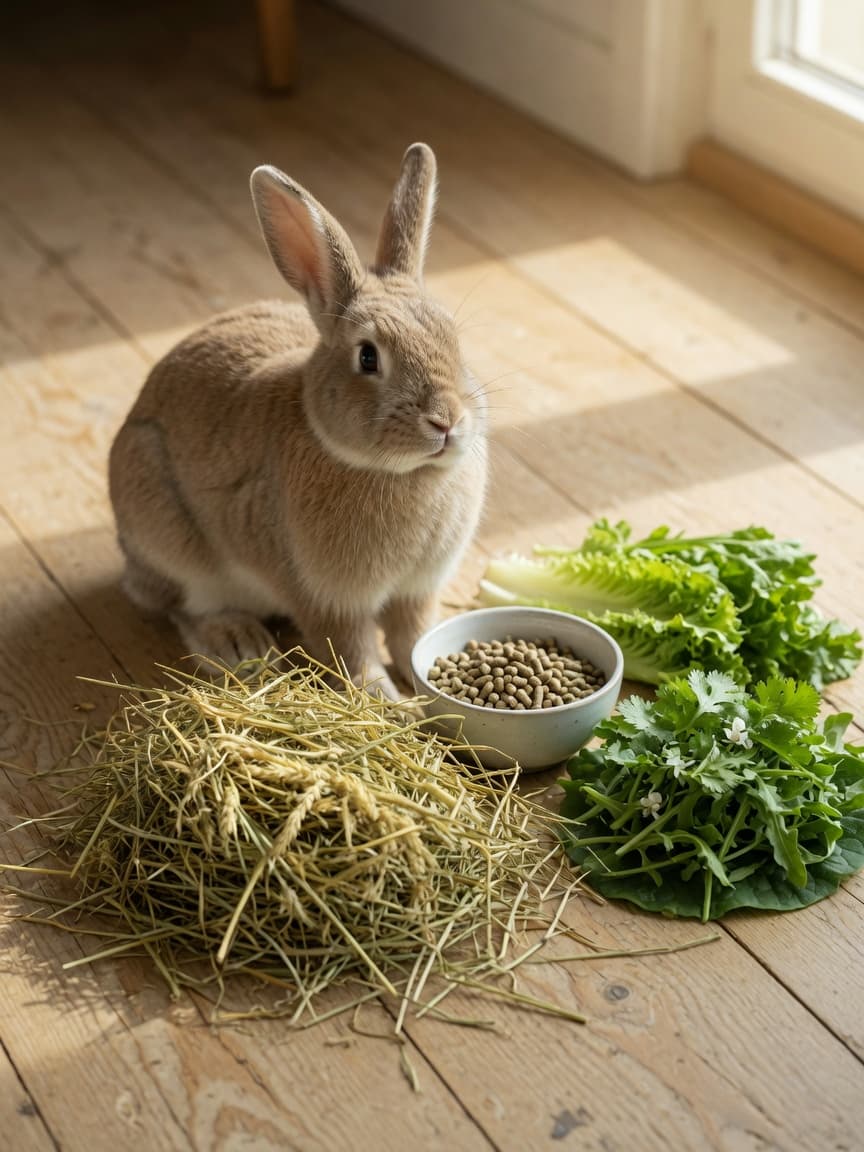
- 80%+ Hay — unlimited timothy, orchard grass, or meadow hay
- 10–15% Fresh vegetables — primarily leafy greens
- 5% Pellets — high-fiber, plain grass hay-based
- 5% or less Treats — fruits and root vegetables
- Water: Always available, changed daily
Rabbit nutrition is one of the most misunderstood aspects of rabbit ownership. Walk into any pet shop and you'll find "complete" rabbit mixes filled with colorful seed pellets, dried corn, and sugary dried fruit. Shelves of rabbit food marketed with cheerful bunnies belie a dietary reality that couldn't be further from what domestic rabbits actually need. The truth is both simpler and more radical than most owners expect: a rabbit's health lives or dies on unlimited access to grass hay.
This complete guide covers every component of a balanced rabbit diet — what to feed, how much, how often, and what to avoid entirely — so you can give your rabbit the nutritional foundation they need for a long, healthy life.
The Foundation: 80% Hay
This cannot be overstated: hay must make up at least 80% of a domestic rabbit's diet, and it should always be available in unlimited quantities. Not pellets. Not vegetables. Hay.
Grass hay — distinct from legume hay such as alfalfa — is the cornerstone of rabbit nutrition because it replicates what rabbits evolved to eat: dry, fibrous plant matter with minimal sugar and high structural fiber content. The long fiber strands in grass hay serve several critical functions simultaneously:
- Gut motility — The mechanical bulk of hay stimulates the muscular contractions that keep the digestive system moving. Without continuous fibrous material, gut movement slows and GI stasis becomes a risk.
- Cecal health — Fiber fermentation in the cecum feeds beneficial bacteria and produces cecotropes (nutrient-rich droppings that rabbits eat directly from their anus to absorb B vitamins and proteins).
- Dental wear — The abrasive lateral grinding action of chewing hay wears down rabbit teeth, which grow 2–3mm per week and must be continuously worn to prevent dangerous overgrowth.
- Weight management — Hay is low in calories relative to volume, allowing rabbits to eat ad libitum without risk of obesity.
Best hay types: Timothy hay (most popular, widely available, well-balanced), orchard grass (slightly softer, good for picky eaters), meadow hay (mixed grasses, good variety), and oat hay (young rabbits particularly enjoy it). Avoid alfalfa hay for adult rabbits — it is too high in protein and calcium and is appropriate only for young rabbits under 6 months.
Store hay in a cool, dry, well-ventilated area. Dusty or moldy hay should be discarded — respiratory sensitivity makes rabbits vulnerable to mold spores.
Fresh Vegetables: 10–15% of the Diet
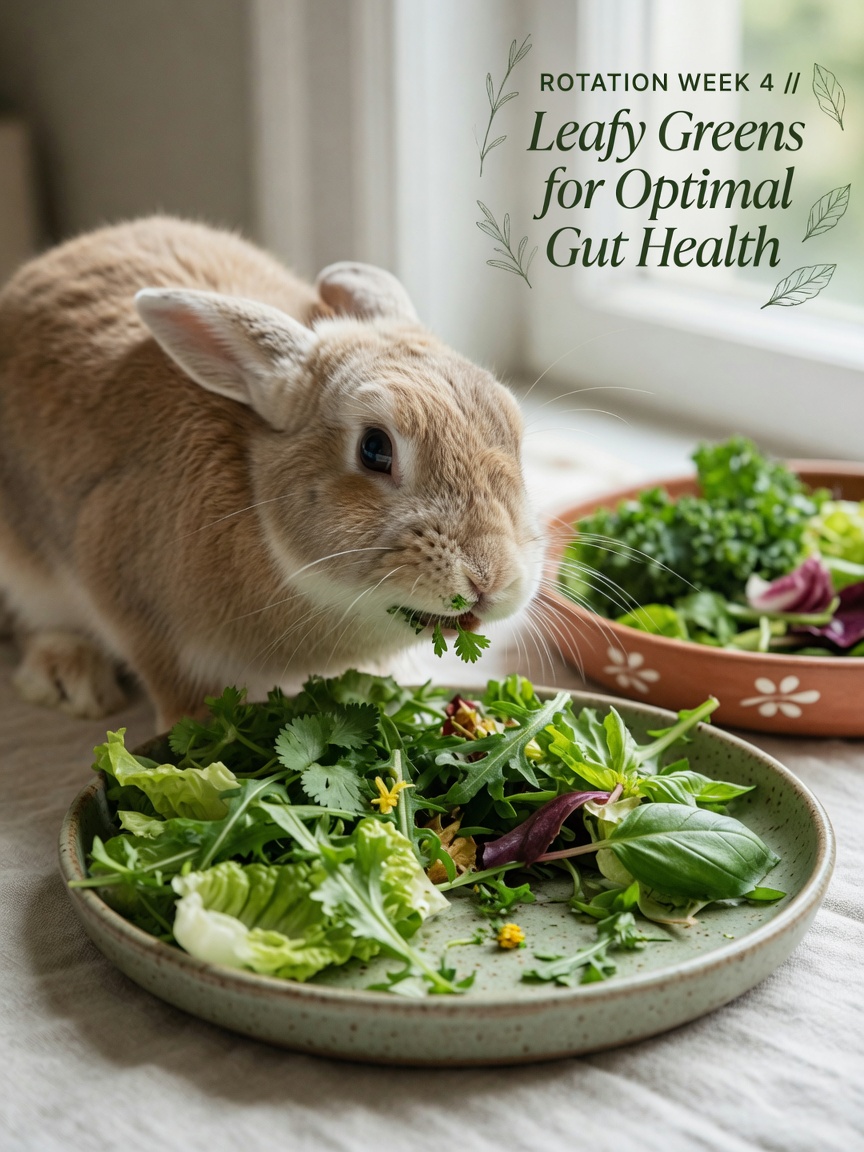
Fresh leafy greens are the second most important component of a rabbit's diet. They add moisture (supporting kidney health), variety (supporting mental enrichment and palatability), and a range of vitamins and phytonutrients not concentrated in hay.
Adult rabbits should receive approximately 2–4 cups of fresh leafy greens per day per 2 kg of body weight. Variety is important — rotate through at least 3–5 different greens rather than feeding the same vegetable every day. This prevents excess accumulation of any single compound (like oxalates) and supports a broader nutrient profile.
Excellent daily greens:
- Romaine lettuce (not iceberg)
- Cilantro
- Arugula
- Dandelion greens (pesticide-free)
- Endive
- Bok choy
- Basil and mint (in smaller amounts)
Offer in rotation, not daily: Parsley, kale, spinach, watercress (moderate oxalate or calcium content).
Pellets: 5% of the Diet
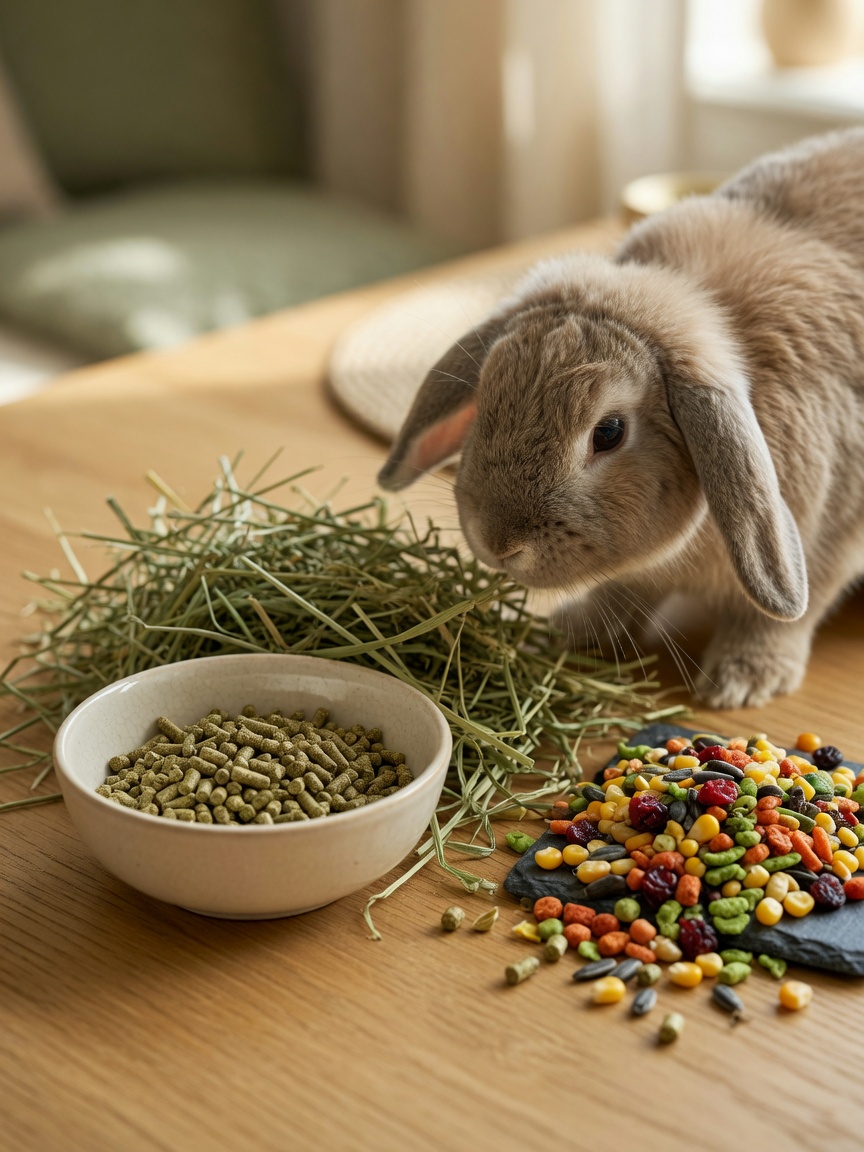
Pellets play a supporting role — not a starring one. A common mistake is to base the diet around pellets and offer hay as a supplement. It should be the reverse. Pellets provide concentrated nutrition but lack the long fiber strands critical for gut motility and dental health.
For an average adult rabbit (2–3 kg), approximately 1/4 cup of high-quality pellets per day is sufficient. Larger breeds may need slightly more; smaller or dwarf breeds may need less. Pellets should be:
- Plain — no added seeds, nuts, dried fruit, or colorful "bits"
- High fiber — minimum 18% fiber content
- Timothy hay-based (for adult rabbits)
- Low protein (under 14% for adults)
- Low fat (under 3%)
The colorful mixes marketed as "rabbit food" in pet shops are, nutritionally speaking, junk food. Rabbits will selectively eat the sugary, high-calorie components and leave the rest — resulting in a nutritionally imbalanced diet.
Shop Premium Hay at Zooplus
Fruits and Treats: 5% Maximum
Fruits and sweet vegetables (like carrots) should constitute no more than 5% of the total diet — and in practice, for many rabbits, even less is healthier. Safe fruits include strawberries, blueberries, raspberries, apple (no seeds), pear (no seeds), papaya, and melon. Offer in tiny portions, 1–3 times per week.
Never offer commercially produced rabbit treats that contain sugar, honey, yogurt drops, or artificial colorings. These products are not formulated with rabbit health in mind.
Foods to Never Give Your Rabbit
The following foods are toxic or seriously harmful to rabbits and must be avoided entirely:
- Avocado — contains persin, toxic to most animals including rabbits
- Onion, garlic, leeks, chives — cause blood cell destruction (hemolytic anemia)
- Chocolate — toxic theobromine content
- Iceberg lettuce — contains lactucarium, which can cause diarrhea; extremely high water content displaces nutrition
- Rhubarb — high oxalate and other toxins
- Potato and potato leaves — solanine content is dangerous
- Tomato leaves and stems — toxic; the fruit is safe in tiny amounts but the plant is not
- Bread, pasta, crackers — high in starch and sugar, catastrophic for gut microbiome
- Nuts and seeds — high fat, wrong nutrient profile entirely
- Dairy products — rabbits are lactose intolerant
- Meat — rabbits are strict herbivores
Water Requirements
Fresh, clean water must always be available. Rabbits typically drink 50–150 ml of water per kilogram of body weight per day, though intake varies with diet (hay-heavy diets require more water; green-heavy diets less). Offer water in a heavy ceramic bowl (which cannot be tipped and is easier to drink from naturally) alongside a bottle backup. Change water daily and clean bowls every 2–3 days to prevent bacterial buildup.
Daily Feeding Schedule
- Morning: Refresh hay, offer daily portion of leafy greens, provide fresh water
- Evening: Offer pellet ration, optionally add a small treat 2–3 times per week
- Ongoing: Top up hay throughout the day so it never runs out
Shop Rabbit Pellets at Zooplus
Key Takeaways
- Unlimited grass hay (timothy, orchard grass, meadow hay) must form 80%+ of every rabbit's diet.
- Fresh leafy greens — rotated through 3–5 varieties — should make up 10–15% of the diet daily.
- Plain, high-fiber pellets are a supplement at approximately 1/4 cup per 2 kg of body weight per day.
- Fruits and sweet vegetables are treats only — maximum 5% of diet, 1–3 times per week.
- Never feed avocado, onion, garlic, chocolate, iceberg lettuce, rhubarb, bread, or nuts.
- Fresh water must always be available; change daily and clean bowls every 2–3 days.
References
- Prebble JL, Meredith AL. Food and water intake and selective feeding in rabbits on four feeding regimes. J Small Anim Pract. 2014;55(5):257–261. PubMed
- Gidenne T. Dietary fibres in the nutrition and digestive physiology of the rabbit. Anim Feed Sci Technol. 2015;210:104–117. PubMed