
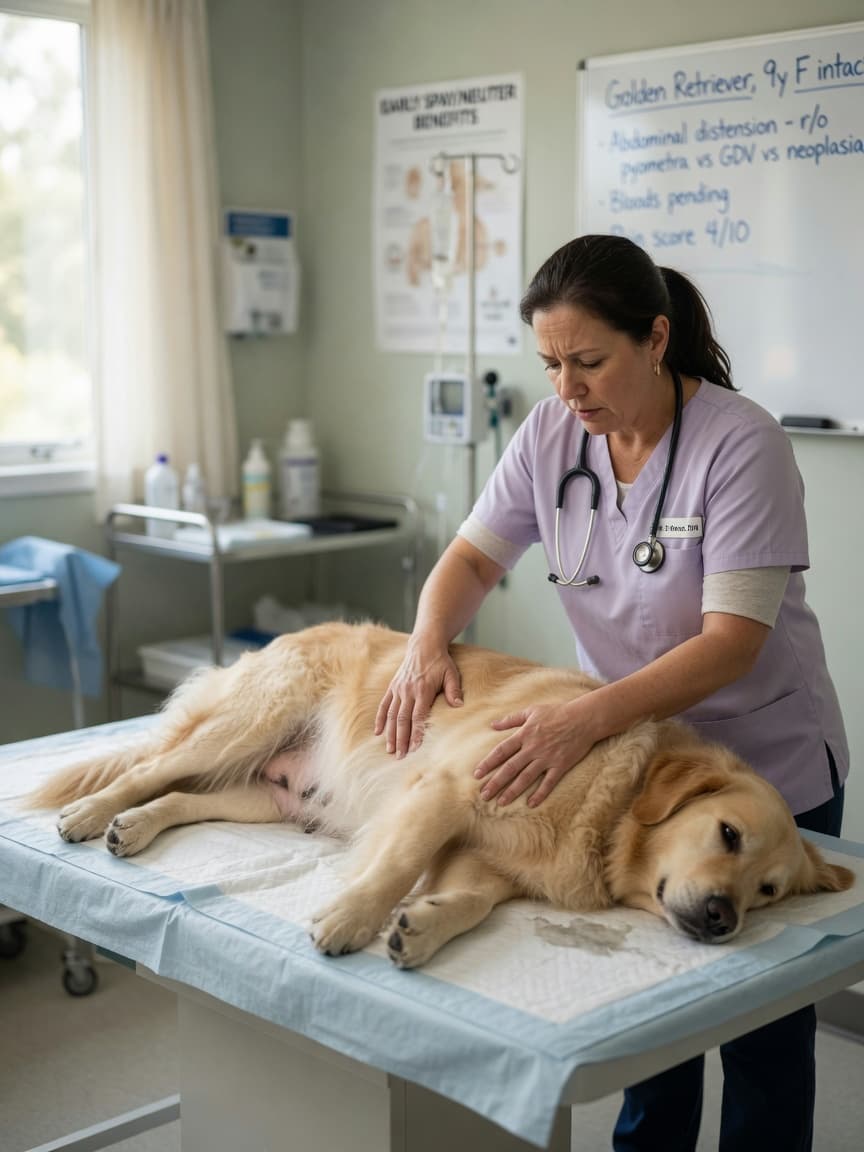
The Condition That Claims Lives Unnecessarily
Pyometra is one of the most serious conditions an intact female dog can develop — a severe infection of the uterus that, if left untreated, is fatal. It is also one that many owners have never heard of until their dog is already critically ill. Understanding what pyometra is, how to recognise it, and why it requires emergency veterinary care could be the difference between life and death for your dog.
What Is Pyometra?
The word pyometra comes from the Greek for pus and uterus. It describes an accumulation of purulent material within the uterus, caused by a bacterial infection — most commonly Escherichia coli — in a uterine environment made susceptible by hormonal changes. It is not contagious and cannot be passed to other dogs.
Pyometra typically develops in the four to eight weeks following a heat cycle, when progesterone levels remain elevated. Progesterone causes the uterine lining to thicken in preparation for a potential pregnancy, suppresses uterine immune defences, and encourages glandular secretions that create an ideal environment for bacterial growth. In older dogs, repeated exposure to these hormonal cycles can lead to cystic endometrial hyperplasia — a thickening and cyst formation in the uterine wall — which significantly increases pyometra risk.
Who Is Most at Risk?
Any intact female dog can develop pyometra, but it is most common in middle-aged to older dogs — typically over five years of age — who have never been pregnant. Studies estimate that approximately one in four intact female dogs will develop pyometra by the age of ten. Dogs that have received progestogen-based medications (used historically to suppress heat or treat certain conditions) are at considerably elevated risk.
Breed appears to play a role, with some studies suggesting higher rates in Collies, Rottweilers, Cavalier King Charles Spaniels, Golden Retrievers, and Bernese Mountain Dogs, though no breed is immune.
Open Versus Closed Pyometra
Pyometra presents in one of two forms, and the distinction matters clinically:
- Open pyometra: the cervix remains open, allowing pus to drain from the vagina. This typically produces a visible discharge — cream, yellow, green, or blood-tinged — and while still serious, the drainage can make recognition easier and may buy slightly more time before sepsis sets in
- Closed pyometra: the cervix is sealed, trapping infection inside the uterus. There is no visible discharge. The uterus expands with accumulated pus, the dog deteriorates rapidly, and the risk of uterine rupture leading to peritonitis is very real. Closed pyometra is the more immediately life-threatening presentation
Recognising the Signs

Because closed pyometra produces no obvious discharge, owners must rely on systemic signs of illness. Both open and closed forms can produce the following:
- Increased thirst and urination — a hallmark symptom, caused by bacterial toxins affecting kidney function
- Lethargy and depression, often marked and progressive
- Loss of appetite, sometimes total food refusal
- Vomiting and diarrhoea
- Abdominal distension, which can become pronounced in closed cases
- Fever — though some dogs are hypothermic in advanced cases
- Vaginal discharge in open cases: any unusual discharge in a bitch four to eight weeks post-heat should be treated as suspicious until proven otherwise
The speed of deterioration varies. Some dogs decline over several days; others can become critically ill within 24 to 48 hours of symptom onset. If your intact female dog shows increased thirst, lethargy, or any vaginal discharge in the weeks following a season, contact your vet the same day — do not wait to see if she improves.
Diagnosis
Your vet will typically diagnose pyometra through a combination of history, physical examination, blood tests, and imaging. Blood work commonly shows an elevated white cell count, signs of kidney involvement, and changes in protein levels. Ultrasound is the most reliable tool for confirming uterine infection and assessing severity.
Treatment: Surgery Is Usually the Only Option
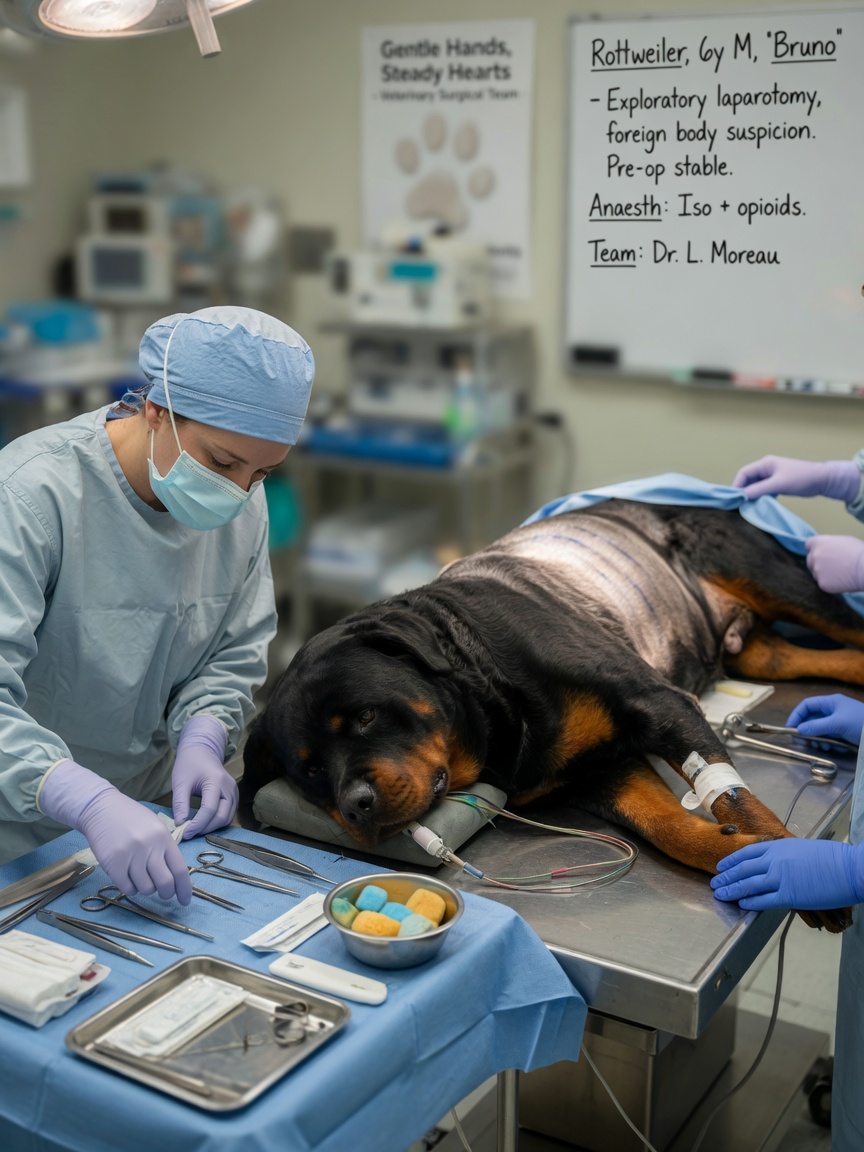
The definitive treatment for pyometra is emergency ovariohysterectomy — surgical removal of the infected uterus and ovaries. This is the same procedure as routine spaying, but performed in a critically ill patient, which significantly increases anaesthetic and surgical risk. Nonetheless, without surgery, the prognosis is grim.
Intensive supportive care is administered before and after surgery: intravenous fluids, antibiotics, and in some cases blood pressure support. Most dogs that reach surgery in time make a full recovery, though kidney damage in some cases may be permanent.
A medical alternative using prostaglandins and antibiotics does exist and is occasionally used in young, valuable breeding females with open pyometra. It is associated with significant risks and high recurrence rates, and is not appropriate for most pet dogs. It should only ever be considered under close specialist supervision.
Prevention: The Simplest Answer
Spaying completely eliminates the risk of pyometra — there is no uterus to infect. For owners who do not intend to breed their dog, spaying at an appropriate age remains the most straightforward preventive measure available. For those who wish to keep their dog intact, awareness of the post-heat risk window, and prompt veterinary contact at the first sign of illness, is essential.
Pyometra kills dogs that could have been saved — not because treatment is unavailable, but because owners did not recognise the signs in time. Knowing what to look for, and acting without delay, is the single most important thing you can do.