
More Is Not Always Better
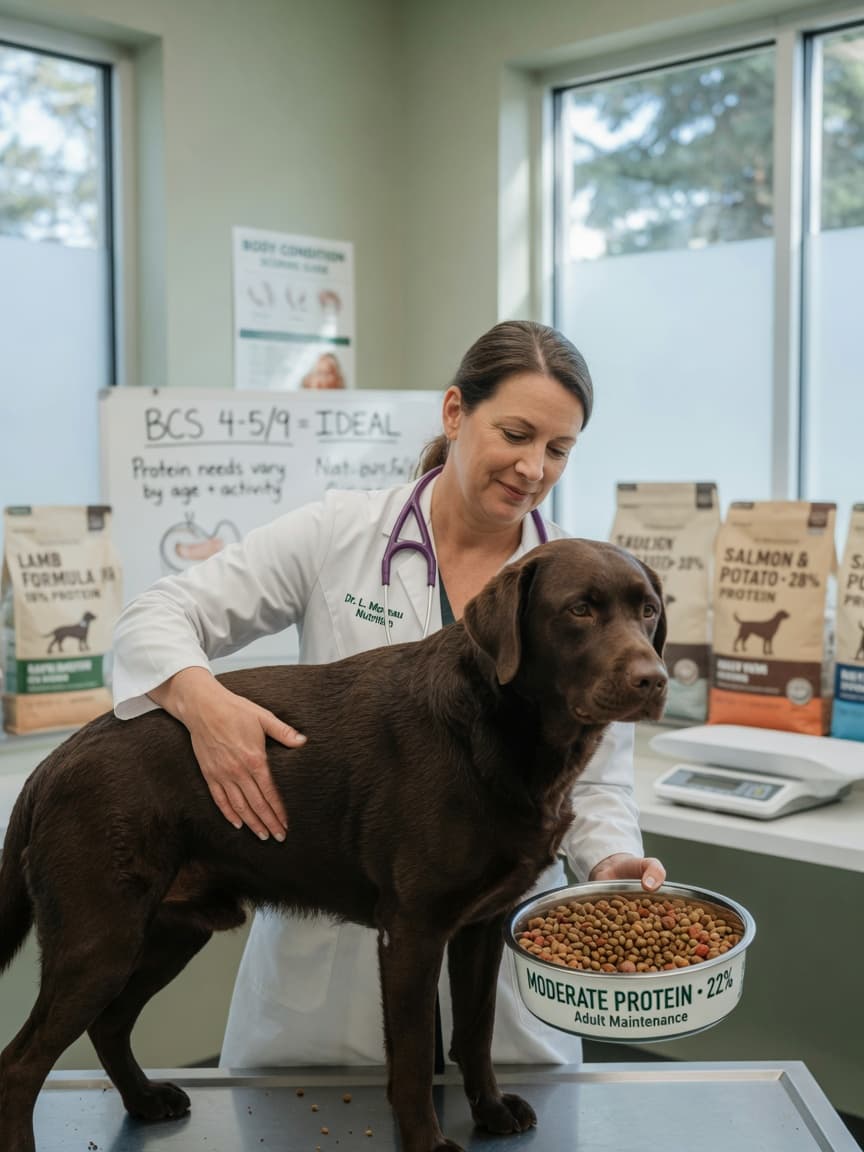
Walk the pet food aisle of any supermarket and you will find labels boasting 40%, 50%, even 70% protein content. The message is implicit: more protein equals a healthier, stronger, more vital dog. It is a compelling pitch — and one that the nutritional science does not entirely support. Understanding what dogs actually need from dietary protein is more nuanced than any marketing panel will tell you.
What Dogs Need Protein For
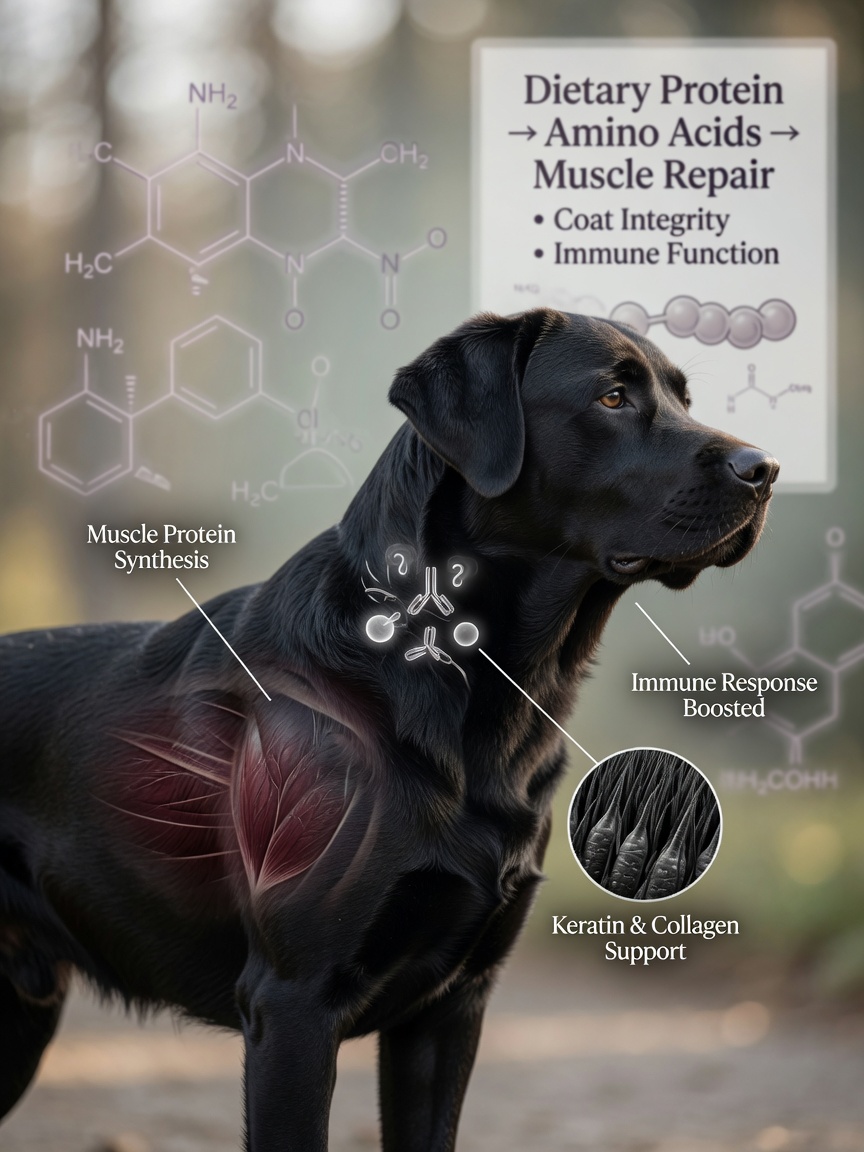
Protein serves several essential functions in a dog's body. It supplies amino acids — the building blocks used to construct and repair muscle tissue, produce enzymes and hormones, support immune function, and maintain skin and coat health. Dogs require 10 essential amino acids they cannot synthesise themselves and must obtain through diet: arginine, histidine, isoleucine, leucine, lysine, methionine, phenylalanine, threonine, tryptophan, and valine.
What matters most, therefore, is not the total quantity of protein in a food but the quality and completeness of its amino acid profile, and the digestibility of the protein source.
The Official Minimums
AAFCO (the US Association of American Feed Control Officials) sets a minimum protein requirement of 18% on a dry matter basis for adult dog maintenance, and 22.5% for growth and reproduction. FEDIAF guidelines in Europe are similar. These are floors, not targets — and they assume reasonably digestible, complete protein sources.
Most commercial adult dog foods sit between 18% and 32% protein on a dry matter basis, which comfortably meets the requirements of the vast majority of healthy adult dogs. The explosion in very high-protein diets — those exceeding 40% — is driven by consumer demand and marketing positioning rather than identified nutritional need in average dogs.
When Higher Protein Is Genuinely Warranted
There are legitimate reasons some dogs need more protein than the established minimums:
- Puppies in rapid growth phases require higher protein relative to body weight
- Pregnant and lactating bitches have significantly elevated protein demands
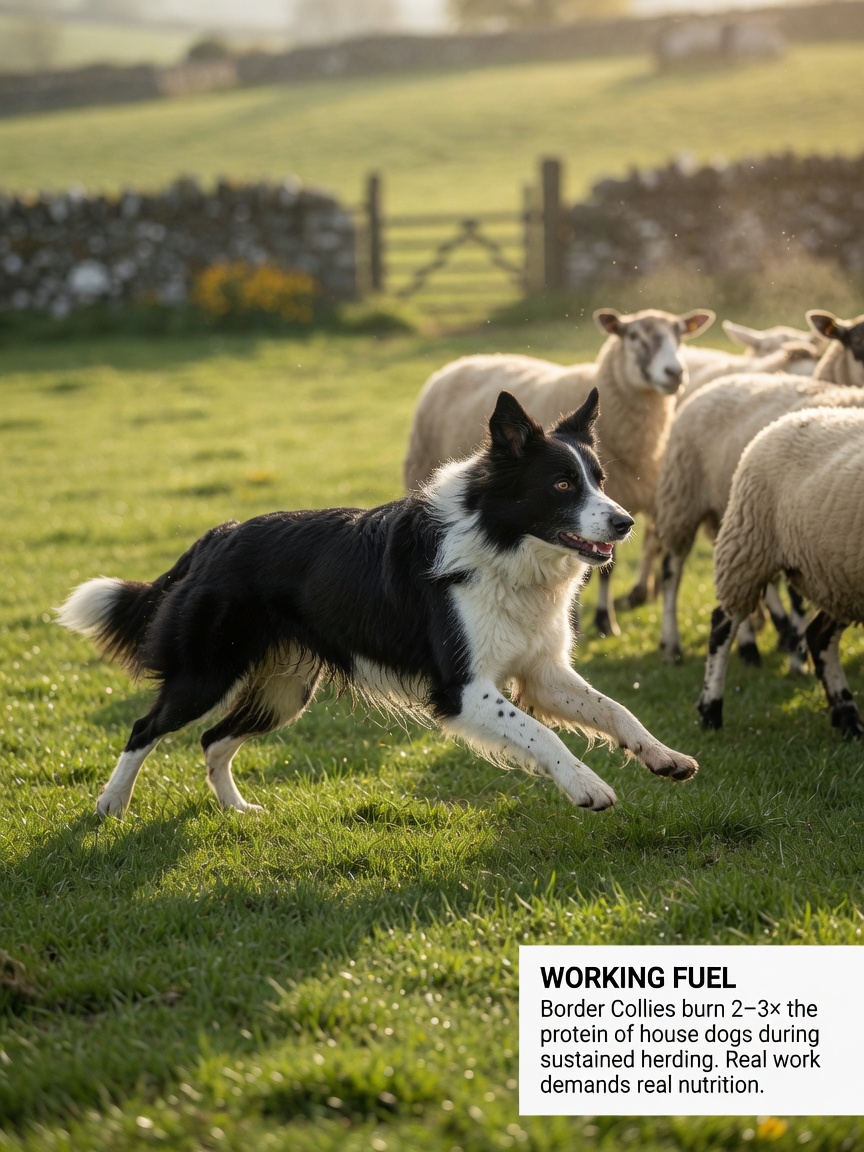
- Working dogs — those doing sustained physical labour such as herding, sled pulling, or search and rescue — benefit from increased protein intake to support muscle repair and energy metabolism
- Senior dogs may require higher dietary protein to counteract age-related muscle loss (sarcopenia), even as their total caloric needs decrease
- Dogs recovering from illness, surgery, or injury may need elevated protein to support tissue repair
What About Muscle Building?
Many owners of athletic or working breeds feed very high-protein diets in the belief that excess protein builds additional muscle. This is a misunderstanding. Muscle development in dogs is driven primarily by exercise stimulus, not dietary protein surplus. Once protein requirements are met, additional protein is not stored as muscle — it is either excreted or converted to energy. Excess protein calories contribute to fat accumulation just as excess carbohydrate or fat calories do.
The Case Against Excess Protein
Very high-protein diets are not dangerous for healthy adult dogs with normal kidney function. The persistent belief that high dietary protein damages healthy kidneys is not supported by current evidence. However, for dogs that already have reduced kidney function, protein restriction does become clinically relevant — the kidneys must process the nitrogenous waste products of protein metabolism, and a damaged filtration system can be overwhelmed.
Beyond kidney considerations, extremely high-protein diets that use low-quality or poorly digestible protein sources may deliver inferior amino acid profiles compared to a moderate-protein diet using high-quality ingredients. A food with 50% protein from feather meal or hide provides far less usable nutrition than one with 25% protein from whole chicken and eggs.
Evaluating Protein Quality
Digestibility and amino acid completeness are the metrics that matter. Look for:
- Named whole meat or fish sources as the primary ingredient (chicken, salmon, lamb, beef)
- Inclusion of eggs, which have one of the highest biological values of any protein source
- Transparent ingredient lists that do not obscure low-quality protein sources through ingredient splitting
- Evidence of feeding trials rather than pure formulation-based nutritional claims
Tailoring Protein to Your Dog
There is no single correct protein percentage for all dogs. A sedentary, neutered, middle-aged Labrador has very different needs from a working Border Collie or a nursing Greyhound. Age, activity level, reproductive status, and health history all shape individual requirements.
Your vet or a veterinary nutritionist can help you assess whether your dog's current diet is meeting their protein needs — neither over-supplying nor falling short. Before switching to a very high-protein food based on marketing claims, it is worth asking: what specific need is this addressing in my dog? If the answer is unclear, the evidence suggests a well-formulated moderate-protein diet from quality sources will serve most dogs entirely well.