
Coping with Pet Loss: A Compassionate Guide for Grieving Owners
By Julia Wrenfield, Pet Wellness Researcher
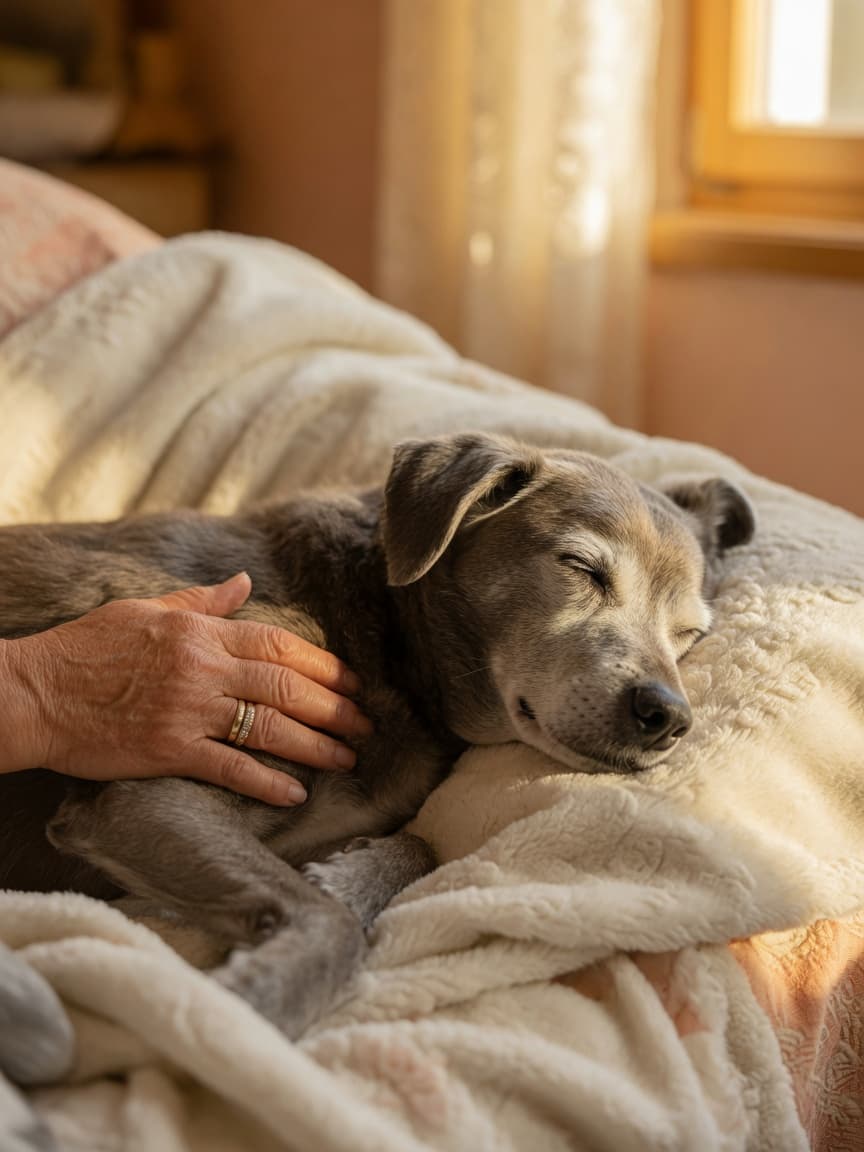
There is a particular loneliness to grieving a pet. It is a grief that the world too often minimizes — a grief you may be expected to move past quickly, to take a few days and then return to normal life as though what you lost was a minor thing. It was not a minor thing. The love between a person and their animal companion is as real as any love there is, and the loss of that companion deserves to be honored with the full weight of mourning it warrants.
This guide is not here to hurry you through anything. It is here to sit with you in what you are feeling, to help you understand it, and to offer some gentle, practical support for the road ahead.
Your Grief Is Real — and It Is Valid
Research in psychology and grief studies has consistently demonstrated that the grief following the death of a pet is not categorically different from the grief that follows the death of a human loved one. The bond between pet and owner activates the same neurological and hormonal systems as other attachment bonds. Its loss triggers the same bereavement process. The pain you feel is not an overreaction. It is not embarrassing. It is not "just" about a pet. It is grief, full and legitimate, and it deserves to be treated as such.
Unfortunately, what grief researchers call "disenfranchised grief" — grief that society does not fully recognize or permit — is exactly what many pet owners experience. You may have been told to "get another one" within days of your loss. You may have felt pressure to appear composed at work when you were devastated inside. You may have found yourself apologizing for how much you miss your animal companion. Please know: you have nothing to apologize for.
The Stages of Grief — and How They Apply to Pet Loss
The concept of grief stages, originally articulated by Elisabeth Kübler-Ross, has evolved significantly since its introduction. Modern grief research understands that grief does not move through neat, sequential stages — it moves in waves, sometimes cycling back to earlier feelings without warning. But the broad emotional territories Kübler-Ross identified remain a useful map for understanding what you might be experiencing.
Denial and disbelief: In the immediate aftermath of a pet's death, many people describe a surreal sense of unreality. You may find yourself forgetting, just for a moment, that your pet is gone — reaching for their leash, expecting to hear their food bowl rattle, looking toward their favorite spot on the couch. This is not confusion. It is the mind slowly processing something it is not yet ready to fully absorb.
Anger: Anger is a normal and often unexpected part of pet loss. You may feel angry at the veterinarian, at yourself, at the disease or accident that took your pet, at the sheer unfairness of how brief animal lives are compared to our own. Anger does not mean you are responding to grief incorrectly. It means you loved deeply enough that the loss feels like an injustice — because in some ways, it is.
Guilt: Guilt is one of the most common and most painful features of pet loss grief, particularly when the death involved euthanasia. "Did I wait too long?" "Did I act too soon?" "Should I have sought a second opinion?" These questions are nearly universal among grieving pet owners, and they rarely have definitive answers. What is almost always true is this: you made the best decision you could with the information and resources you had, motivated by love. That is what you could give, and it was enough.
Sadness and depression: The deep, aching sadness of losing an animal companion — particularly one who was central to your daily life and routine — can be overwhelming. This sadness is not a malfunction. It is love with nowhere to go. It is appropriate, and it is temporary, even when it does not feel that way.
Acceptance: Acceptance does not mean you are glad your pet is gone, or that the loss no longer hurts. It means finding a way to carry the loss forward — to integrate it into who you are rather than being paralyzed by it. Acceptance often comes not as a single moment of clarity but as a gradual, quiet shift.
Practical Steps in the Days and Weeks After Loss
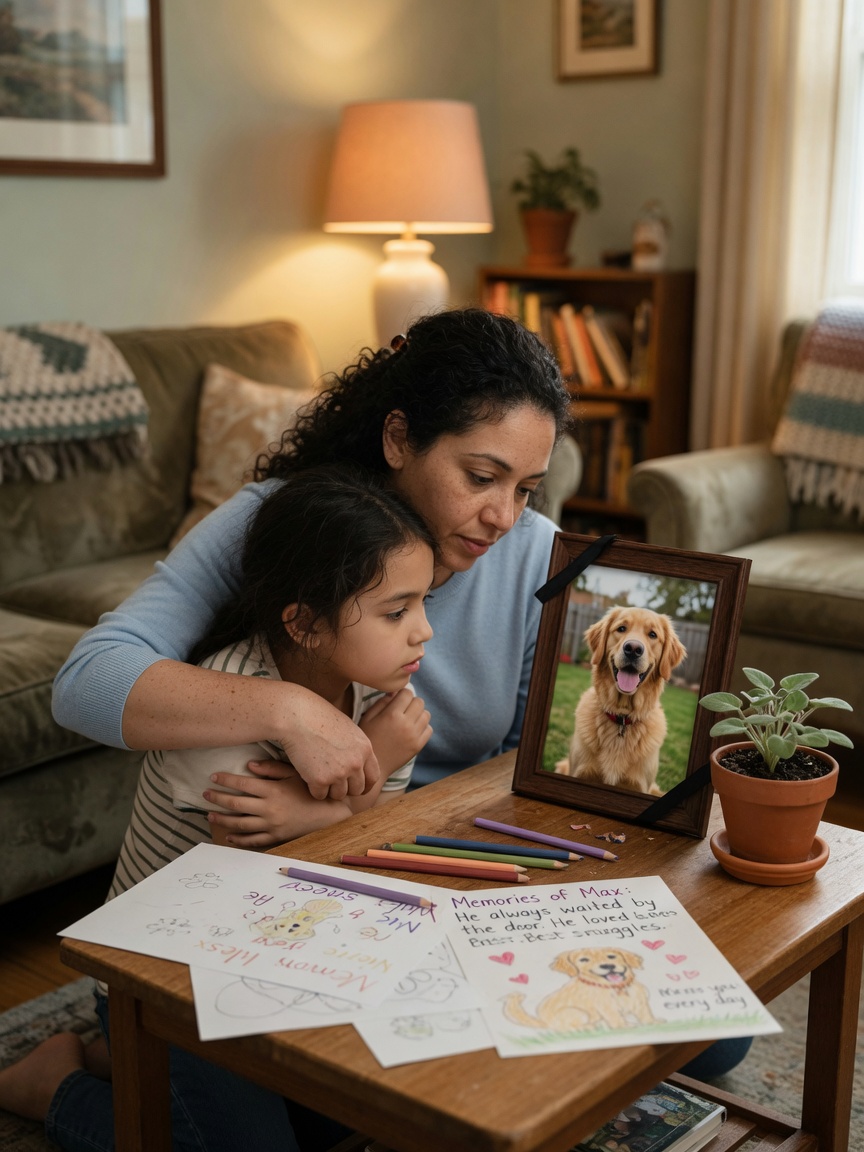
Memorialization: Creating a tangible acknowledgment of your pet's life and meaning can be profoundly healing. This might be a photo album, a framed portrait, a garden stone, a donation to an animal shelter in your pet's name, or a small ceremony with family members. Ritual matters in grief — it gives form to feelings that might otherwise feel shapeless.
Talking to children: If you have children in your home, the death of a family pet is often their first direct encounter with death. Be honest in age-appropriate ways. Euphemisms like "went to sleep" can create fear around sleep; clearer language about death, while harder to say, is healthier. Allow children to grieve alongside you. Their love for the pet was real too, and being included in the grief — the tears, the stories, the memorial — helps them learn that grief is something to move through, not something to hide.
Euthanasia grief: If your pet was euthanized, the grief often carries additional complexity. The responsibility of that decision — of choosing the moment of death, of being the one who decided — sits heavily with many owners. It helps to remember that euthanasia, when it is the right choice, is an act of profound mercy. It is the last gift you can give an animal in pain. The fact that it was hard to do is proof of how much you loved them.
Sudden versus expected loss: Pet loss that comes suddenly — through accident or rapid illness — carries a particular shock. There is no preparation, no goodbye, no chance to resolve unfinished things. If this is your experience, give yourself extra gentleness. Traumatic grief is grief on a harder road, and it may take longer to process.
Finding Support — You Do Not Have to Grieve Alone
One of the most important things you can do when grieving a pet is to find people who understand. If the people around you cannot fully meet you in this grief, seek out those who can.
ASPCA Pet Loss Hotline: 1-877-474-3310 — This free service connects grieving pet owners with trained counselors who specialize in animal loss. There is no judgment, no minimizing. It is a safe space to say everything you are feeling.
Pet loss support groups: Many communities have in-person pet loss support groups, often organized through veterinary clinics or humane societies. Being in a room with others who truly understand — who have also felt this specific grief — can be remarkably healing.
Online communities: Online forums and communities dedicated to pet loss (including the r/petloss community on Reddit, the Association for Pet Loss and Bereavement at aplb.org, and numerous Facebook groups) offer around-the-clock connection with others who are walking a similar path. These communities are particularly valuable in the middle of the night, when grief often feels most acute and most alone.
Therapy: A grief counselor or therapist — particularly one familiar with pet loss — can offer structured, professional support. The loss of an animal companion is a legitimate reason to seek therapy, and doing so is a sign of self-awareness, not weakness.
Self-Care During Grief
Grief is physically as well as emotionally exhausting. Sleep disturbances, appetite changes, fatigue, and diminished immune function are all documented physiological responses to bereavement. Taking care of your body during this time is not frivolous — it is necessary.
Eat, even when you do not feel hungry. Sleep as much as you can. Get outside, even briefly. Move your body in gentle ways. Accept help from people who offer it. Give yourself permission to have moments of feeling better — a laugh, an hour of distraction — without interpreting those moments as disrespect to your pet's memory. Grief and moments of relief can coexist. Both are part of healing.
When Grief Becomes Complicated Grief
For most people, pet loss grief — while intense — gradually eases over weeks and months. For some, however, grief does not follow this trajectory. It remains as raw and disabling as it was in the first days, or it intensifies over time rather than softening. This is called complicated grief or prolonged grief disorder, and it affects a minority of bereaved individuals regardless of what — or who — they have lost.
Signs that grief may have become complicated include: inability to function in daily life after several months, persistent inability to accept the reality of the death, profound and unremitting guilt, social withdrawal that does not improve, and thoughts of self-harm. If you recognize these signs in yourself, please reach out to a mental health professional. Complicated grief is treatable, and you deserve support.
The Question of Getting Another Pet
There is no right answer to the question of when — or whether — to get another pet. Some people find that welcoming a new animal relatively soon helps channel their love and begin healing. Others need months or years, or decide they cannot go through this loss again and choose not to have another pet. Both responses are valid. Neither is a measure of how much you loved the animal you lost.
What matters most is that any decision is made from a grounded place rather than in the acute depths of early grief. A new pet deserves to be welcomed for who they are, not primarily as a substitute for who is gone. And you deserve the space to grieve before making decisions of that magnitude.
Whatever you choose, and whenever you choose it, be kind to yourself. You loved well. That is what matters.
- Pet loss grief is real, valid, and neurologically indistinguishable from grief over the loss of a human loved one.
- Grief does not move in neat stages — it moves in waves, and there is no correct timeline for healing.
- Guilt is nearly universal in pet loss, especially after euthanasia — you made the best decision you could out of love.
- The ASPCA Pet Loss Hotline (1-877-474-3310) offers free, judgment-free support from trained counselors.
- Pet loss support groups, online communities, and therapists can all provide meaningful connection and relief.
- Complicated grief — grief that does not ease over months — is treatable; please seek professional support if this is your experience.
- There is no right or wrong answer about when or whether to get another pet. Honor your own pace.
References
- Packman W, Carmack BJ, Ronen R, et al. "Online survey as empathic bridging for the disenfranchised grief of pet loss." OMEGA — Journal of Death and Dying. 2014;69(4):333–356. PMID: 25530158.
- Adrian JAL, Deliramich AN, Frueh BC. "Complicated grief and posttraumatic stress disorder in humans' response to the death of pets/animals." Bulletin of the Menninger Clinic. 2009;73(3):176–187. PMID: 19821642.