
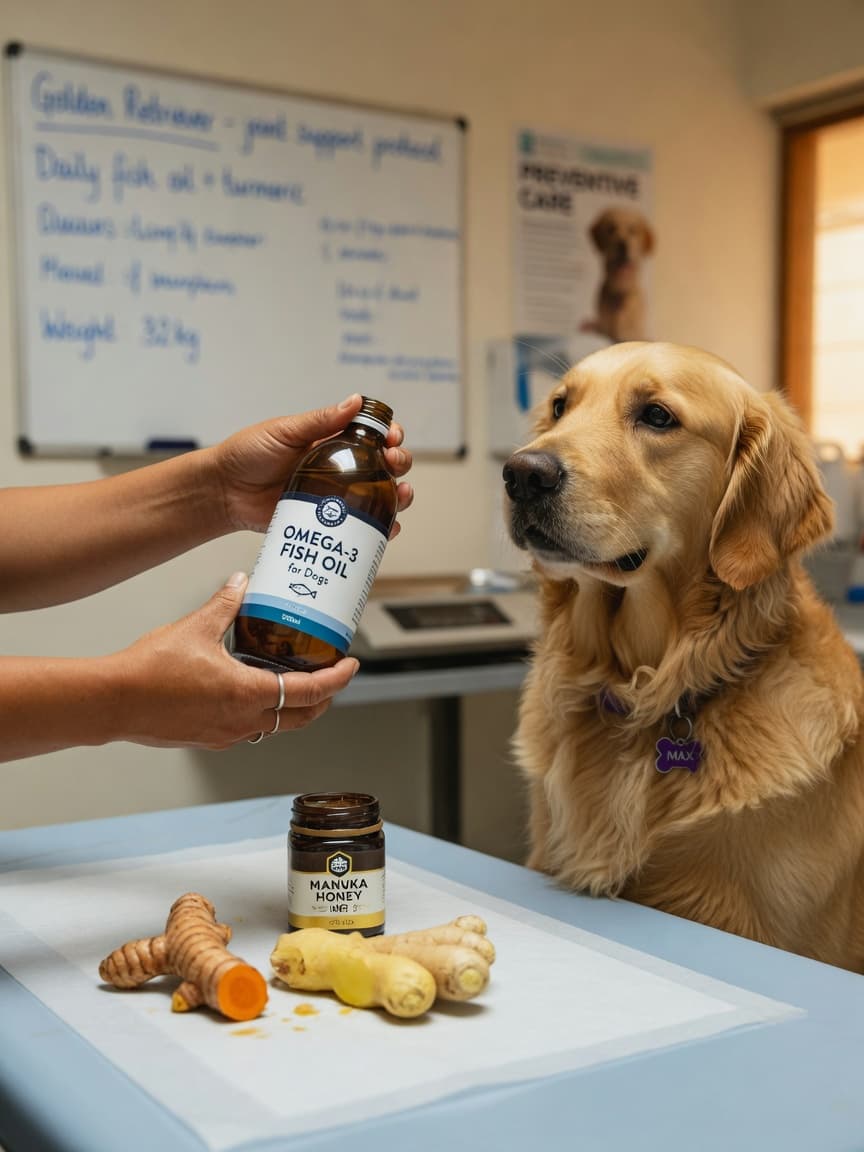
When Nature Meets Science: Remedies Worth Your Attention
The world of natural pet care is vast, and the noise is deafening. For every remedy with solid research behind it, there are a dozen others propped up by anecdote and wishful thinking. As someone who has spent over a decade working with animals in clinical and nutritional settings, I can tell you that the line between genuinely helpful and harmlessly useless is narrower than most people think — and occasionally, something marketed as "natural" can cause real harm.
This article focuses on natural remedies that have at least some credible scientific backing. That does not mean they replace veterinary care. What it does mean is that these are options worth discussing with your vet, particularly for dogs with chronic conditions where integrative approaches are increasingly welcomed.
Fish Oil and Omega-3 Fatty Acids

This is probably the most evidence-supported natural supplement you can give a dog. Omega-3 fatty acids, particularly EPA and DHA found in fish oil, have been studied extensively for their anti-inflammatory effects. The research covers a range of conditions including osteoarthritis, skin disorders, kidney disease, and even cardiac conditions.
A 2010 study published in the Journal of Veterinary Internal Medicine found that dogs with osteoarthritis who received fish oil supplementation showed significant improvements in weight-bearing and overall mobility compared to a control group. The anti-inflammatory mechanism here is well understood — omega-3s compete with omega-6 fatty acids in the production of eicosanoids, essentially dampening inflammatory pathways.
Dosage matters, though. Many commercial dog foods contain fish oil in amounts too small to have a therapeutic effect. If you are supplementing specifically for joint or skin health, you will likely need a separate product, and the appropriate dose varies considerably by body weight. Your vet can help with this calculation.
Turmeric and Curcumin

Turmeric has genuine anti-inflammatory properties, primarily attributed to its active compound curcumin. The challenge is bioavailability — curcumin is poorly absorbed on its own. In human studies, combining it with piperine (found in black pepper) significantly increases absorption, and a similar principle appears to apply in dogs.
Research in veterinary medicine is still catching up with human studies, but there is enough preclinical and clinical data to suggest curcumin has real anti-inflammatory and antioxidant potential. Some veterinary oncologists are also looking at curcumin as a complementary support during cancer treatment, though this should never be pursued without specialist guidance.
Turmeric paste — a mixture of turmeric powder, water, black pepper, and a fat source such as coconut oil — is a popular way to administer this to dogs. The fat helps with fat-soluble curcumin absorption. Start with very small amounts, as too much can cause digestive upset.
Ginger
Ginger has a long history of use for nausea and digestive complaints, and there is reasonable evidence to support its anti-nausea effects in dogs. A study from 2012 examined ginger's effect on motion sickness in dogs and found it was effective at reducing vomiting compared to a placebo, and performed comparably to some pharmaceutical anti-nausea agents.
Beyond nausea, ginger also has anti-inflammatory properties and shows some promise in studies looking at bloat prevention, though the evidence here is less established. It is generally considered safe for dogs in small amounts, though it should be used cautiously in dogs on blood-thinning medications or those due for surgery.
Manuka Honey for Wound Care
Honey has been used medicinally for thousands of years, and Manuka honey in particular has attracted scientific interest. It contains methylglyoxal (MGO), a compound with antimicrobial properties, and has been shown in multiple studies to inhibit a range of bacteria including some antibiotic-resistant strains.
In veterinary practice, medical-grade Manuka honey is used topically for wound management, burns, and skin infections. It creates a moist healing environment, draws out fluid via osmotic action, and its low pH discourages bacterial growth. There are commercially available veterinary wound dressings that incorporate Manuka honey.
Regular supermarket honey should not be substituted — it lacks the same concentration of active compounds. And while Manuka honey is safe if a dog licks a wound, it should not be given in large quantities internally due to sugar content.
Chamomile
Chamomile is worth mentioning because its uses are genuinely multi-faceted. It has documented anti-inflammatory, antispasmodic, and mild sedative properties. For dogs, it has been used to support digestive upset, reduce mild anxiety, and as a topical soothe for irritated skin.
Cooled chamomile tea applied to itchy or inflamed skin can provide relief, and diluted chamomile preparations have been used to rinse irritated eyes — though you should always consult a vet before applying anything near a dog's eyes. Chamomile is generally well-tolerated, but dogs with known ragweed or daisy family allergies should avoid it, as cross-reactivity is possible.
Remedies That Sound Promising But Need More Evidence
A few remedies frequently appear in natural pet care circles but lack strong evidence in dogs specifically. These include milk thistle for liver support (promising, with decent human and some animal data, but veterinary dosing is still not well-established), valerian root for anxiety (some evidence, but inconsistent results), and CBD oil (regulatory grey areas aside, the data in dogs is genuinely emerging and worth watching).
None of these are necessarily bad options, but they sit in a different category from fish oil or Manuka honey, where the evidence is substantially more robust.
How to Use Natural Remedies Responsibly
- Always discuss supplements with your vet before starting them, particularly if your dog takes any medications.
- Source matters enormously — quality control in the supplement industry is inconsistent, and contamination or incorrect labelling is a real issue.
- Natural does not mean risk-free. Some plants and herbs that are safe for humans are toxic to dogs.
- Monitor your dog carefully when introducing anything new and stop if you notice adverse reactions.
- Be wary of products making extravagant claims — if the marketing sounds too good to be true, it almost certainly is.
The good news is that integrative veterinary medicine is a growing field, and more vets are now open to discussing evidence-based natural options alongside conventional treatment. The best outcomes tend to come when both approaches are used thoughtfully together, rather than in opposition to each other.