
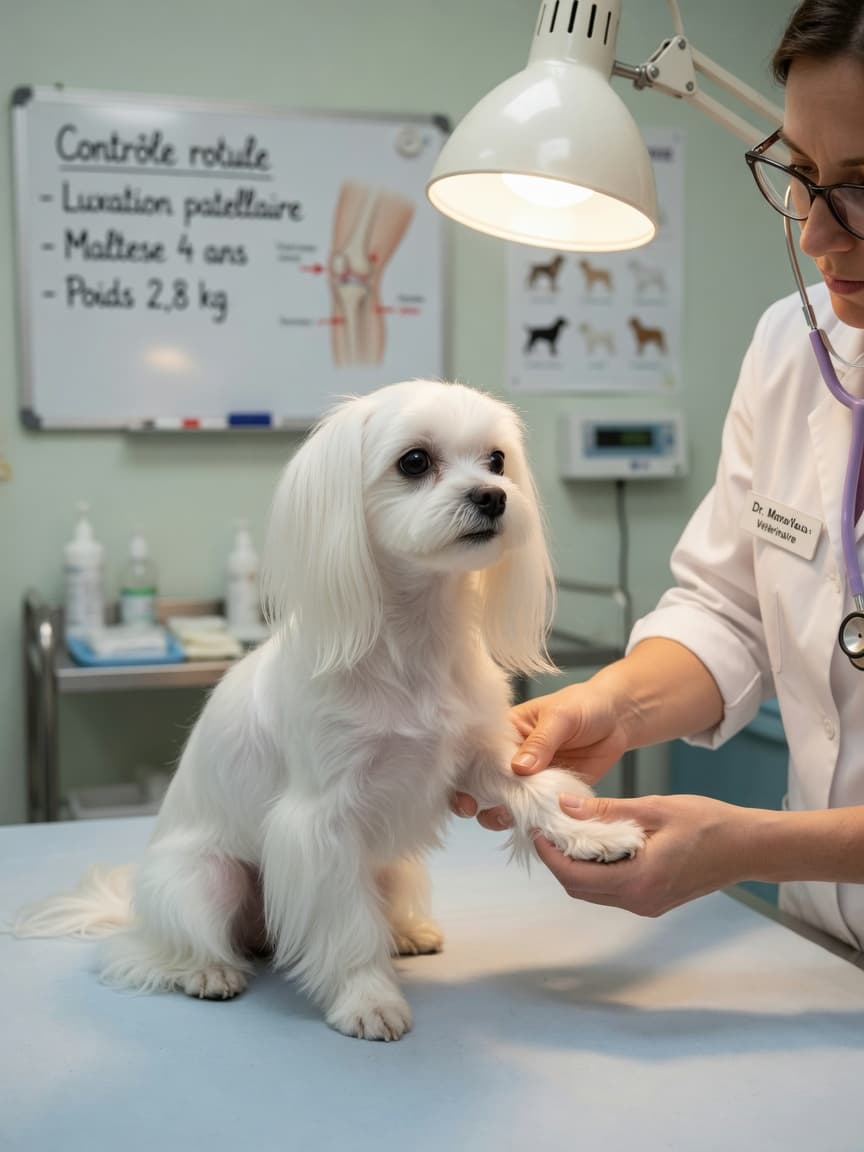
Maltese Health: Liver Shunts, Luxating Patella & White Dog Shaker Syndrome
The Maltese is one of the oldest and most refined toy breeds, treasured for its flowing white coat, lively personality, and devoted temperament. These elegant little dogs typically live 12–15 years, and with attentive care, many remain active and bright well into old age. However, the Maltese carries a handful of breed-specific health vulnerabilities that owners must understand: portosystemic liver shunts, medial patellar luxation, white dog shaker syndrome, severe dental disease, and hypoglycaemia in puppies.
Portosystemic Liver Shunts (PSS)

A portosystemic shunt is an abnormal blood vessel that allows blood from the digestive tract to bypass the liver and flow directly into systemic circulation. Normally, the liver filters blood arriving from the intestines, removing toxins (including ammonia), metabolising nutrients, and producing clotting factors. When a shunt diverts this blood, these toxins accumulate in the bloodstream and reach the brain, causing hepatic encephalopathy.
Maltese are among the breeds most predisposed to congenital (present at birth) extrahepatic portosystemic shunts — shunts located outside the liver itself. Affected puppies and young dogs are typically smaller than their littermates, grow poorly, and may show neurological signs after meals: disorientation, staring into space, circling, head pressing, or seizures. Some dogs show excessive thirst and urination, vomiting, or struvite bladder stones (formed due to elevated urinary ammonia). Signs often wax and wane and can be subtle.
Diagnosis involves bile acid testing (pre- and post-meal samples), abdominal ultrasound, and sometimes CT or MRI to visualise the shunting vessel. The most effective treatment is surgical correction — placement of an ameroid constrictor or cellophane band around the shunting vessel to gradually occlude it, redirecting blood flow through the liver. Success rates are excellent for extrahepatic shunts in small breeds when surgery is performed early. Dogs that cannot undergo surgery can be managed medically with a low-protein diet and lactulose to reduce ammonia production, though medical management is palliative rather than curative.
Medial Patellar Luxation (MPL)

Patellar luxation — dislocation of the kneecap from its normal groove in the femur — is extremely common in toy and small breeds, and the Maltese is no exception. In medial luxation (the most common form in small breeds), the kneecap slips inward (toward the body’s midline). It is graded on a scale of 1 to 4:
- Grade 1: Kneecap can be manually luxated but returns to position spontaneously; usually no clinical signs.
- Grade 2: Spontaneous luxation causing intermittent lameness (the characteristic “skipping” gait); returns to position on its own or with manipulation.
- Grade 3: Kneecap is permanently luxated but can be manually reduced; moderate to severe lameness.
- Grade 4: Kneecap permanently luxated and cannot be manually repositioned; severe deformity and lameness.
Grade 1 and mild Grade 2 cases are often managed conservatively with weight control, controlled exercise, and joint supplements. Grade 2 with frequent episodes, and Grades 3–4, typically require surgical correction involving deepening of the femoral groove and realignment of the tibial crest. Prognosis after surgery is generally excellent. Untreated luxation increases the risk of cruciate ligament rupture in the affected knee, so monitoring and acting at the appropriate grade threshold is important.
White Dog Shaker Syndrome (Idiopathic Tremor Syndrome)
White dog shaker syndrome — also called idiopathic tremor syndrome or steroid-responsive tremors — is a mysterious neurological condition predominantly affecting small white dogs, including Maltese, West Highland White Terriers, and Bichons Frisés. The cause is not fully understood but is thought to involve immune-mediated inflammation of the cerebellum or generalised central nervous system.
Affected dogs develop whole-body or head tremors, typically between 1 and 5 years of age, which can be severe enough to interfere with walking and eating. The tremors are usually constant during waking hours and absent during sleep. Vision and mentation are typically normal. Despite the dramatic appearance, the condition responds remarkably well to treatment with corticosteroids (prednisolone). Most dogs show significant improvement within 1–2 weeks of starting treatment, and many eventually achieve complete remission with slow dose tapering. Recurrence is possible when medication is discontinued too quickly.
Dental Disease
Dental disease is perhaps the most universally undertreated condition in Maltese dogs. Like other toy breeds, the Maltese has a small jaw in which teeth are crowded and prone to rotational abnormalities. Plaque and tartar accumulate rapidly, leading to periodontal disease that progresses faster and with worse consequences than in larger breeds. Severe periodontal disease can cause jaw fractures (pathological fractures), loss of most or all teeth, and bacterial seeding of the bloodstream with effects on the heart and kidneys.
Daily tooth brushing is essential from puppyhood. Professional dental cleanings under general anaesthesia are typically needed every 1–2 years from age 2 onwards. Water additives and dental chews provide supplementary benefit but do not replace brushing or professional cleanings.
Hypoglycaemia in Maltese Puppies
Maltese puppies, particularly those under 3 months of age and those weighing under 1 kg, are prone to hypoglycaemia (low blood sugar) if they miss meals, are stressed, or become ill. Signs include weakness, trembling, glassy eyes, disorientation, and — in severe cases — seizures and unconsciousness. First aid involves immediately rubbing a small amount of corn syrup, honey, or glucose gel on the gums and seeking immediate veterinary care. Feeding every 4 hours during the high-risk period and avoiding prolonged fasting in young puppies is essential prevention.
Key Takeaways
- Any young Maltese that is small for its age, neurologically signs after meals, or shows urinary stones should have bile acid testing for a liver shunt.
- A “skipping” rear leg gait usually indicates patellar luxation — have it graded by your vet; early-grade cases can be managed conservatively.
- Whole-body tremors in a young Maltese: do not panic — white dog shaker syndrome responds well to steroids. But rule out toxins and other causes first.
- Daily tooth brushing and annual professional dental cleanings are non-negotiable for this breed.
- Know the signs of puppy hypoglycaemia and keep corn syrup or glucose gel at home during the first 3 months.
- Lifespan: 12–15 years with proactive dental care and regular veterinary check-ups.
References
- Berent AC, Tobias KM. Portosystemic vascular anomalies. Veterinary Clinics of North America: Small Animal Practice. 2009;39(3):513–541. PMID: 19272500
- Olby NJ, Dyce J, Houlton JE. Correlation of plain radiographic and lumbar myelographic findings with surgical findings in thoracolumbar disc disease. Journal of Small Animal Practice. 1994;35(7):345–350. PMID: 7932185 (patellar luxation grading reference)